Why this works
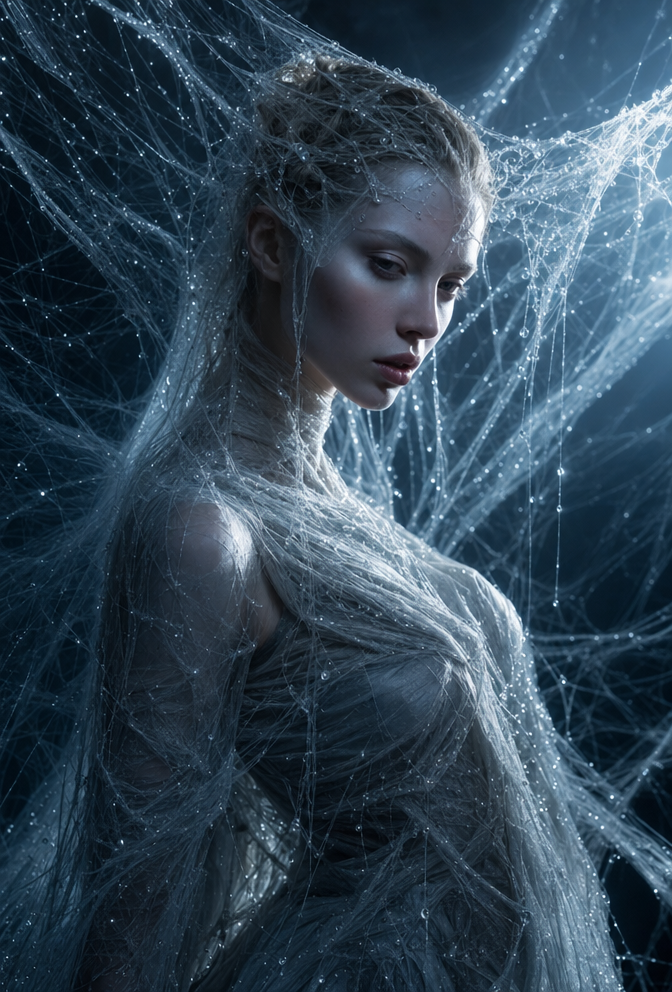
The phrase “translucent web-like filaments and shimmering strands” supplies the delicate, otherworldly structure, while “small beads of dew clinging to the threads” adds pinpoint highlights that make the fantasy material feel tactile. “Cool blue side lighting with soft rim light” separates the pale figure from the “dark velvety background,” creating the blue-black-white harmony and mysterious mood. “Close framing,” “shallow depth of field,” and “subtle haze around the subject” keep attention on the woman and soften the surrounding detail, while “layered silver-gray fabric” gives the full-body portrait a controlled couture silhouette.
FAQ
→How do I make the web filaments more prominent than the woman’s clothing?
Replace “elegant couture styling in layered silver-gray fabric” with “minimal silver-gray fabric, leaving the translucent web-like filaments fully exposed across the torso, arms, and legs,” and add “filaments in sharp focus with visible dew beads.” Keep “shallow depth of field” but change “close framing” to “full-body framing with the web structure clearly readable.”
→How do I shift this from mysterious blue fantasy to a warmer, romantic portrait?
Replace “Cool blue side lighting with soft rim light” with “warm amber side lighting with a gentle rose-gold rim light,” and change the dominant background description from “dark velvety background” to “soft burgundy velvet background.” Replace “subtle haze” with “delicate rosy atmospheric haze” to preserve the ethereal softness without the cold tone.
→How do I create a series of variations while keeping the same visual identity?
Keep “Photorealistic ethereal fantasy portrait,” “ultra-fine skin texture,” “shallow depth of field,” and “soft rim light” unchanged, then swap only the subject material and setting. For example, replace “web-like filaments” with “translucent moth-wing ribbons” and “dark velvety background” with “moonlit greenhouse shadows,” or replace them with “floating glass vines” and “misty black shoreline,” while retaining the “blue, black, white” palette.
Learn the technique behind this
- Why can't AI spell, and how do I get readable text in an image? — Older diffusion models had no character-level representation of text, so they produced letterform-shaped texture instead of words.
- How should a prompt be structured, and does word order matter? — A prompt that behaves predictably names one subject first, then what it is doing, then where, then the light, then the lens or medium, then the style.
- Which aspect ratio should I use, and how does it change the image? — Aspect ratio determines what the model composes, not how it's cropped afterwards.
Related prompts
Young girl with dog in tornado
Headless sitter atop a giant head
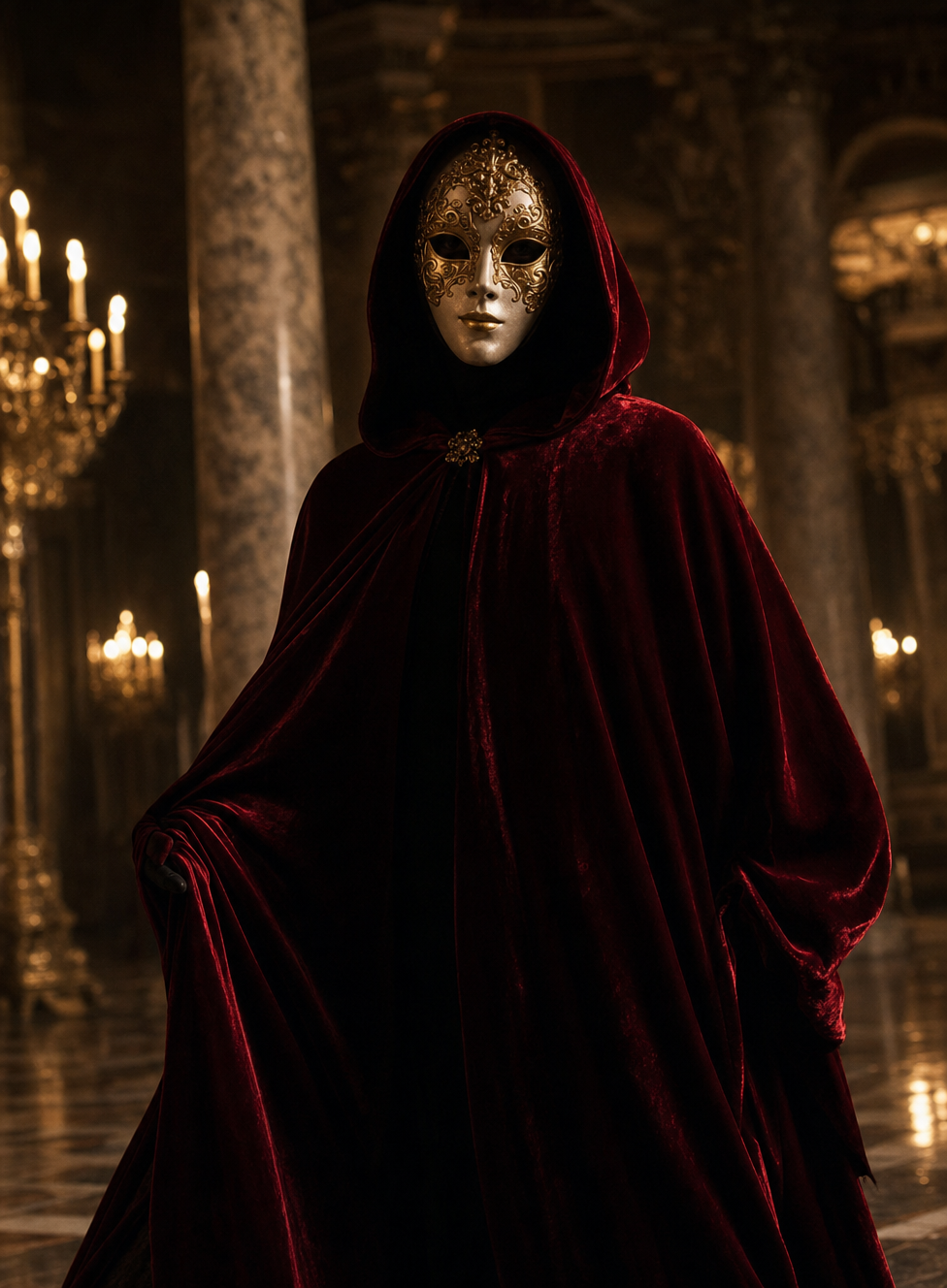
Crimson-Cloaked Specter in Candlelit Ballroom

Violet Holographic Hands Almost Touching