Why this works
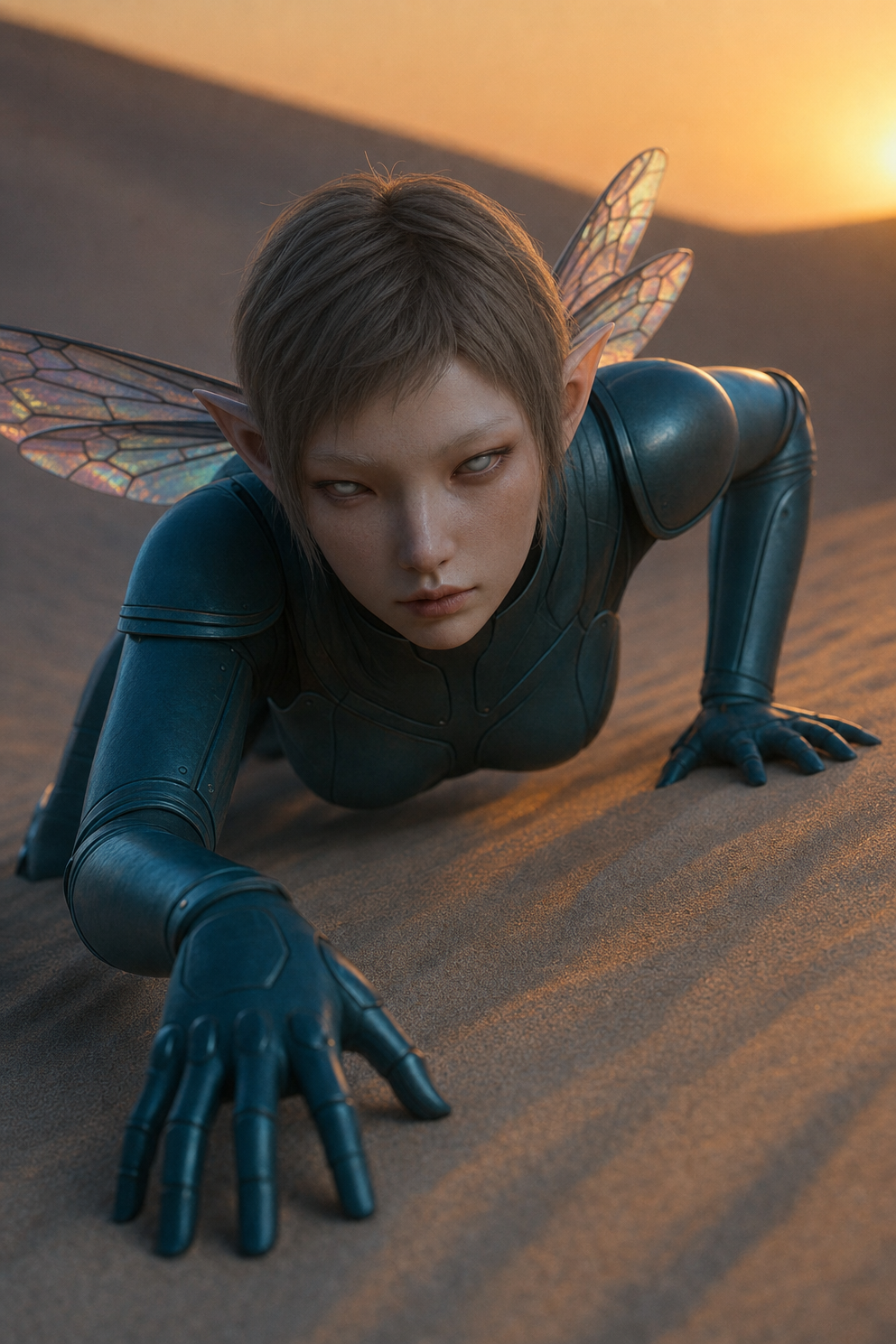
“Front-facing close-up” and “crawling low” put the pale alien fairy directly into the viewer’s space, while “sand texture sharply defined near the subject” anchors the candid-action composition in tactile foreground detail. The eerie elegance comes from the contrast between “pointed ears,” “translucent dragonfly-like wings,” and the “matte deep teal biomechanical suit,” reinforced by the explicit “eerie elegant facial expression.” “Warm dusk desert lighting with a cool fill from the side” balances the dominant tan and gray sand palette with cooler facial and costume accents, while “subtle rainbow iridescence” gives the wings a restrained spectral highlight rather than a fully colorful scene.
FAQ
→How do I make the fairy’s face and expression more prominent?
Replace “front-facing close-up” with “extreme facial close-up, eyes and expression dominating the frame,” and change “sand texture sharply defined near the subject” to “sand texture softly blurred at the bottom edge.” Keep “eerie elegant facial expression,” but add “direct eye contact and sharply resolved irises” to make the face the visual anchor.
→How do I shift this from eerie dreamlike fashion imagery to a darker, threatening tone?
Replace “eerie elegant facial expression” with “predatory, unsettling expression,” and change “warm dusk desert lighting with a cool fill from the side” to “low-key moonlit lighting with hard blue side light and deep facial shadows.” Swap “subtle rainbow iridescence” for “oil-slick black iridescence” and add “windswept sand and stark contrast” to reduce the elegant softness.
→How do I build a series of variations while keeping this character recognizable?
Keep the identity anchors “pale alien fairy,” “ash-brown pixie cut,” “pointed ears,” “matte deep teal biomechanical suit,” and “shorter articulated black forearm gauntlets” unchanged. Vary one setting phrase at a time, such as replacing “rippled desert sand” with “salt-flat crust at dawn,” “bioluminescent alien marsh,” or “black volcanic ash,” then adjust “warm dusk desert lighting” to “cold dawn light,” “green bioluminescent underlight,” or “red smoky backlight” to match.
Learn the technique behind this
- Why can't AI spell, and how do I get readable text in an image? — Older diffusion models had no character-level representation of text, so they produced letterform-shaped texture instead of words.
- How should a prompt be structured, and does word order matter? — A prompt that behaves predictably names one subject first, then what it is doing, then where, then the light, then the lens or medium, then the style.
- Which aspect ratio should I use, and how does it change the image? — Aspect ratio determines what the model composes, not how it's cropped afterwards.
Related prompts
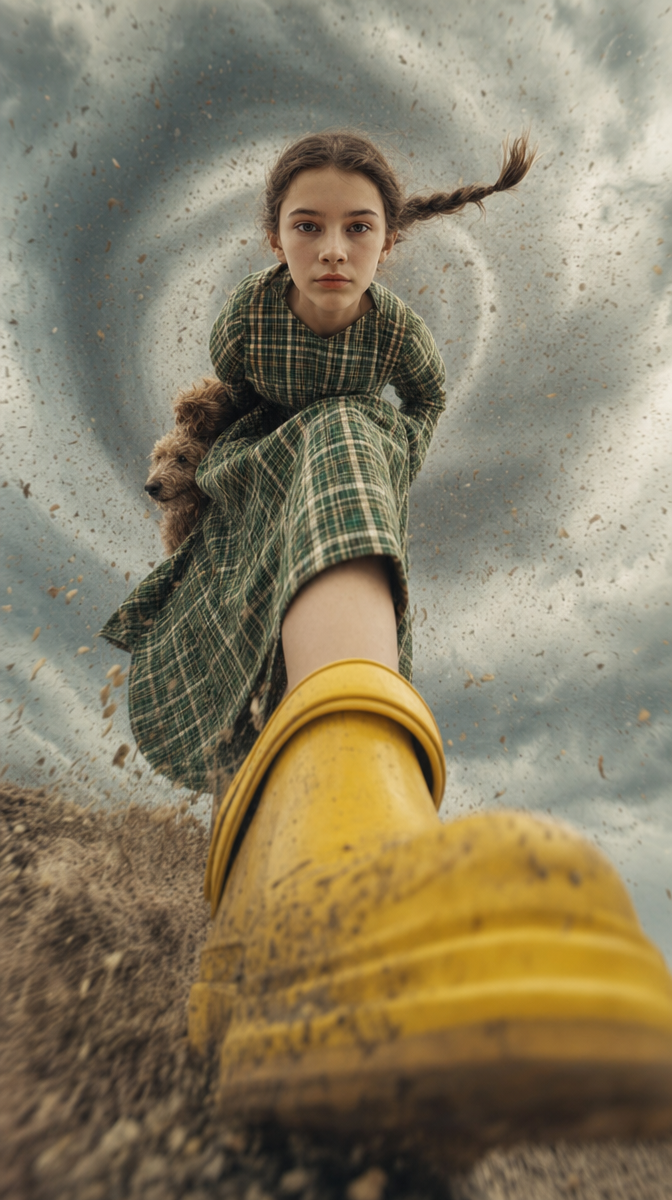
Young girl with dog in tornado
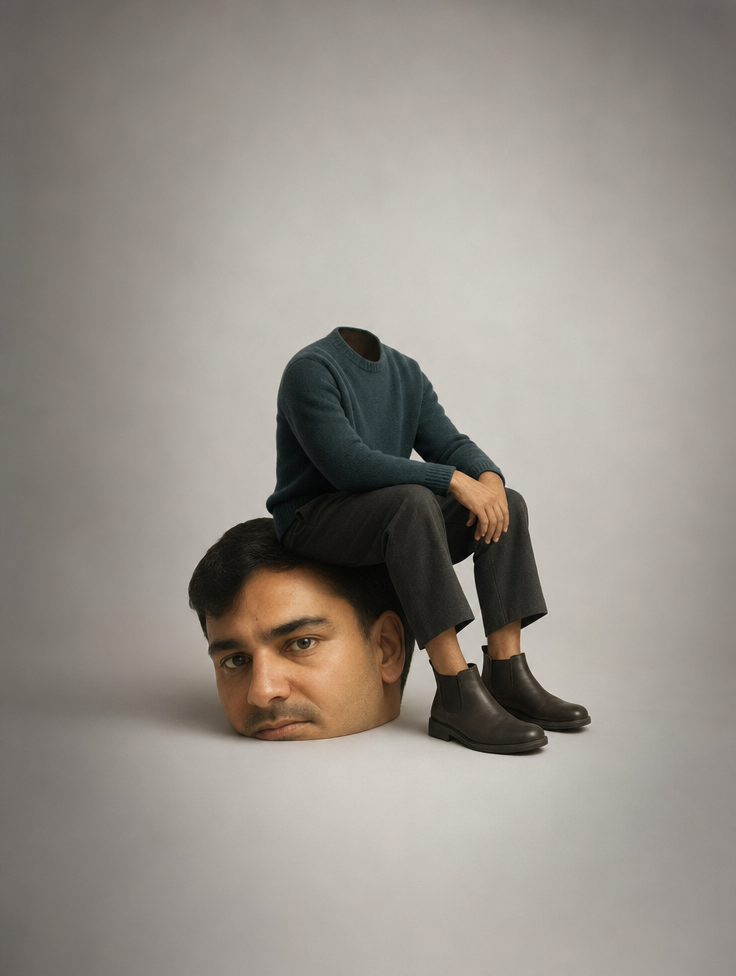
Headless sitter atop a giant head
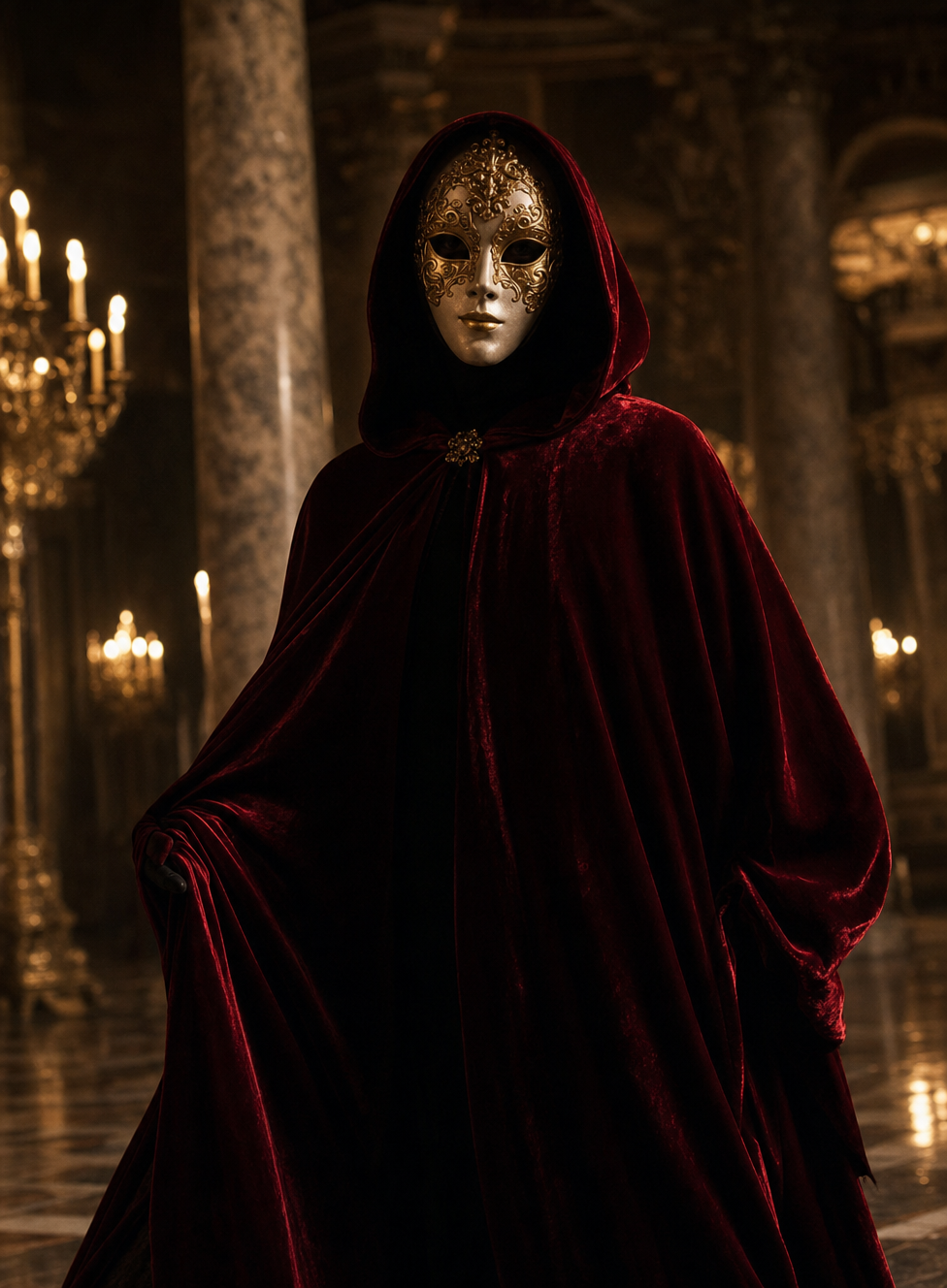
Crimson-Cloaked Specter in Candlelit Ballroom

Violet Holographic Hands Almost Touching