Why this works
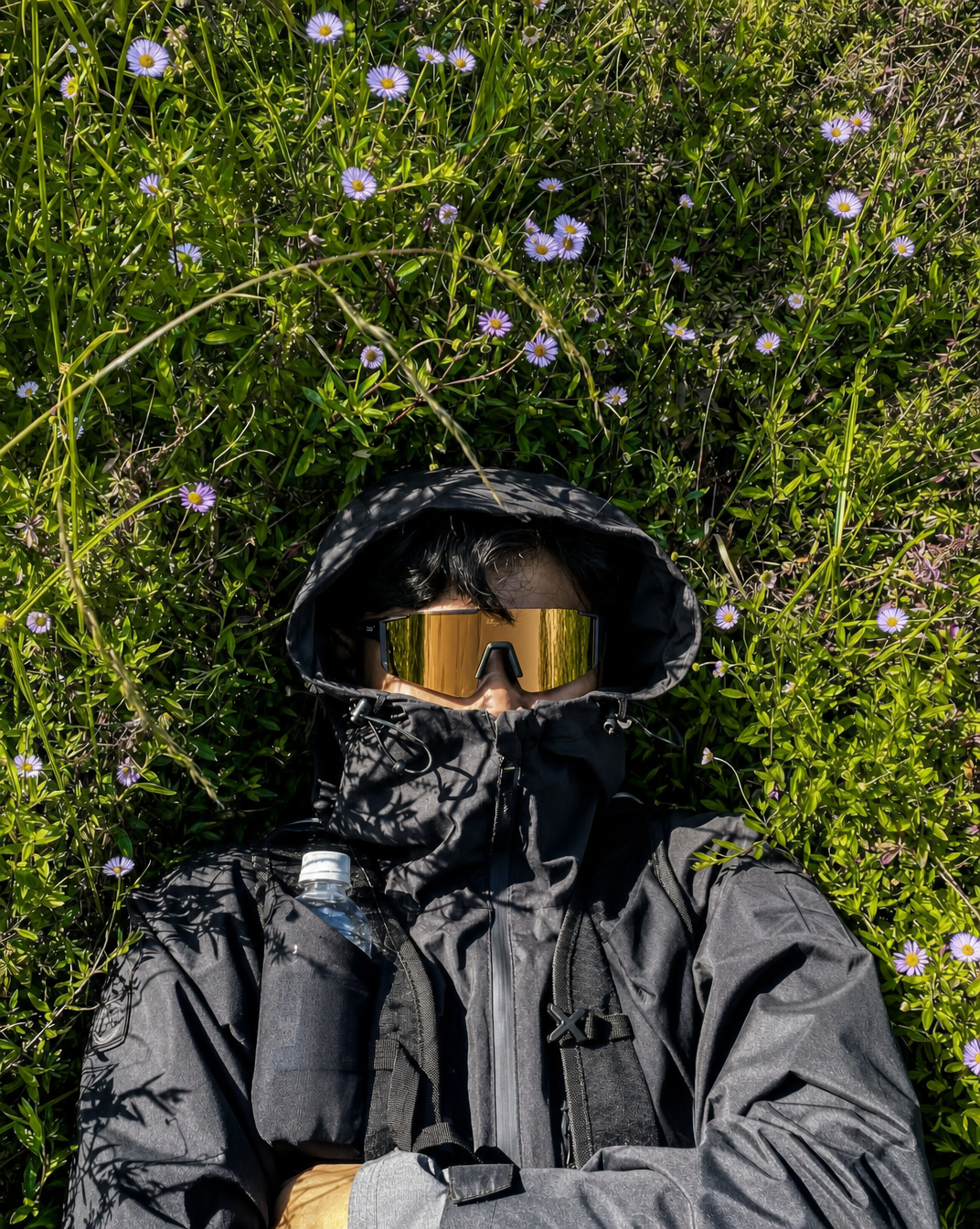
The centered overhead portrait view makes the reclining figure the compositional anchor, while the full-body framing lets the emerald grass and pale lavender wildflowers define the surrounding field. “Natural late-afternoon sunlight with warm highlights” softens the adventurous subject, and the charcoal jacket, hood, and mirrored copper-gold ski goggles create the strongest dark and metallic accents against the vivid green foliage. “Crisp high-detail texture on grass and foliage” supplies the tactile realism, while “face partially covered by the hood” keeps the mood calm and slightly anonymous.
FAQ
→How do I make the person more prominent than the grass?
Replace “centered composition” with “tight overhead three-quarter-body composition” and change “crisp high-detail texture on grass and foliage” to “sharpest detail on the person, softly blurred grass foreground and background.” Keep the goggles and hood, but add “figure fills most of the frame” to reduce the visual weight of the field.
→How do I turn the calm, late-afternoon portrait into a colder, more dramatic scene?
Replace “natural late-afternoon sunlight with warm highlights” with “cool overcast blue-hour light with deep directional shadows,” and change “vivid greenery” to “muted olive and blue-green foliage.” For a stronger tone shift, replace “adventurous, calm mood” with “solitary, windswept mood” while keeping the overhead view.
→How do I build a series of variations without losing this composition?
Keep “photorealistic overhead portrait,” “centered composition,” and “adult person lying on their back,” then swap the setting phrase “tall emerald-green grass scattered with small pale lavender wildflowers” for controlled alternatives such as “golden meadow grass with white daisies,” “snow-dusted alpine ground with sparse blue flowers,” or “rust-colored autumn leaves with small cream mushrooms.” Change the jacket and goggle colors alongside each setting, such as “rust-orange jacket with blue mirrored goggles,” to create distinct but consistently framed images.
Learn the technique behind this
- Why can't AI spell, and how do I get readable text in an image? — Older diffusion models had no character-level representation of text, so they produced letterform-shaped texture instead of words.
- Which aspect ratio should I use, and how does it change the image? — Aspect ratio determines what the model composes, not how it's cropped afterwards.
- Why does AI get hands and faces wrong, and how do I fix it? — Hands fail because they're small in frame, extremely variable in pose, and self-occluding — the model has less usable signal per pixel than for any other body part.
Related prompts
Woman in Teal Light, Shadowed Fashion Portrait
Eerie Elegance Among Marble Busts
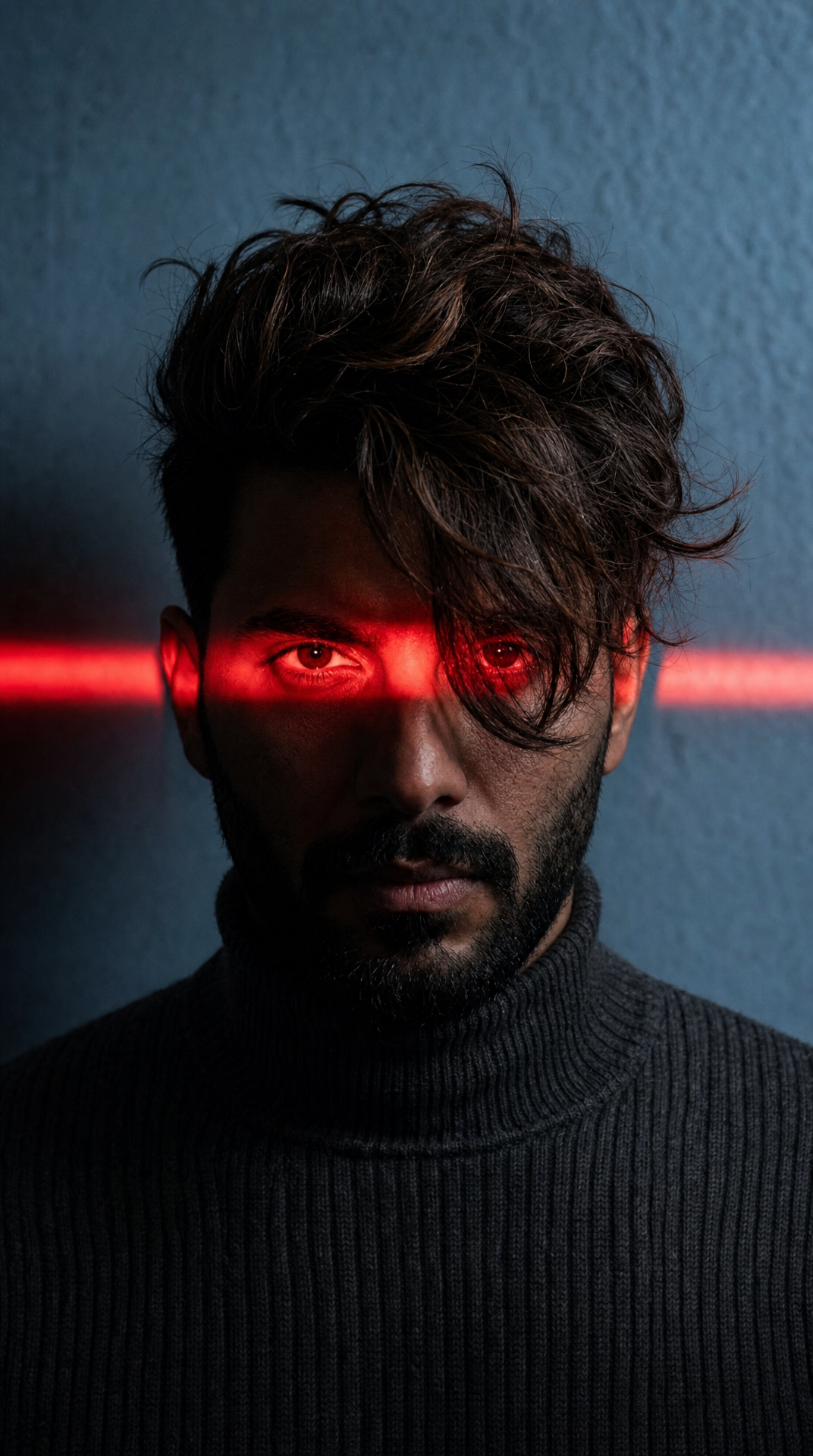
Charcoal turtleneck with red eye-beam
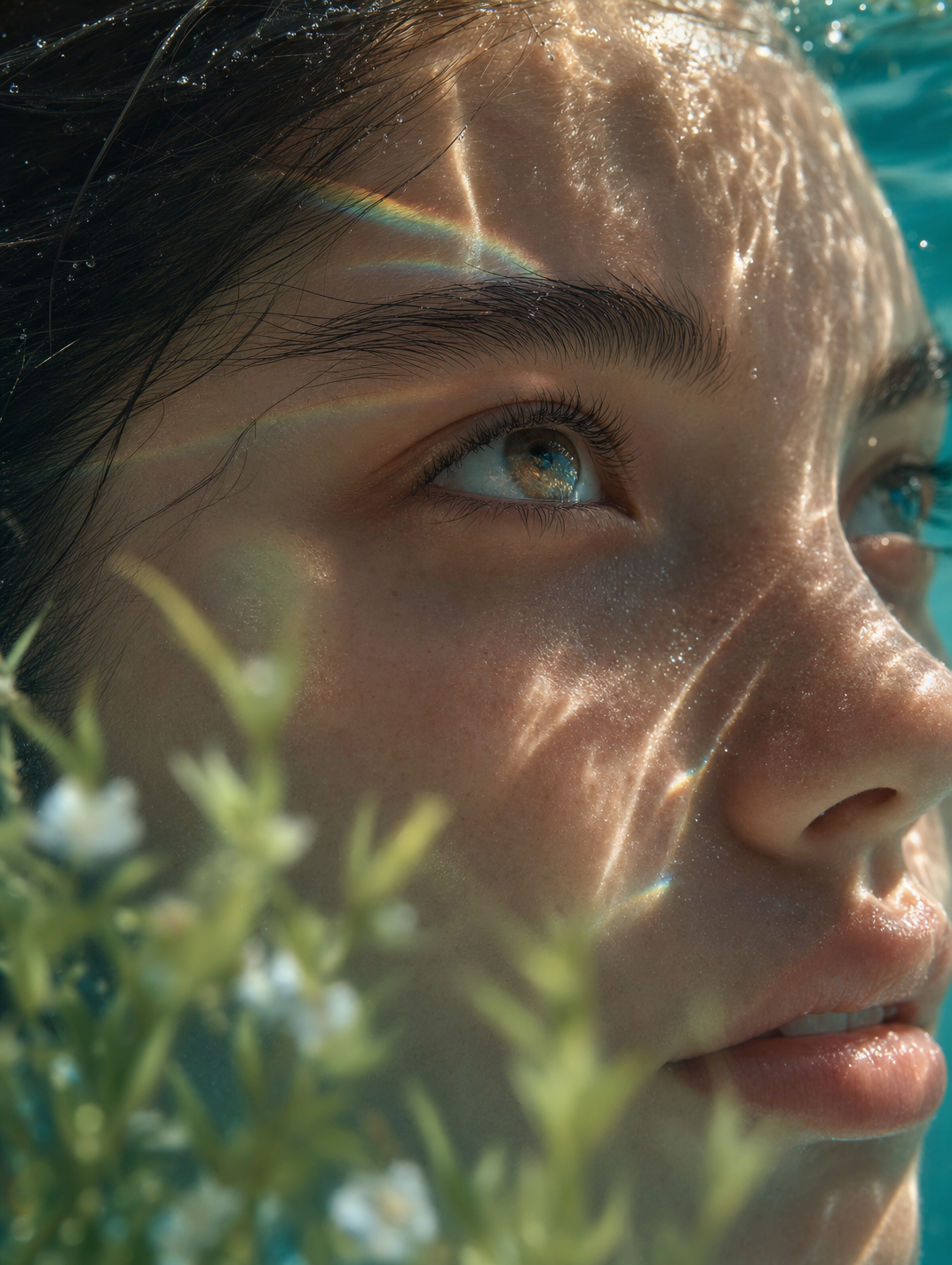
Dreamy Macro Portrait in Cool Water