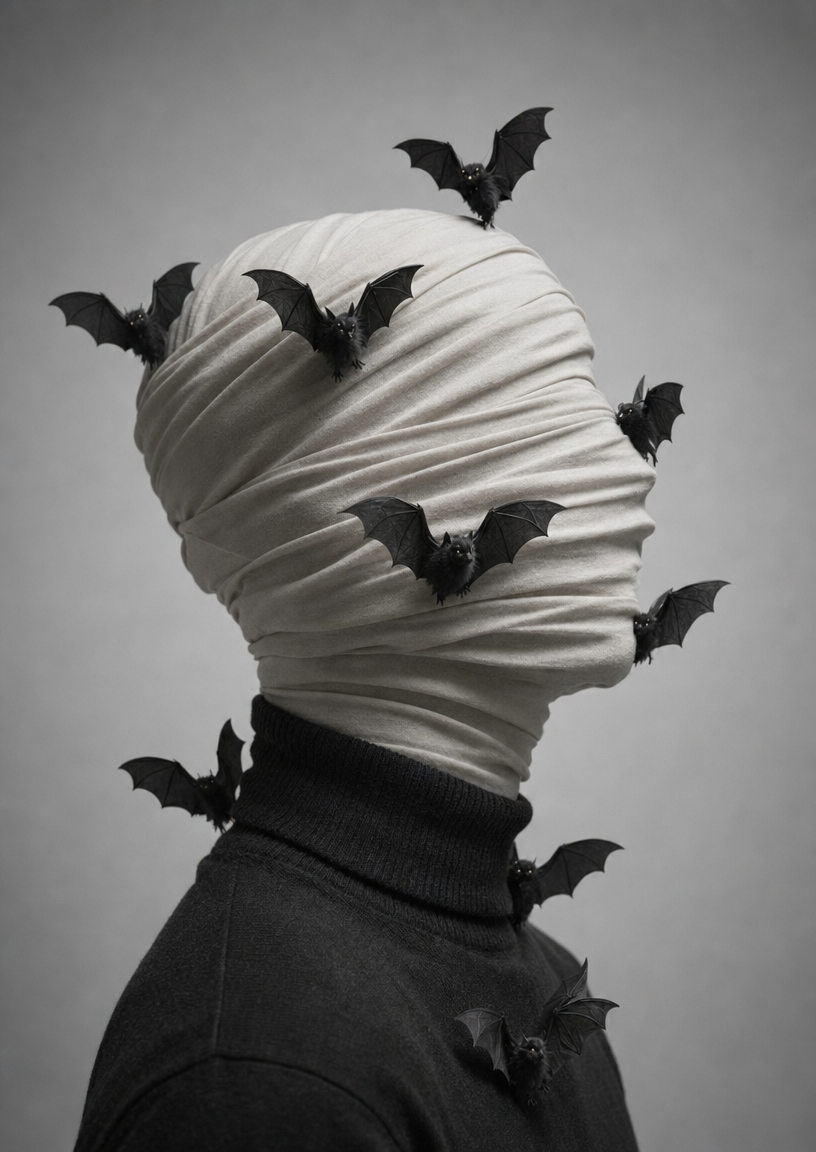
Why this works
The close portrait framing comes directly from “tight framing on head and neck” and “side-profile composition,” keeping the bats and barely visible facial outline legible against the black-dominant image. “Matte off-white fabric cocoon” against the “monochrome gray studio background” creates restrained tonal contrast, while “dramatic soft lighting with gentle rim light on the cocoon folds” separates the wrapped silhouette without revealing the face. The haunting mood is anchored by “face remains mostly hidden in shadow,” “small bats perched,” and “eerie atmosphere,” rather than by the monochrome palette alone.
FAQ
→How do I make the face more central and recognizable while keeping the cocoon concept?
Replace “the face remains mostly hidden in shadow, but a faint outline of the nose and jaw is barely visible” with “the face is clearly visible in side profile, with softly modeled cheekbone, eye, nose, and jaw details.” Change “dramatic soft lighting” to “soft frontal three-quarter lighting,” while retaining “gentle rim light on the cocoon folds” for separation.
→How do I make the image feel more threatening and less quietly mysterious?
Replace “small bats perched along the upper edge of the cocoon and near the cheek area” with “a dense cluster of bats gripping the cocoon and spreading their wings around the head.” Replace “gentle rim light” with “sharp, directional underlighting with deep hard-edged shadows,” and change “eerie atmosphere” to “menacing horror atmosphere.”
→How do I build a varied series from this prompt without losing its visual identity?
Keep “photorealistic surreal side-profile portrait,” “matte off-white fabric cocoon,” “monochrome gray studio background,” and “shallow depth of field” fixed. For each variation, replace only the bat phrase with subjects such as “moths tracing the cocoon folds,” “white ravens perched along the upper edge,” or “thin vine tendrils winding around the neck,” then vary “side-profile composition” to “front-facing close-up” or “three-quarter portrait.”
Learn the technique behind this
- Why can't AI spell, and how do I get readable text in an image? — Older diffusion models had no character-level representation of text, so they produced letterform-shaped texture instead of words.
- Why does AI get hands and faces wrong, and how do I fix it? — Hands fail because they're small in frame, extremely variable in pose, and self-occluding — the model has less usable signal per pixel than for any other body part.
- How do I keep the same character across multiple images? — Text prompts alone won't hold a face across images — a description defines a type, not a person.
Related prompts
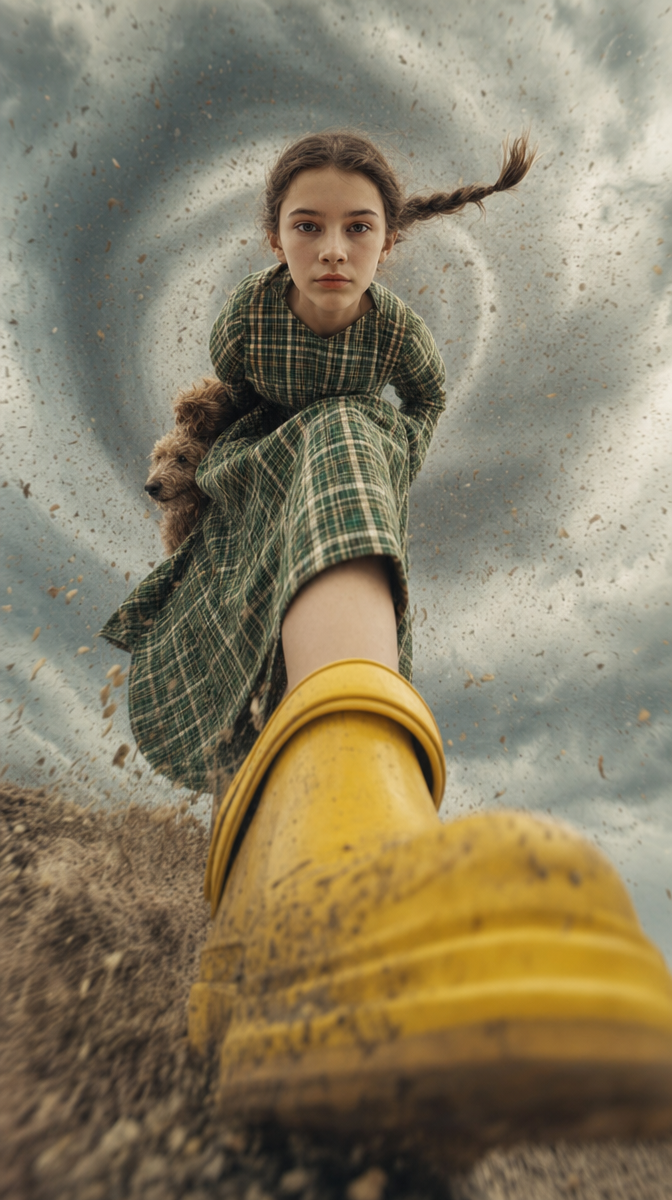
Young girl with dog in tornado
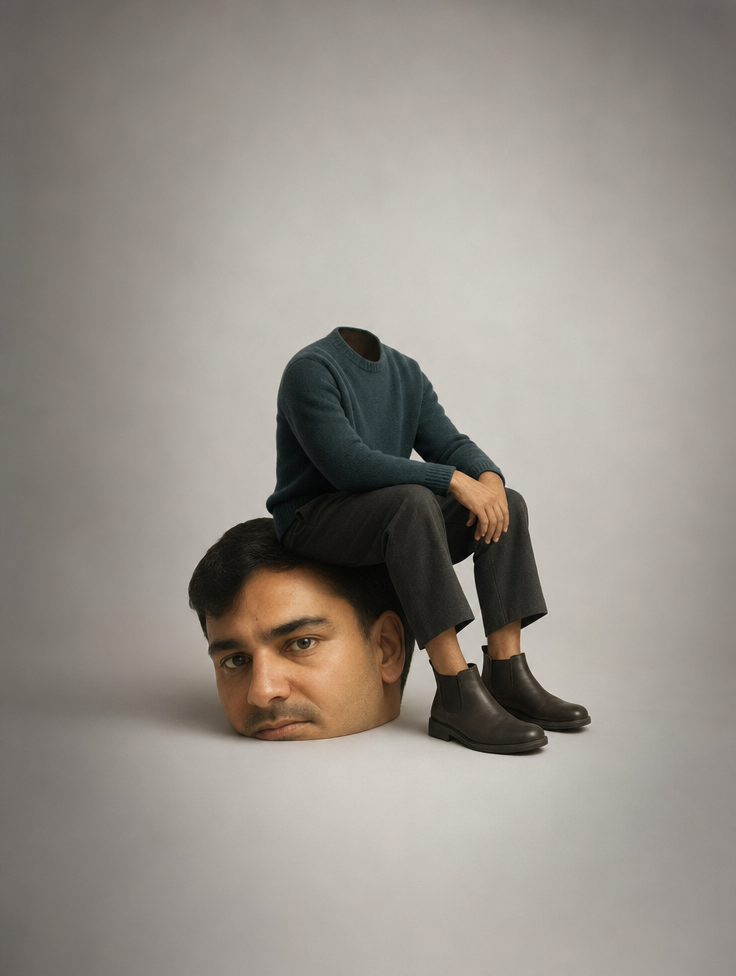
Headless sitter atop a giant head
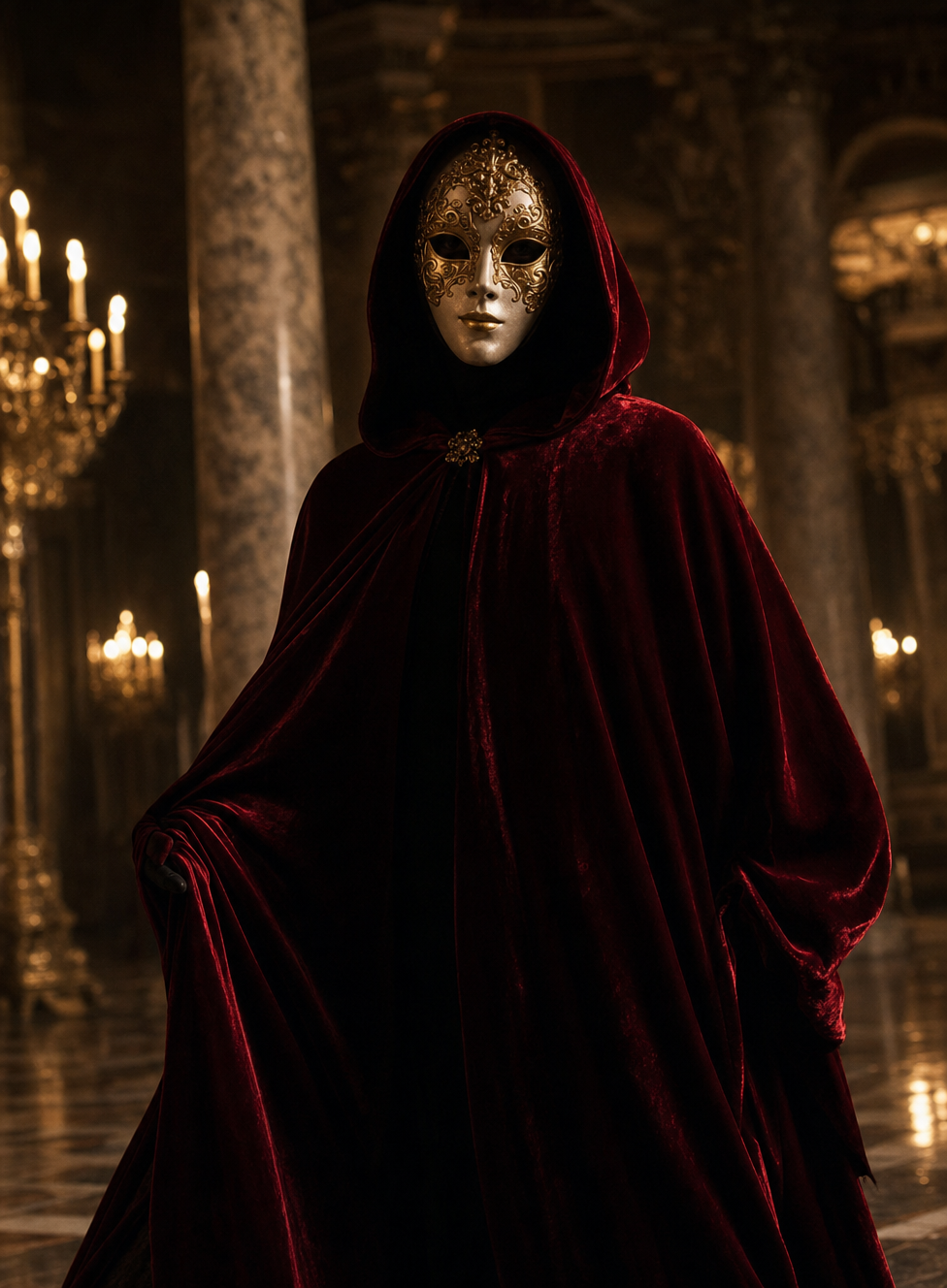
Crimson-Cloaked Specter in Candlelit Ballroom
Charcoal-suited man on teal plane