Why this works
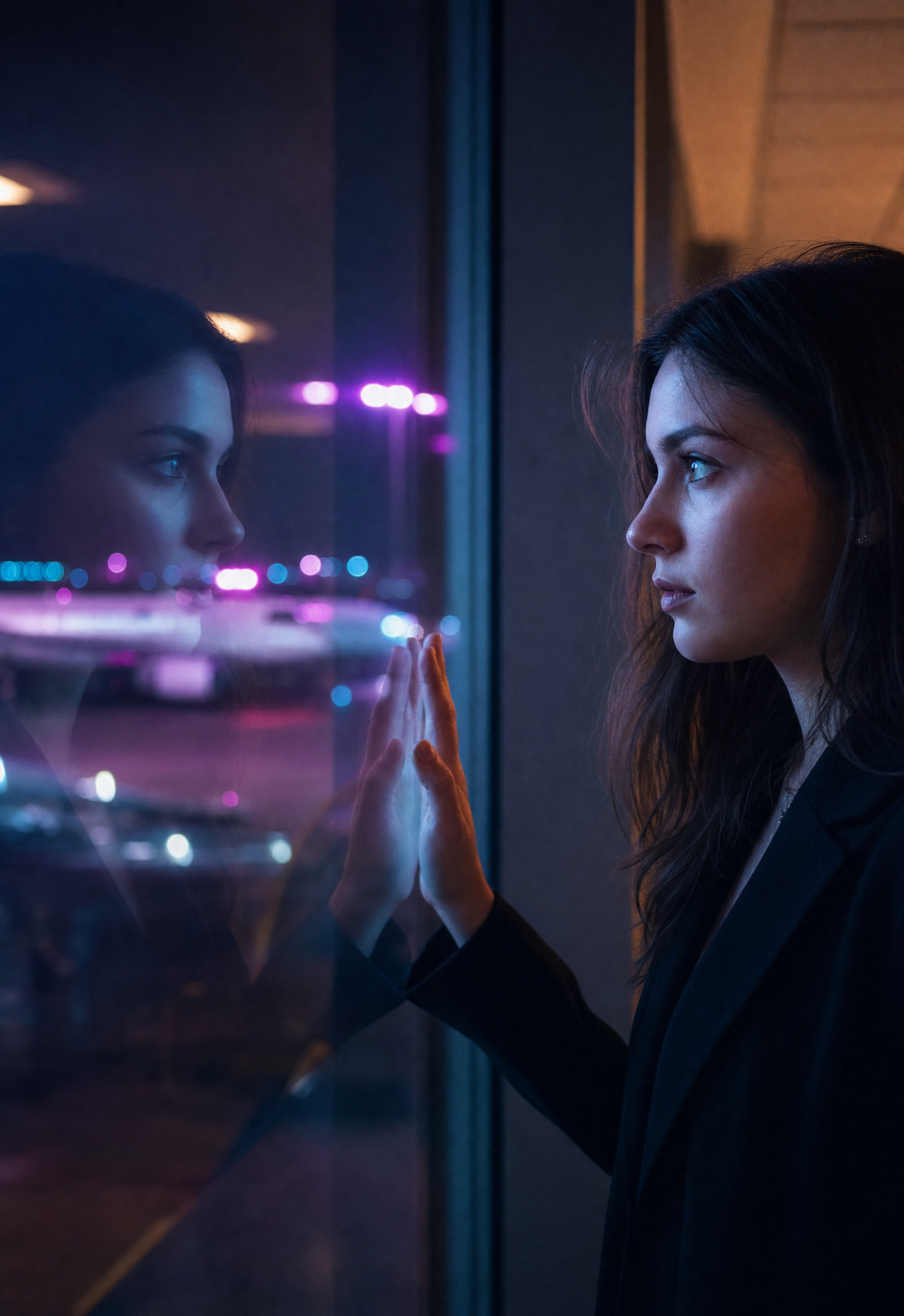
The close portrait framing is anchored by “face is shown in profile with a crisp reflection visible in the glass,” creating a doubled focal point rather than a generic window portrait. The mood comes from “dramatic low-key lighting” and “emotional and introspective atmosphere,” while the specific contrast between “deep navy city streets,” “violet-magenta and cooler cyan highlights,” and an “apricot-gold glow” separates the cool exterior from the warmer face. “Shallow depth of field with smooth bokeh” keeps the woman and reflection legible while reducing the night city to soft, graphic color fields.
FAQ
→How do I make the reflection more central and visually dominant?
Replace “a crisp reflection visible in the glass” with “the reflection occupies half the frame, equally sharp and aligned with her profile,” and change “portrait-closeup” to “symmetrical split-frame close-up.” Keep “one hand resting on the pane” so the glass remains an explicit compositional divider.
→How do I shift this from tense noir toward a warmer, hopeful mood?
Replace “dramatic low-key lighting” with “soft luminous evening lighting,” change “deep navy city streets” to “blue-hour streets with warm windows,” and expand “softer apricot-gold glow” to “a generous honey-gold interior glow across her face and shoulders.” Replace “emotional and introspective atmosphere” with “quietly hopeful atmosphere.”
→How do I build a series of variations without losing the identity of this image?
Keep the load-bearing phrases “young woman,” “tall glass window,” “profile,” “crisp reflection,” “cool cyan/violet-magenta city lights,” and “apricot-gold interior glow.” For each variation, swap only the setting phrase, such as “rain-streaked train window,” “rooftop greenhouse glass,” or “hotel skyscraper window,” and vary the pose from “one hand resting on the pane” to “forehead touching the pane” or “both hands framing the reflection.”
Learn the technique behind this
- Why does AI get hands and faces wrong, and how do I fix it? — Hands fail because they're small in frame, extremely variable in pose, and self-occluding — the model has less usable signal per pixel than for any other body part.
- Why can't AI spell, and how do I get readable text in an image? — Older diffusion models had no character-level representation of text, so they produced letterform-shaped texture instead of words.
- How do I keep the same character across multiple images? — Text prompts alone won't hold a face across images — a description defines a type, not a person.
Related prompts
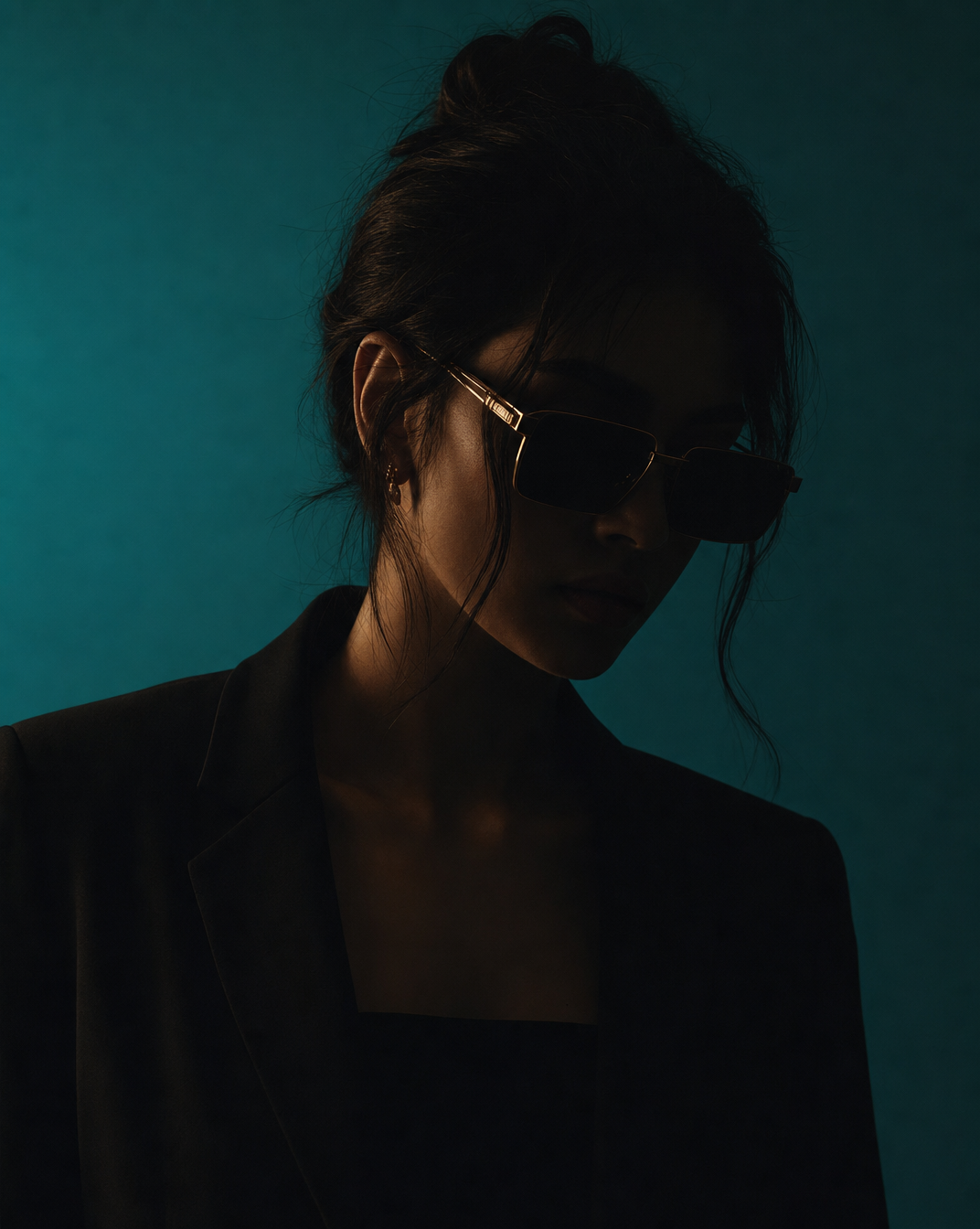
Woman in Teal Light, Shadowed Fashion Portrait
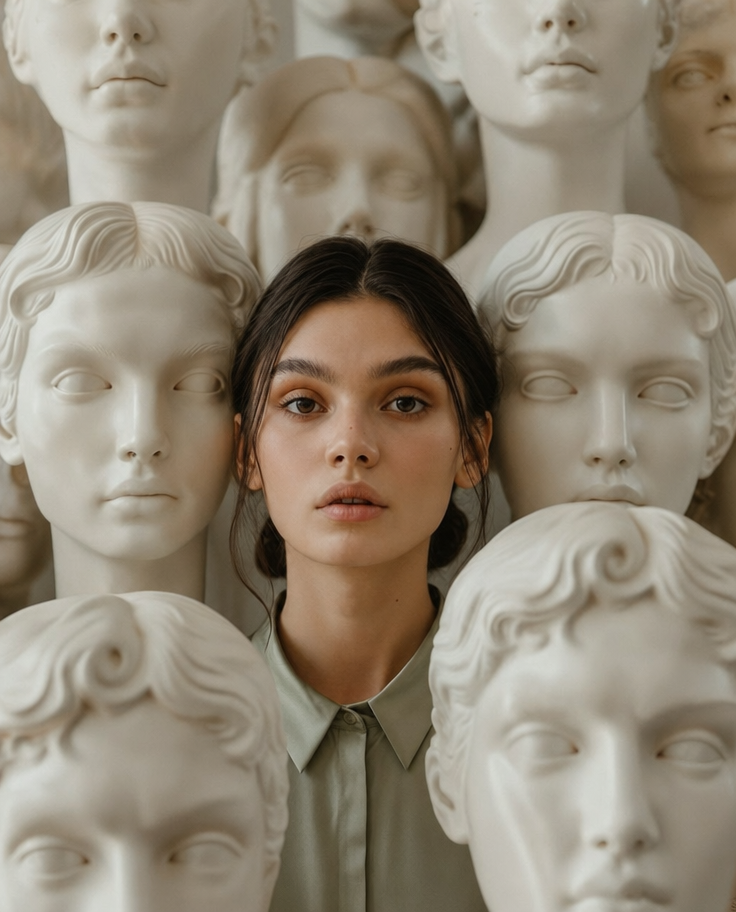
Eerie Elegance Among Marble Busts

Charcoal turtleneck with red eye-beam
Dreamy Macro Portrait in Cool Water