Why this works
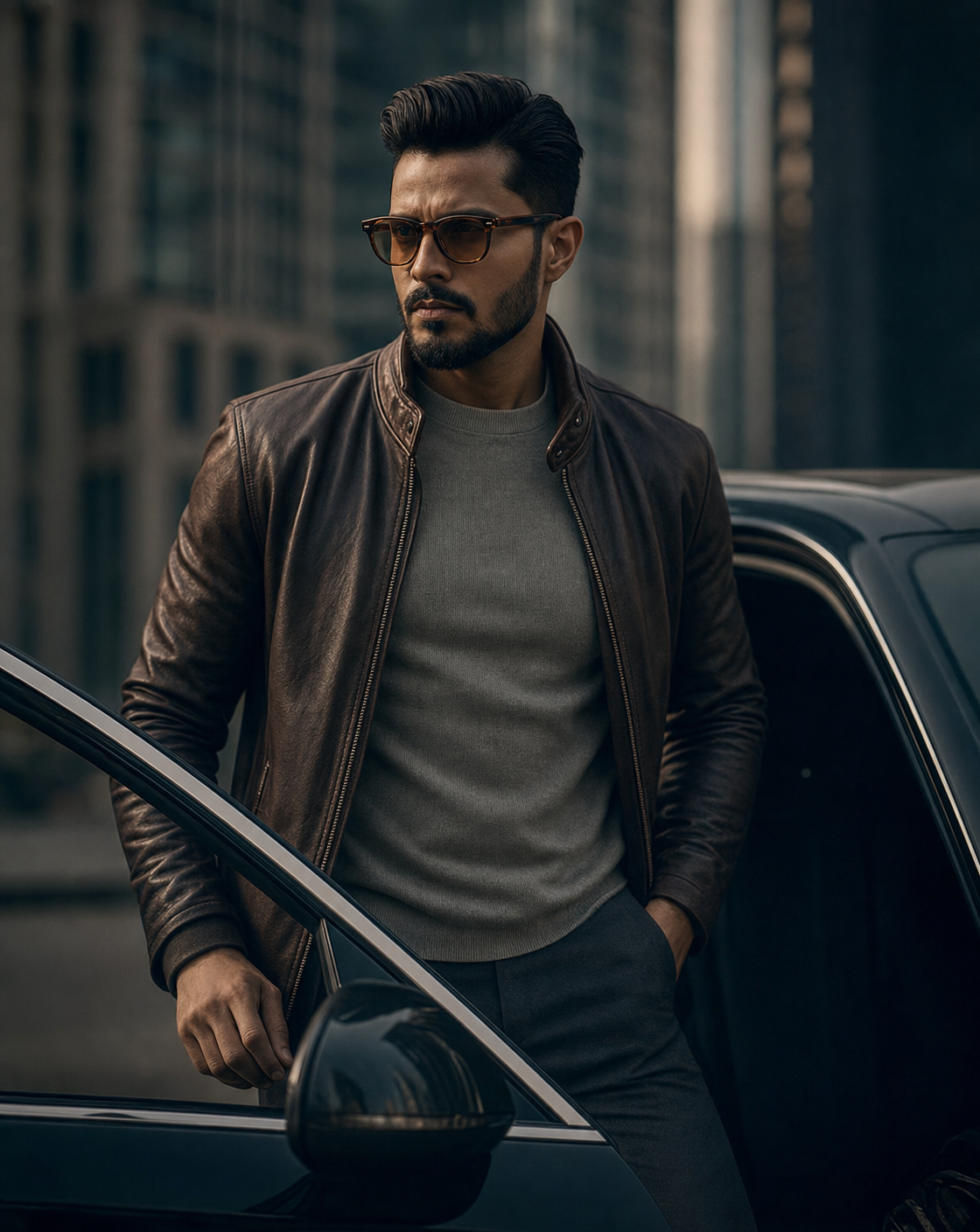
The phrase “portrait framing, near-street level perspective” gives the full-body figure a grounded, cinematic presence, while “pauses mid-step” supplies a clear moment of controlled motion. “Moody cinematic noir lighting with dramatic shadows across his face and jacket” creates the confident, guarded tone, and the “deep-brown leather jacket,” “light-gray crewneck sweater,” and “dark charcoal outfit” build a restrained gray-black palette with a warm brown focal accent. “Softly blurred buildings,” “shallow depth of field,” and “wet-street reflections” separate him from the city while preserving the luxury-night setting.
FAQ
→How do I make the man’s face and expression more prominent?
Replace “portrait framing, near-street level perspective” with “medium full-body portrait, slightly low-angle perspective with face prioritized,” and replace “shallow depth of field” with “focused eyes and sharply resolved facial features, moderate background blur.” Keep “dramatic shadows across his face” but change it to “controlled side-lighting that preserves both eyes and facial expression.”
→How do I shift this from moody noir toward a warmer, more inviting luxury mood?
Replace “moody cinematic noir lighting” and “dramatic shadows” with “warm golden practical lighting and soft cinematic fill,” and change “nighttime urban street” to “upscale city street at blue hour.” Replace the gray-black clothing emphasis with “deep-brown leather jacket, cream sweater, and subtle amber highlights,” while retaining “wet-street reflections” for polished atmosphere.
→How do I create a series of variations without losing the same visual identity?
Keep the fixed anchors “photorealistic cinematic noir portrait,” “luxury lifestyle street photography,” “near-street level perspective,” and “shallow depth of field.” Swap only the setting and action in controlled batches, such as replacing “stepping out of a luxury car” with “leaning against a vintage coupe,” then replacing “nighttime urban street” with “rainy hotel entrance” or “neon-lit downtown avenue.” Maintain “deep-brown leather jacket,” “amber-tinted eyeglasses,” and “wet-street reflections” across the set for consistent character and palette.
Learn the technique behind this
- Why can't AI spell, and how do I get readable text in an image? — Older diffusion models had no character-level representation of text, so they produced letterform-shaped texture instead of words.
- Why does AI get hands and faces wrong, and how do I fix it? — Hands fail because they're small in frame, extremely variable in pose, and self-occluding — the model has less usable signal per pixel than for any other body part.
- How should a prompt be structured, and does word order matter? — A prompt that behaves predictably names one subject first, then what it is doing, then where, then the light, then the lens or medium, then the style.
Related prompts
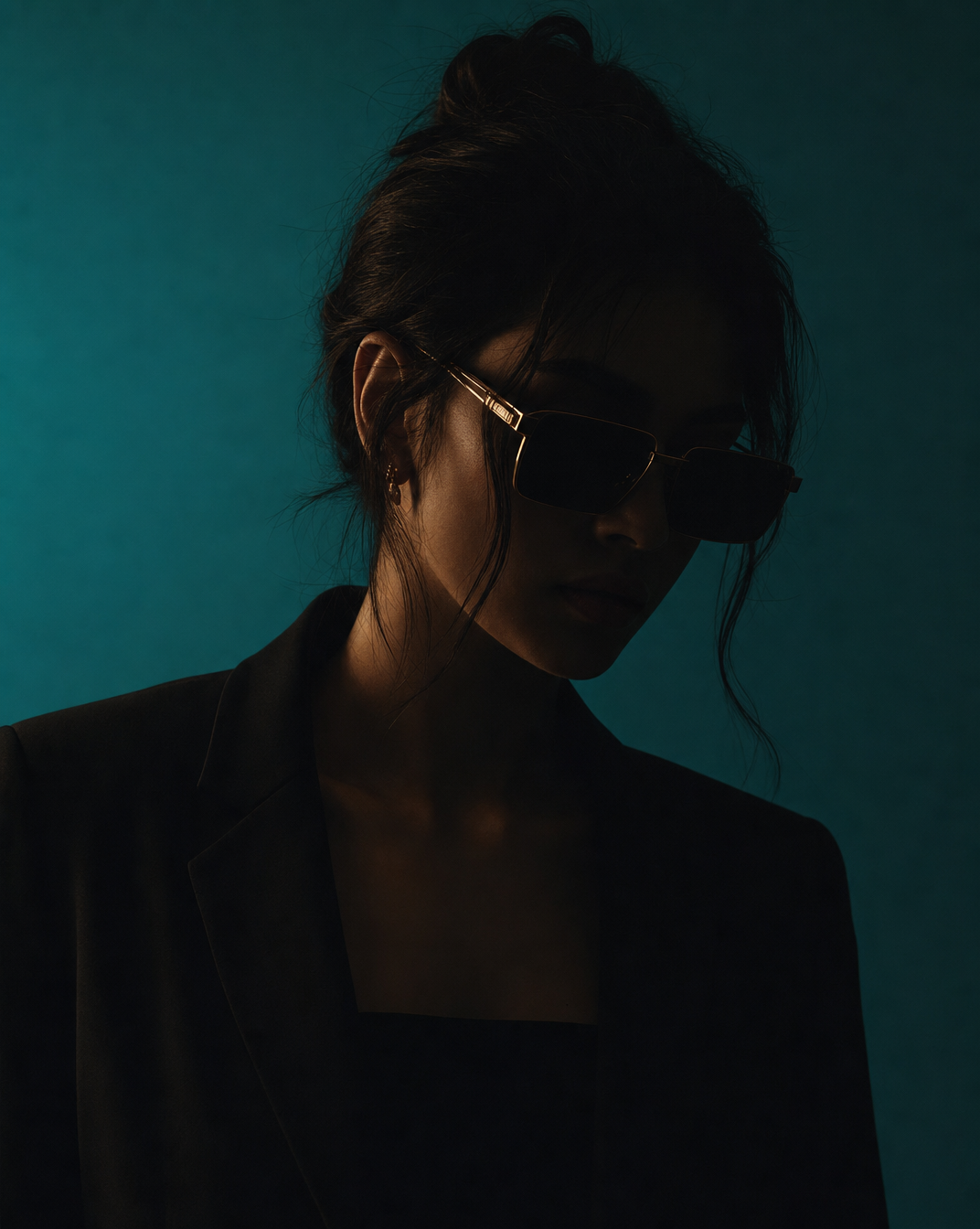
Woman in Teal Light, Shadowed Fashion Portrait
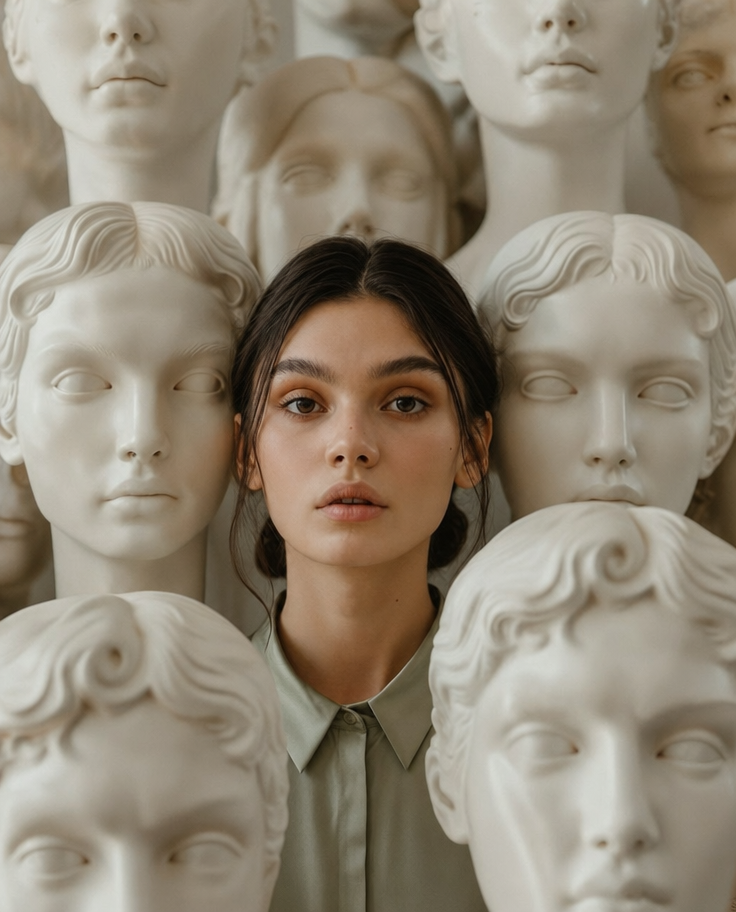
Eerie Elegance Among Marble Busts
Charcoal turtleneck with red eye-beam
Dreamy Macro Portrait in Cool Water