Why this works
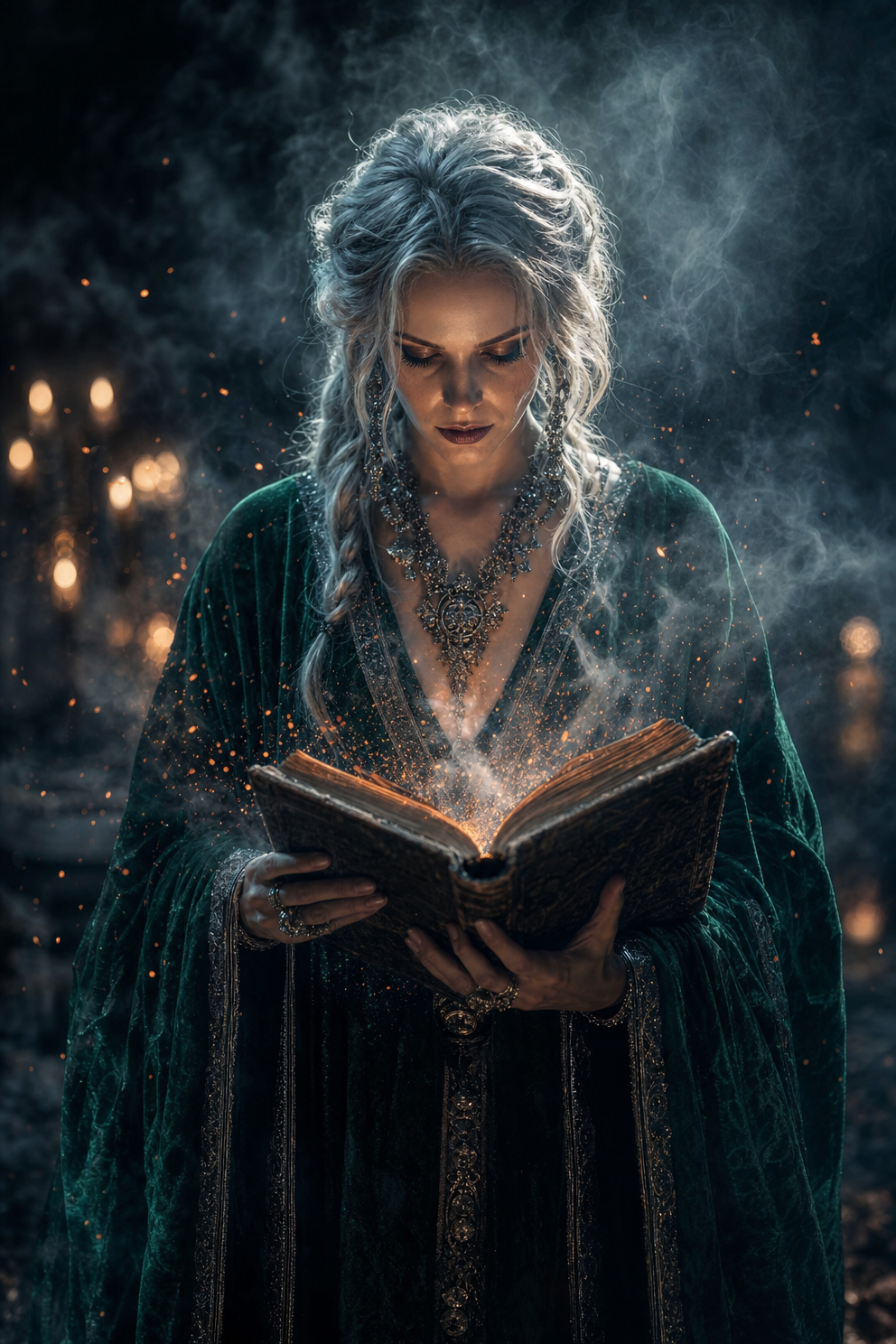
The phrase “cinematic medium shot” keeps the witch, grimoire, face, and hands as the visual hierarchy, while “expressive eyes suggest secret knowledge and hidden power” gives the portrait its strongest focal point. “Moonlight blended with warm candle glow” supplies the gray-black shadows and gold highlights visible in the image, and “deep emerald velvet robe with silver-toned trim” adds controlled color contrast without breaking the dark palette. “Dark, cavern-like background” plus “floating embers and wisps of smoke” creates depth around the centered figure, while “photorealistic dark fantasy portrait style” keeps the supernatural details tactile rather than illustrative.
FAQ
→How do I make the grimoire more central and visually prominent?
Replace “cinematic medium shot” with “medium close-up centered on the witch and open grimoire,” and replace “reading an ancient grimoire” with “holding the open ancient grimoire toward the viewer, its illuminated pages prominent in the foreground.” Add “sharp focus on the grimoire’s engraved pages and her hands” to shift attention from the eyes to the book.
→How do I change the calm mystery into a more threatening, supernatural mood?
Replace “calm but intense expression” with “cold, threatening expression with faintly glowing eyes,” and change “moonlight and warm candle glow” to “harsh blue moonlight with blood-red candlelight.” Replace “floating embers and wisps of smoke” with “black smoke, ash, and flickering occult sparks” to make the atmosphere more ominous.
→How do I build a matching series with different magical characters while keeping this visual identity?
Keep “cinematic medium shot,” “moonlight blended with warm candle glow,” “dark, cavern-like background,” “dramatic moody lighting,” and “photorealistic dark fantasy portrait style” unchanged. Replace “mysterious witch reading an ancient grimoire” with a role-and-prop pairing such as “masked alchemist examining a glass vial” or “pale necromancer holding a bone wand,” then swap “deep emerald velvet robe” for a distinct signature costume color while retaining “silver-toned trim” and “layered necklaces” as recurring series details.
Learn the technique behind this
- Why can't AI spell, and how do I get readable text in an image? — Older diffusion models had no character-level representation of text, so they produced letterform-shaped texture instead of words.
- Why does AI get hands and faces wrong, and how do I fix it? — Hands fail because they're small in frame, extremely variable in pose, and self-occluding — the model has less usable signal per pixel than for any other body part.
- How should a prompt be structured, and does word order matter? — A prompt that behaves predictably names one subject first, then what it is doing, then where, then the light, then the lens or medium, then the style.
Related prompts
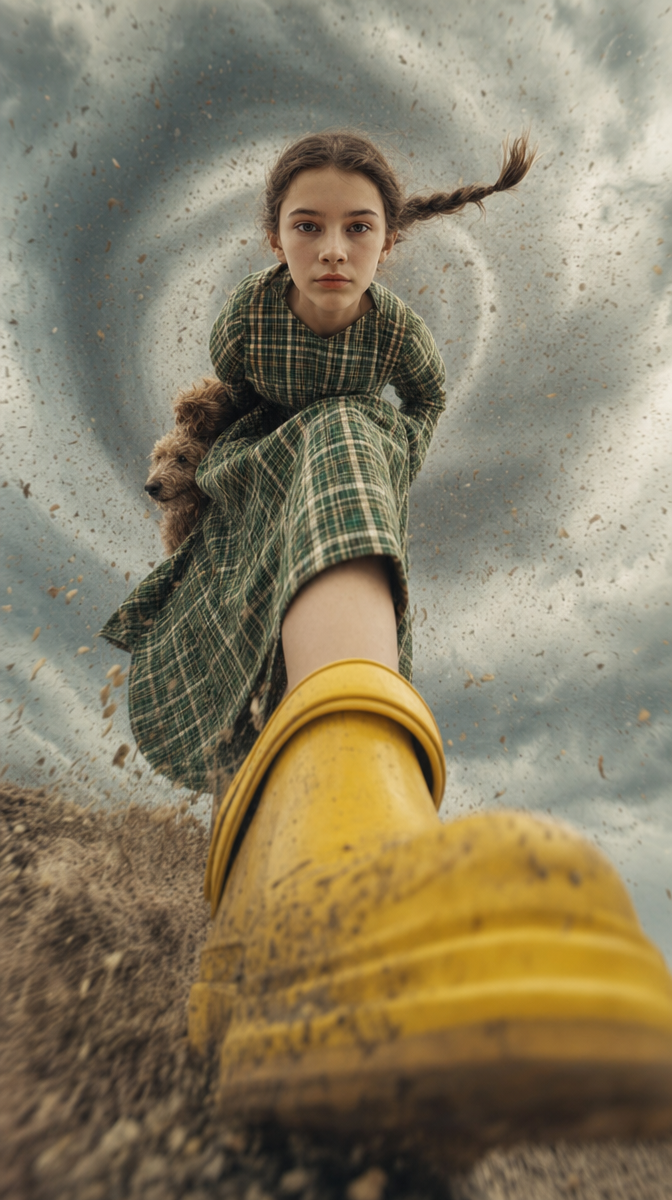
Young girl with dog in tornado
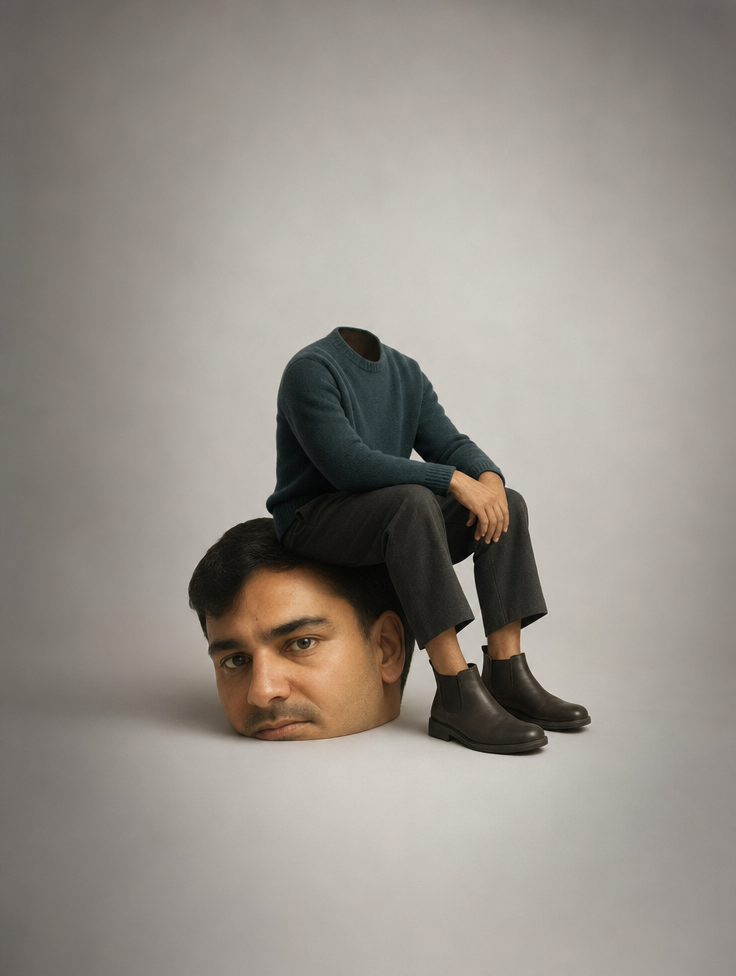
Headless sitter atop a giant head
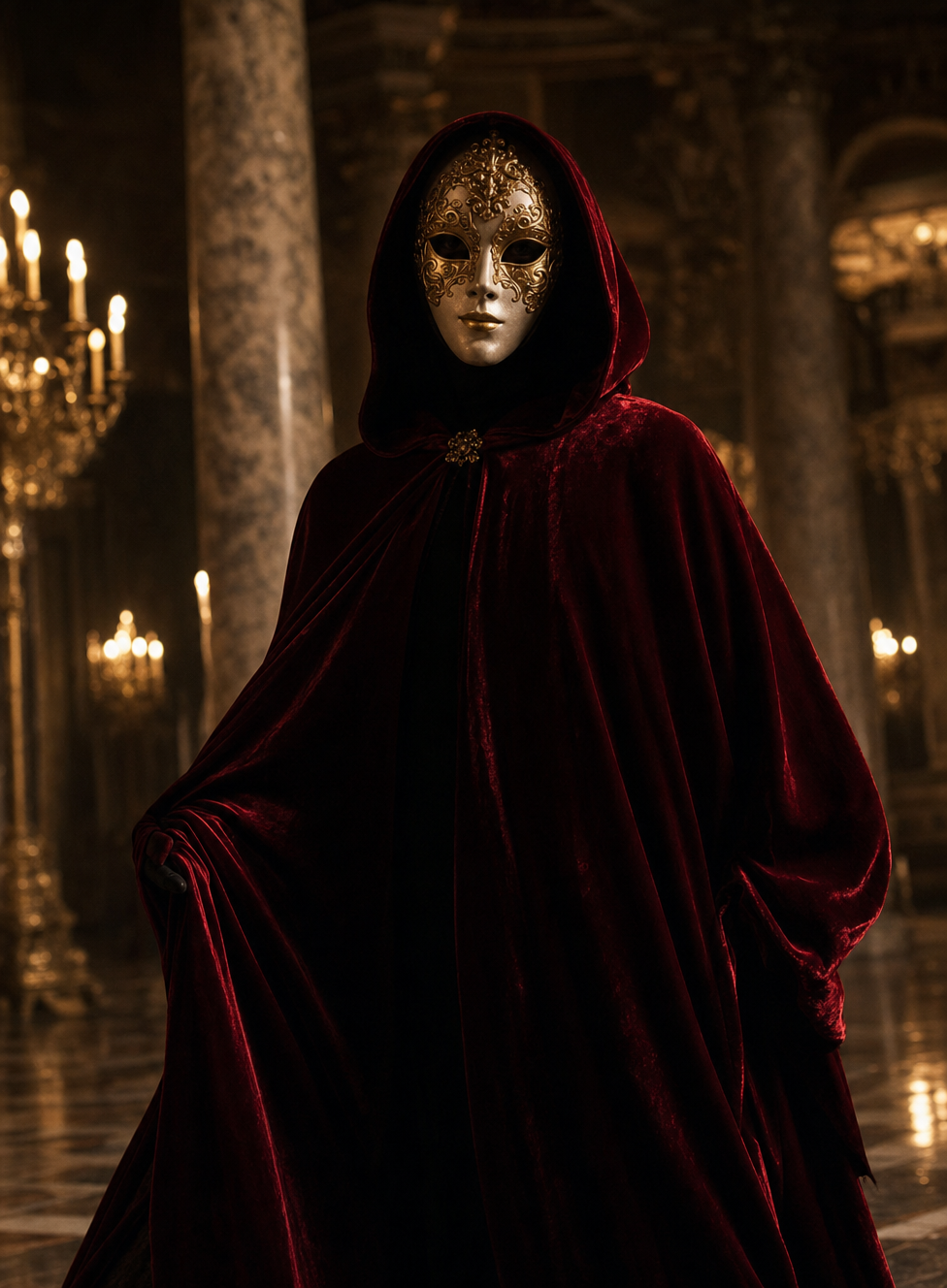
Crimson-Cloaked Specter in Candlelit Ballroom

Violet Holographic Hands Almost Touching