Why this works
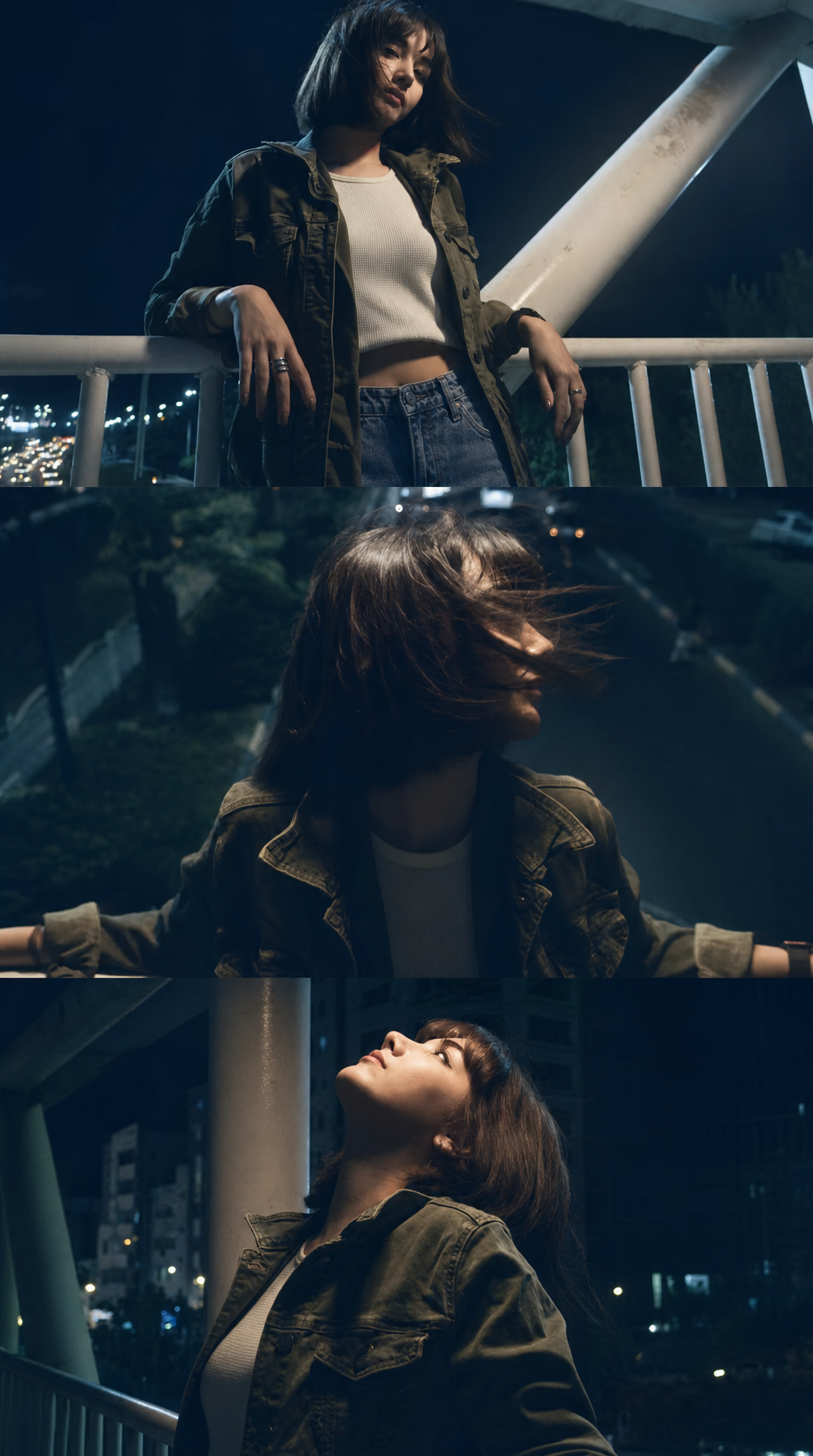
“Cool blue moonlight with faint street highlights” replaces the warmer streetlight mood with a restrained, nocturnal palette, while “dark urban background with distant city lights” preserves the nostalgic grit. The wide-shot framing gives the woman and bridge a clear sense of place, and “leaning on the railing with a calm, reflective posture” supplies the quiet emotional center. “Shallow depth of field” separates her from the background, while “35mm photography” and “realistic skin tones” keep the low-light portrait grounded rather than overly stylized.
FAQ
→How do I make the woman more prominent than the bridge and city background?
Replace “wide-shot” with “medium close-up portrait” or “waist-up framing,” and change “dark urban background with distant city lights” to “softly blurred bridge lights behind her.” Keep “shallow depth of field” to maintain separation, and add “face and upper body dominant in frame.”
→How do I shift this from reflective and nostalgic to tense and cinematic?
Replace “calm, reflective posture” with “tense posture, gripping the railing and looking over her shoulder,” and change “moody nostalgic gritty film aesthetic” to “high-contrast noir film aesthetic.” Replace “faint street highlights” with “harsh intermittent streetlight cutting across her face” for sharper visual tension.
→How do I build a consistent series of variations from this portrait?
Keep the fixed phrases “35mm photography,” “realistic skin tones,” “cool blue moonlight,” and “moody nostalgic gritty film aesthetic,” then swap only the location and pose. For example, replace “nighttime urban bridge” with “rainy riverside walkway” and “leaning on the railing” with “standing beneath an overpass,” while retaining “dark background with distant city lights” to preserve the series’ visual language.
Learn the technique behind this
- Why can't AI spell, and how do I get readable text in an image? — Older diffusion models had no character-level representation of text, so they produced letterform-shaped texture instead of words.
- How do I keep the same character across multiple images? — Text prompts alone won't hold a face across images — a description defines a type, not a person.
- How should a prompt be structured, and does word order matter? — A prompt that behaves predictably names one subject first, then what it is doing, then where, then the light, then the lens or medium, then the style.
Related prompts
Woman in Teal Light, Shadowed Fashion Portrait
Eerie Elegance Among Marble Busts
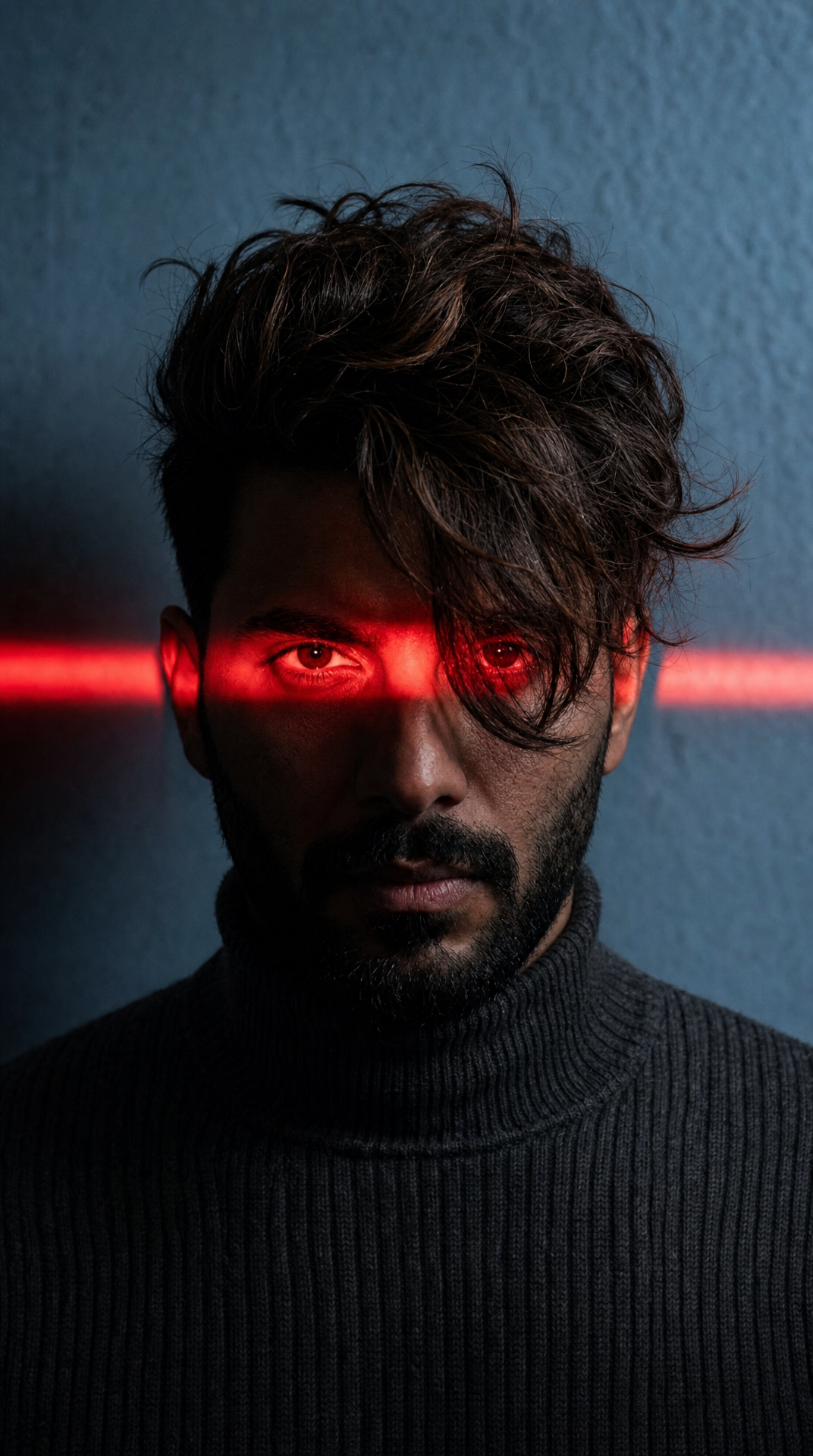
Charcoal turtleneck with red eye-beam
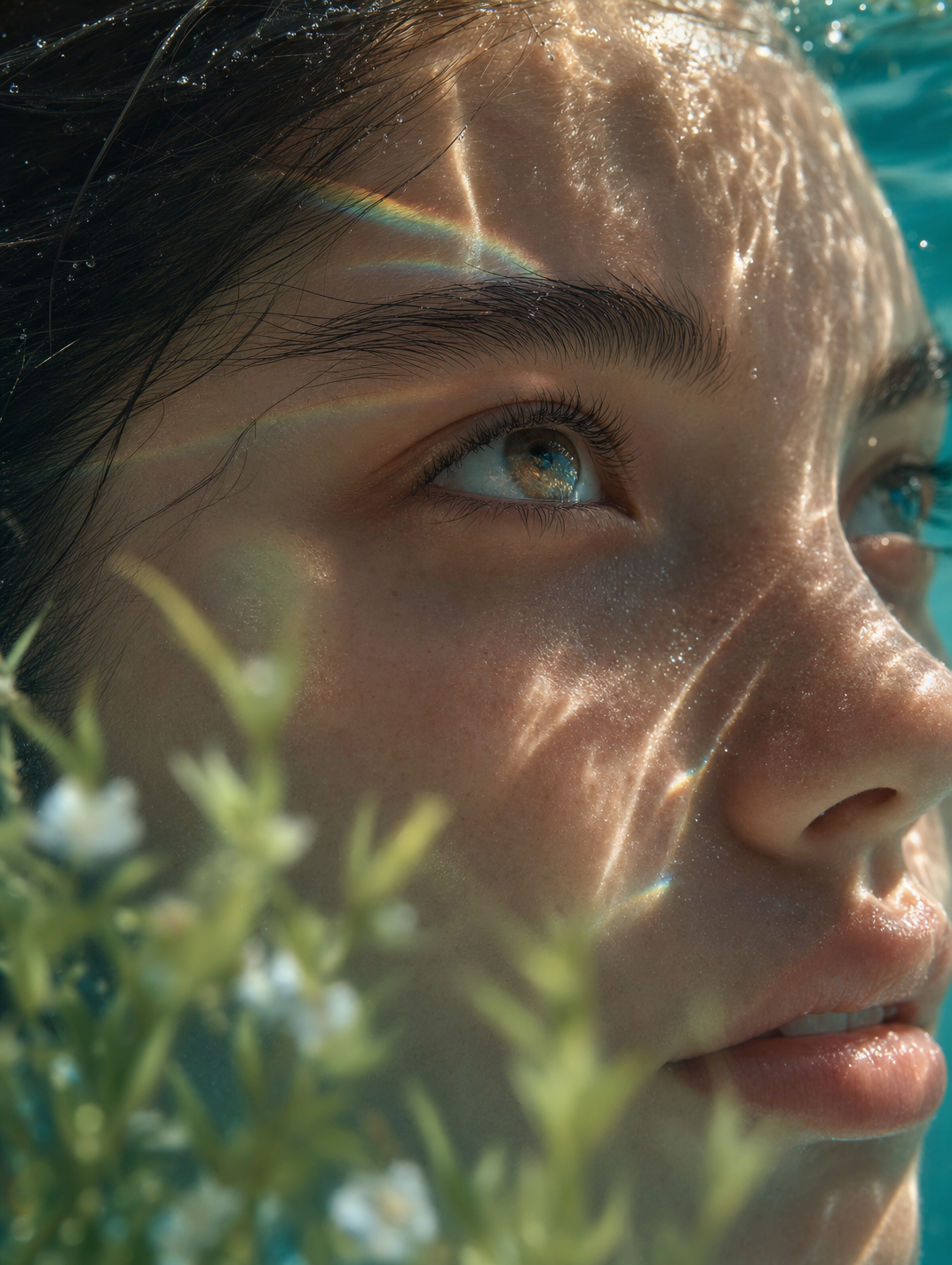
Dreamy Macro Portrait in Cool Water