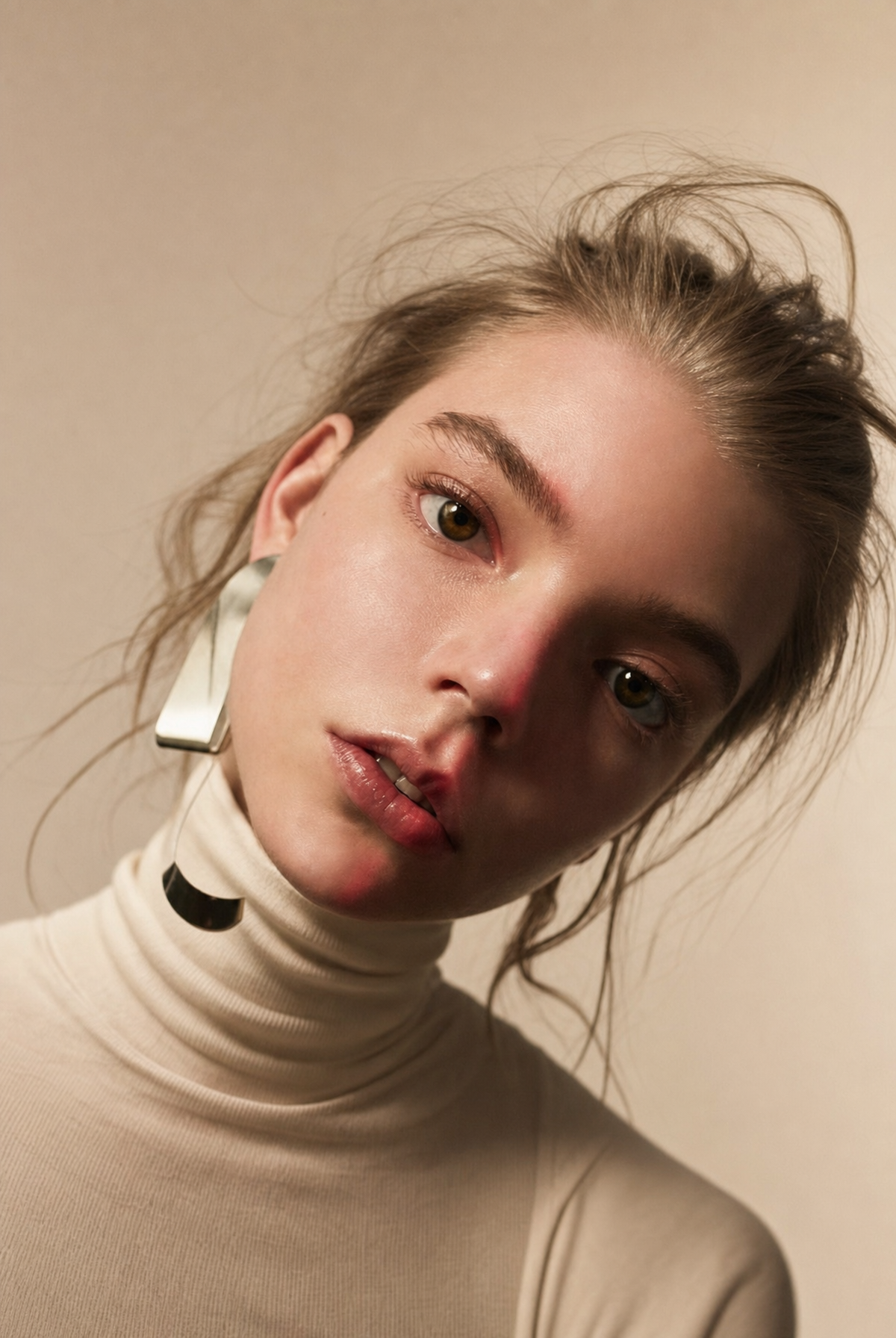
Why this works
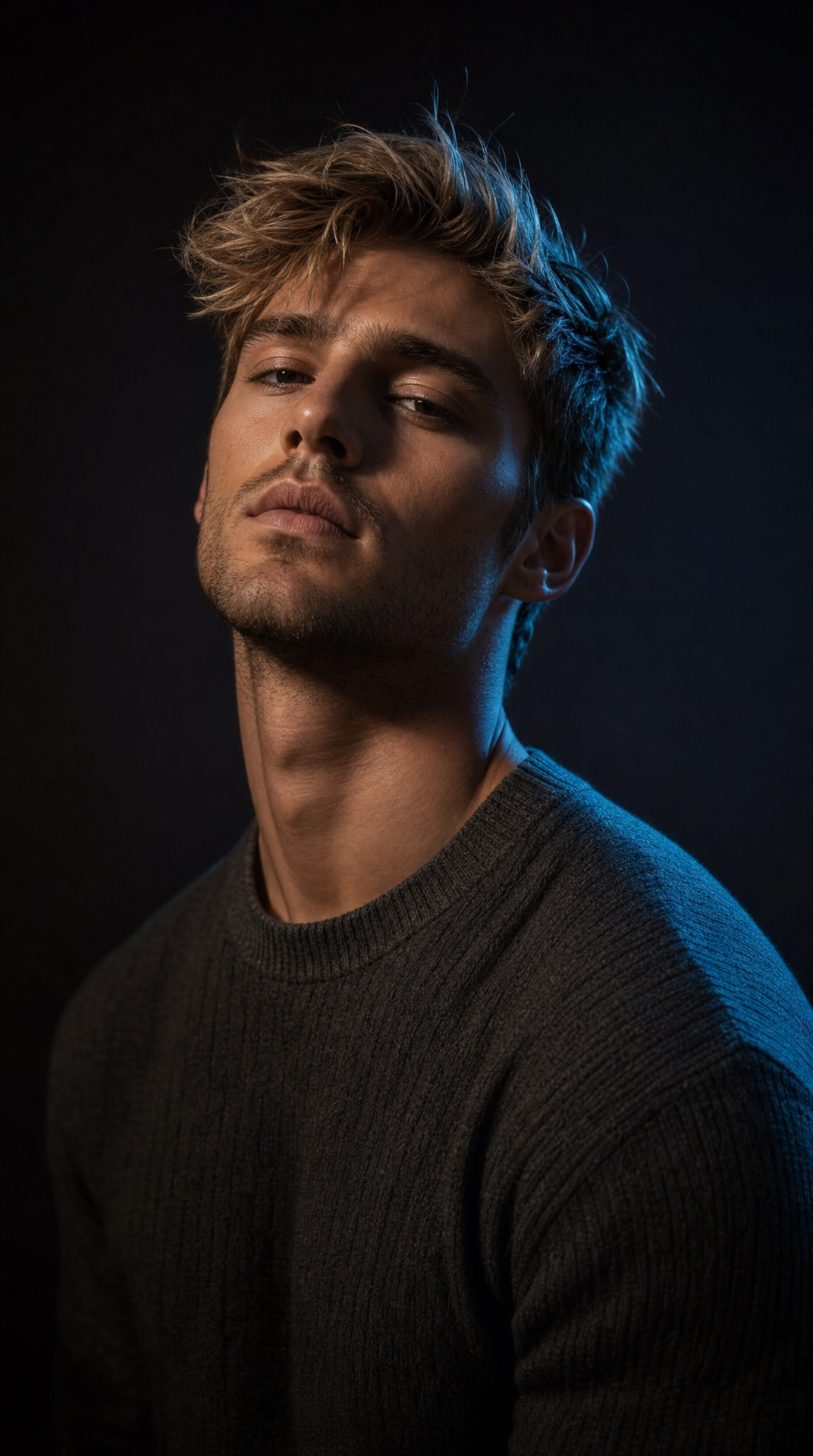
The phrase 'dramatic low-key lighting with cool blue rim light accentuating his jawline and shoulder' is doing the heavy lifting here, that's what produces the blue-gray color split and carves the face out of the dark instead of just lighting it flatly. 'Deep charcoal gradient background' matches the low-key call so the subject doesn't get lost against a competing tone, and 'shallow depth of field' plus 'close-up' is what keeps the sweater and background soft while the winged liner and jaw stay sharp. 'Composed introspective expression' is the phrase steering the mood away from generic moodiness into something specifically sultry and self-contained rather than sad or aggressive.
FAQ
→How do I make the lighting warmer instead of this cool blue tone?
Swap 'cool blue rim light' for something like 'warm amber rim light' and change 'deep charcoal gradient background' to 'deep espresso brown gradient background'. Keep 'dramatic low-key lighting' as is since that's what preserves the chiaroscuro structure, you're just changing the color of the rim light, not the contrast style.
→How do I shift this from a fashion portrait to a more raw, documentary feel?
Drop 'high-end fashion photography style' and 'cinematic mood' entirely, and replace 'composed introspective expression' with something like 'unguarded, caught mid-thought expression'. You'll also want to loosen 'shallow depth of field' to 'moderate depth of field' so the frame reads less polished and posed.
→How do I build a series of variations from this same prompt?
Keep the lighting and camera phrases locked ('dramatic low-key lighting with cool blue rim light', 'close-up perspective with shallow depth of field') since those define the visual signature, then just cycle the subject details: change 'short, textured sandy blonde hair' to different hair colors/textures, swap 'charcoal grey crew-neck wool sweater' for other garments like a 'black leather jacket' or 'white collared shirt', and vary 'subtle matte taupe lip tint' to different makeup tones. That keeps the mood and framing consistent across the set while giving each image a distinct subject.
Learn the technique behind this
- How should a prompt be structured, and does word order matter? — A prompt that behaves predictably names one subject first, then what it is doing, then where, then the light, then the lens or medium, then the style.
- Why can't AI spell, and how do I get readable text in an image? — Older diffusion models had no character-level representation of text, so they produced letterform-shaped texture instead of words.
- Why does the model ignore parts of my prompt? — Ignored instructions are almost always conflicts, counts, or spatial relationships — three things current models handle badly — rather than the model failing to read you.
Related prompts
Woman in Teal Light, Shadowed Fashion Portrait
Eerie Elegance Among Marble Busts
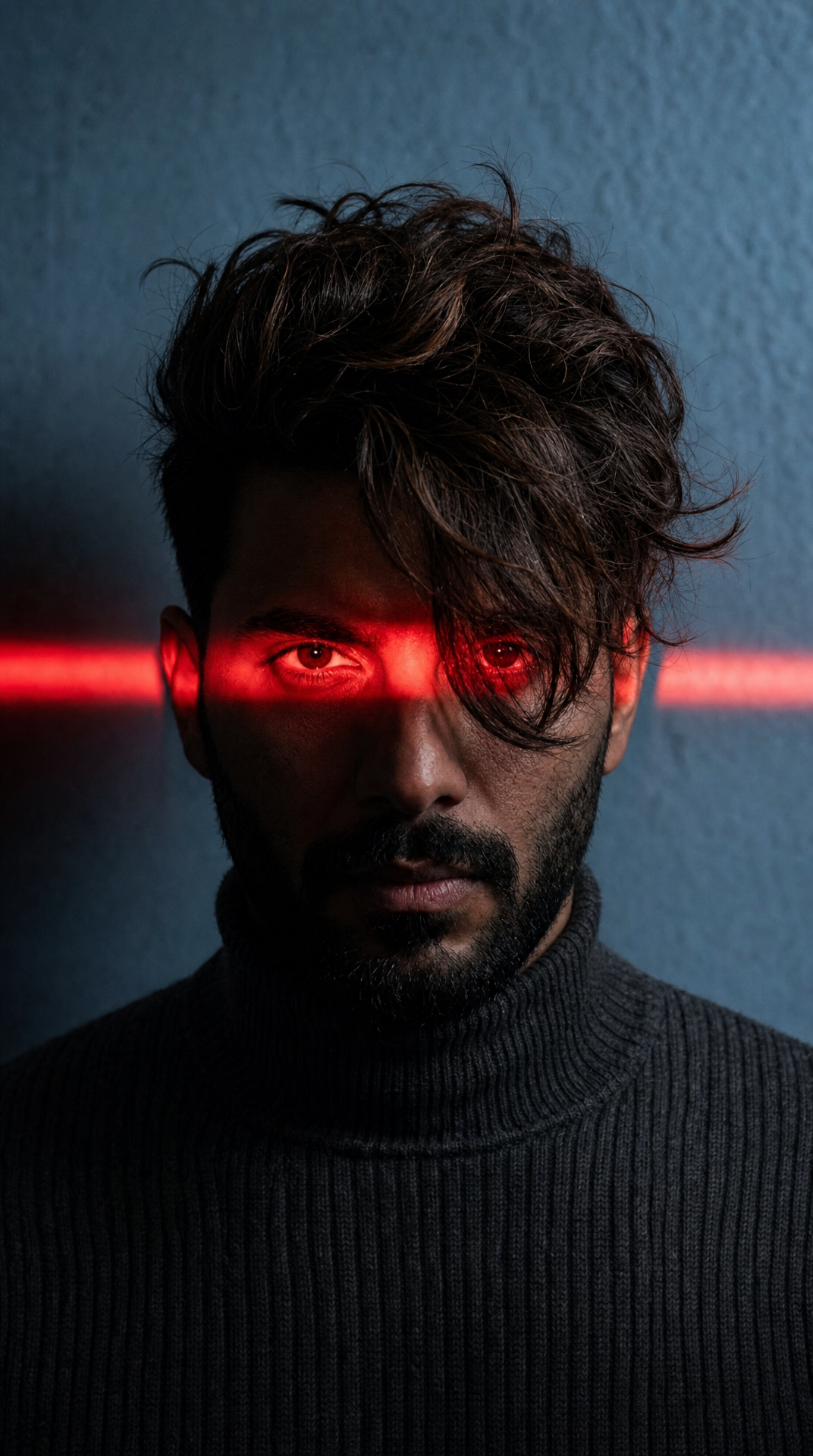
Charcoal turtleneck with red eye-beam
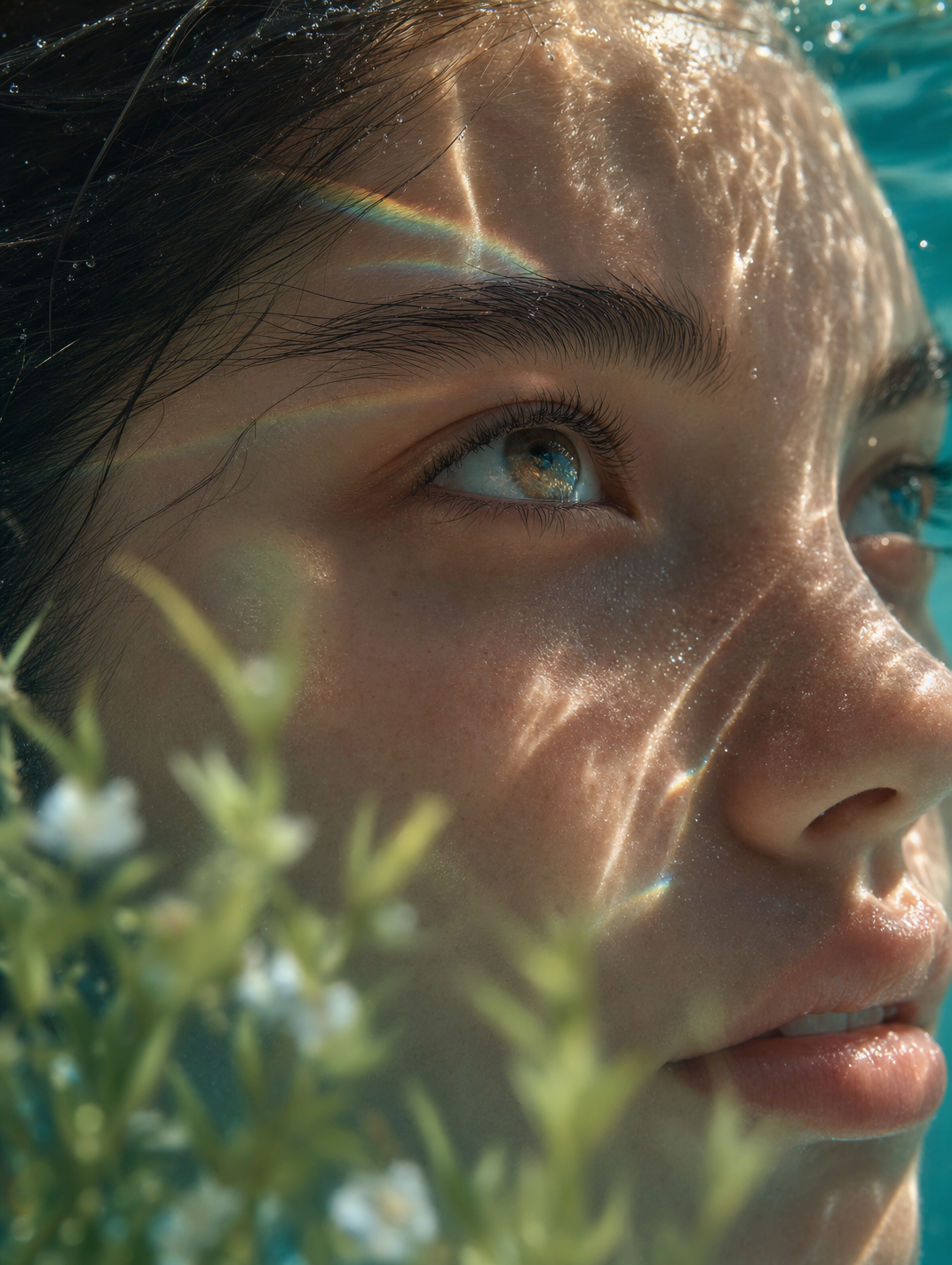
Dreamy Macro Portrait in Cool Water