Why this works
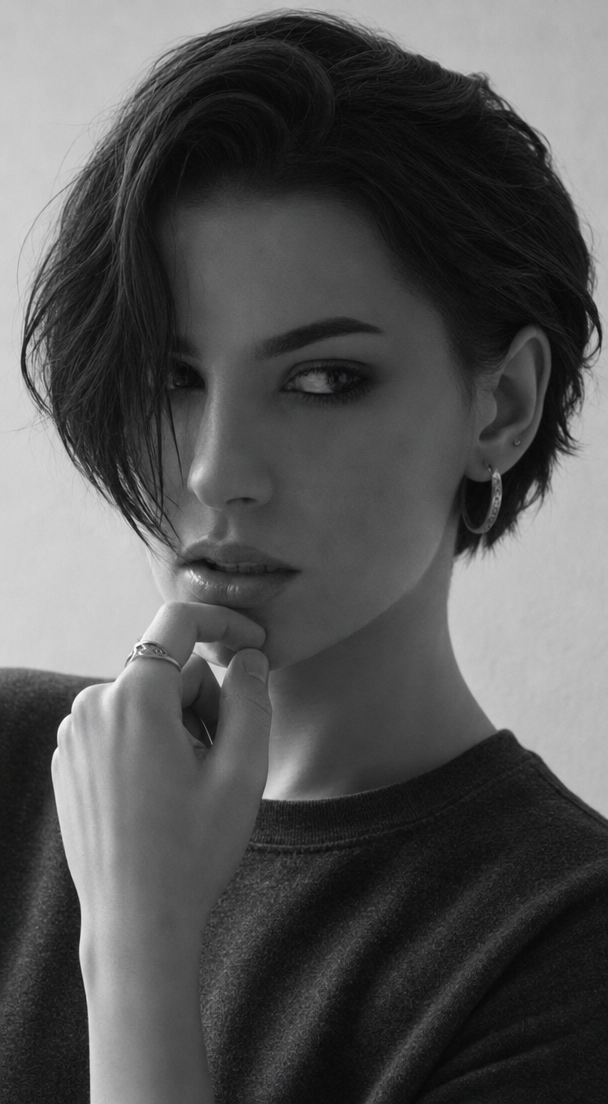
“Close-up” and “intimate framing” place the face, wet side-swept hair, and hand-on-chin gesture at the center, while the “simple neutral plain background” removes competing shapes. The “contemplative gaze” and “one hand resting lightly on the chin” establish the introspective mood; “soft directional studio lighting with high-contrast shadows” gives the black-and-white image its sculpted tonal separation. “Shallow depth of field” keeps attention on the realistic skin texture and expression rather than the background.
FAQ
→How do I make the portrait feel warmer and less severe?
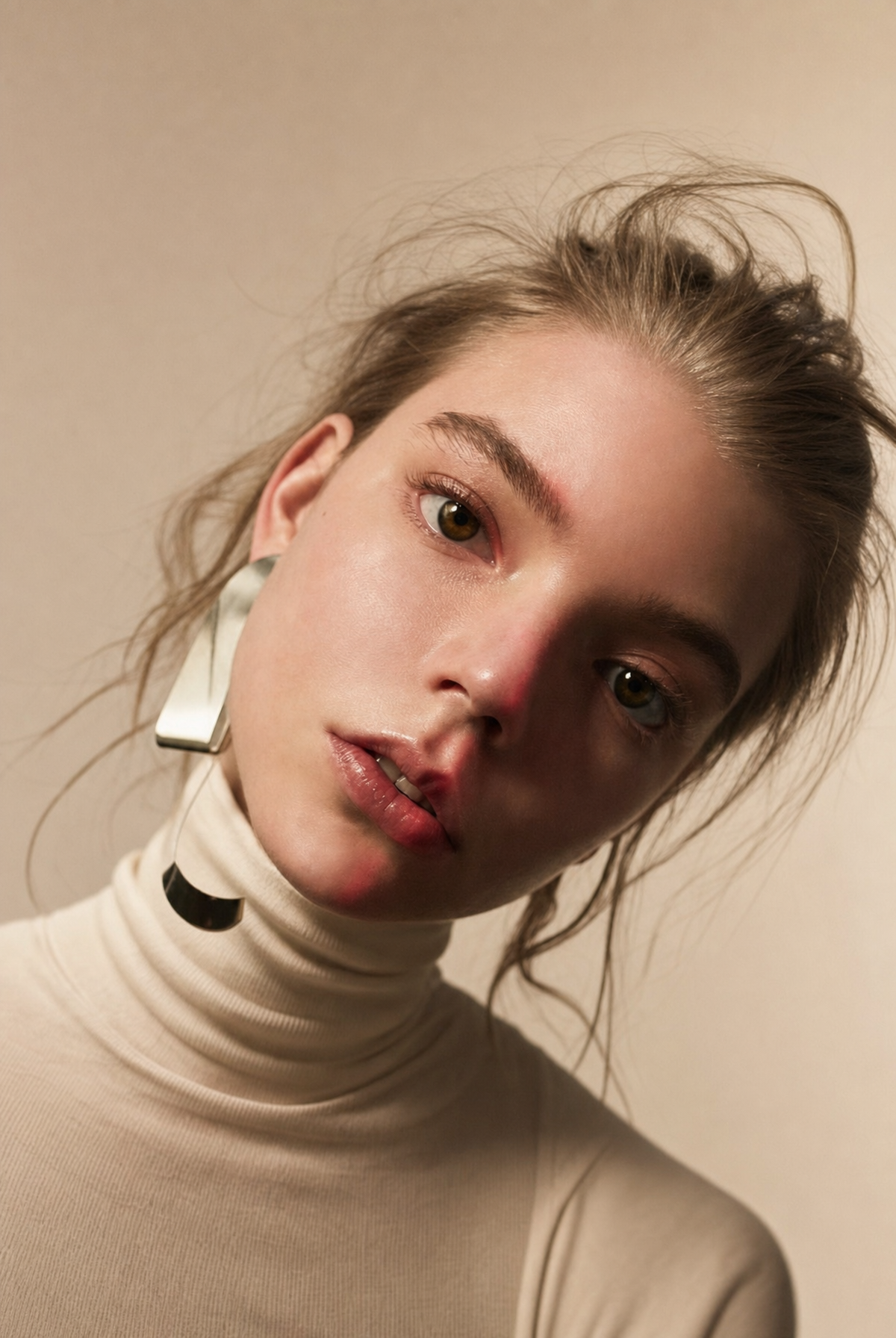
Replace “black-and-white editorial photography” and “high-contrast shadows” with “muted warm color editorial photography” and “soft low-contrast shadows,” and change “charcoal-grey crewneck shirt” to “warm beige knit sweater.” Keep “soft directional studio lighting” if you still want controlled facial modeling.
→How do I make the eyes the strongest focal point?
Replace “one hand resting lightly on the chin” with “hands out of frame,” and add “direct eye contact, sharply focused eyes, catchlights in the irises.” Retain “close-up framing” and “shallow depth of field,” since those phrases keep attention on the face while the plain background stays unobtrusive.
→How do I build a matching series with different expressions and poses?
Keep “black-and-white editorial photography,” “simple neutral plain background,” “soft directional studio lighting,” “intimate framing,” and “shallow depth of field” unchanged. Swap “contemplative gaze” and “one hand resting lightly on the chin” for variants such as “quiet half-smile with arms crossed,” “downcast gaze with fingers touching the collar,” or “confident direct gaze with one shoulder turned toward camera.”
Learn the technique behind this
- Why can't AI spell, and how do I get readable text in an image? — Older diffusion models had no character-level representation of text, so they produced letterform-shaped texture instead of words.
- How should a prompt be structured, and does word order matter? — A prompt that behaves predictably names one subject first, then what it is doing, then where, then the light, then the lens or medium, then the style.
- Which aspect ratio should I use, and how does it change the image? — Aspect ratio determines what the model composes, not how it's cropped afterwards.
Related prompts
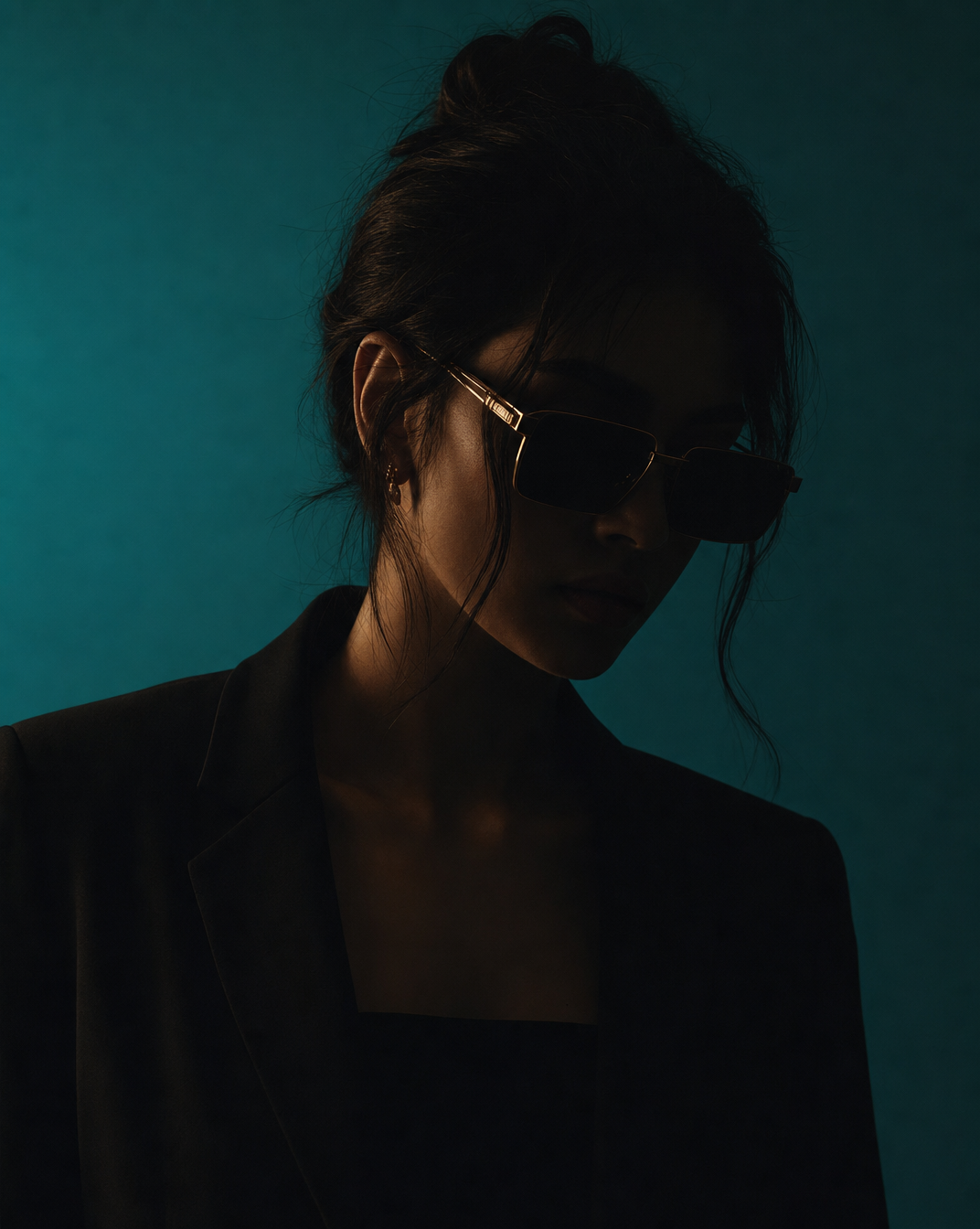
Woman in Teal Light, Shadowed Fashion Portrait
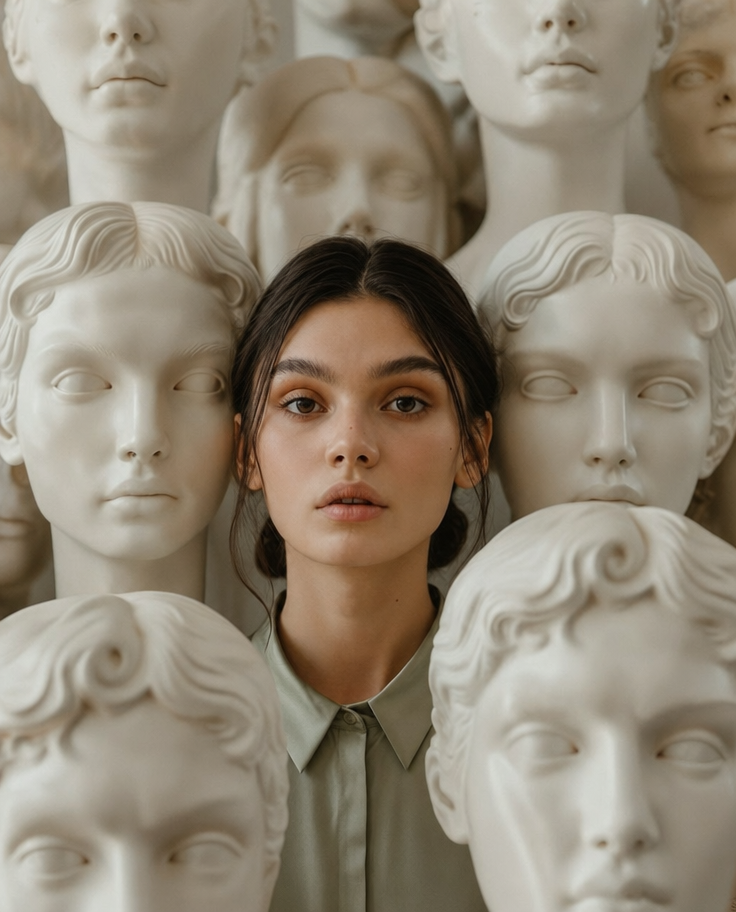
Eerie Elegance Among Marble Busts
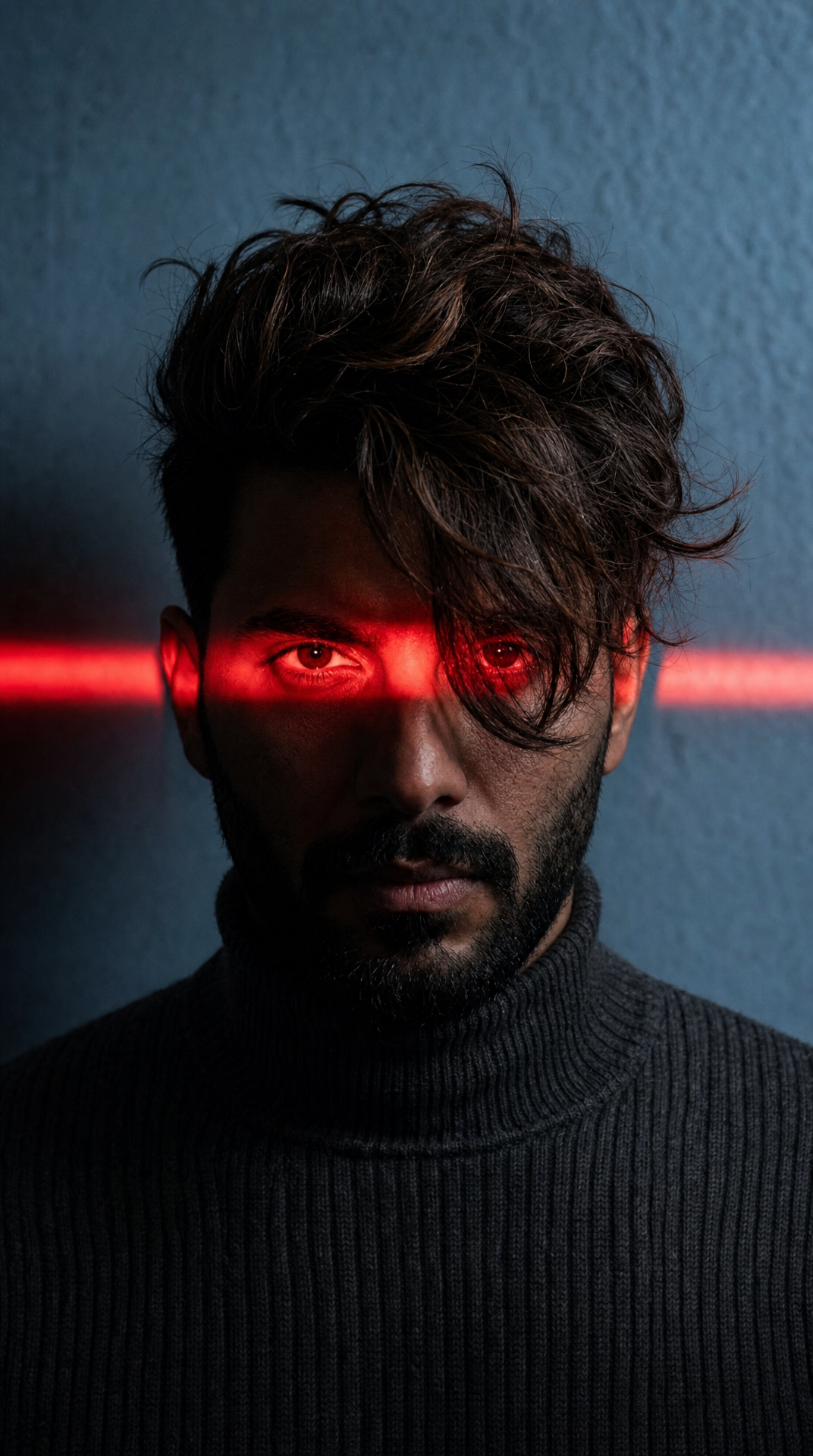
Charcoal turtleneck with red eye-beam
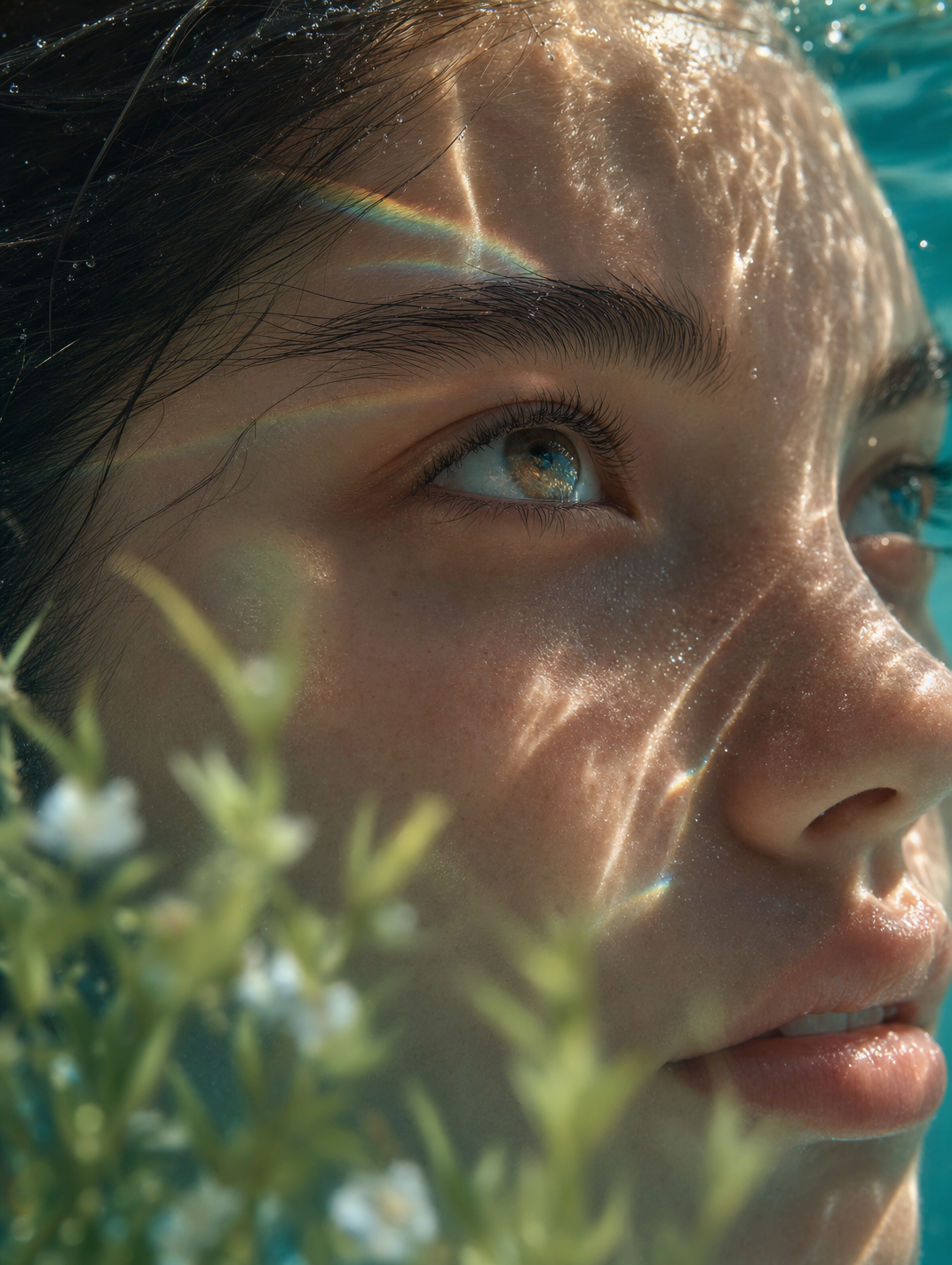
Dreamy Macro Portrait in Cool Water