Why this works
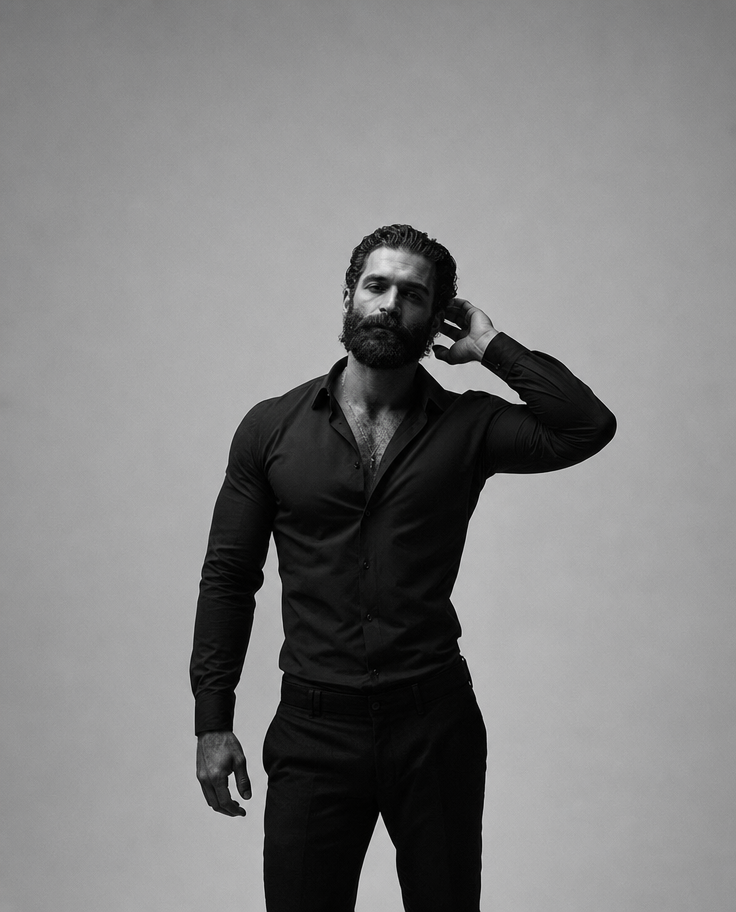
“Black-and-white” and the dominant black palette give the portrait a severe, graphic tone, while “moody, intense expression” makes the emotional focus read through the face. “Centered composition” against a “plain seamless background” removes distractions and gives the full-body figure a controlled editorial presence. “Dramatic soft lighting” paired with “high contrast” preserves facial modeling and separates the fitted dark shirt from the background without losing the “sharp facial detail.”
FAQ
→How do I make the face and expression more prominent than the full-body pose?
Replace “portrait-full-body” and “Portrait framing” with “tight head-and-shoulders portrait” or “medium close-up,” while keeping “centered composition” and “sharp facial detail.” Change “one hand resting behind his ear” to “hand lightly touching the jawline” if you want the gesture to reinforce the face rather than extend the silhouette.
→How do I make this portrait feel less severe and more approachable?
Replace “moody, intense expression” and “high contrast” with “calm, warm expression” and “low-contrast soft lighting.” Keep “black-and-white” for the editorial look, or replace it with “muted warm color grading” if you want skin tone and the dark shirt to soften the image further.
→How do I build a consistent series with different poses and styling?
Keep the fixed anchors “plain seamless background,” “dramatic soft lighting,” “centered composition,” “editorial fashion photography look,” and “sharp facial detail.” Create variations by replacing “one hand resting behind his ear” with “both hands in trouser pockets,” “arms crossed,” or “one hand adjusting the open collar,” and swap “fitted dark open-collar shirt” for “structured charcoal blazer” or “minimal black turtleneck” while retaining “neatly styled slightly damp hair with a tighter shape.”
Learn the technique behind this
- Why can't AI spell, and how do I get readable text in an image? — Older diffusion models had no character-level representation of text, so they produced letterform-shaped texture instead of words.
- How should a prompt be structured, and does word order matter? — A prompt that behaves predictably names one subject first, then what it is doing, then where, then the light, then the lens or medium, then the style.
- Why does the model ignore parts of my prompt? — Ignored instructions are almost always conflicts, counts, or spatial relationships — three things current models handle badly — rather than the model failing to read you.
Related prompts
Woman in Teal Light, Shadowed Fashion Portrait
Eerie Elegance Among Marble Busts
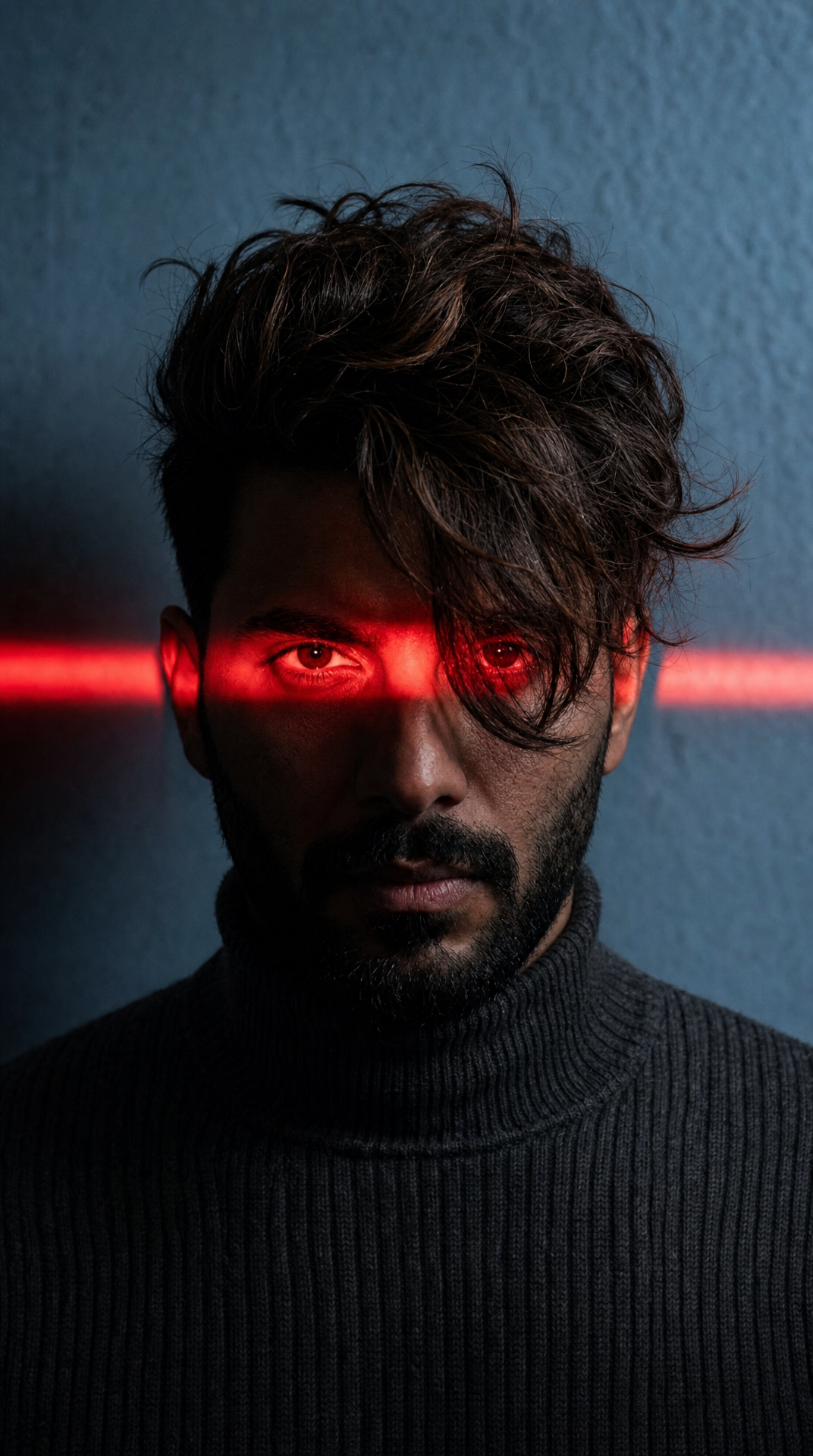
Charcoal turtleneck with red eye-beam
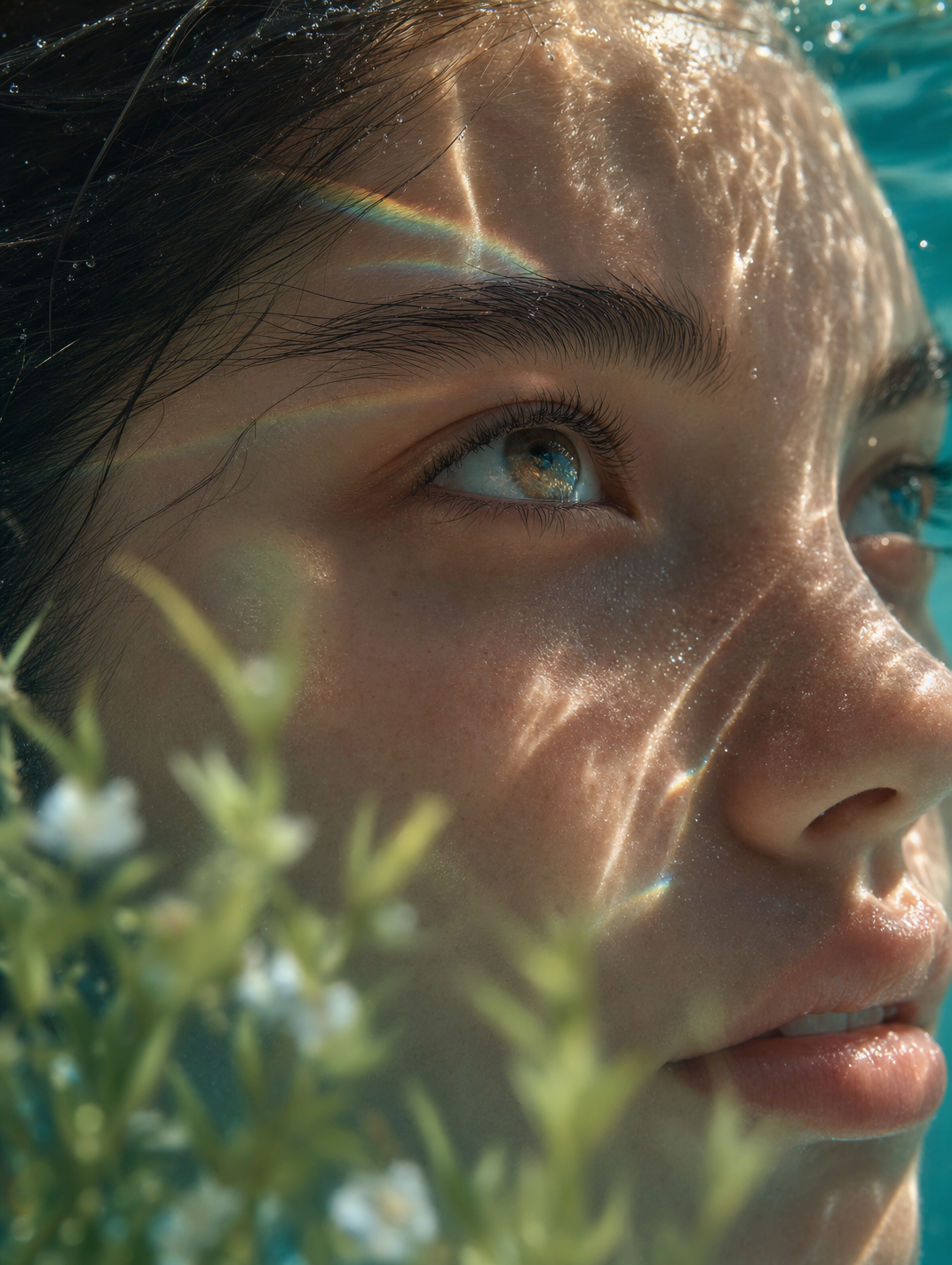
Dreamy Macro Portrait in Cool Water