Why this works
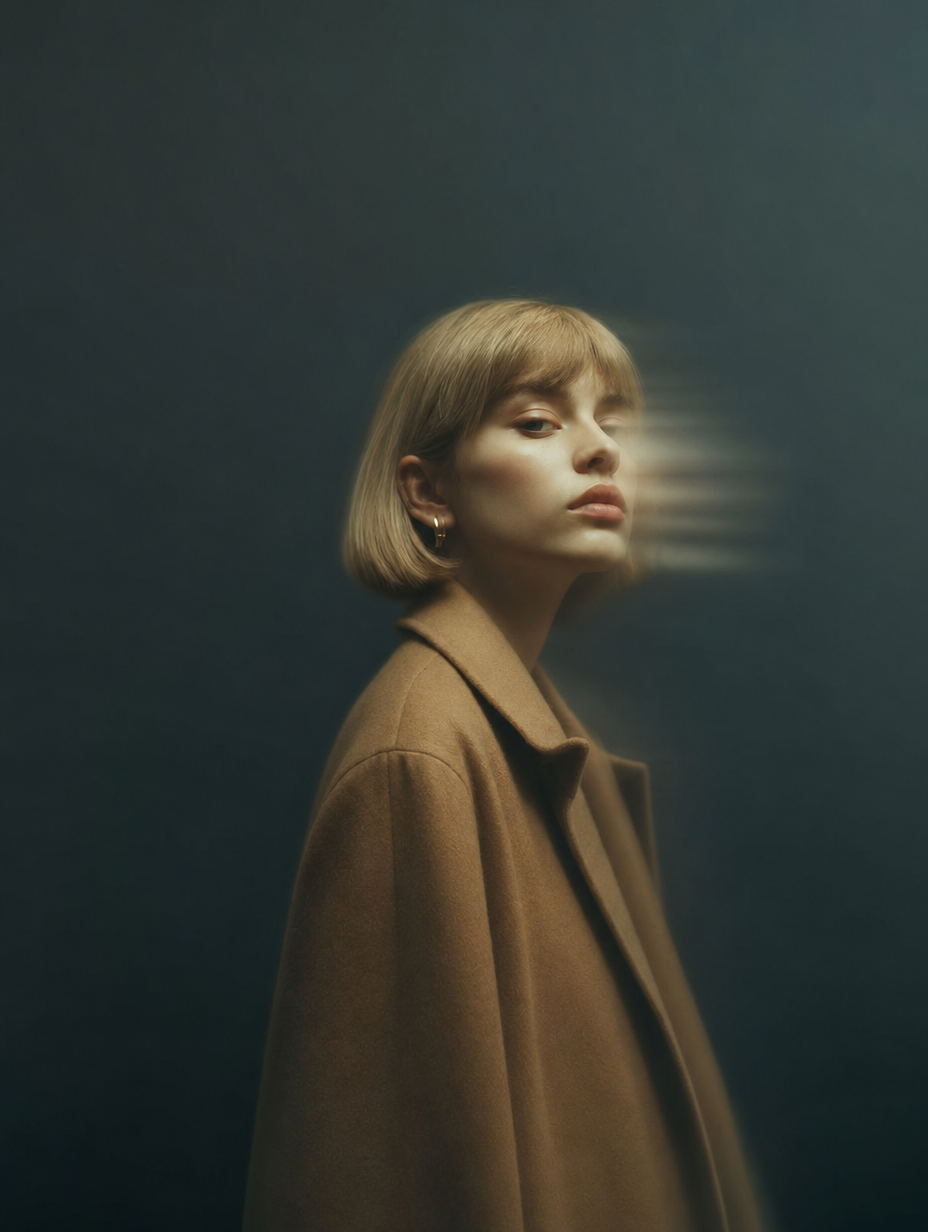
The “cinematic close portrait framing” makes the blonde bob, camel overcoat, and cheek detail carry the image, while “lots of negative space” keeps the portrait visually spare against the cool slate-blue backdrop. “Soft rim lighting that outlines her silhouette” separates the pale hair and camel coat from the background, and the “gentle smear of motion blur across the lower edge of one cheek” adds a controlled, slightly uncanny disruption to an otherwise polished pose. The brown and beige dominance comes from the camel overcoat and warm filmic grading, creating a muted contrast with the slate-blue studio field rather than letting the background overpower the subject.
FAQ
→How do I make the portrait feel brighter and less mysterious?
Replace “moody atmosphere” and “moody, mysterious, stylish” with “bright, airy, quietly optimistic editorial mood,” and change “soft rim lighting” to “soft frontal daylight with a gentle fill.” Keep “filmic color grading,” but specify “warm, low-contrast filmic color grading” to retain the editorial finish without the heavier shadows.
→How do I make the cheek motion effect more prominent?
Replace “a gentle smear of motion blur across the lower edge of one cheek” with “a distinct horizontal motion-blur streak sweeping across the lower third of the face, strongest over one cheek.” Change “cinematic close portrait framing” to “tight extreme close-up framing” so the blur occupies more of the composition, while keeping “shallow depth of field” to isolate it from the backdrop.
→How do I build a matching series with different outfits or backgrounds?
Keep the fixed structure, especially “cinematic editorial portrait,” “soft rim lighting that outlines her silhouette,” “shallow depth of field,” and “minimalist composition with lots of negative space.” Swap “sleek blonde bob haircut” and “camel overcoat” for a controlled subject pair such as “short dark curls, charcoal wool blazer,” then replace “cool slate-blue backdrop” with a similarly simple color field such as “muted sage-green studio backdrop”; repeating the same framing and lighting preserves visual continuity.
Learn the technique behind this
- Why can't AI spell, and how do I get readable text in an image? — Older diffusion models had no character-level representation of text, so they produced letterform-shaped texture instead of words.
- How should a prompt be structured, and does word order matter? — A prompt that behaves predictably names one subject first, then what it is doing, then where, then the light, then the lens or medium, then the style.
- Which aspect ratio should I use, and how does it change the image? — Aspect ratio determines what the model composes, not how it's cropped afterwards.
Related prompts
Woman in Teal Light, Shadowed Fashion Portrait
Eerie Elegance Among Marble Busts
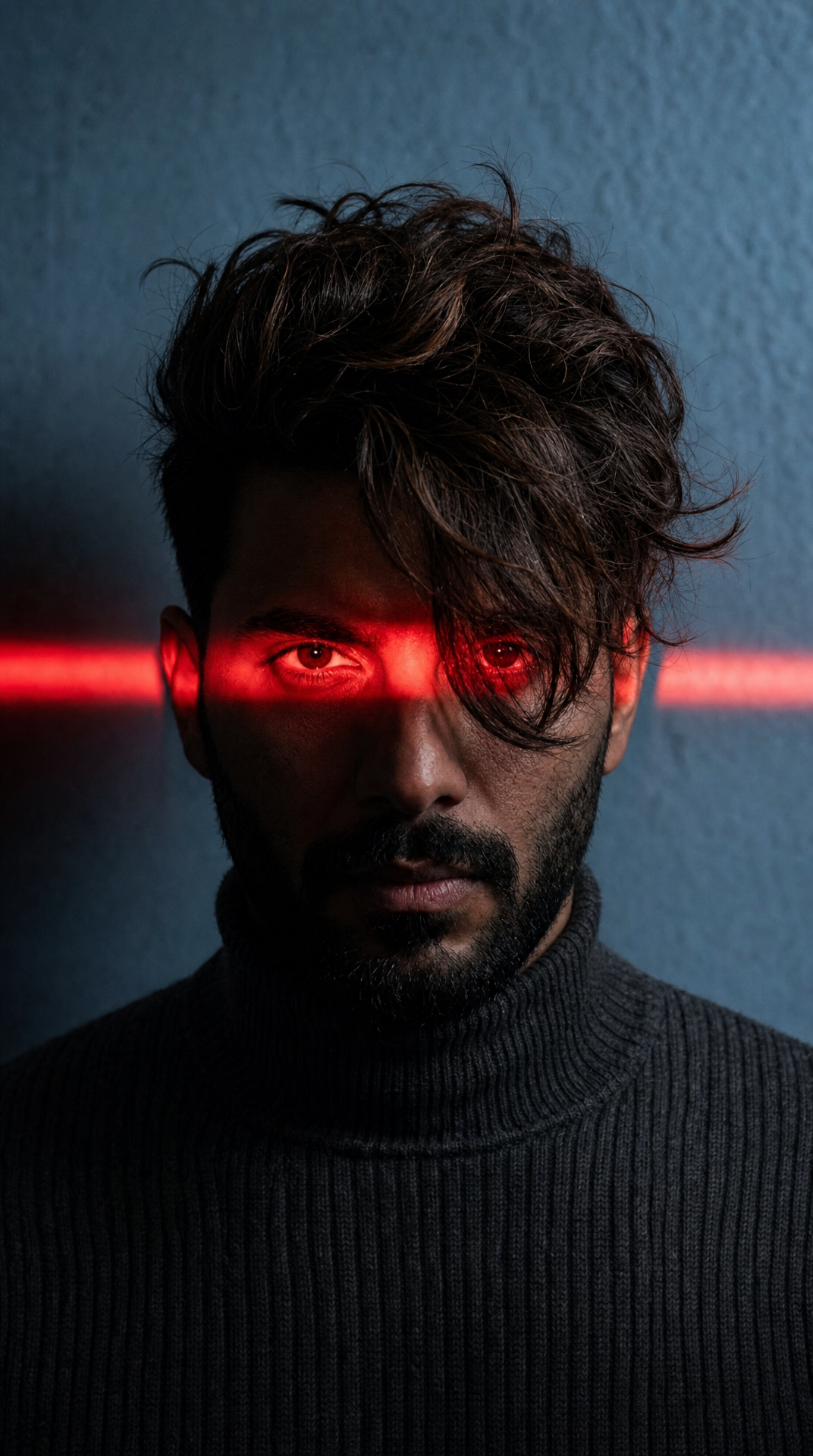
Charcoal turtleneck with red eye-beam
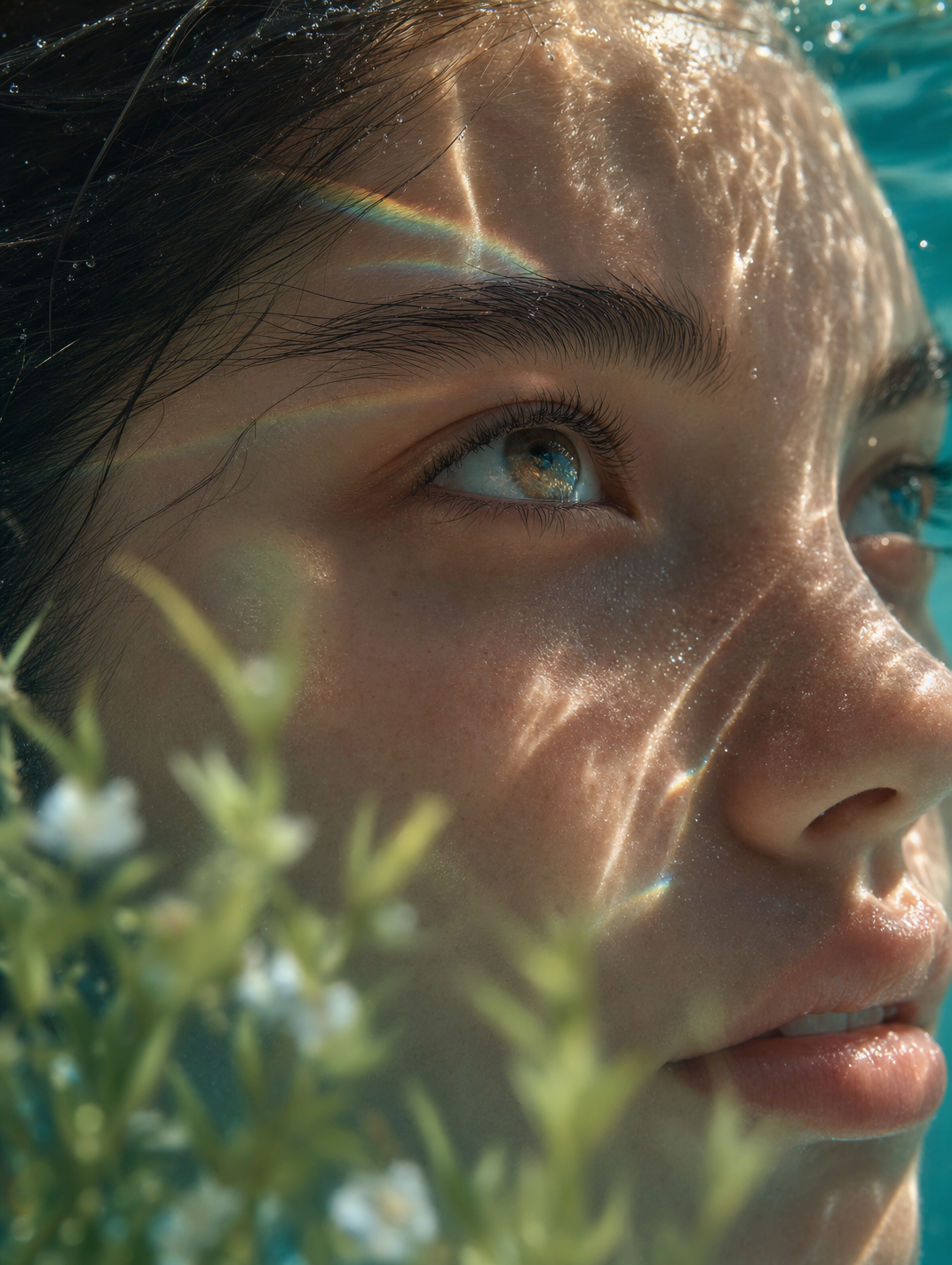
Dreamy Macro Portrait in Cool Water