Why this works
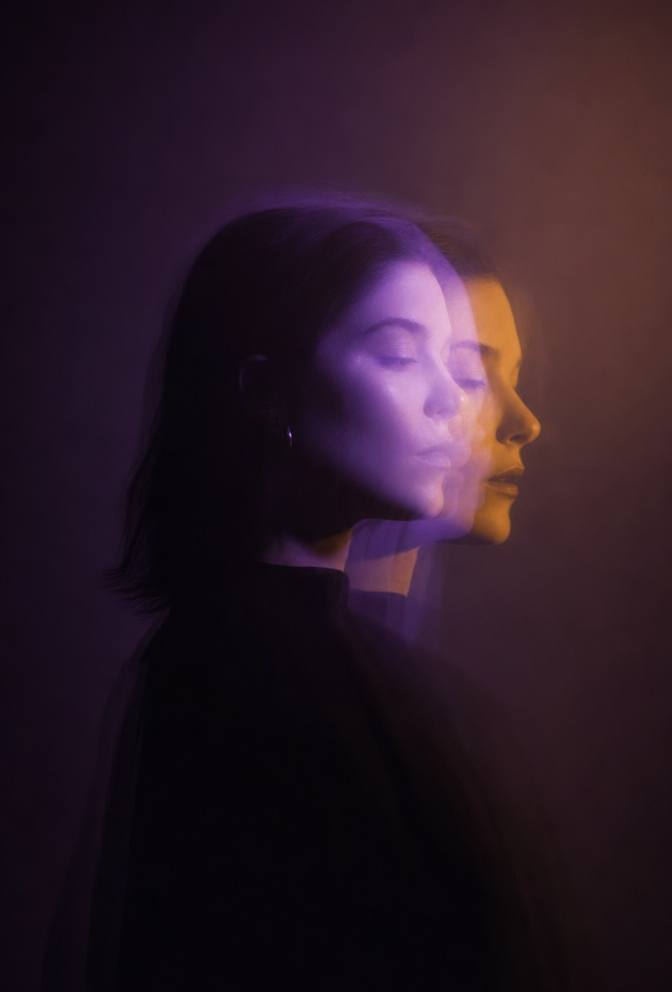
The phrase “woman in side profile with double exposure (two overlapping faces slightly offset)” supplies the defining layered composition, while “close portrait framing” keeps the facial profiles dominant in the portrait-closeup crop. “Deep purple and warm amber moody lighting” drives the dreamy, mysterious tone, with the generated image’s black-and-orange dominance showing the amber light against the “dark, minimal background.” “Soft motion blur” and “dreamy, mysterious atmosphere” soften the otherwise “high-contrast” studio treatment without sacrificing the “ultra-realistic skin” detail.
FAQ
→How do I make one face more prominent while keeping the double-exposure effect?
Replace “two overlapping faces slightly offset” with “one sharply defined primary side-profile face and a faint secondary face offset behind it,” and add “primary face in crisp focus, secondary exposure at 30% opacity.” Keep “close portrait framing” so the main face remains large.
→How do I shift this from mysterious and dreamy to a colder, more tense mood?
Replace “deep purple and warm amber moody lighting” with “cold blue-violet side-lighting with a narrow hard rim light,” and replace “dreamy, mysterious atmosphere” with “tense, austere atmosphere.” Reduce “soft motion blur” to “subtle directional blur” to preserve sharper facial edges.
→How do I create a series of variations without losing the visual identity?
Keep “cinematic double-exposure studio portrait,” “close portrait framing,” “high-contrast,” and “ultra-realistic skin” unchanged. Swap only the subject phrase, such as “woman in side profile” for “elderly man in three-quarter profile,” and vary “deep purple and warm amber” with controlled pairs like “crimson and pale gold” or “emerald and copper,” while retaining the “dark, minimal background.”
Learn the technique behind this
- Why can't AI spell, and how do I get readable text in an image? — Older diffusion models had no character-level representation of text, so they produced letterform-shaped texture instead of words.
- How should a prompt be structured, and does word order matter? — A prompt that behaves predictably names one subject first, then what it is doing, then where, then the light, then the lens or medium, then the style.
- Why does AI get hands and faces wrong, and how do I fix it? — Hands fail because they're small in frame, extremely variable in pose, and self-occluding — the model has less usable signal per pixel than for any other body part.
Related prompts
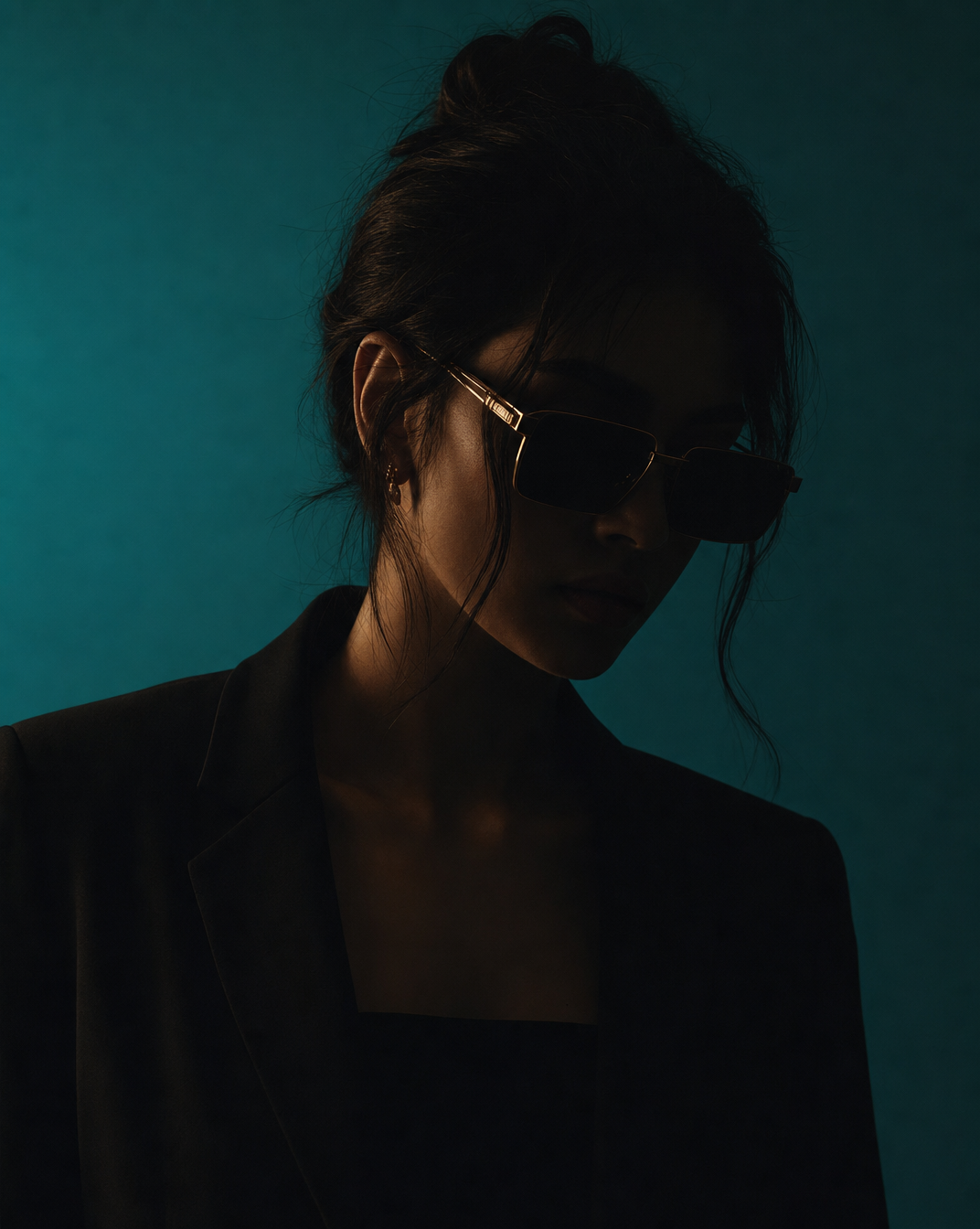
Woman in Teal Light, Shadowed Fashion Portrait
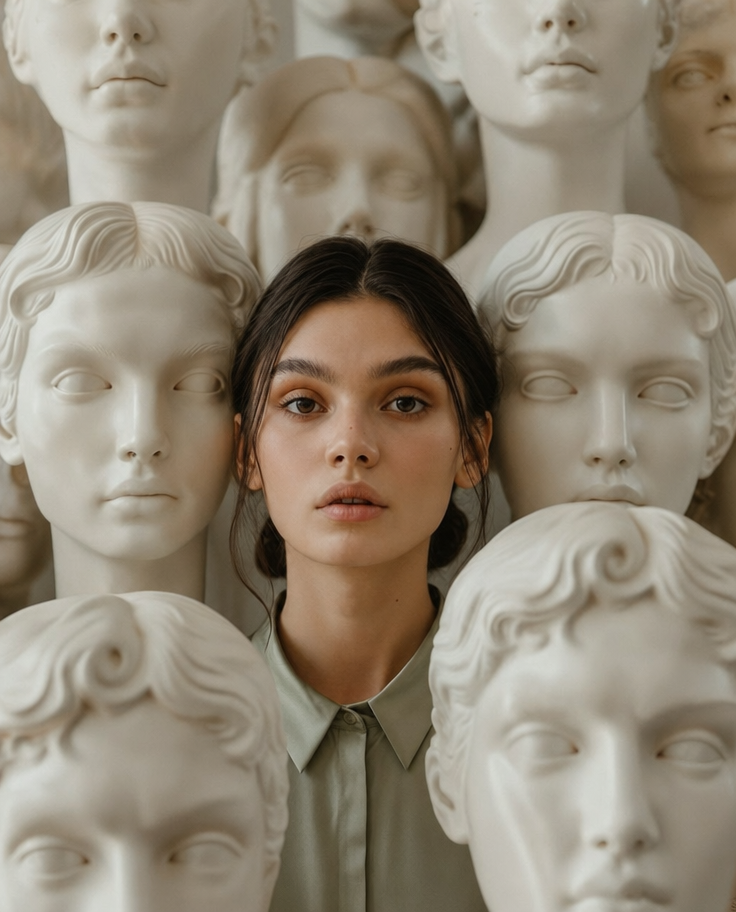
Eerie Elegance Among Marble Busts
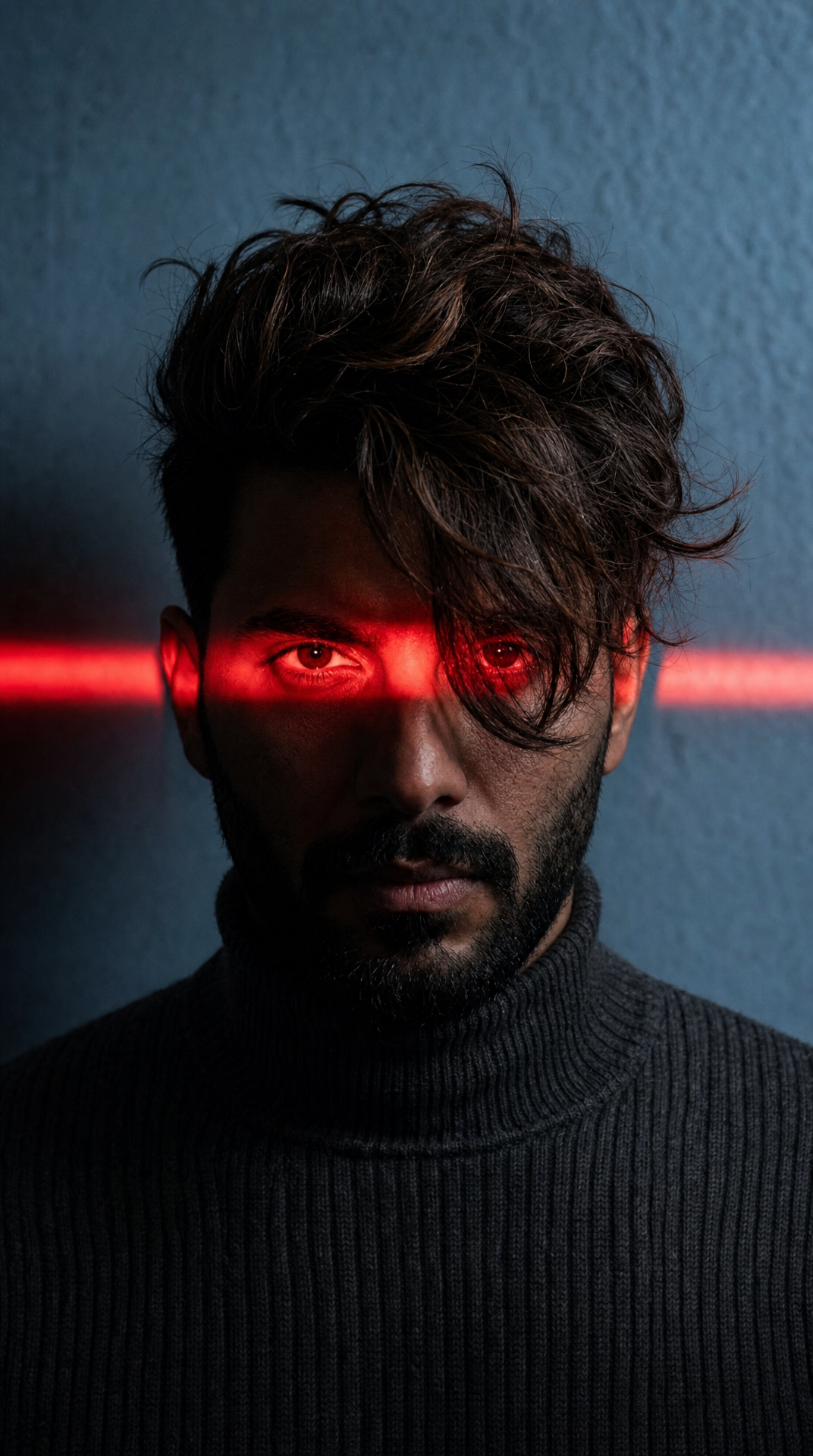
Charcoal turtleneck with red eye-beam
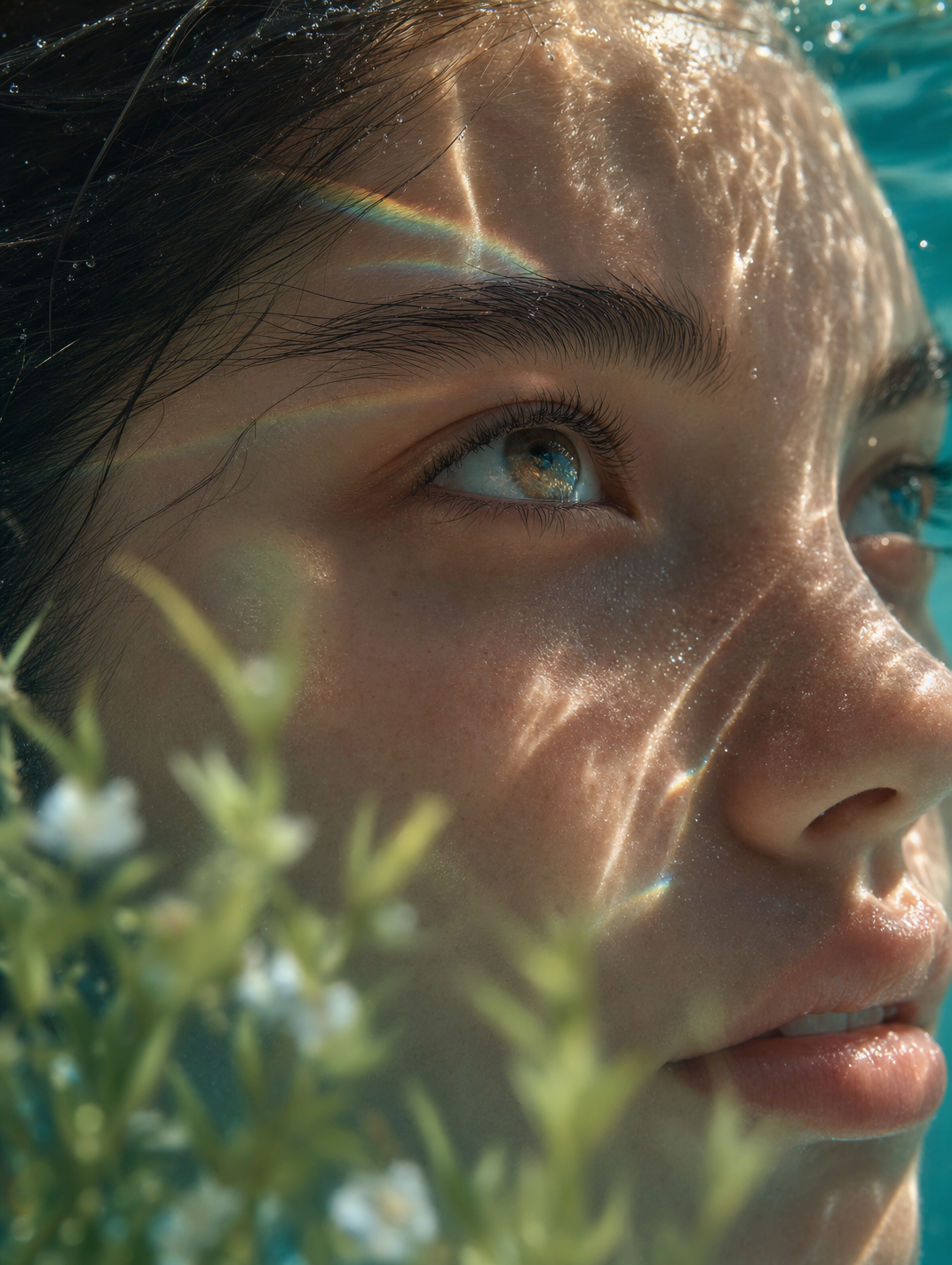
Dreamy Macro Portrait in Cool Water