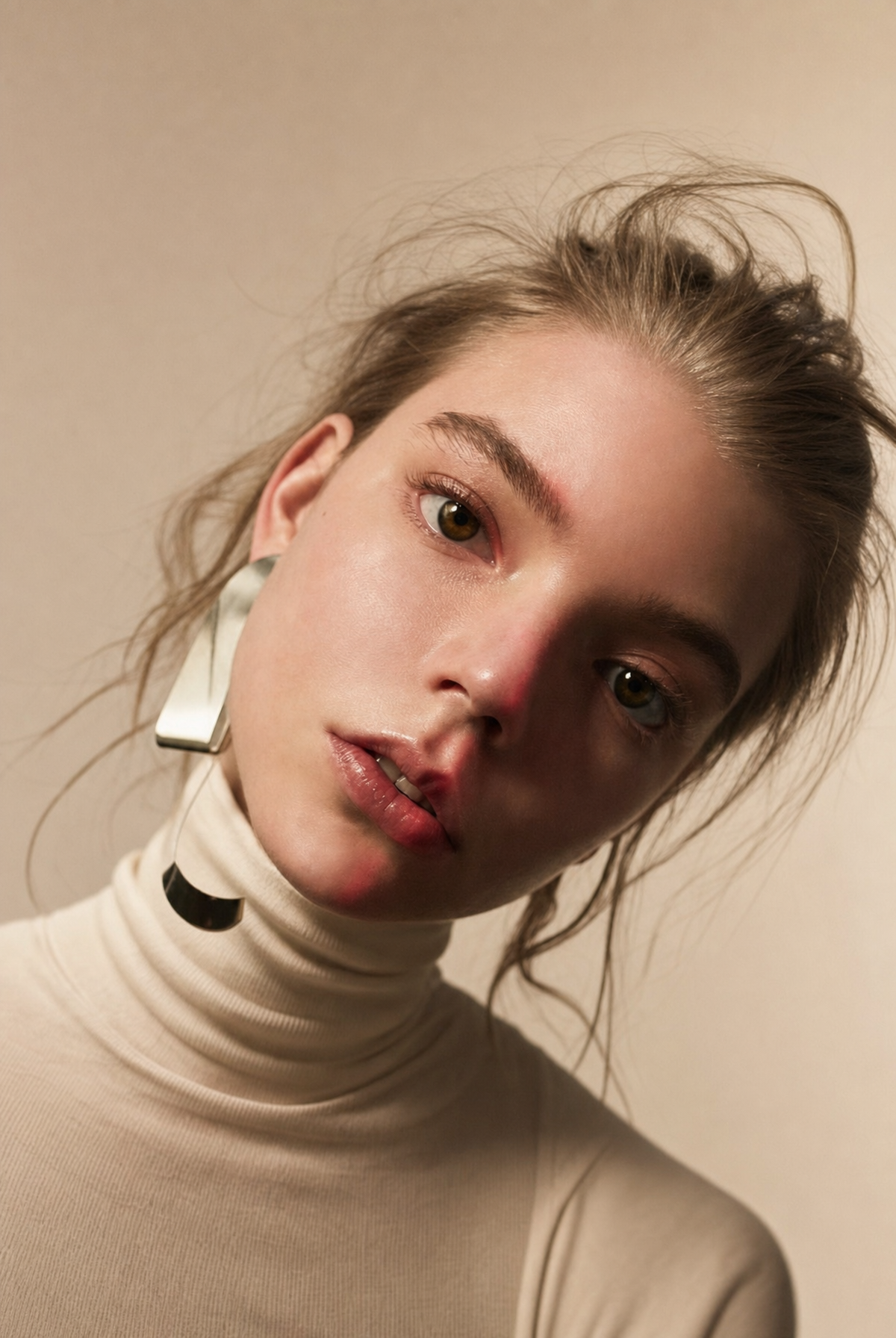
Why this works
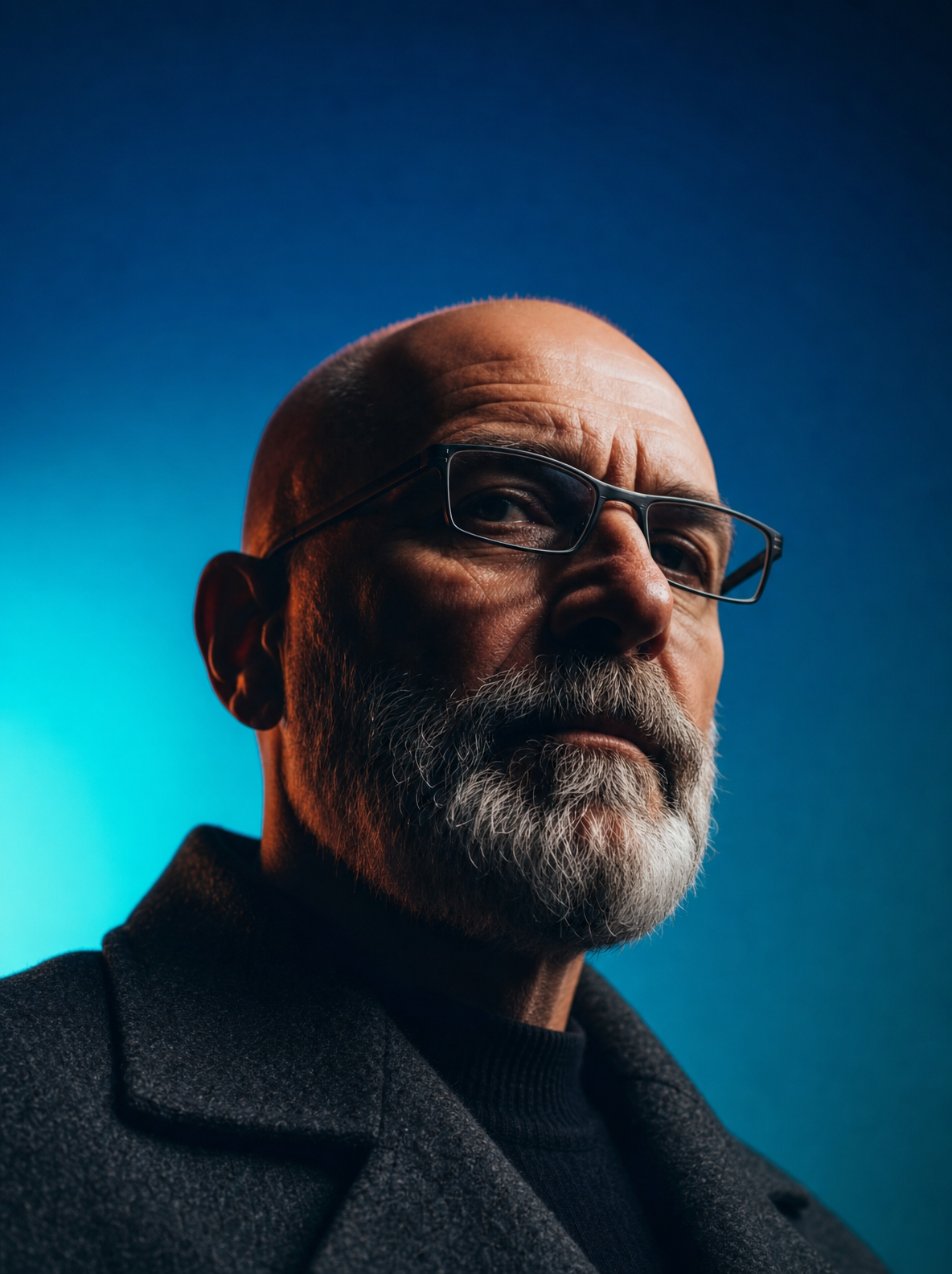
The phrase “low-angle medium close-up” gives the older man visual authority while keeping his rectangular eyeglasses, gray beard, and sharp facial detail central to the frame. “Cool blue and teal tones,” “subtle warm rim edge,” and “deep shadows” establish the teal, black, and gray palette with a controlled warm accent; “smooth gradient background” removes visual clutter so the face remains the focal point. “Strong rim light” separates the bald head and overcoat from the background, while “intense moody atmosphere” and “dramatic high-contrast studio lighting” reinforce the severe cinematic tone.
FAQ
→How do I change this prompt to make the portrait feel warmer and more approachable?
Replace “cool blue and teal tones,” “deep shadows,” and “intense moody atmosphere” with “soft amber and golden tones,” “gentle balanced shadows,” and “warm, approachable atmosphere.” Change “dramatic high-contrast studio lighting” to “soft diffused window lighting” and reduce “strong rim light” to “subtle golden edge light” for a less severe expression and palette.
→How do I make the man’s eyeglasses and beard more prominent?
Replace “medium close-up” with “tight extreme close-up focused on the eyes, eyeglasses, and beard,” and change “sharp facial detail” to “ultra-detailed eyeglass frames, gray beard texture, and skin detail.” Add “catchlights clearly reflected in the rectangular lenses” while keeping “low-angle” if you want to preserve the authoritative viewpoint.
→How do I turn this into a consistent series with different subjects?
Keep the fixed structure “low-angle medium close-up,” “smooth gradient background,” “dramatic high-contrast studio lighting,” and “cool blue and teal tones with a subtle warm rim edge.” Replace only “older bald man with rectangular eyeglasses and a neatly trimmed gray beard” with parallel descriptions such as “older woman with silver hair and a tailored navy coat” or “young musician with tousled black hair and a leather jacket,” while retaining “photorealistic,” “cinematic color grading,” and “sharp facial detail.”
Learn the technique behind this
- How should a prompt be structured, and does word order matter? — A prompt that behaves predictably names one subject first, then what it is doing, then where, then the light, then the lens or medium, then the style.
- Why can't AI spell, and how do I get readable text in an image? — Older diffusion models had no character-level representation of text, so they produced letterform-shaped texture instead of words.
- Why does the model ignore parts of my prompt? — Ignored instructions are almost always conflicts, counts, or spatial relationships — three things current models handle badly — rather than the model failing to read you.
Related prompts
Woman in Teal Light, Shadowed Fashion Portrait
Eerie Elegance Among Marble Busts
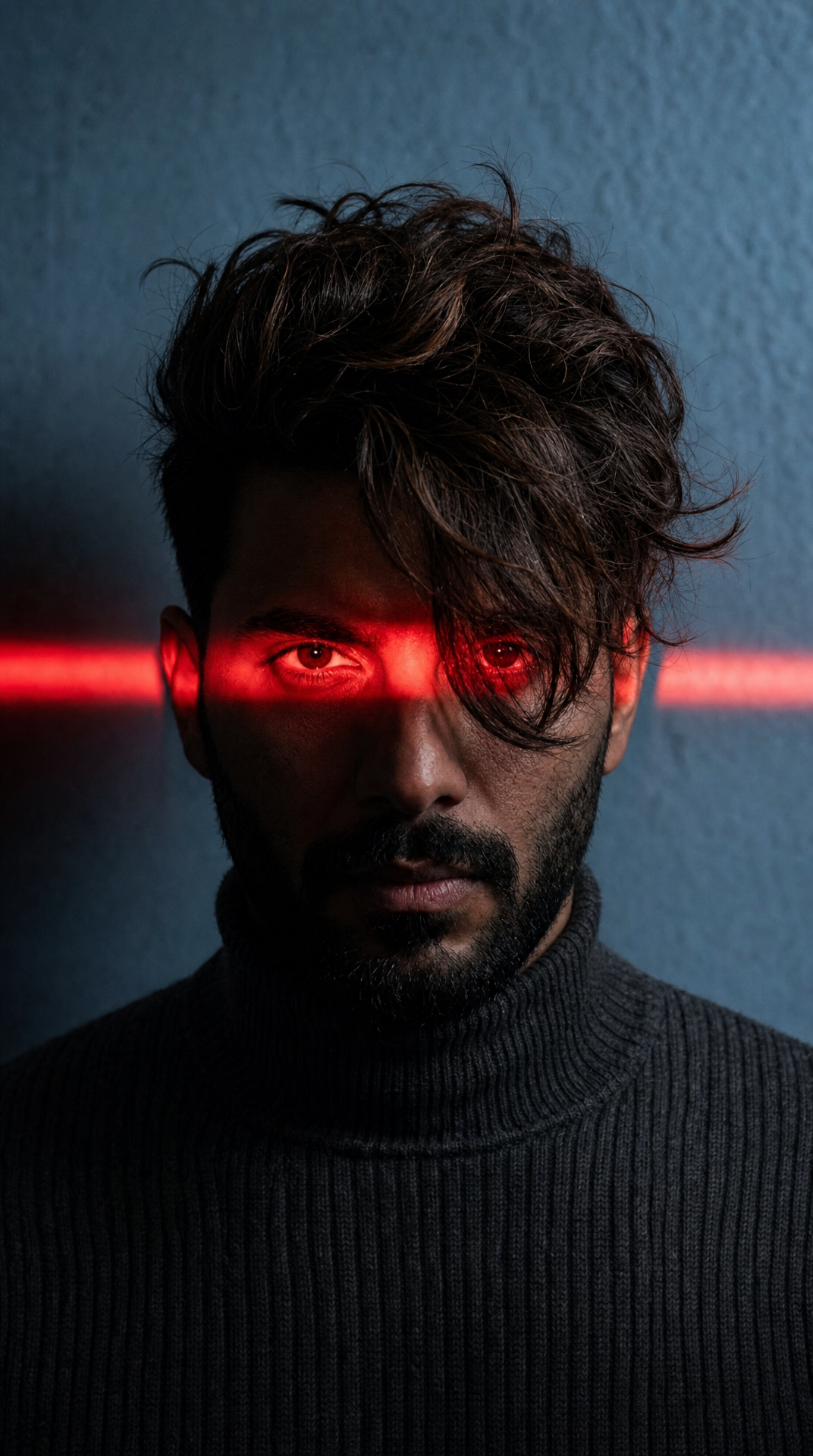
Charcoal turtleneck with red eye-beam
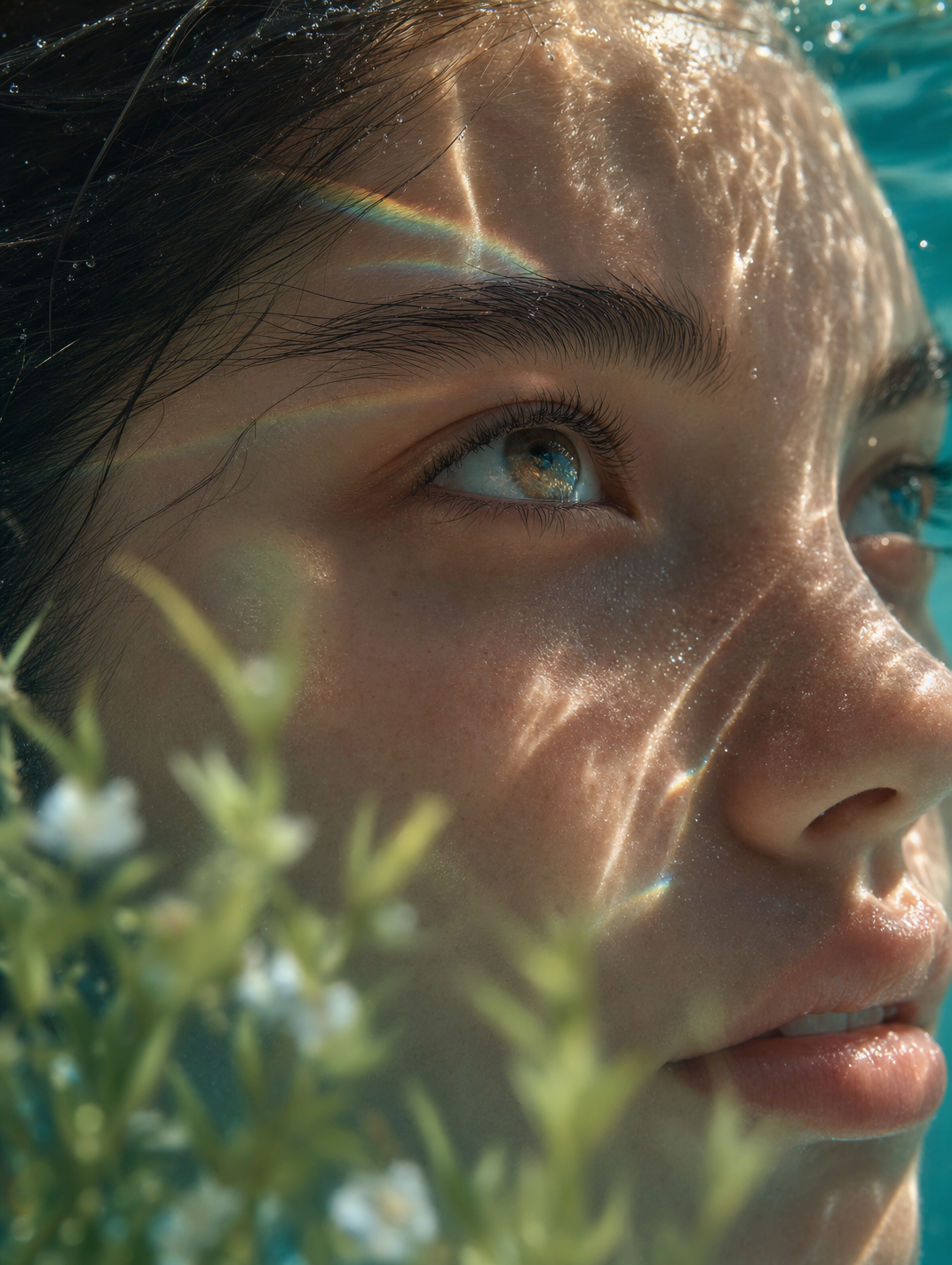
Dreamy Macro Portrait in Cool Water