Why this works
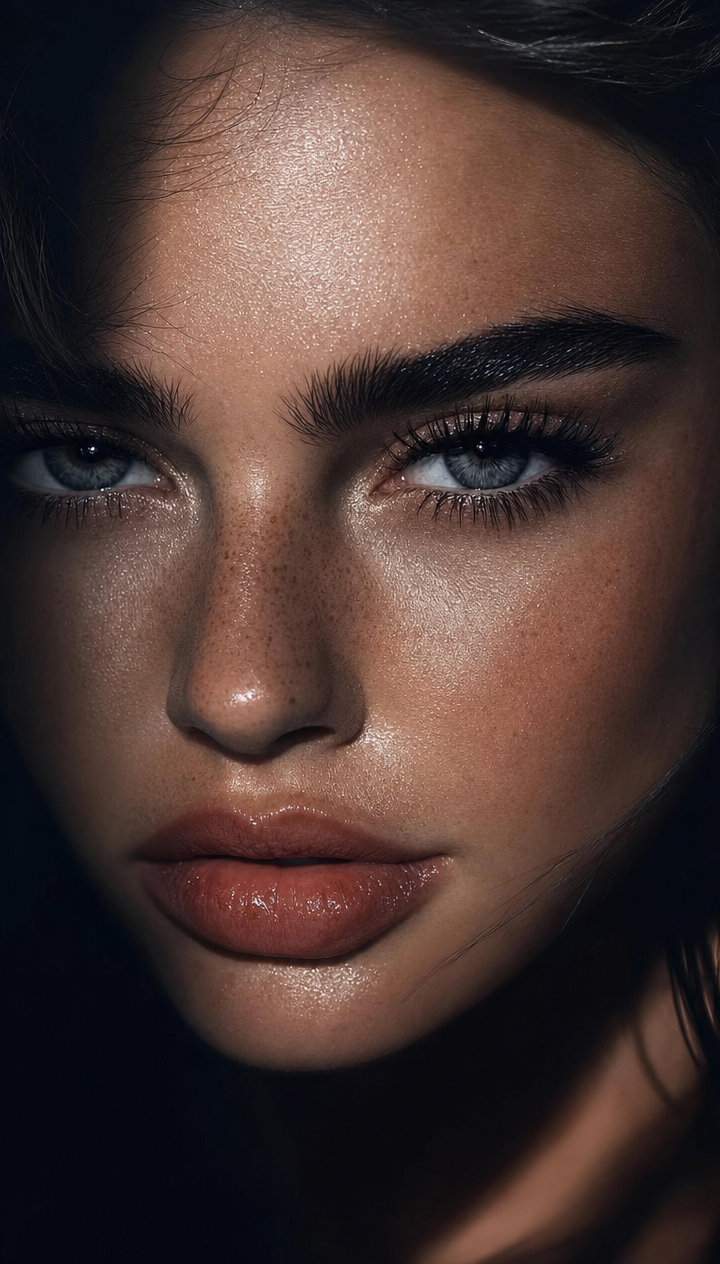
The close-up framing and “shallow depth of field” force attention onto the woman’s intense blue eyes, while the dark, softly textured background removes competing detail. “Soft overhead lighting” paired with “subtle, curved shadows around the eyes and cheeks” gives the face sculpted structure without the harder graphic pattern of diagonal slatted shadows. The black-and-gray dominant palette follows the “cooler blue-gray color palette” and “slightly desaturated highlights,” while “dramatic high-contrast look” and “glossy, smooth skin texture” balance severity with polished editorial finish.
FAQ
→How do I make the eyes and gaze more central in the portrait?
Keep “close-up framing,” but replace “shallow depth of field” with “razor-sharp focus on both irises and eyelashes, softer focus across the cheeks and background.” Strengthen “intense blue eyes” to “bright electric-blue eyes with sharply defined catchlights,” and add “direct eye contact with the camera” to make the gaze more dominant.
→How do I change the mood from moody and severe to softer and more luminous?
Replace “dramatic high-contrast look” with “low-contrast luminous beauty lighting,” and change “dark, softly textured background” to “pale blue-gray seamless background.” Substitute “slightly desaturated highlights” with “soft pearlescent highlights,” while retaining “subtle, curved shadows around the eyes and cheeks” for gentle facial definition.
→How do I build a matching series with a different subject or setting?
Preserve the visual structure in “photorealistic fashion editorial portrait,” “cool blue-gray color palette,” “dramatic high-contrast look,” and “shallow depth of field,” then replace “a woman’s face with intense blue eyes” with a new subject such as “a man’s face with amber eyes” and replace “dark, softly textured background” with “a cool gray concrete studio wall.” Keep “soft overhead lighting” and “subtle, curved shadows around the eyes and cheeks” consistent across images for continuity.
Learn the technique behind this
- Why can't AI spell, and how do I get readable text in an image? — Older diffusion models had no character-level representation of text, so they produced letterform-shaped texture instead of words.
- Why does AI get hands and faces wrong, and how do I fix it? — Hands fail because they're small in frame, extremely variable in pose, and self-occluding — the model has less usable signal per pixel than for any other body part.
- How do I keep the same character across multiple images? — Text prompts alone won't hold a face across images — a description defines a type, not a person.
Related prompts
Woman in Teal Light, Shadowed Fashion Portrait
Eerie Elegance Among Marble Busts
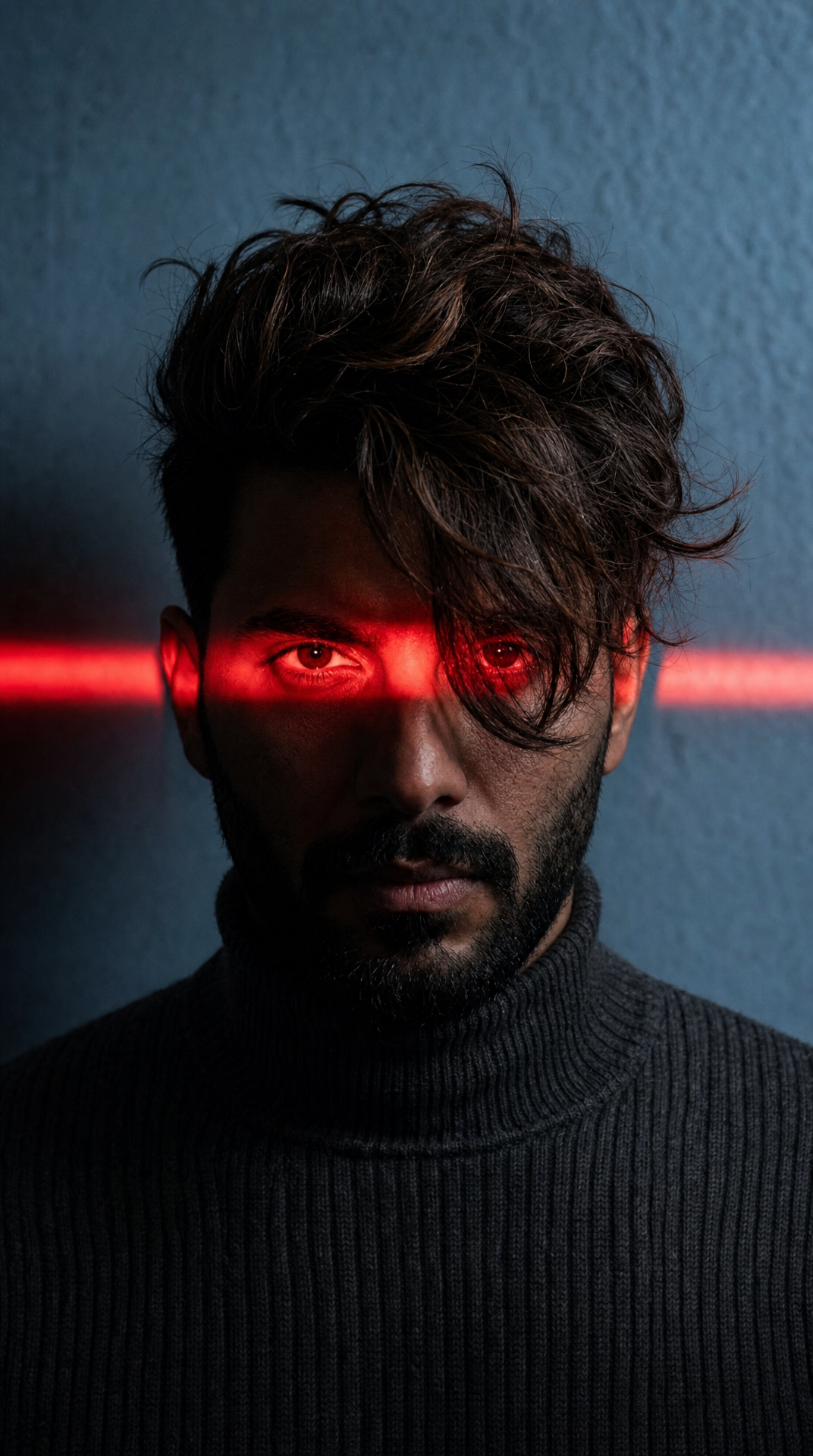
Charcoal turtleneck with red eye-beam
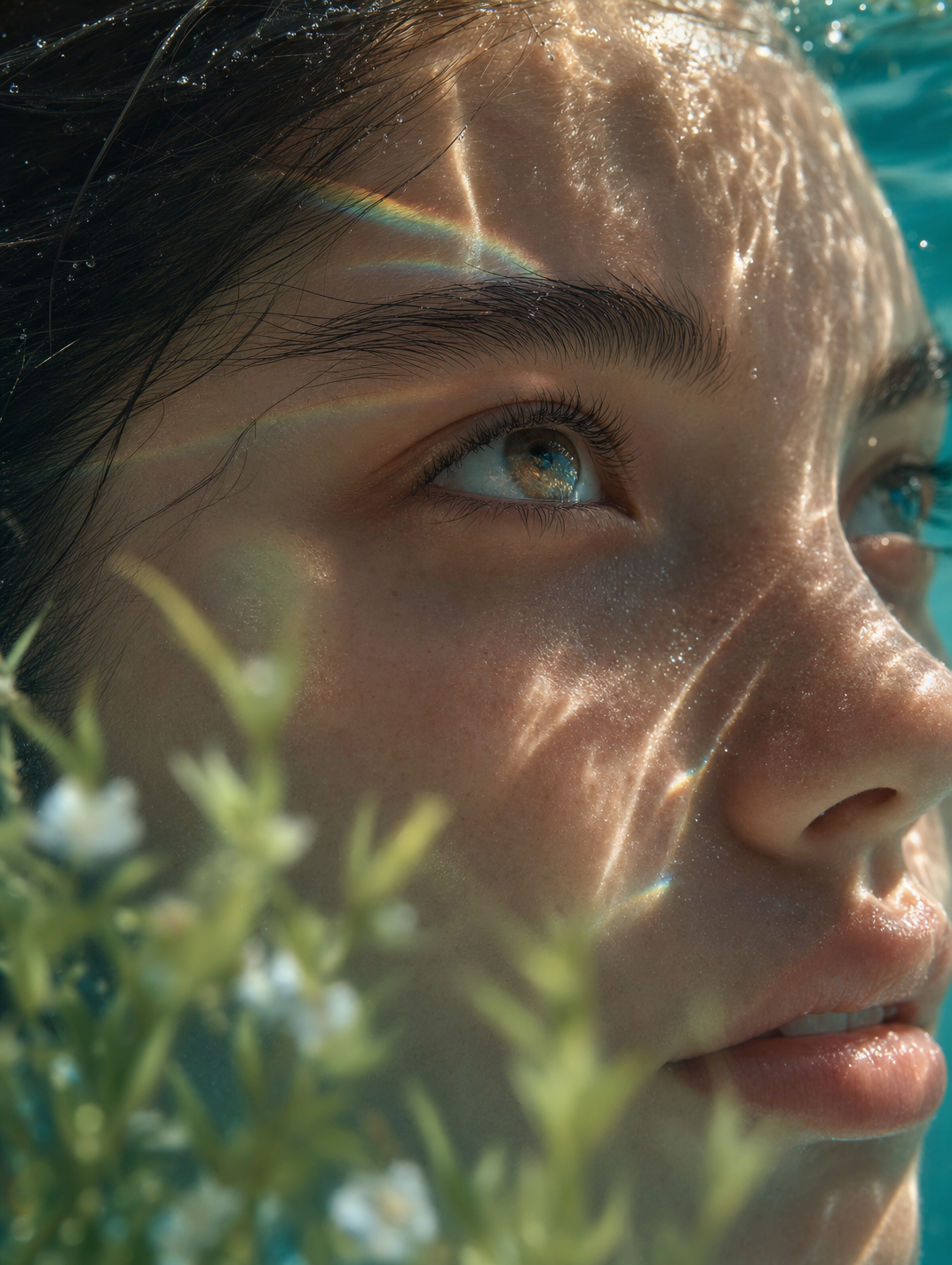
Dreamy Macro Portrait in Cool Water