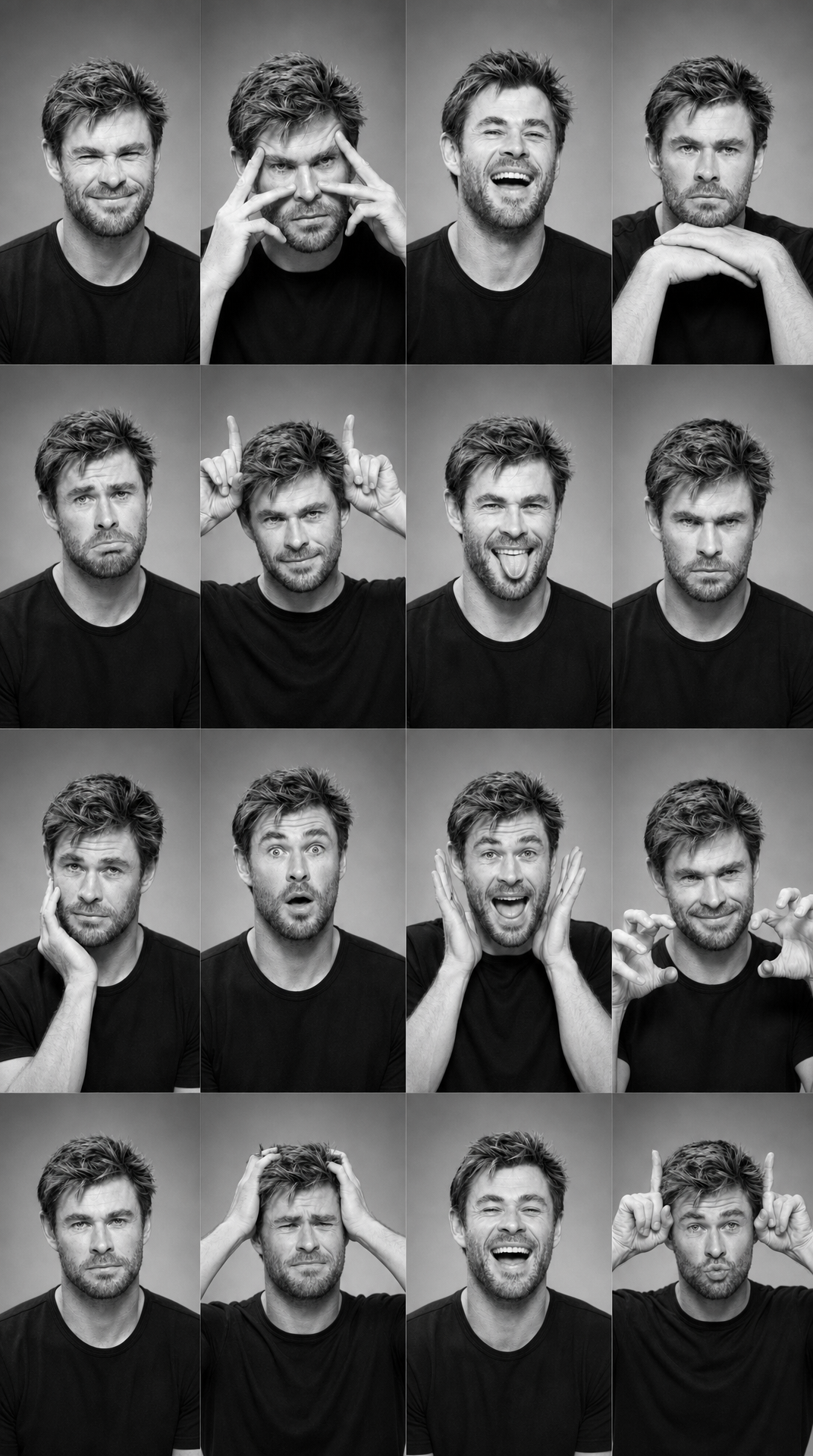
Why this works
The “4x4 photobooth-style collage” and “minimal spacing between photobooth panels” establish the repeated grid, while “slightly wider crop (more shoulders visible)” keeps each expressive pose readable as a portrait rather than a floating face. “Black-and-white,” “high-contrast monochrome,” and the “subtle mid-gray gradient” produce the strict black-and-white palette with restrained tonal separation. The playful mood comes from “multiple expressive facial poses and playful emotions,” while “soft front-and-side even lighting with gentle contrast” preserves crisp facial texture without making the rugged subject look harsh.
FAQ
→How do I make one facial pose more central and prominent?
Replace “4x4 photobooth-style collage” with “3x3 photobooth collage with one large central portrait,” and change “multiple expressive facial poses” to “eight varied poses surrounding one dominant direct-to-camera expression.” Keep “slightly wider crop (more shoulders visible)” for the surrounding panels, but use “tight head-and-shoulders crop” for the central image.
→How do I shift this from playful to darker and more dramatic?
Replace “playful emotions” with “ restrained, brooding expressions,” and change “soft front-and-side even lighting with gentle contrast” to “hard single-source side lighting with deep cheek and jaw shadows.” Replace “subtle mid-gray gradient” with “near-black studio background” and retain “high-contrast monochrome” to intensify the tonal range.
→How do I build a matching series with a different subject or setting?
Keep “4x4 photobooth-style collage,” “minimal spacing between photobooth panels,” and “editorial modern fashion portrait aesthetic” unchanged so the series retains its visual system. Replace “the same rugged man” with a consistent subject such as “the same elderly woman with a blunt silver bob,” then swap “clean studio backdrop with a subtle mid-gray gradient” for “textured backstage theater curtain with a soft shadow gradient.”
Learn the technique behind this
- Which aspect ratio should I use, and how does it change the image? — Aspect ratio determines what the model composes, not how it's cropped afterwards.
- Why can't AI spell, and how do I get readable text in an image? — Older diffusion models had no character-level representation of text, so they produced letterform-shaped texture instead of words.
- How should a prompt be structured, and does word order matter? — A prompt that behaves predictably names one subject first, then what it is doing, then where, then the light, then the lens or medium, then the style.
Related prompts
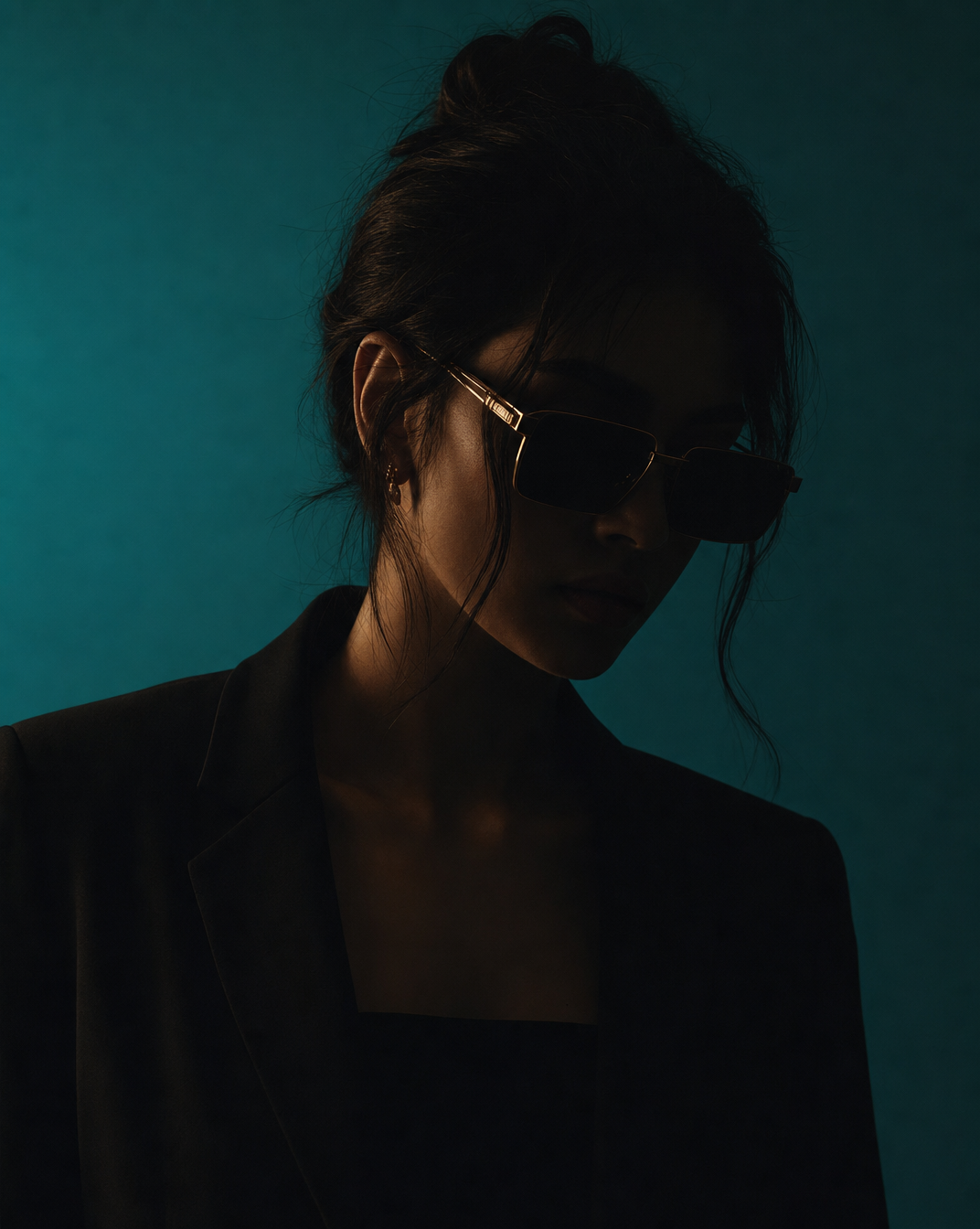
Woman in Teal Light, Shadowed Fashion Portrait
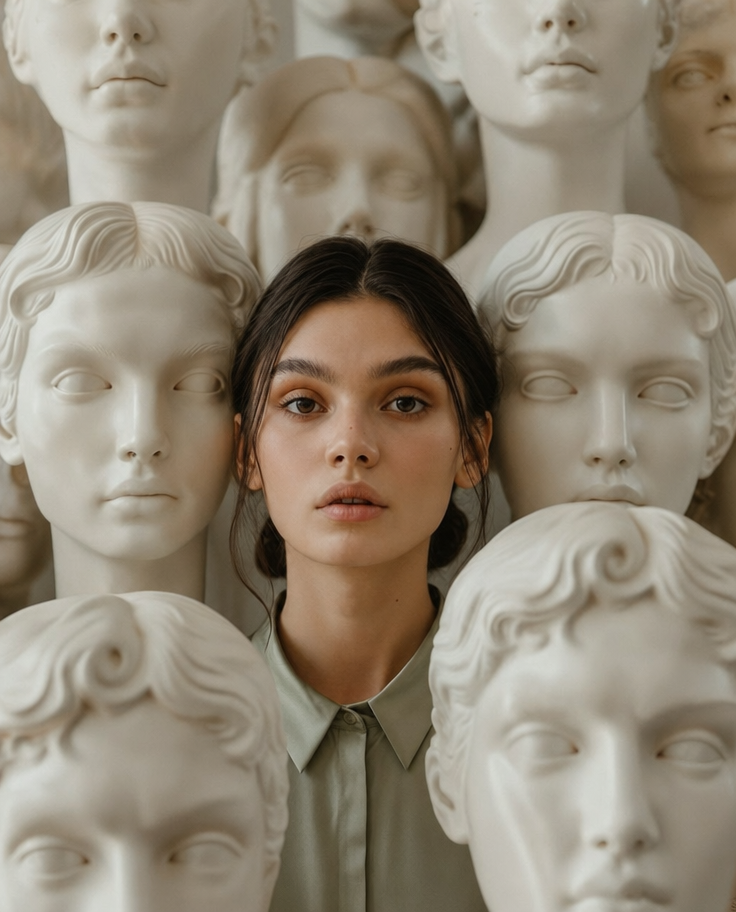
Eerie Elegance Among Marble Busts
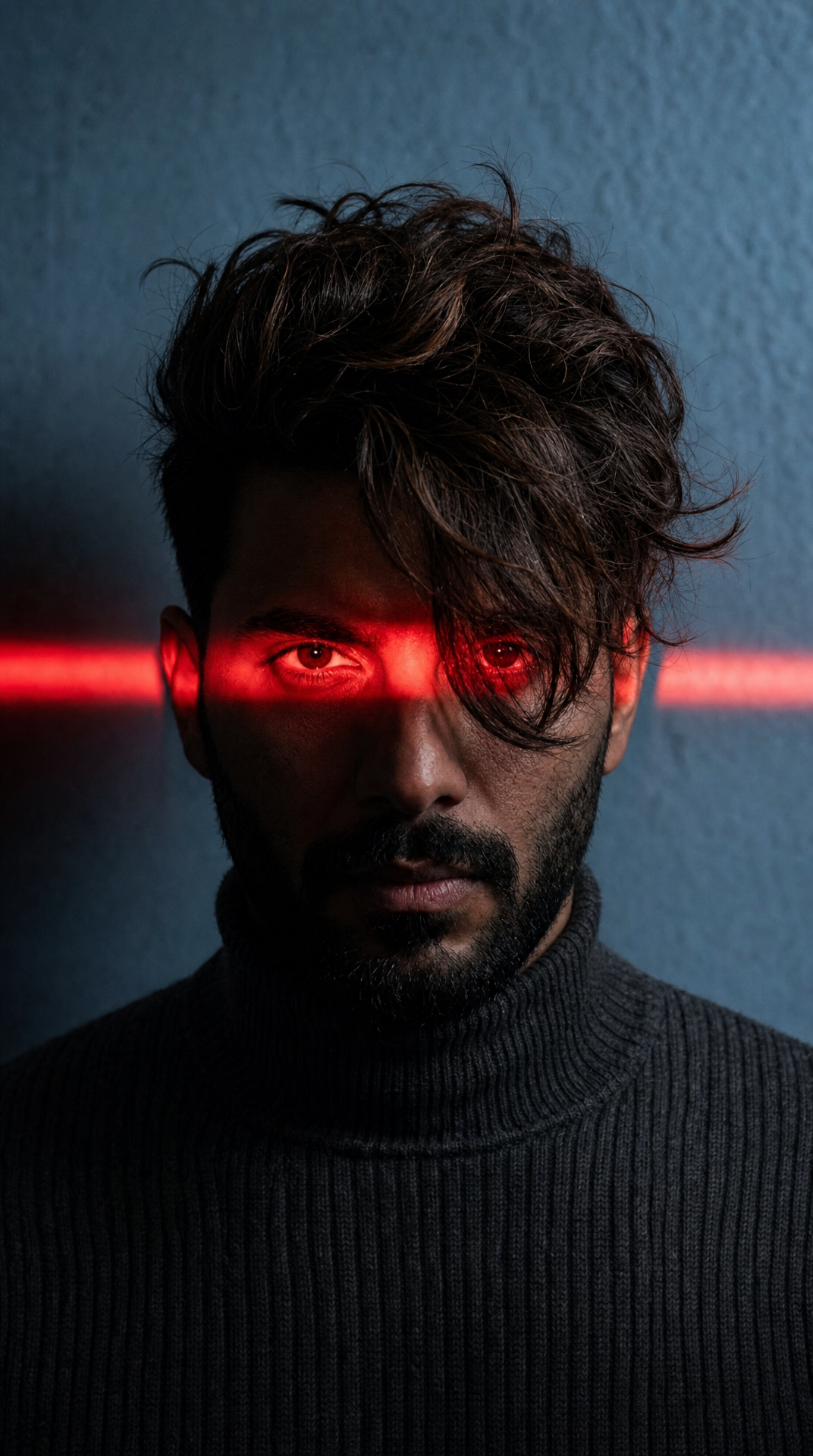
Charcoal turtleneck with red eye-beam
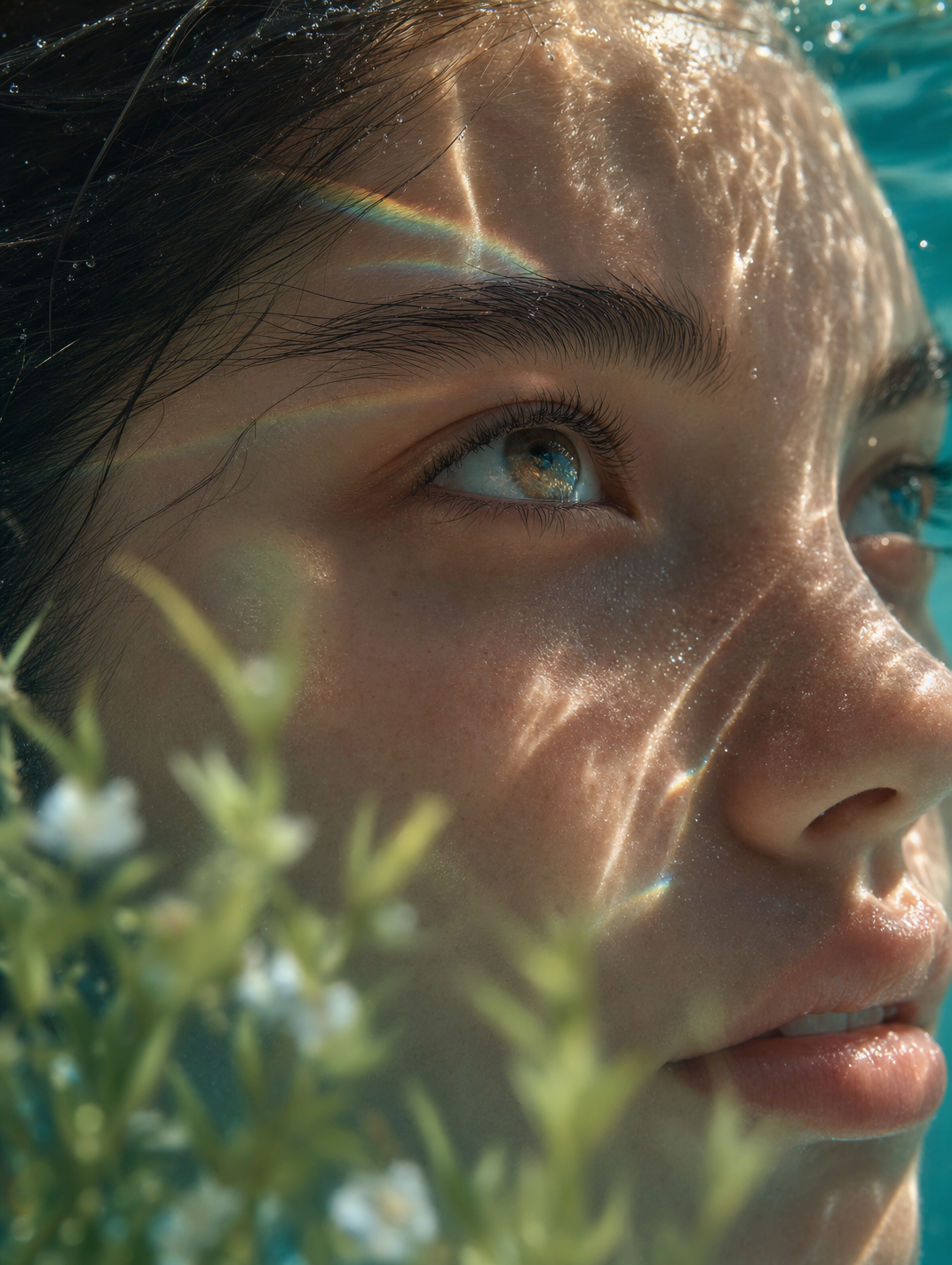
Dreamy Macro Portrait in Cool Water