Why this works
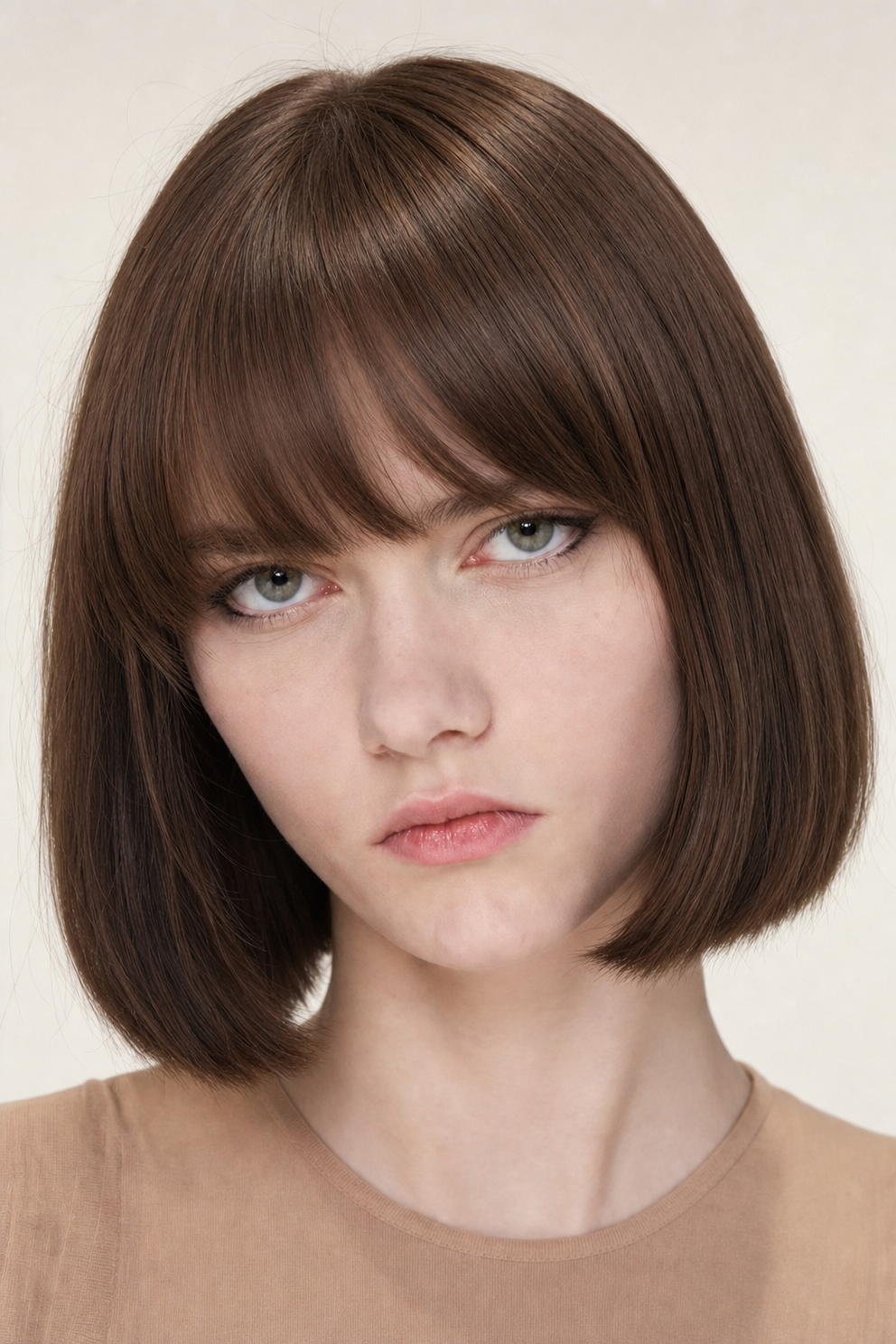
The close-up head-and-shoulders framing makes the glossy chestnut-brown bob, pale skin, light green eyes, and neutral expression carry the portrait instead of letting the setting compete. “Plain off-white background” and “clean composition” create the sparse, editorial space, while “soft diffused lighting” with “even, minimal shadows” keeps the mood calm and understated. The dominant brown comes directly from “glossy chestnut-brown bob haircut,” which gives the otherwise pale, low-contrast image its main visual anchor.
FAQ
→How do I make the eyes and expression more central in the portrait?
Keep “close-up head-and-shoulders framing,” but replace “neutral, composed expression” with “direct, intense gaze with a subtle confident half-smile” and add “sharp catchlights in the light green eyes.” Replace “soft diffused lighting” with “focused key light on the face” to give the eyes stronger emphasis without changing the studio setting.
→How do I turn the calm editorial mood into a darker, more dramatic portrait?
Replace “plain off-white background” with “deep charcoal studio background,” and change “soft diffused lighting, even, minimal shadows” to “dramatic side lighting with strong facial shadows.” Keep “realistic skin texture” and “photorealistic” so the darker treatment remains grounded rather than becoming stylized.
→How do I build a coordinated series with different hair colors?
Keep “minimalist fashion editorial portrait,” “close-up head-and-shoulders framing,” “plain off-white background,” and “soft diffused lighting” unchanged, then swap “glossy chestnut-brown bob haircut” for variants such as “sleek jet-black bob,” “warm copper-red bob,” or “platinum-blonde bob.” Preserve “pale skin, light green eyes” and the “neutral, composed expression” to make hair color the controlled variable across the series.
Learn the technique behind this
- Why can't AI spell, and how do I get readable text in an image? — Older diffusion models had no character-level representation of text, so they produced letterform-shaped texture instead of words.
- How should a prompt be structured, and does word order matter? — A prompt that behaves predictably names one subject first, then what it is doing, then where, then the light, then the lens or medium, then the style.
- Which aspect ratio should I use, and how does it change the image? — Aspect ratio determines what the model composes, not how it's cropped afterwards.
Related prompts
Woman in Teal Light, Shadowed Fashion Portrait
Eerie Elegance Among Marble Busts
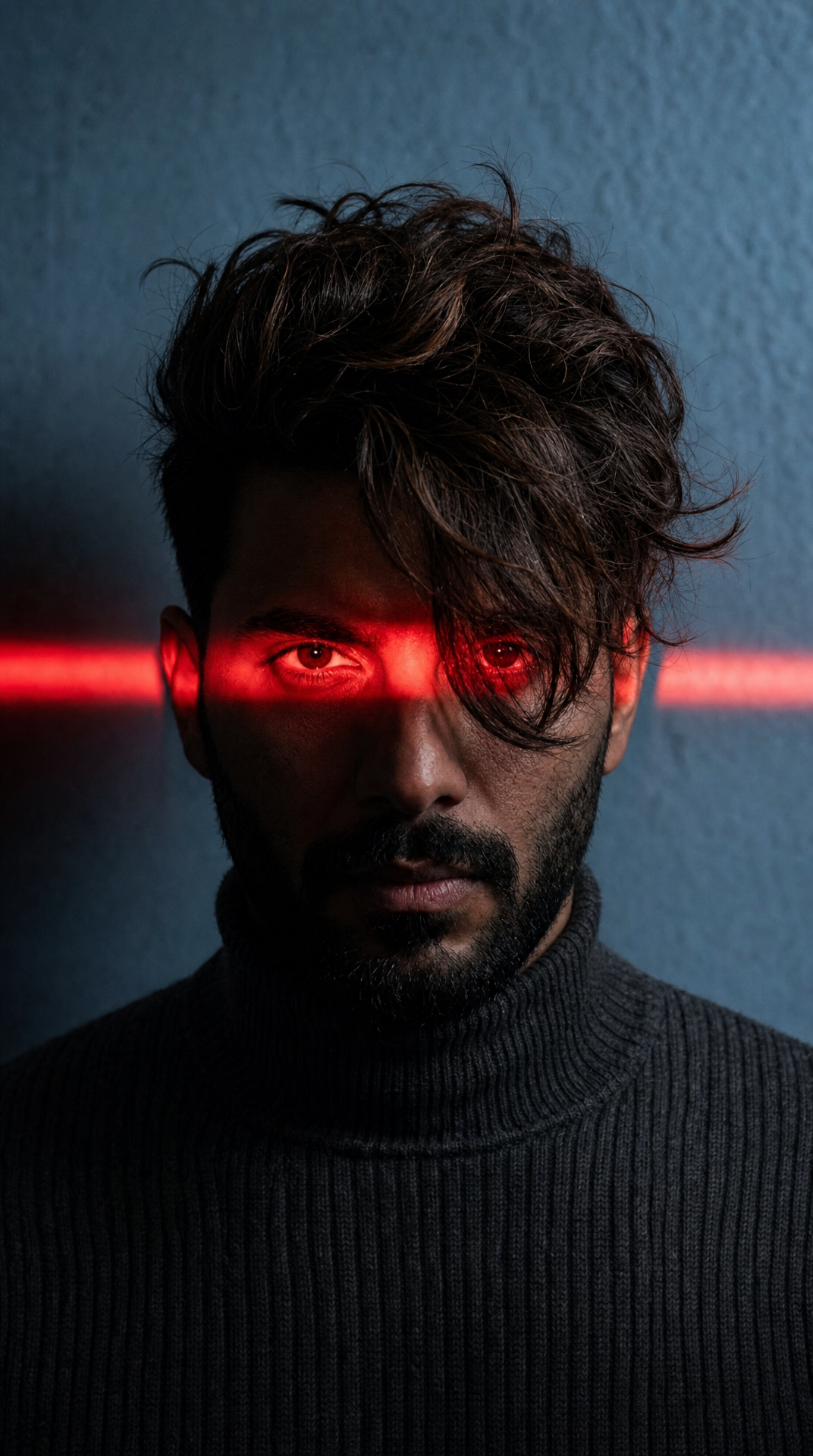
Charcoal turtleneck with red eye-beam
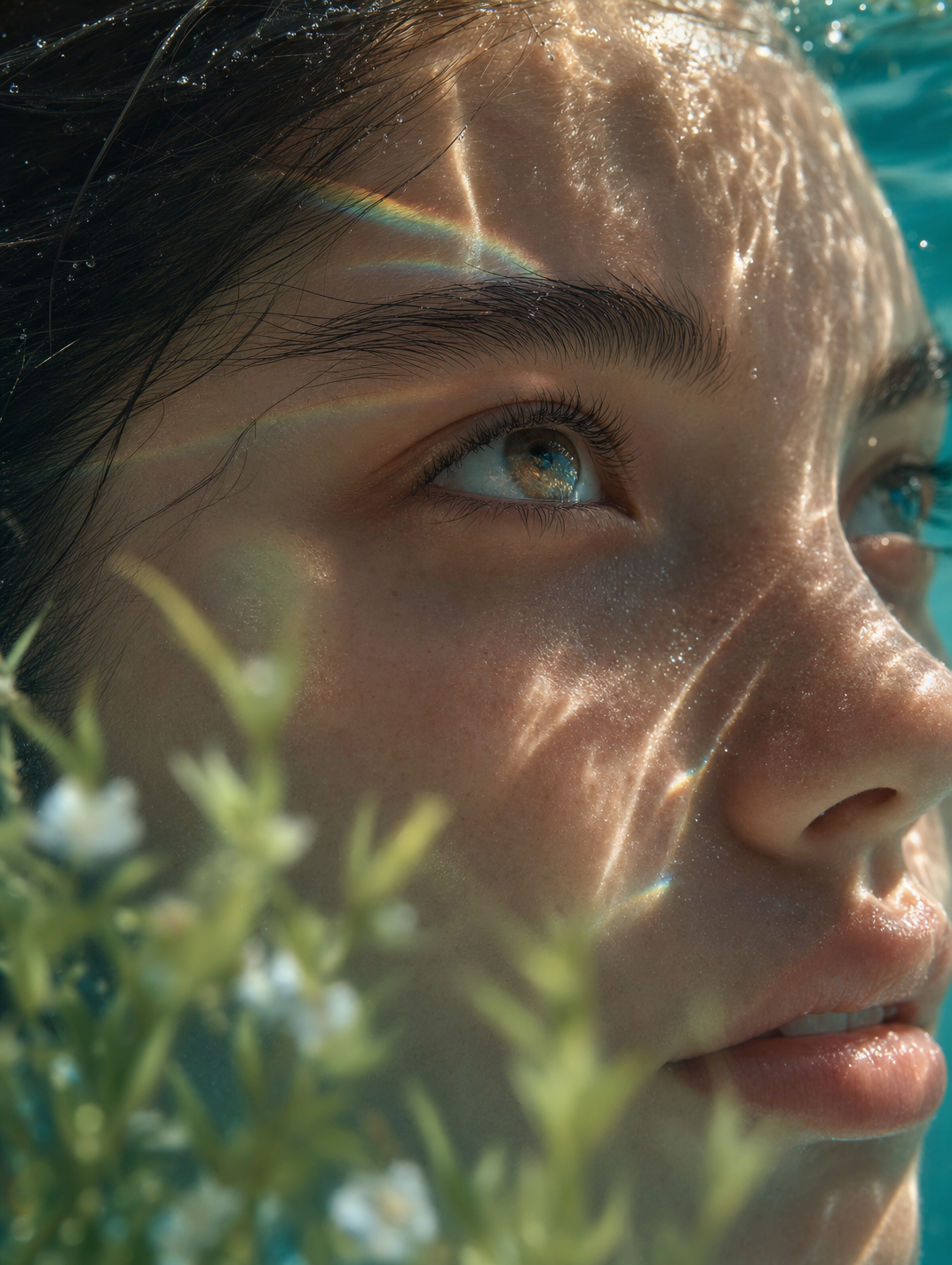
Dreamy Macro Portrait in Cool Water