Same prompt, generated with each model separately — click one to see how it holds up.
Why this works
The phrase “close-up editorial photorealistic portrait” establishes the tight portrait-closeup composition, while “shallow depth of field with a softly blurred background” isolates the man’s face from the setting. His calm, polished mood comes from “calm, confident expression with a slight smile,” supported by the navy blazer and light gray shirt; the dominant gray palette reinforces the restrained editorial tone. “Natural flattering light,” “realistic skin texture,” and “high-detail photorealism” keep the skin, beard, hair, and subtle glasses reflections credible rather than overly stylized.
FAQ
→How do I change this prompt to make the portrait feel more dramatic and serious?
Replace “natural flattering light” with “directional chiaroscuro side-lighting with deeper facial shadows,” and replace “calm, confident expression with a slight smile” with “serious, unsmiling expression with an intense gaze.” Keep “close-up” and “shallow depth of field” to preserve the controlled editorial framing.
→How do I make the glasses and face more visually prominent?
Change “rectangular clear-frame glasses with subtle reflections” to “distinct rectangular clear-frame glasses with crisp controlled reflections,” and replace “close-up” with “tight extreme close-up focused on the eyes, glasses, and upper face.” Retain “high-detail photorealism” and “realistic skin texture” so the added emphasis remains natural.
→How do I build a varied portrait series from this prompt?
Keep the fixed identity details, including “middle-aged man,” “short styled ash-brown hair,” and “neatly trimmed beard,” then swap “navy blazer over a light gray crew-neck shirt” for controlled wardrobe alternatives such as “charcoal suit over a white shirt” or “camel overshirt over a black knit.” For location variations, replace “softly blurred background” with phrases such as “blurred modern office,” “blurred library interior,” or “blurred urban street,” while keeping “editorial photorealistic portrait” consistent across the series.
Learn the technique behind this
- Why can't AI spell, and how do I get readable text in an image? — Older diffusion models had no character-level representation of text, so they produced letterform-shaped texture instead of words.
- How should a prompt be structured, and does word order matter? — A prompt that behaves predictably names one subject first, then what it is doing, then where, then the light, then the lens or medium, then the style.
- Do negative prompts work, and what should go in one? — Negative prompts work on models that support a separate negative conditioning channel — mainly Stable Diffusion and FLUX-family models.
Related prompts
Woman in Teal Light, Shadowed Fashion Portrait
Eerie Elegance Among Marble Busts
Charcoal turtleneck with red eye-beam
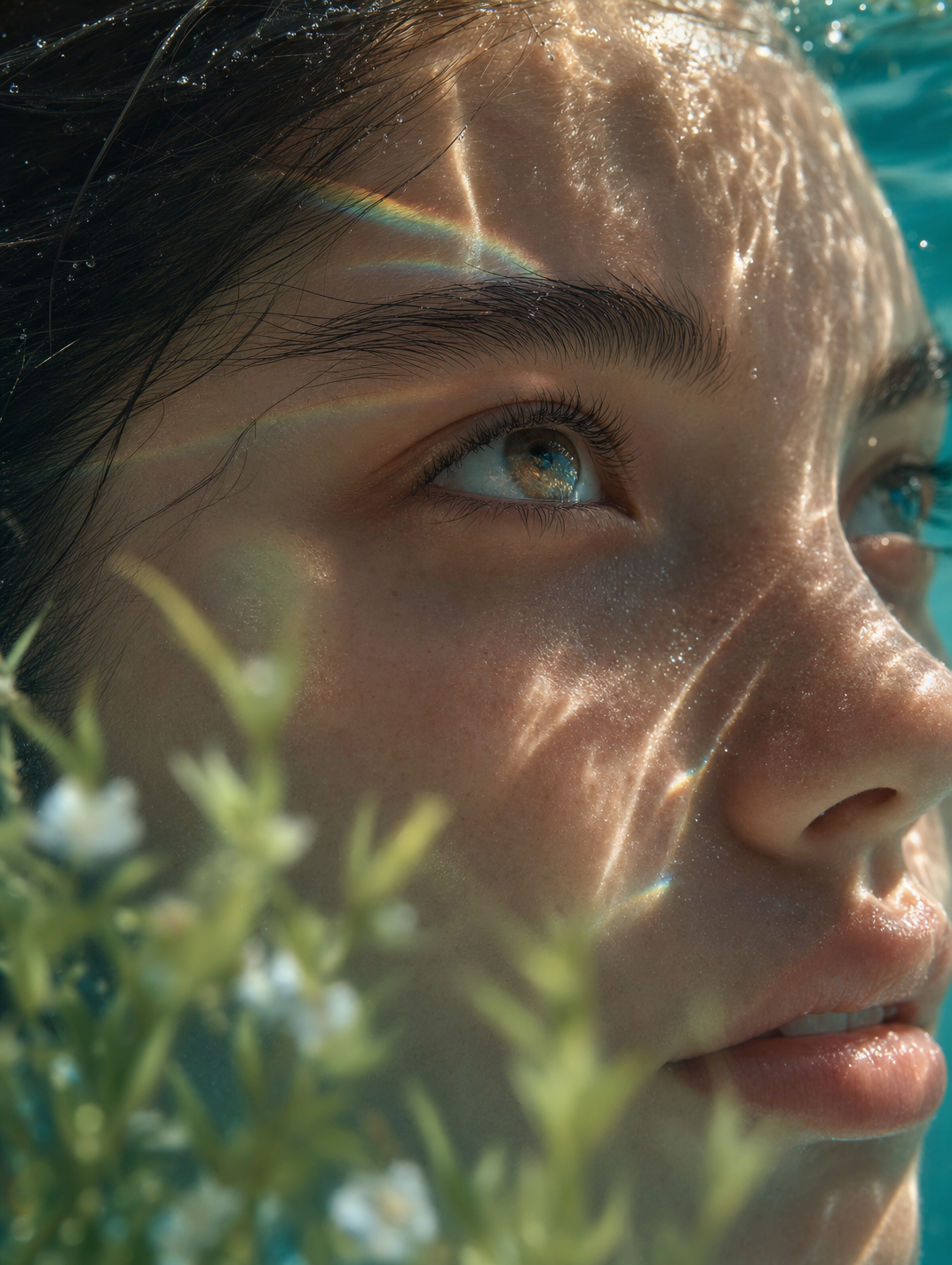
Dreamy Macro Portrait in Cool Water