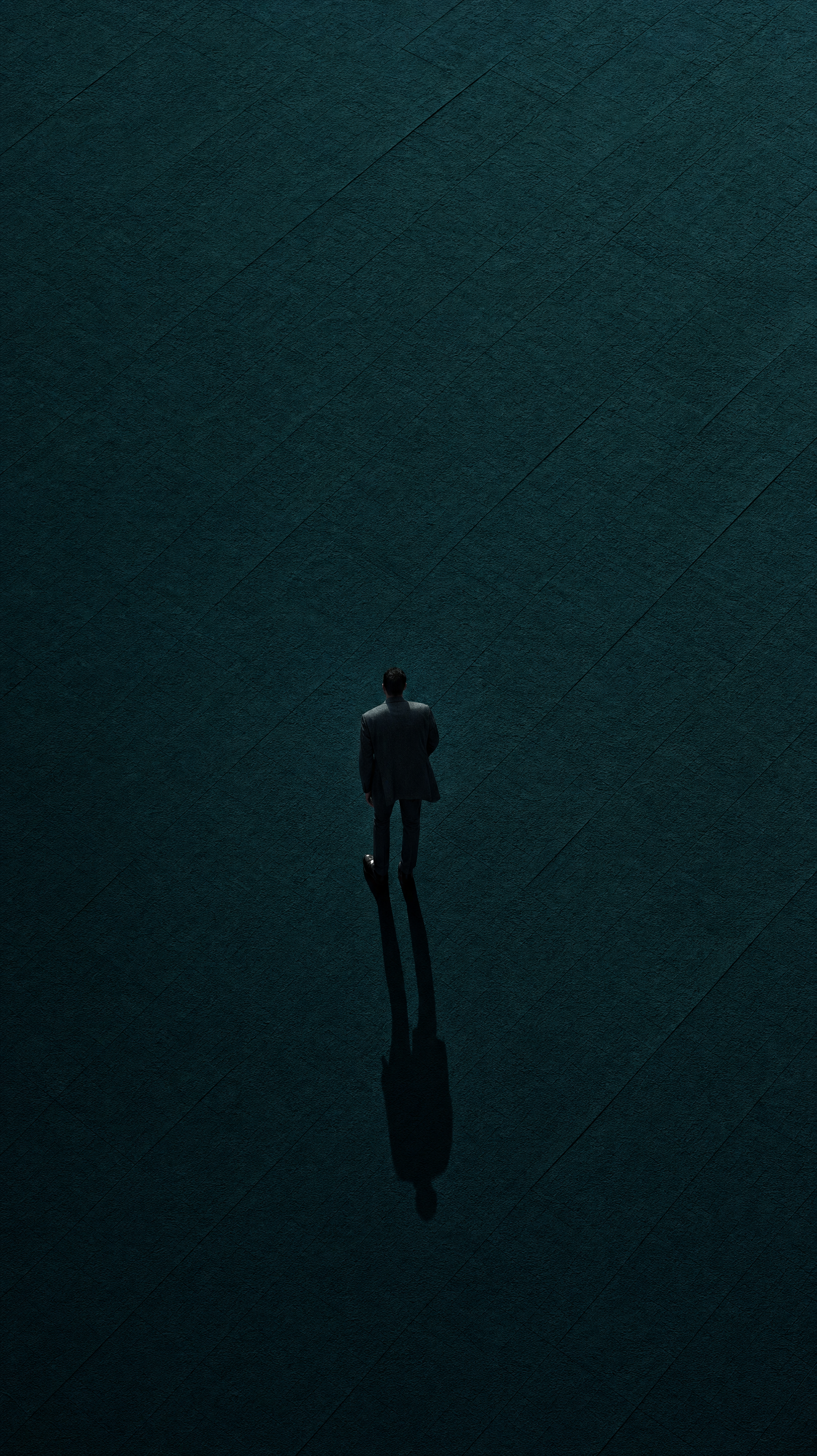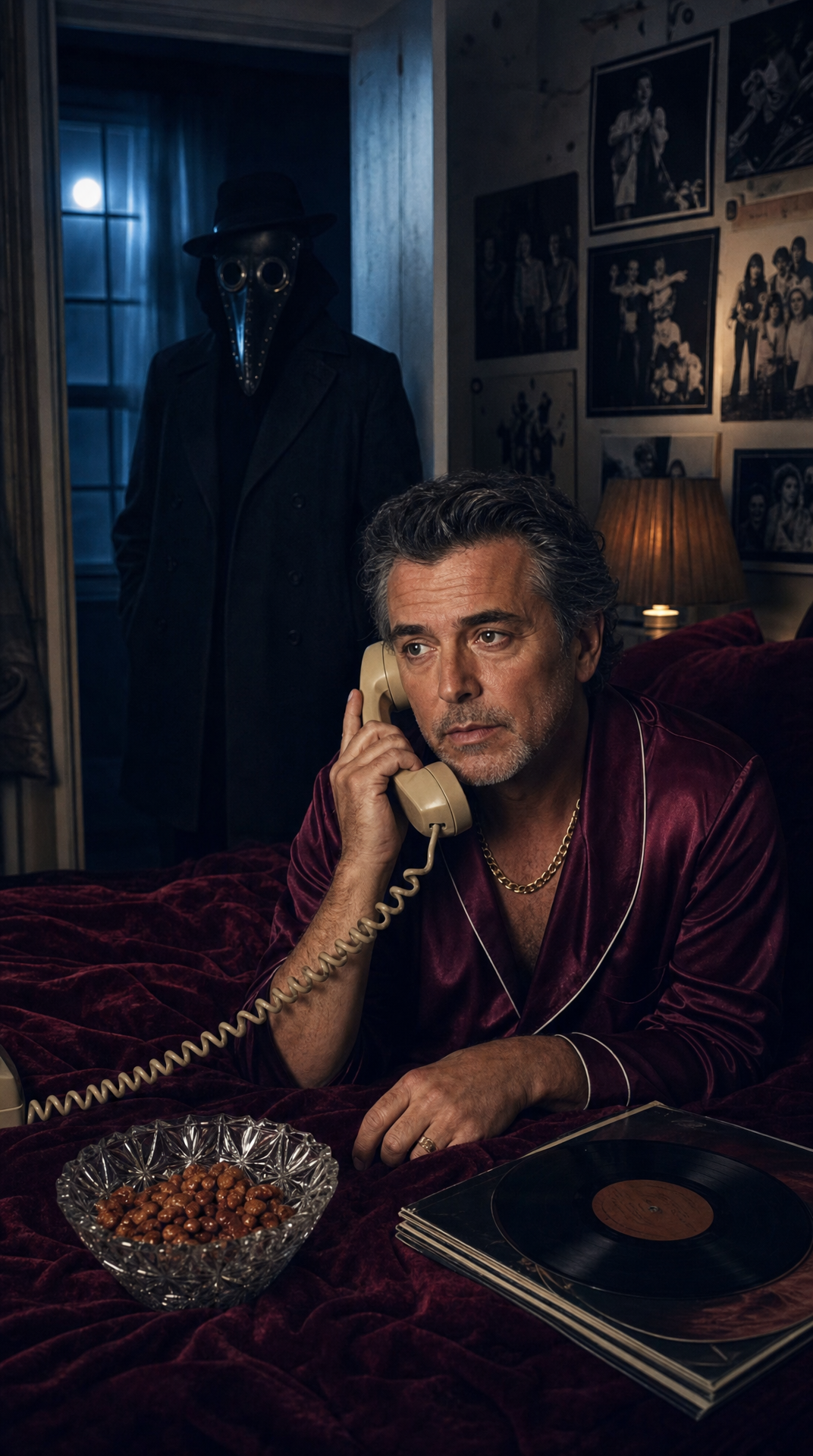
Same prompt, generated with each model separately — click one to see how it holds up.
Why this works
The phrase "cool blue moonlight streaming through a window illuminating the scene" is what produces that navy-and-sky-blue wash across the frame, while "crimson velvet sheets" and the burgundy pajama shirt punch the magenta/gold against it, so the dominant palette traces directly back to those two color callouts rather than to "cinematic photo" alone. The dread comes specifically from "in the shadowy doorway behind him stands an ominous silhouette in a long charcoal overcoat wearing a leather plague-doctor mask" placed in background text while the man remains the sharp foreground subject, which is what "shallow depth of field" is doing structurally: keeping the threat visible but soft-focused so it reads as a presence rather than a detail. The nostalgia layer is carried by "vintage concert posters and film stills covering the walls" plus the vinyl records and rotary phone, concrete props that root the horror-movie aesthetic in a specific decade rather than a generic old-timey feel. Without "tense suspenseful atmosphere with hints of psychological dread" spelled out, the same props and lighting could just as easily read as cozy retro portraiture instead of horror.
FAQ
→How do I make the masked figure feel more like the central threat instead of a background detail?
Move the doorway description earlier in the prompt and add specificity to its lighting, something like "a tall silhouette looming just inside the frame, leather plague-doctor mask catching a sliver of blue moonlight" right after the setting line, and change "shallow depth of field" to "deep focus" so both figures stay sharp and compete for attention.
→How do I shift this from suspenseful horror to warm nostalgic drama without losing the vintage feel?
Drop the "ominous silhouette in a long charcoal overcoat wearing a leather plague-doctor mask" line entirely, replace "cool blue moonlight" with "warm amber lamplight," and swap "tense suspenseful atmosphere with hints of psychological dread" for "quiet reflective atmosphere, wistful and melancholic." Keep the vinyl records, rotary phone, and concert posters since those are what carry the retro mood on their own.
→How do I turn this into a series with different decades or settings while keeping the same tension?
Keep the structure "ominous silhouette in [outfit] wearing [mask/object]" in the shadowy doorway and the "cool blue moonlight streaming through a window" lighting line fixed across versions, then swap only the setting and props: try "1980s home office with a boxy CRT monitor and cassette tapes" or "1920s parlor with a gramophone and lace curtains" so each image reads as the same threat transplanted into a new decade.
Learn the technique behind this
- Why can't AI spell, and how do I get readable text in an image? — Older diffusion models had no character-level representation of text, so they produced letterform-shaped texture instead of words.
- How do I keep one consistent style across a whole set of images? — Style consistency is more achievable than character consistency because style lives in describable attributes.
- How should a prompt be structured, and does word order matter? — A prompt that behaves predictably names one subject first, then what it is doing, then where, then the light, then the lens or medium, then the style.
Related prompts
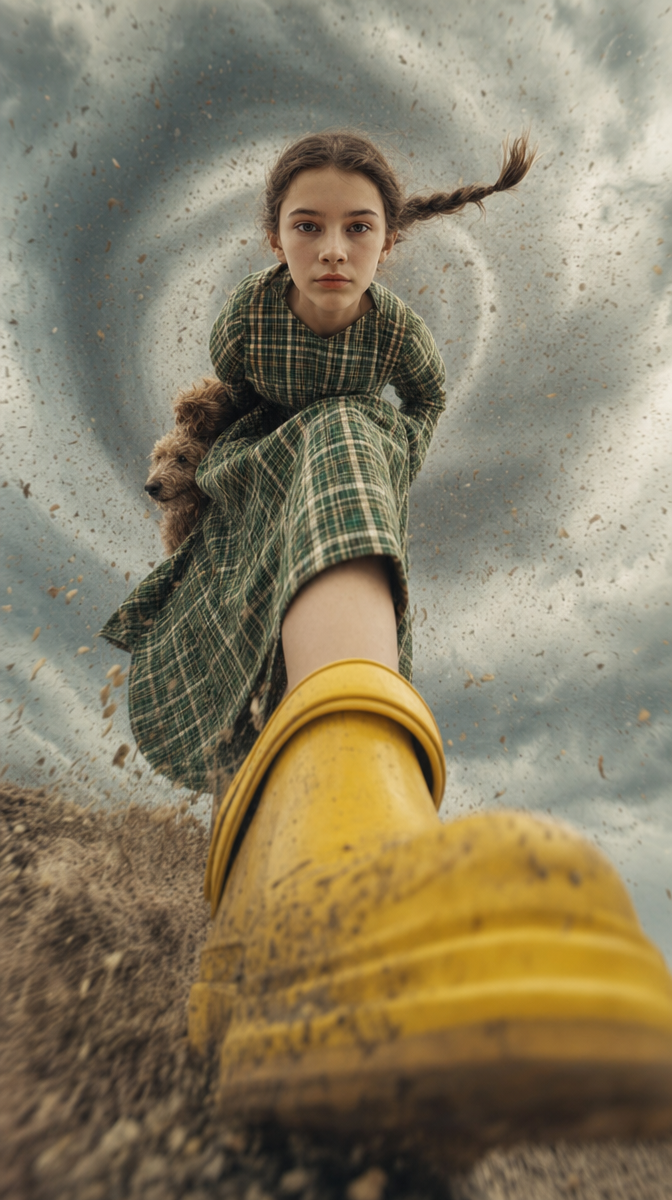
Young girl with dog in tornado
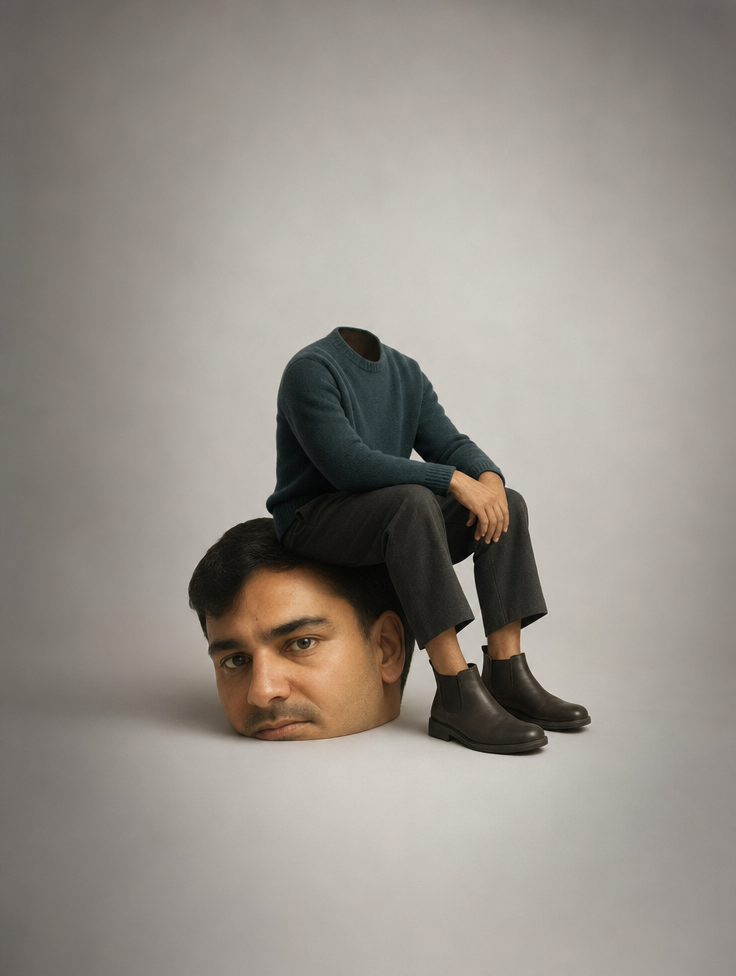
Headless sitter atop a giant head
Crimson-Cloaked Specter in Candlelit Ballroom
Violet Holographic Hands Almost Touching