Why this works
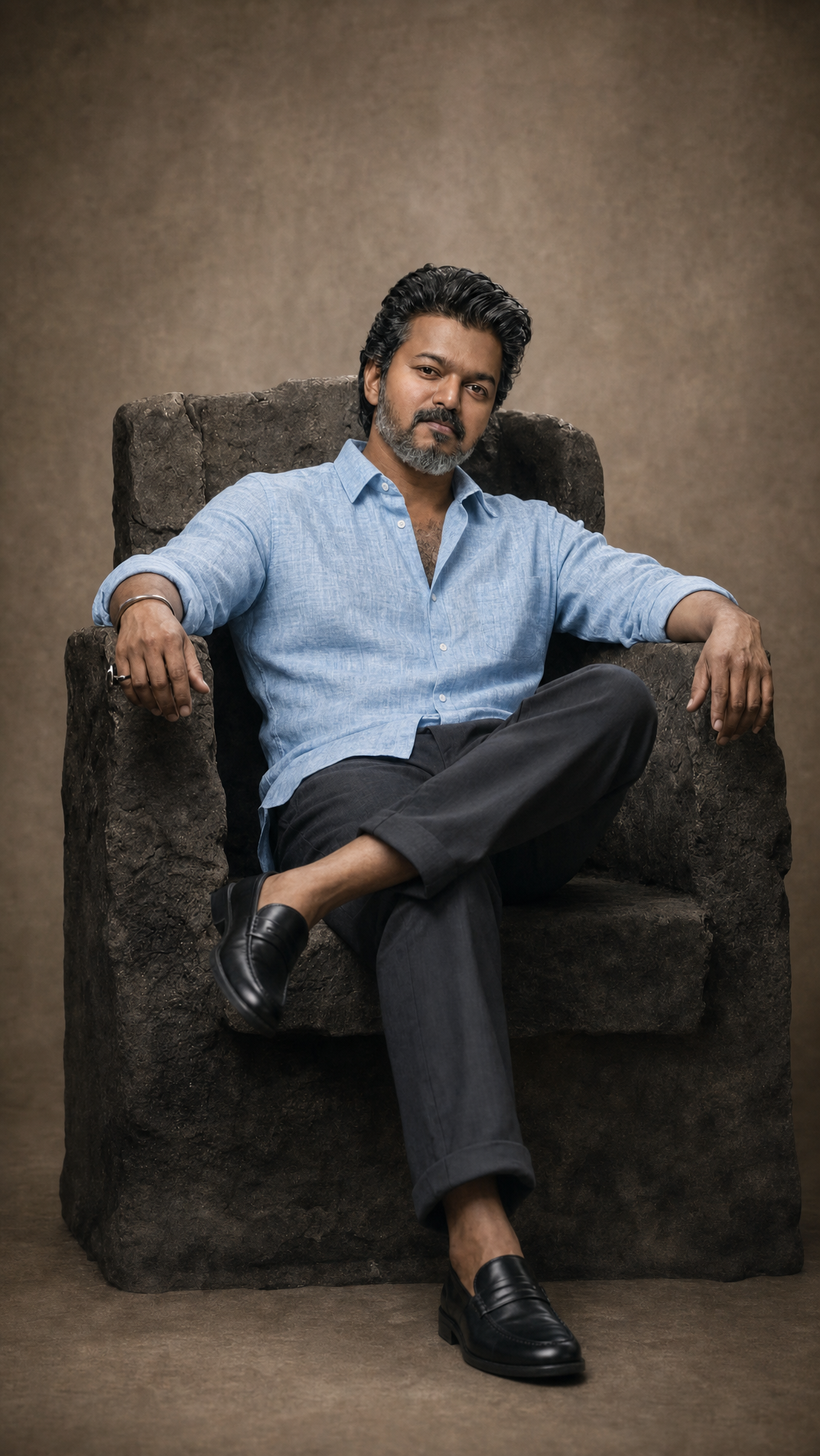
The phrase “confident middle-aged man seated cross-legged in a rugged dark textured chair” establishes the calm, self-possessed pose and gives the full-body portrait a strong central anchor. “Warm taupe backdrop” paired with “soft diffused studio lighting with gentle warm highlights” creates a restrained, welcoming studio mood, while the light blue linen shirt and dark charcoal trousers provide the image’s dominant blue-and-black color structure. “Shallow depth of field” separates the subject from the backdrop, and “crisp facial detail” plus “realistic skin texture” keeps attention on his expression and face despite the full-body framing.
FAQ
→How do I make the portrait feel more formal and authoritative?
Replace “relaxed editorial pose with a natural expression” with “upright formal posture with a composed, direct expression,” and change “light blue linen shirt with sleeves slightly rolled and dark charcoal trousers” to “deep navy tailored suit, crisp white dress shirt, and polished black leather shoes.” Keep “seated cross-legged” if you want authority with a less rigid silhouette.
→How do I make the man more prominent than the chair and backdrop?
Replace “seated cross-legged in a rugged dark textured chair” with “seated cross-legged in a minimally visible chair, centered and filling most of the frame,” and change “portrait-full-body” to “three-quarter portrait framing.” Retain “shallow depth of field” while adding “background strongly blurred and chair texture subdued” to reduce competing detail.
→How do I create a coordinated series of variations from this prompt?
Keep “photorealistic studio portrait,” “crisp facial detail,” “realistic skin texture,” and the subject’s age and pose unchanged, then swap only the wardrobe and backdrop phrases. For example, replace “warm taupe backdrop” with “cool slate-blue backdrop” and “light blue linen shirt...dark charcoal trousers” with “cream knit polo and olive trousers” for one variation, or use “muted terracotta backdrop” with “soft gray overshirt and black trousers” for another.
Learn the technique behind this
- Why can't AI spell, and how do I get readable text in an image? — Older diffusion models had no character-level representation of text, so they produced letterform-shaped texture instead of words.
- How should a prompt be structured, and does word order matter? — A prompt that behaves predictably names one subject first, then what it is doing, then where, then the light, then the lens or medium, then the style.
- Do negative prompts work, and what should go in one? — Negative prompts work on models that support a separate negative conditioning channel — mainly Stable Diffusion and FLUX-family models.
Related prompts
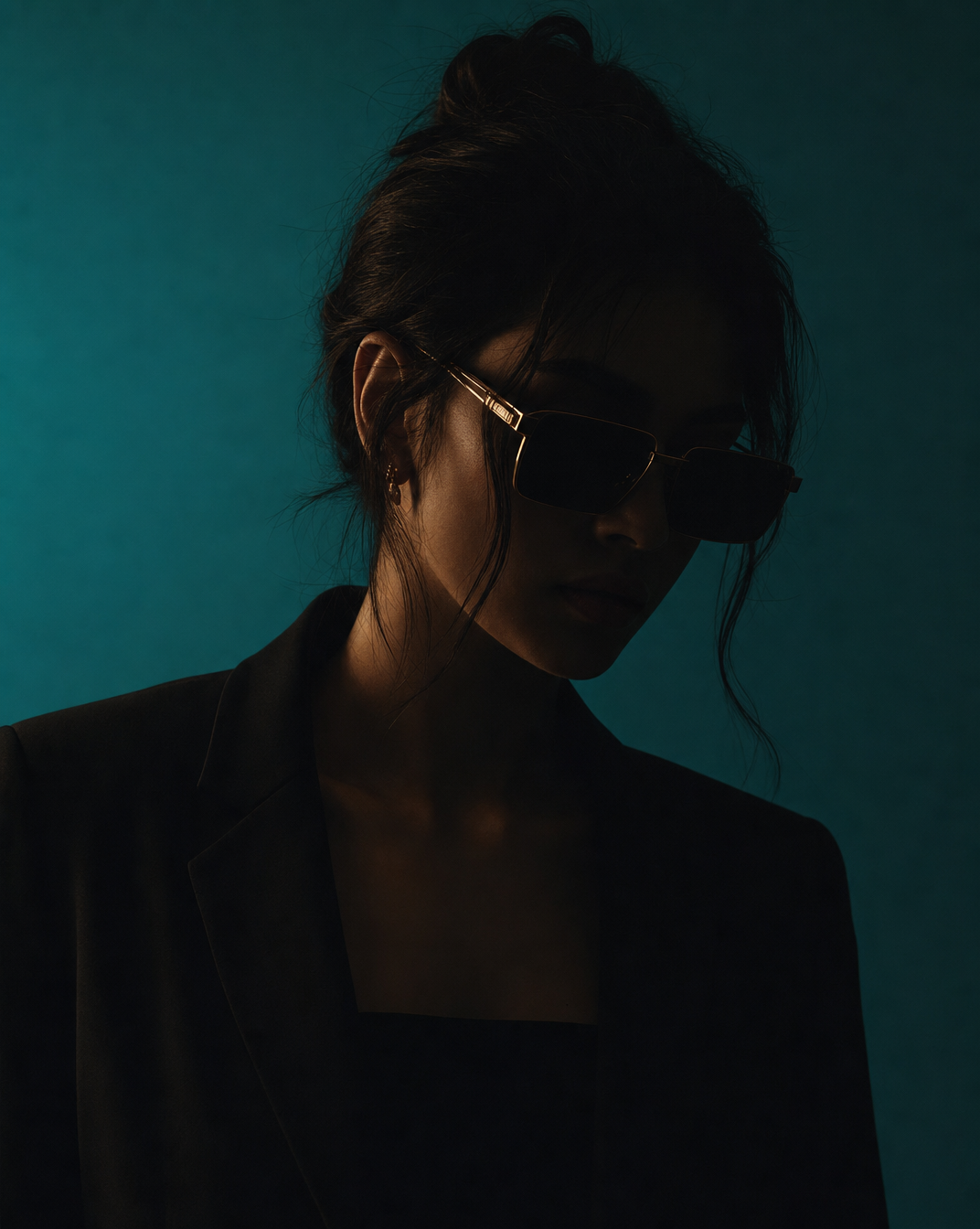
Woman in Teal Light, Shadowed Fashion Portrait
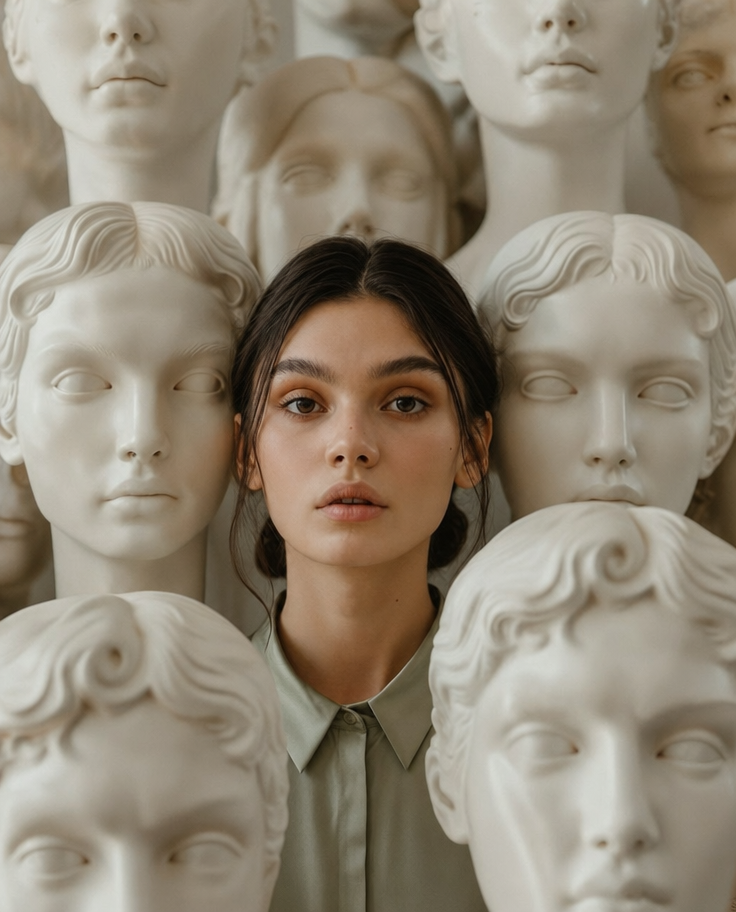
Eerie Elegance Among Marble Busts
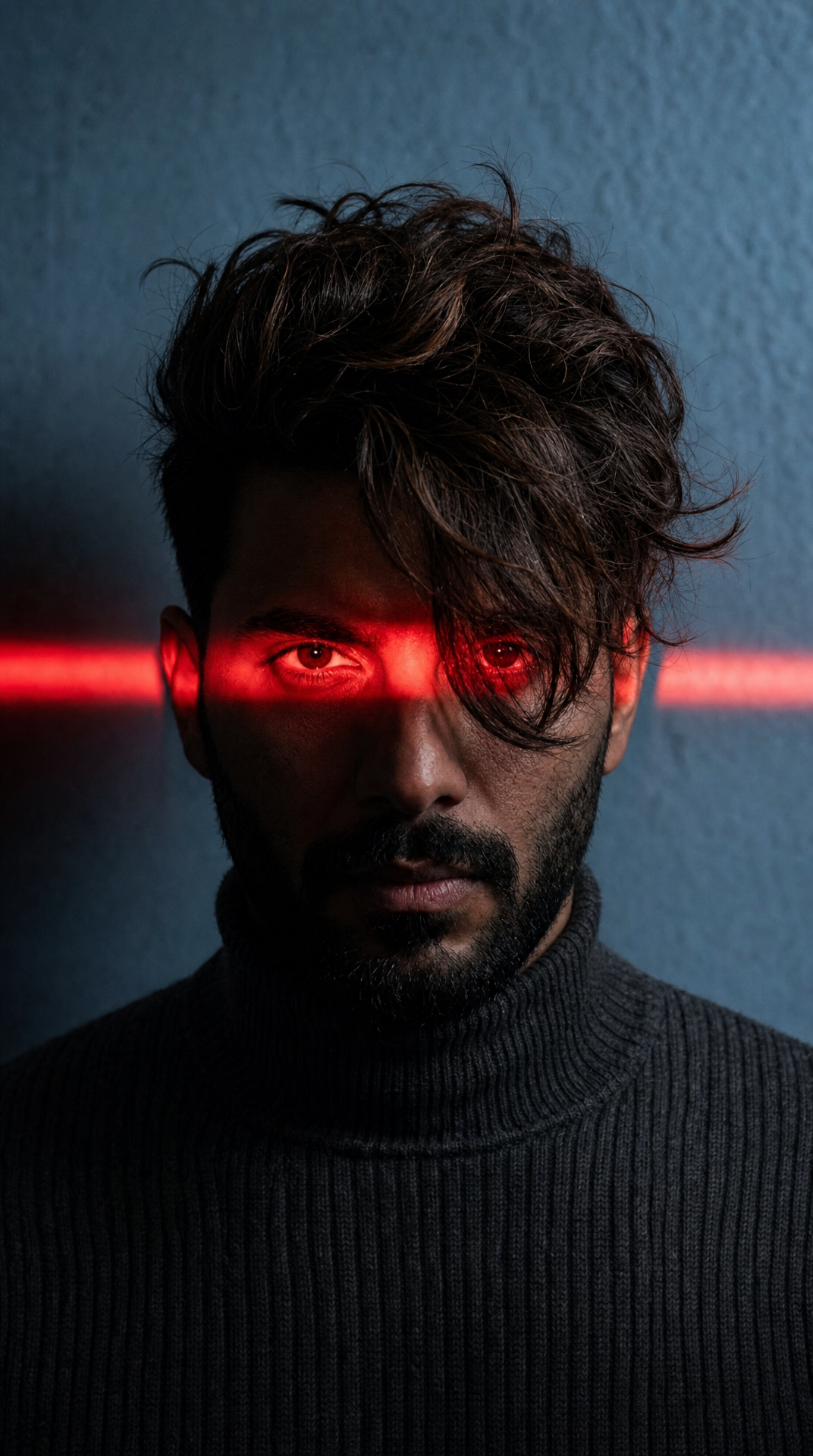
Charcoal turtleneck with red eye-beam
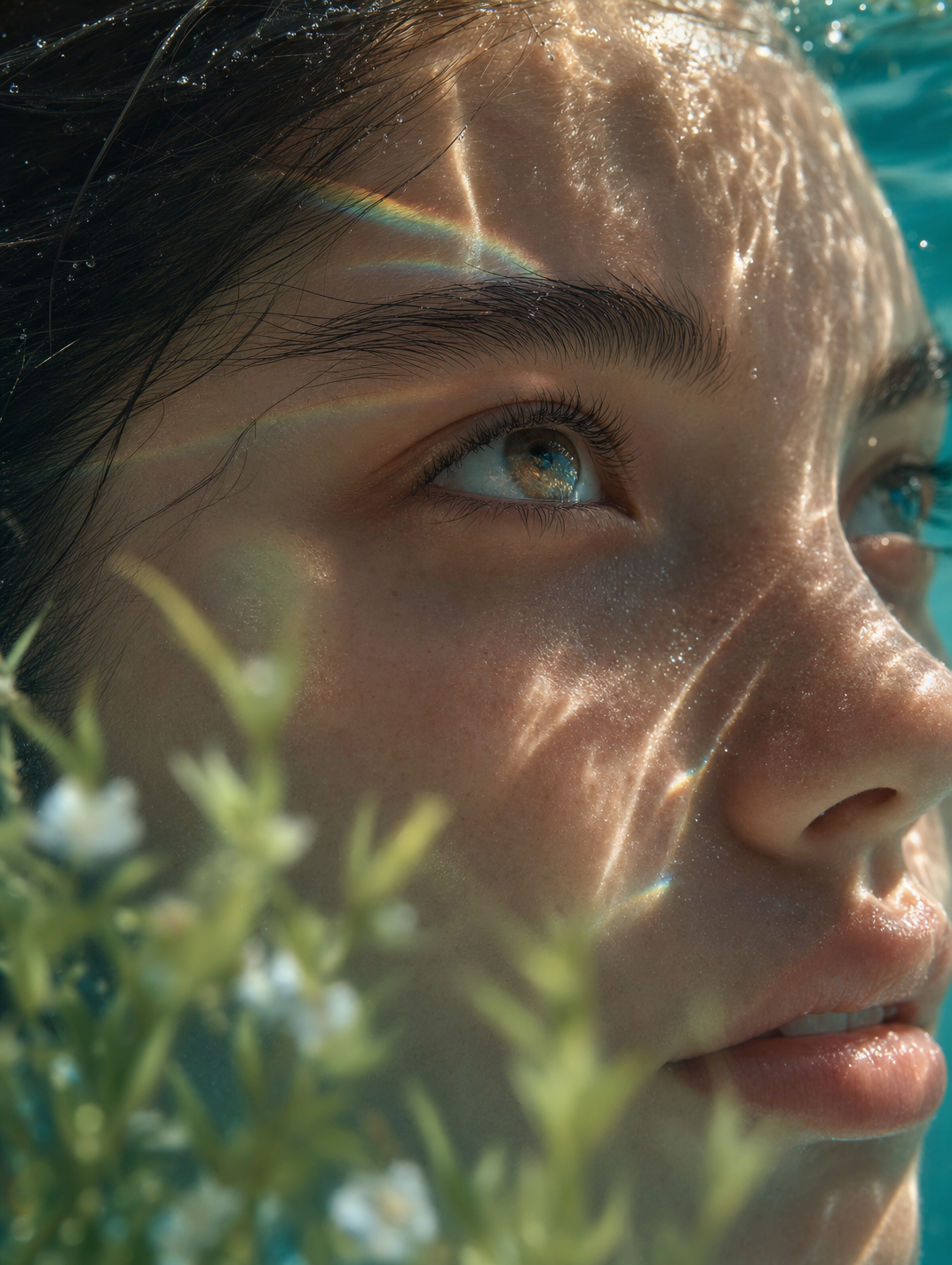
Dreamy Macro Portrait in Cool Water