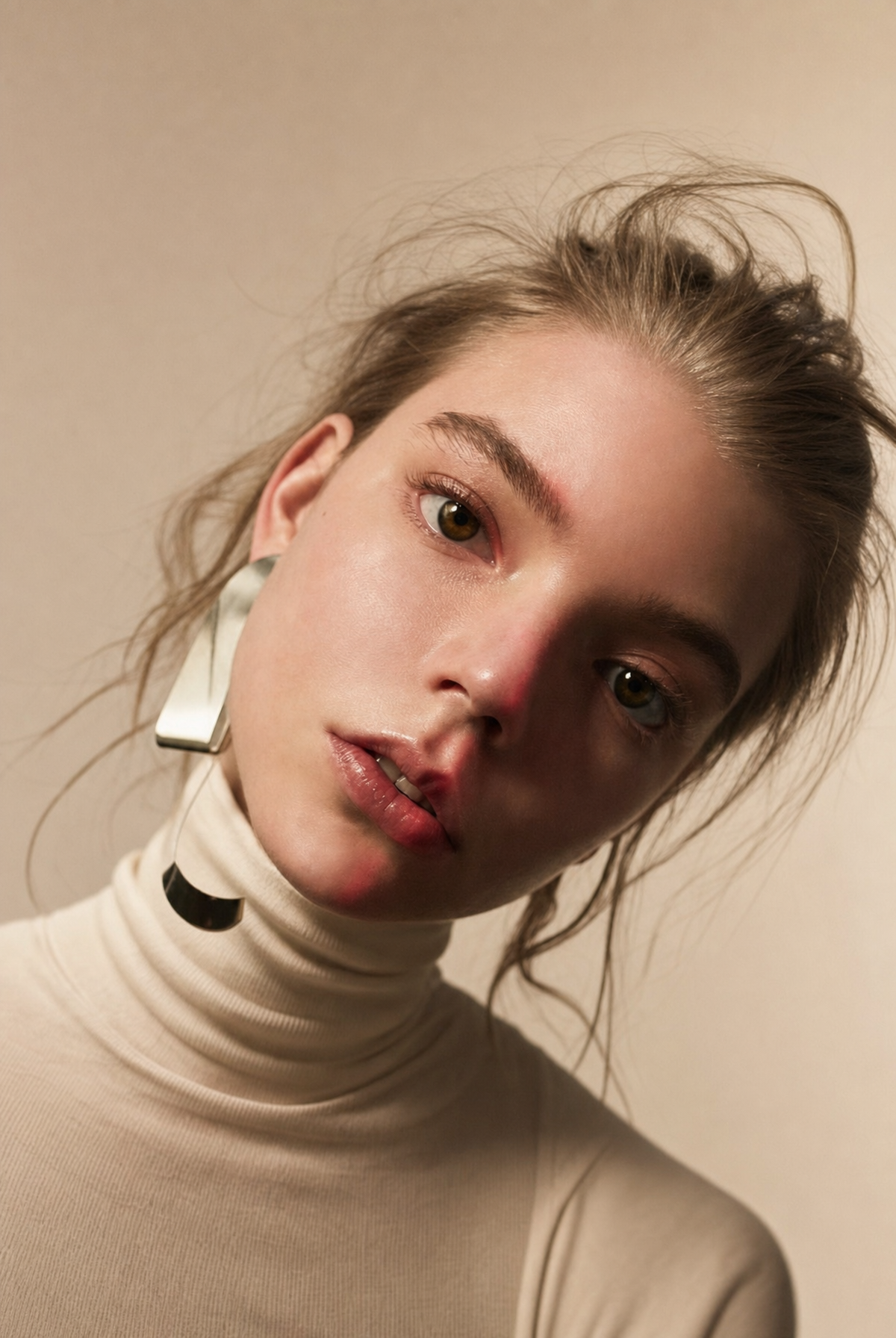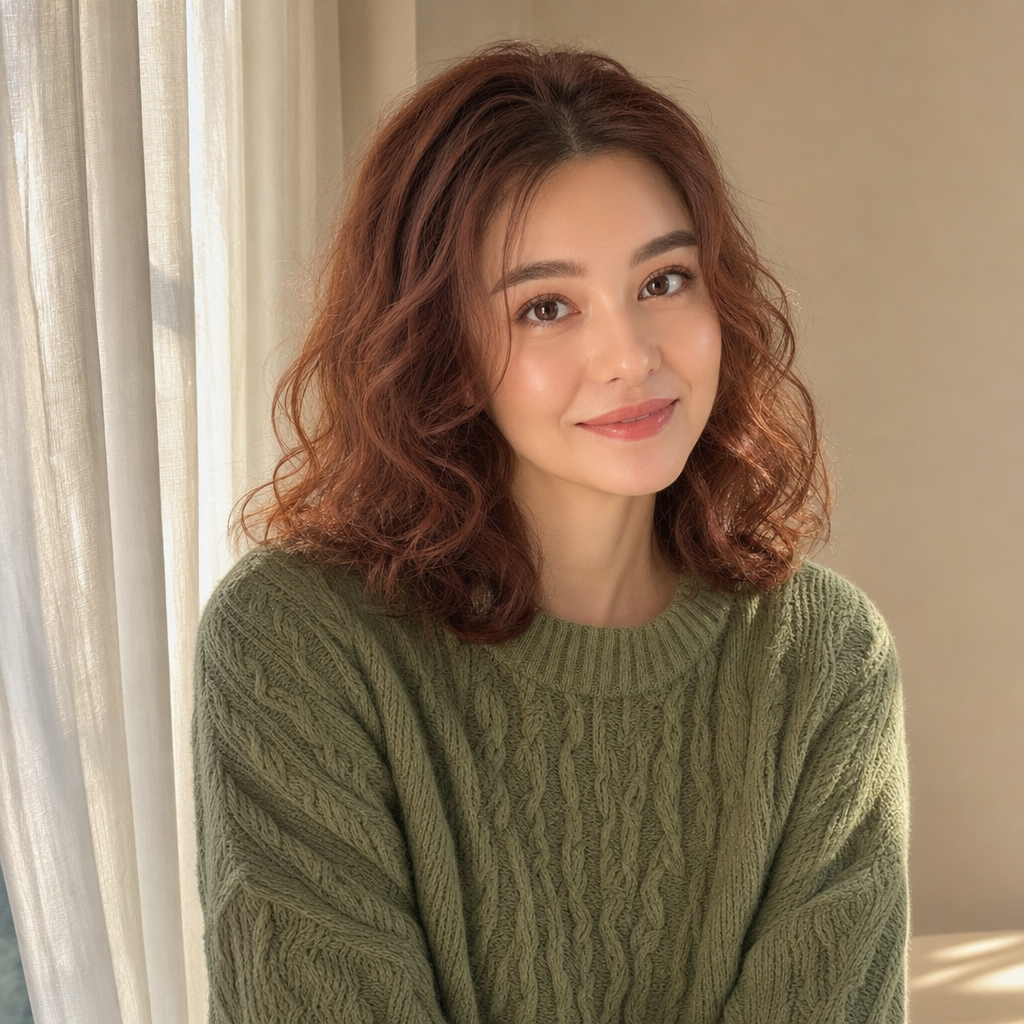
Same prompt, generated with each model separately — click one to see how it holds up.
Why this works
The copper-red curly hair and sage green sweater are what generate the orange/olive color split visible in the dominant palette, since those two phrases are the only saturated color anchors in an otherwise neutral scene. 'Large window with white sheer curtains and soft afternoon light streaming through' is doing the work of the beige/tan wash across the frame, softening contrast so the portrait reads warm rather than clinical. 'Shallow depth of field' is what pushes the window and curtains into a soft blur behind her, keeping the composition a tight portrait-closeup instead of a wider environmental shot. 'Serene expression' and 'soft diffused lighting' together keep the mood calm and cheerful rather than dramatic, since neither phrase introduces any hard shadow or tension into the face.
FAQ
→How do I make the lighting more dramatic instead of soft and warm?
Replace 'soft diffused afternoon light streaming through' with 'harsh directional light with strong shadows' and swap 'soft diffused lighting' for 'high-contrast side lighting'. That shift alone will pull the palette away from the current beige/tan wash toward deeper shadow tones and change the mood from cheerful to more moody or cinematic.
→How do I make the sweater or hair color more of the focal point instead of the face?
Add framing language like 'close-up on the cable-knit texture' or 'camera focused on the sweater's weave' and change 'shallow depth of field' to 'macro focus on fabric texture with face softly blurred'. Right now the prompt's focus words all point at the face, so redirecting the depth-of-field instruction is what moves attention to the sweater or hair curls.
→How do I turn this into a series with different settings but the same subject?
Keep 'mature woman with shoulder-length copper-red curly hair, subtle smoky eye makeup, serene expression' untouched and only swap the setting clause. Replace 'standing indoors in front of a large window with white sheer curtains' with something like 'seated at a wooden kitchen table' or 'standing in a garden with soft green foliage behind her' to generate variants that still read as the same person in a new location.
Learn the technique behind this
- Why can't AI spell, and how do I get readable text in an image? — Older diffusion models had no character-level representation of text, so they produced letterform-shaped texture instead of words.
- How should a prompt be structured, and does word order matter? — A prompt that behaves predictably names one subject first, then what it is doing, then where, then the light, then the lens or medium, then the style.
- Why does AI get hands and faces wrong, and how do I fix it? — Hands fail because they're small in frame, extremely variable in pose, and self-occluding — the model has less usable signal per pixel than for any other body part.
Related prompts
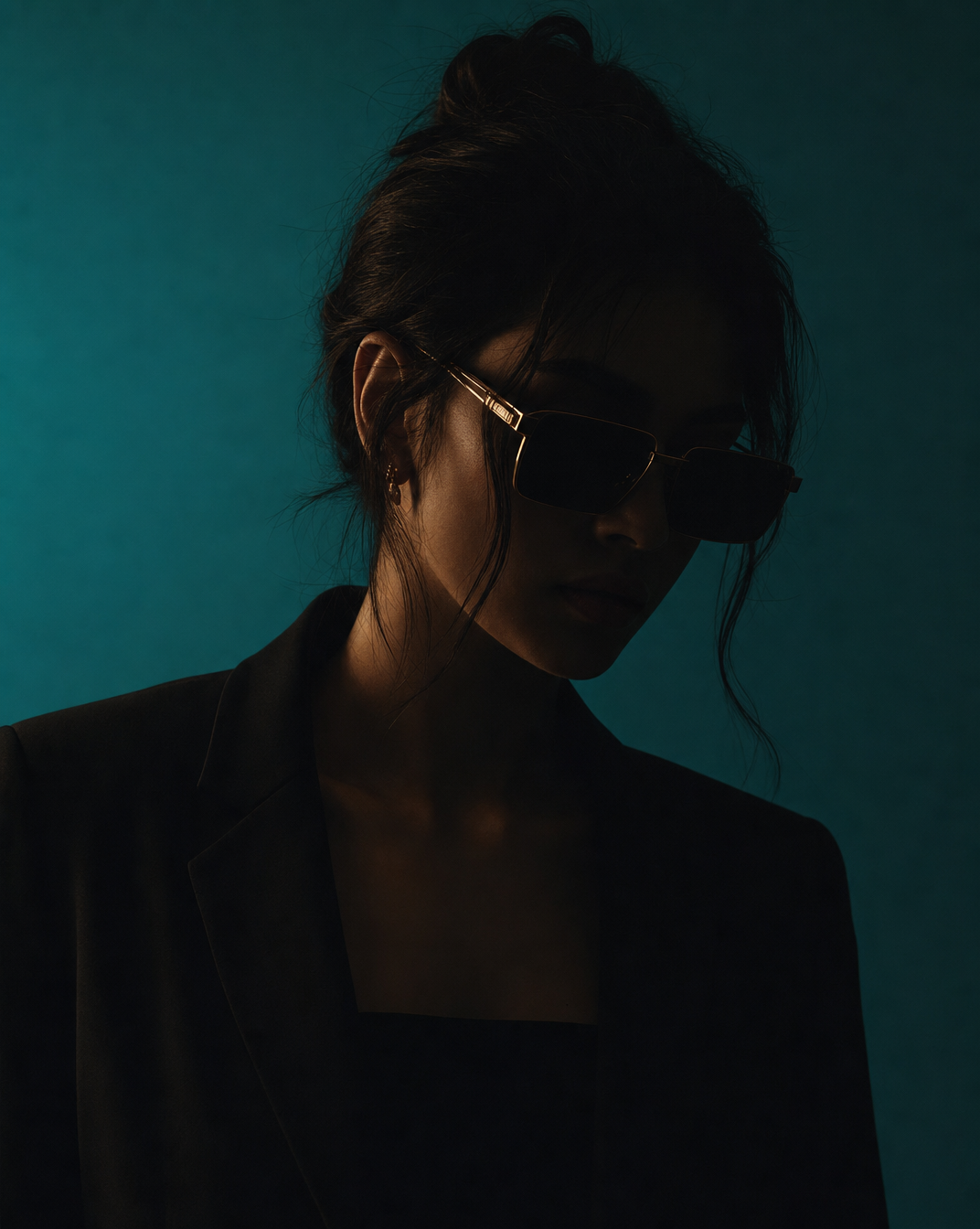
Woman in Teal Light, Shadowed Fashion Portrait
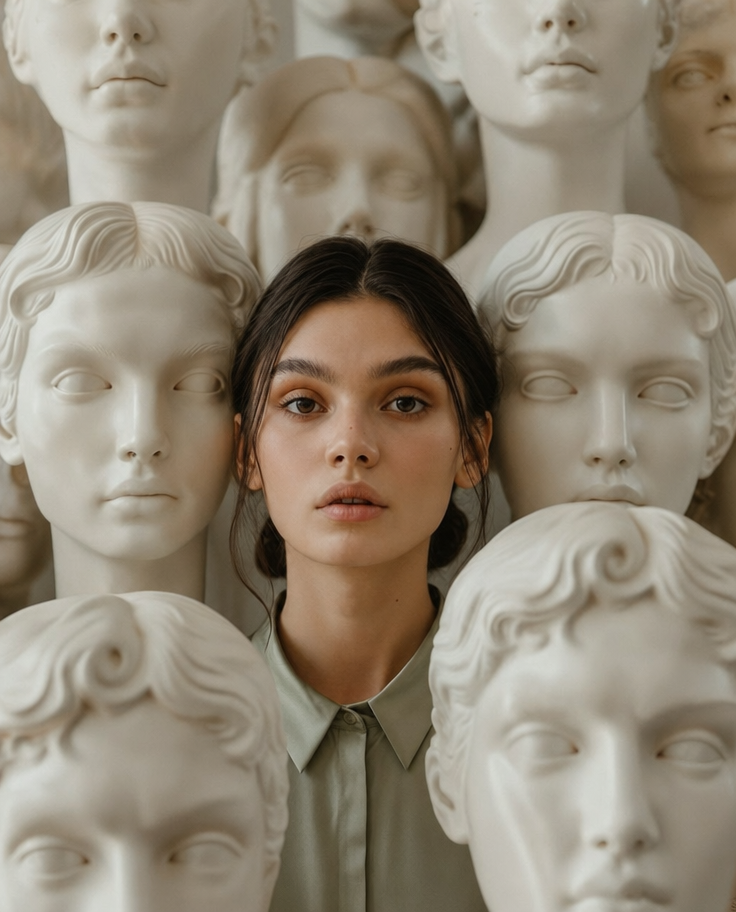
Eerie Elegance Among Marble Busts

Charcoal turtleneck with red eye-beam
Dreamy Macro Portrait in Cool Water