Why this works
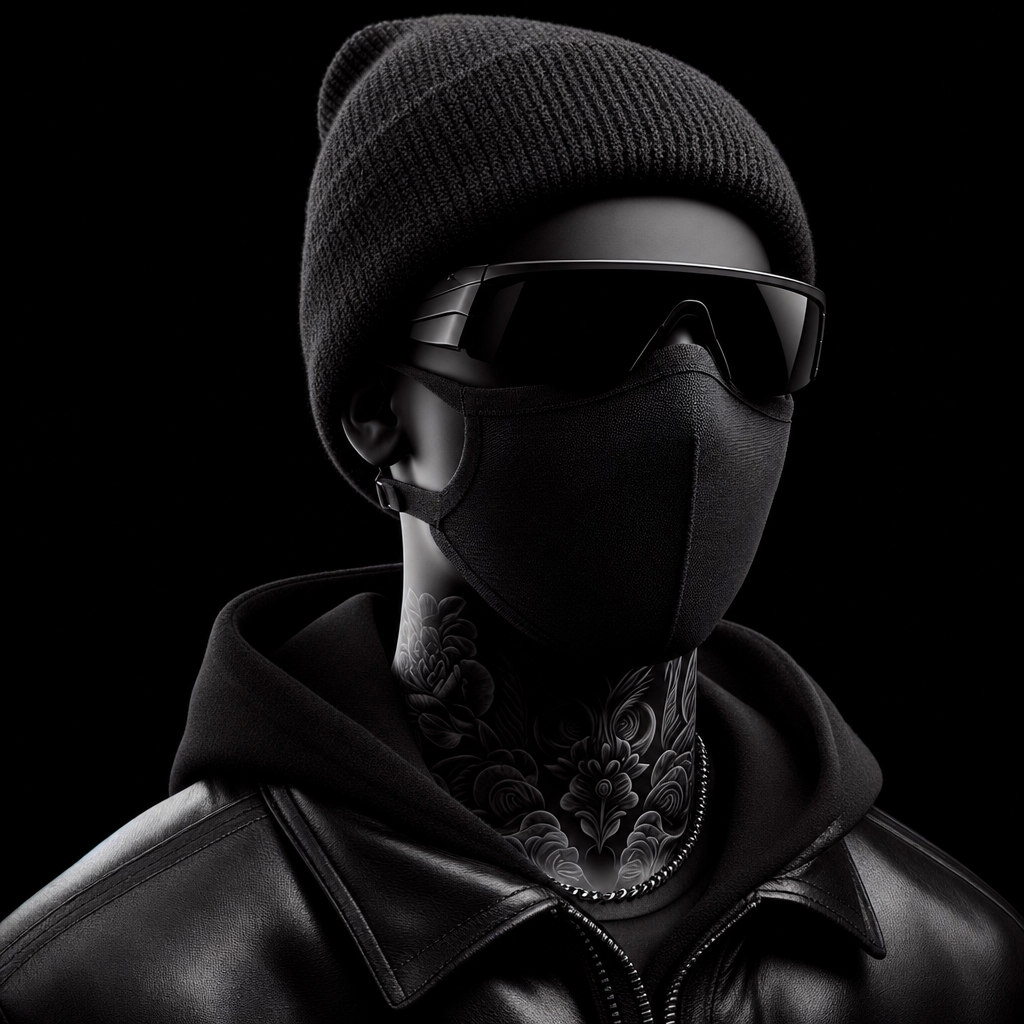
The portrait-closeup framing makes the charcoal beanie, tinted wraparound sunglasses, fully covered dark mask, and intricate neck tattoos carry the image instead of the clothing silhouette. “Isolated on a pure black background” and “dramatic low-key lighting” compress the scene into a moody dark-luxury study, while “crisp glossy highlights on the sunglasses” creates the main gray-toned visual accent against the nearly black wardrobe. “Sharp focus” and “subtle texture detail on the fabric and leather” keep the knit, leather grain, and tattoo lines legible despite the restrained palette.
FAQ
→How do I make the sunglasses and eyes feel more central?
Replace “portrait-closeup” with “extreme close-up focused on the eyes and sunglasses,” and change “tinted wraparound sunglasses” to “large mirrored wraparound sunglasses dominating the frame.” Keep “crisp glossy highlights on the sunglasses,” but add “bright rectangular catchlights” to make the lenses become the first focal point.
→How do I shift this from moody and intimidating to a cleaner luxury-editorial look?
Replace “dramatic low-key lighting” and “high contrast” with “soft, even diffused studio lighting with controlled shadows,” and change “pure black background” to “warm light-gray seamless background.” Retain “sleek black streetwear” and “subtle texture detail on the fabric and leather” so the result stays fashion-focused without the heavy noir tone.
→How do I build a variation series while keeping the same masked-character identity?
Keep “fully covered by a dark mask,” “intricate neck tattoos,” and “portrait-closeup” unchanged, then swap the wardrobe phrase “black leather jacket over a black hood” for controlled variants such as “oversized graphite technical parka,” “dark tailored wool coat,” or “black quilted vest.” For consistent progression, vary only the lighting phrase, using “cool blue rim light,” “hard white side light,” or “soft amber top light,” while preserving “pure black background” and the same sunglasses.
Learn the technique behind this
- Why can't AI spell, and how do I get readable text in an image? — Older diffusion models had no character-level representation of text, so they produced letterform-shaped texture instead of words.
- How should a prompt be structured, and does word order matter? — A prompt that behaves predictably names one subject first, then what it is doing, then where, then the light, then the lens or medium, then the style.
- Why does AI get hands and faces wrong, and how do I fix it? — Hands fail because they're small in frame, extremely variable in pose, and self-occluding — the model has less usable signal per pixel than for any other body part.
Related prompts
Woman in Teal Light, Shadowed Fashion Portrait
Eerie Elegance Among Marble Busts
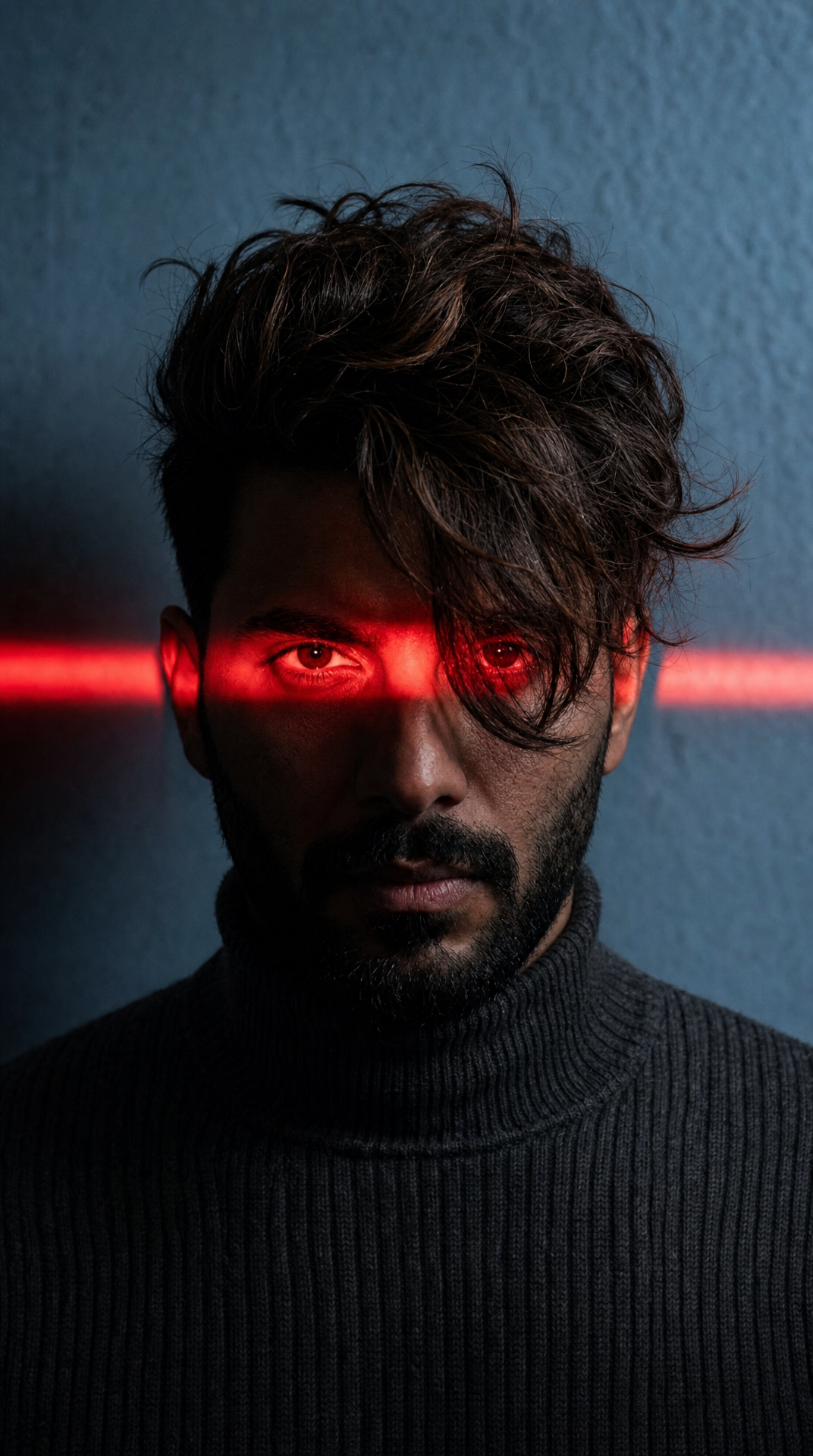
Charcoal turtleneck with red eye-beam
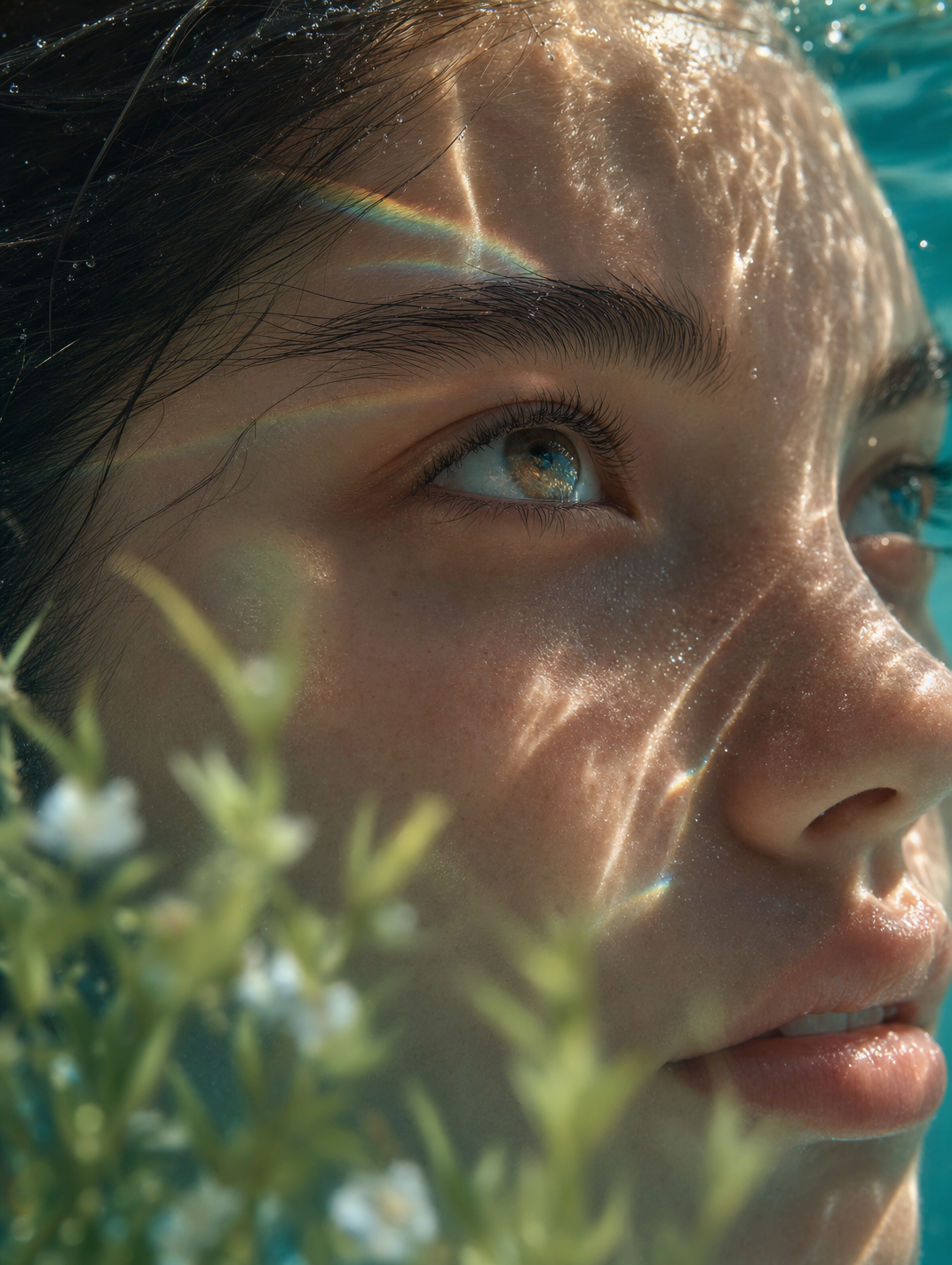
Dreamy Macro Portrait in Cool Water