Why this works
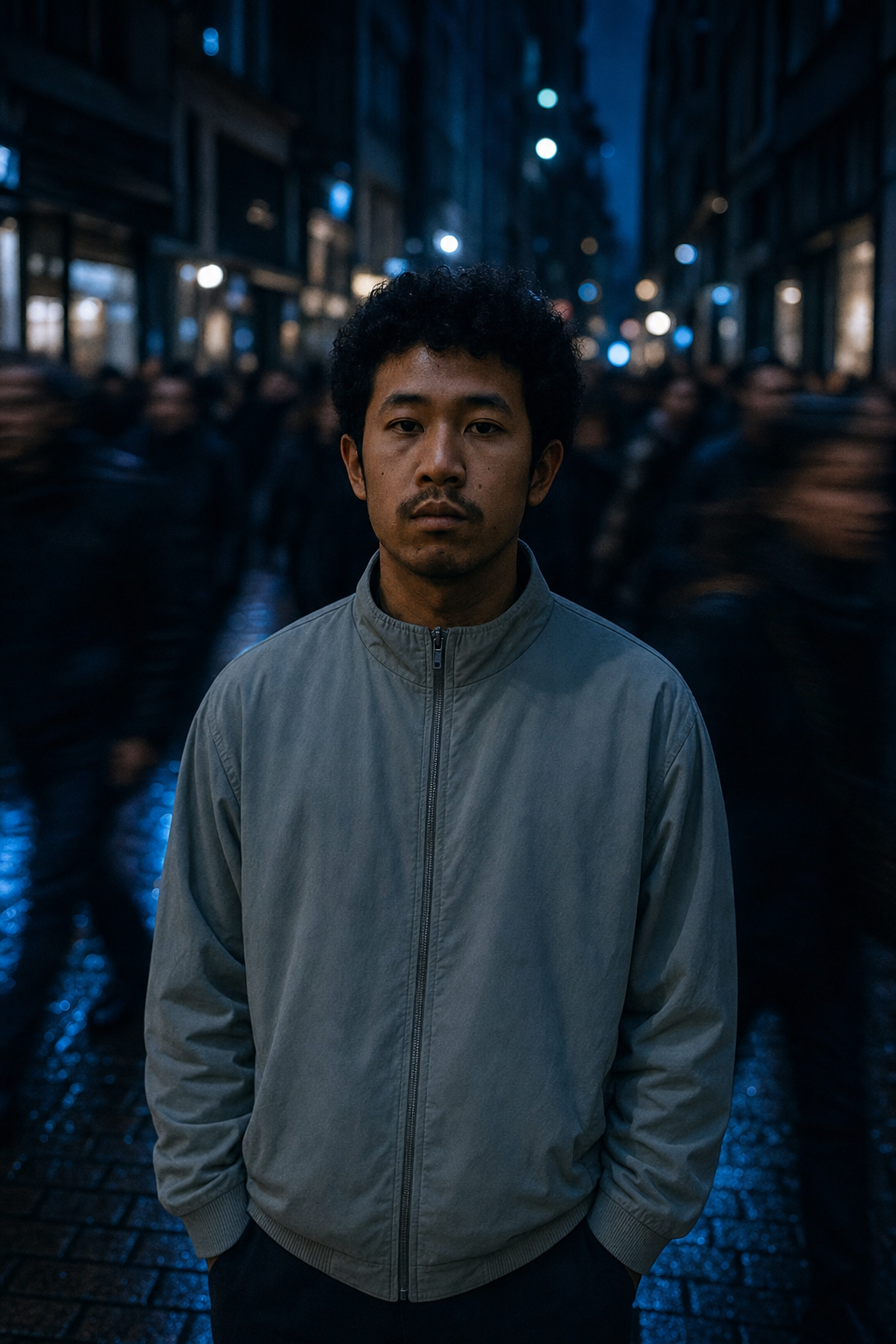
The phrase “standing still in the center” establishes a rigid full-body anchor, while “pedestrians blurred in motion passing on both sides” creates motion contrast and makes the surrounding crowd feel restless. “Centered composition between tall buildings” tightens the frame into an urban corridor, and “shallow depth of field” keeps the man sharp against softened figures and background. The mood comes from “moody, low-light atmosphere” and “cool-blue ambient tones,” with “small warm streetlight bokeh” supplying restrained color contrast against the image’s dominant black and gray palette.
FAQ
→How do I make the man feel more isolated and introspective?
Replace “crowded city street” and “pedestrians blurred in motion passing on both sides” with “nearly empty city street with only distant silhouettes receding into the background.” Keep “standing still in the center,” but add “head slightly lowered, gaze turned inward, generous negative space around him” to reduce the crowd’s visual pressure.
→How do I make the surrounding pedestrians more prominent without losing the central subject?
Replace “shallow depth of field” with “moderate depth of field, central man sharp while nearby pedestrians remain recognizable.” Change “pedestrians blurred in motion” to “crowd in varied coats, faces and gestures partially visible, with subtle motion blur,” while retaining “centered composition” so the man remains the compositional anchor.
→How do I create a series of variations with different urban locations and tones?
Keep the core phrases “same man,” “standing still in the center,” “hands relaxed at his sides,” and “realistic skin texture” consistent across images. Swap “narrow urban alley between tall buildings” for locations such as “rain-soaked subway entrance,” “fluorescent late-night convenience store,” or “foggy elevated train platform,” and replace “cool-blue ambient tones with small warm streetlight bokeh” with lighting matched to each setting, such as “green fluorescent spill with red signage reflections” or “pale dawn light with silver-gray shadows.”
Learn the technique behind this
- Why can't AI spell, and how do I get readable text in an image? — Older diffusion models had no character-level representation of text, so they produced letterform-shaped texture instead of words.
- Why does AI get hands and faces wrong, and how do I fix it? — Hands fail because they're small in frame, extremely variable in pose, and self-occluding — the model has less usable signal per pixel than for any other body part.
- How should a prompt be structured, and does word order matter? — A prompt that behaves predictably names one subject first, then what it is doing, then where, then the light, then the lens or medium, then the style.
Related prompts
Woman in Teal Light, Shadowed Fashion Portrait
Eerie Elegance Among Marble Busts
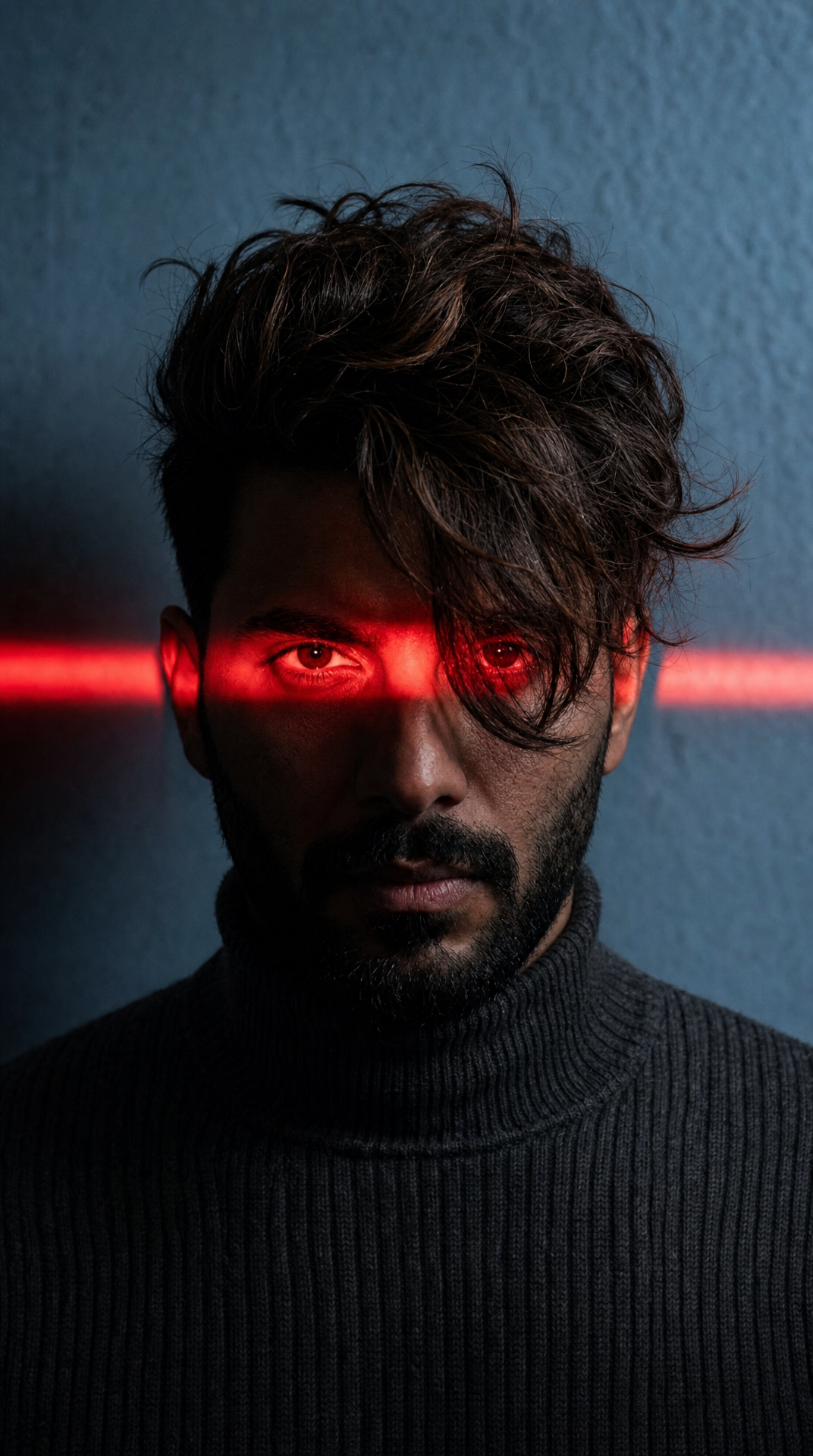
Charcoal turtleneck with red eye-beam
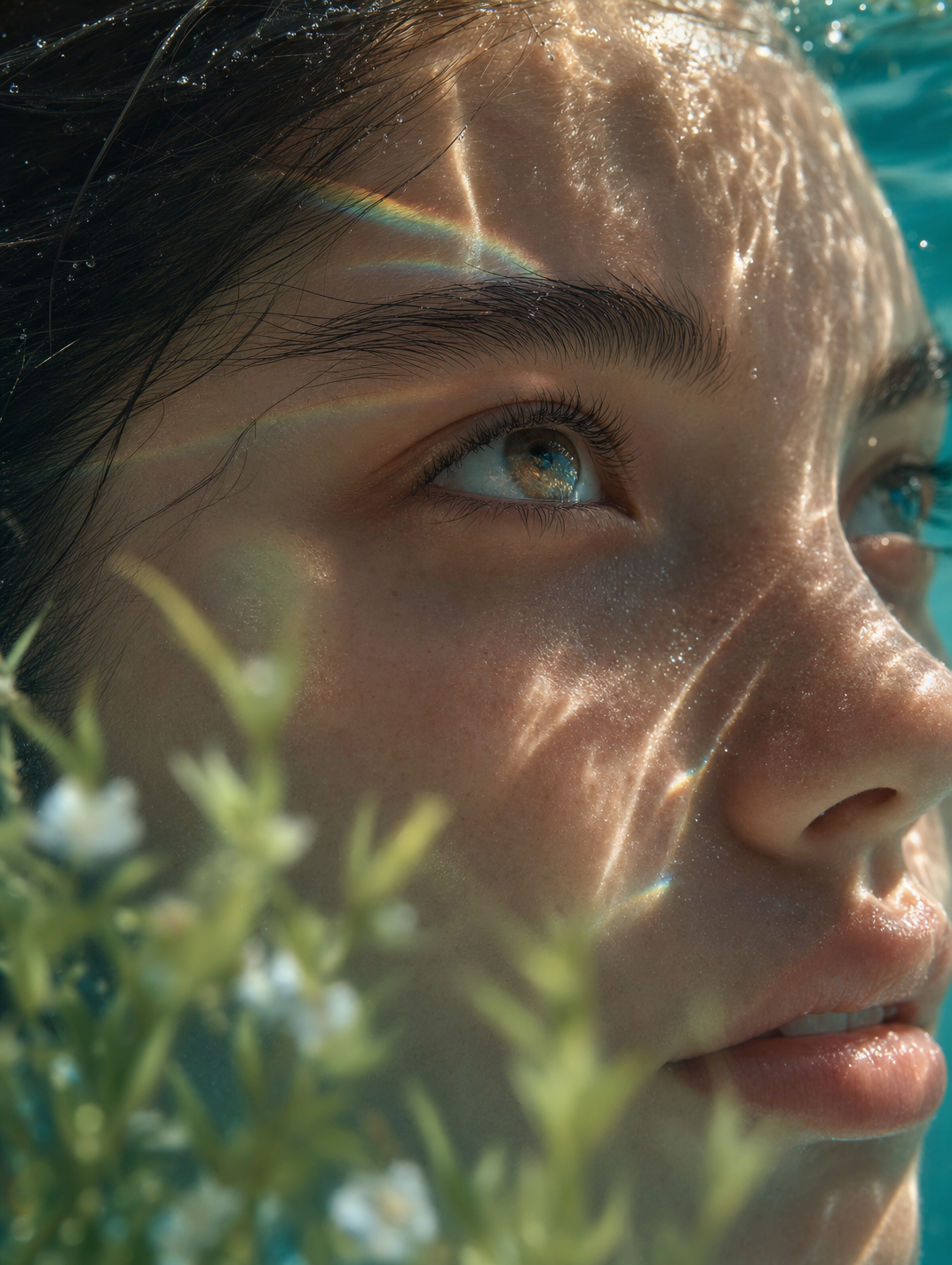
Dreamy Macro Portrait in Cool Water