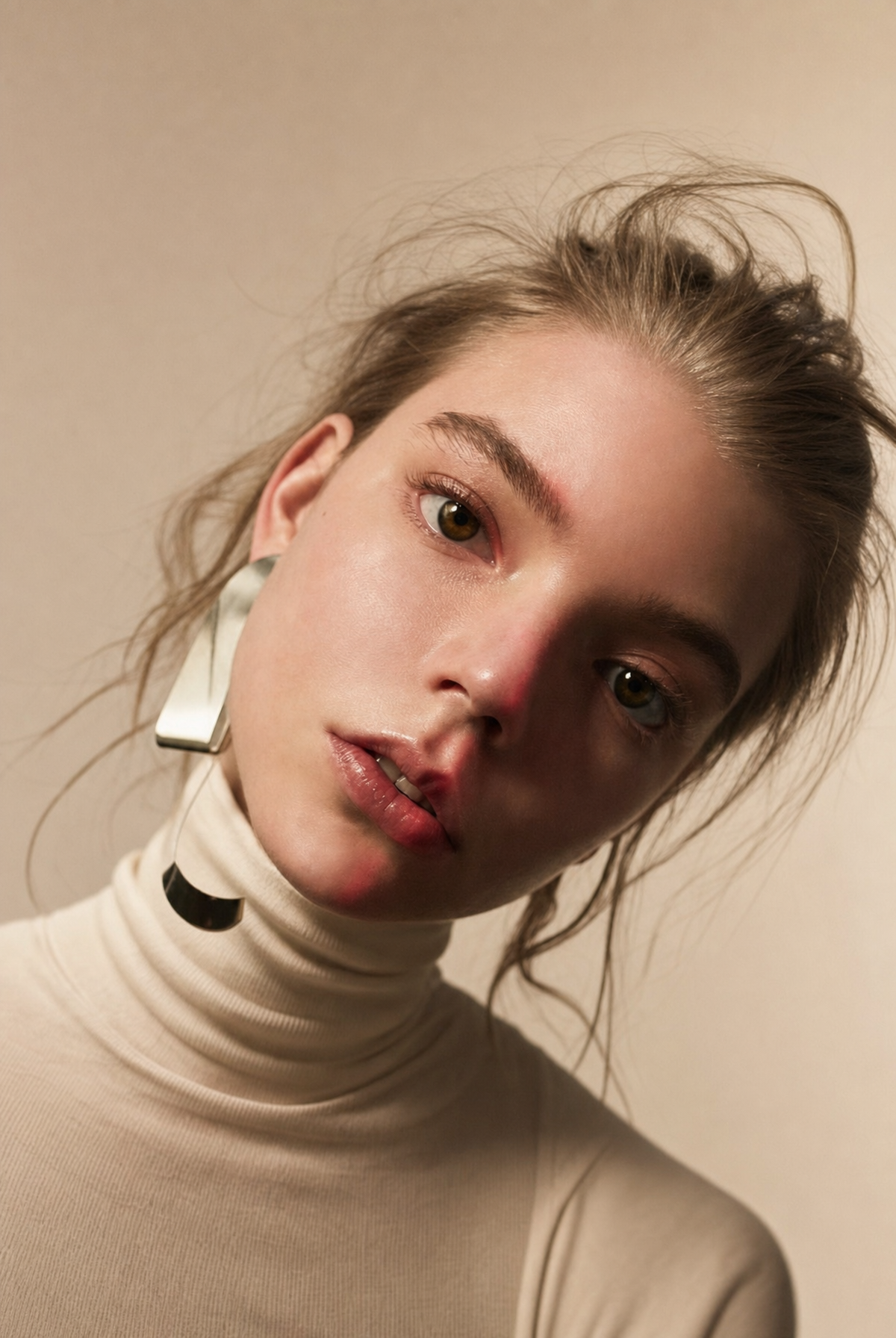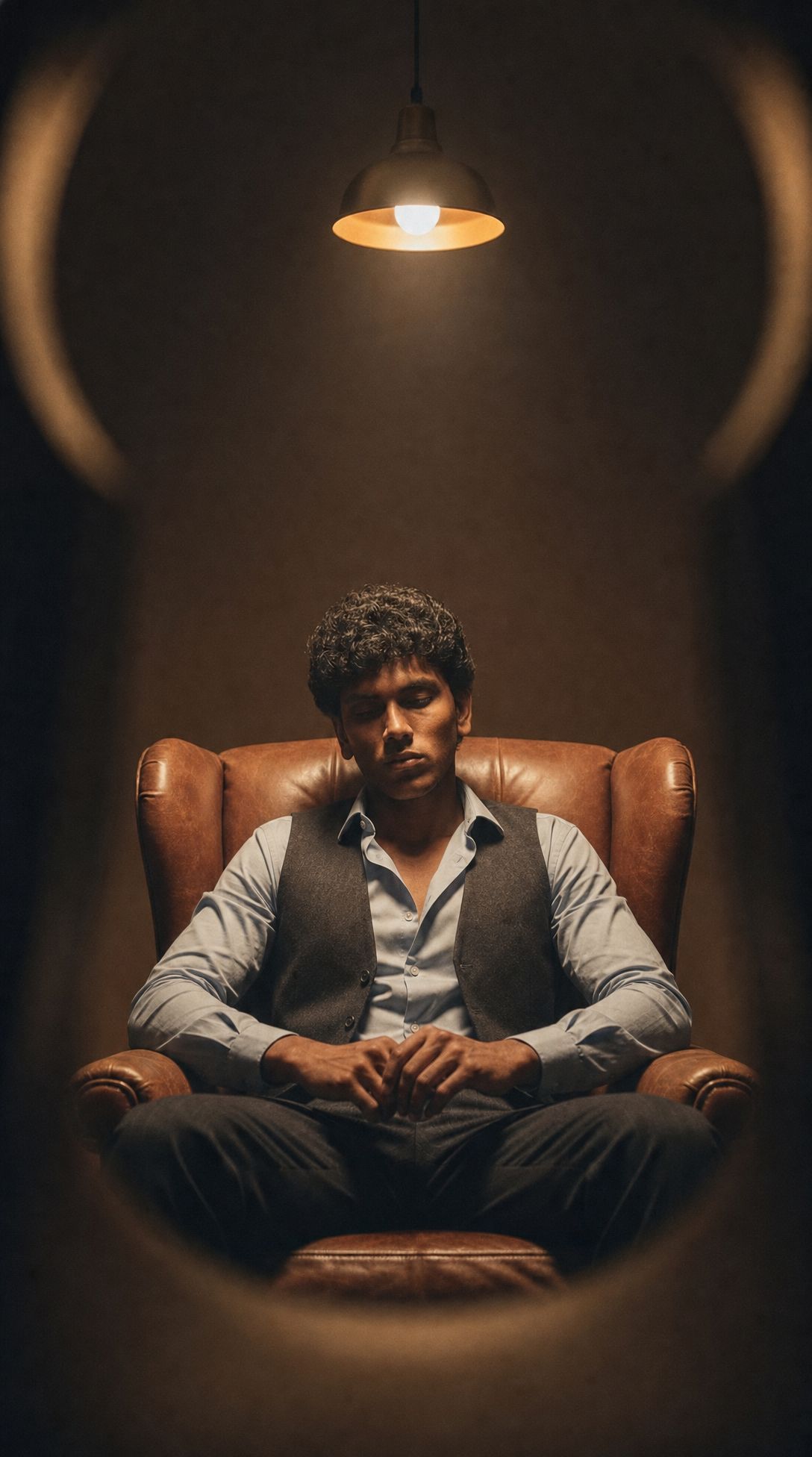
Same prompt, generated with each model separately — click one to see how it holds up.
Why this works
The phrase “viewed through a blurred keyhole-like foreground opening” supplies the enclosing frame and voyeuristic tension, while “shallow depth of field” keeps that obstruction soft and the man’s realistic face legible. “Warm light from a hanging lamp pools across the leather and his face” creates the central amber accent against the dominant black and gray shadows, and “deep shadows,” “moody contrast,” and “grainy cinematic finish” establish the film-noir mood. The “cinematic close framing” conflicts slightly with the stated portrait-full-body composition, so the image may prioritize an intimate torso-and-face crop over a clearly readable full figure.
FAQ
→How do I make the man’s full body more prominent while keeping the keyhole framing?
Replace “cinematic close framing with realistic facial detail” with “full-body portrait framing with the entire armchair and both shoes visible,” and change “shallow depth of field” to “moderate depth of field, face and seated figure sharply resolved.” Keep “blurred keyhole-like foreground opening” so the obstructed viewpoint remains.
→How do I make the scene colder and more suspenseful instead of warm and contemplative?
Replace “Warm light from a hanging lamp pools across the leather and his face” with “cold blue-green light from a bare overhead bulb cuts across the leather and half his face.” Change “subtle soft haze” to “thin smoky haze with harder-edged shadows,” and replace “contemplative” with “alert, guarded expression.”
→How do I create a series of variations without losing this visual identity?
Keep the fixed anchors “blurred keyhole-like foreground opening,” “film-noir vibe,” “shallow depth of field,” and “grainy cinematic finish.” Swap only the subject and lamp phrase in controlled versions, such as “a woman reading beside a rain-streaked window” with “a narrow desk lamp pools across her hands,” or “an aging detective examining photographs” with “a green-shaded lamp illuminates the evidence board.”
Learn the technique behind this
- Why does AI get hands and faces wrong, and how do I fix it? — Hands fail because they're small in frame, extremely variable in pose, and self-occluding — the model has less usable signal per pixel than for any other body part.
- Why can't AI spell, and how do I get readable text in an image? — Older diffusion models had no character-level representation of text, so they produced letterform-shaped texture instead of words.
- How should a prompt be structured, and does word order matter? — A prompt that behaves predictably names one subject first, then what it is doing, then where, then the light, then the lens or medium, then the style.
Related prompts
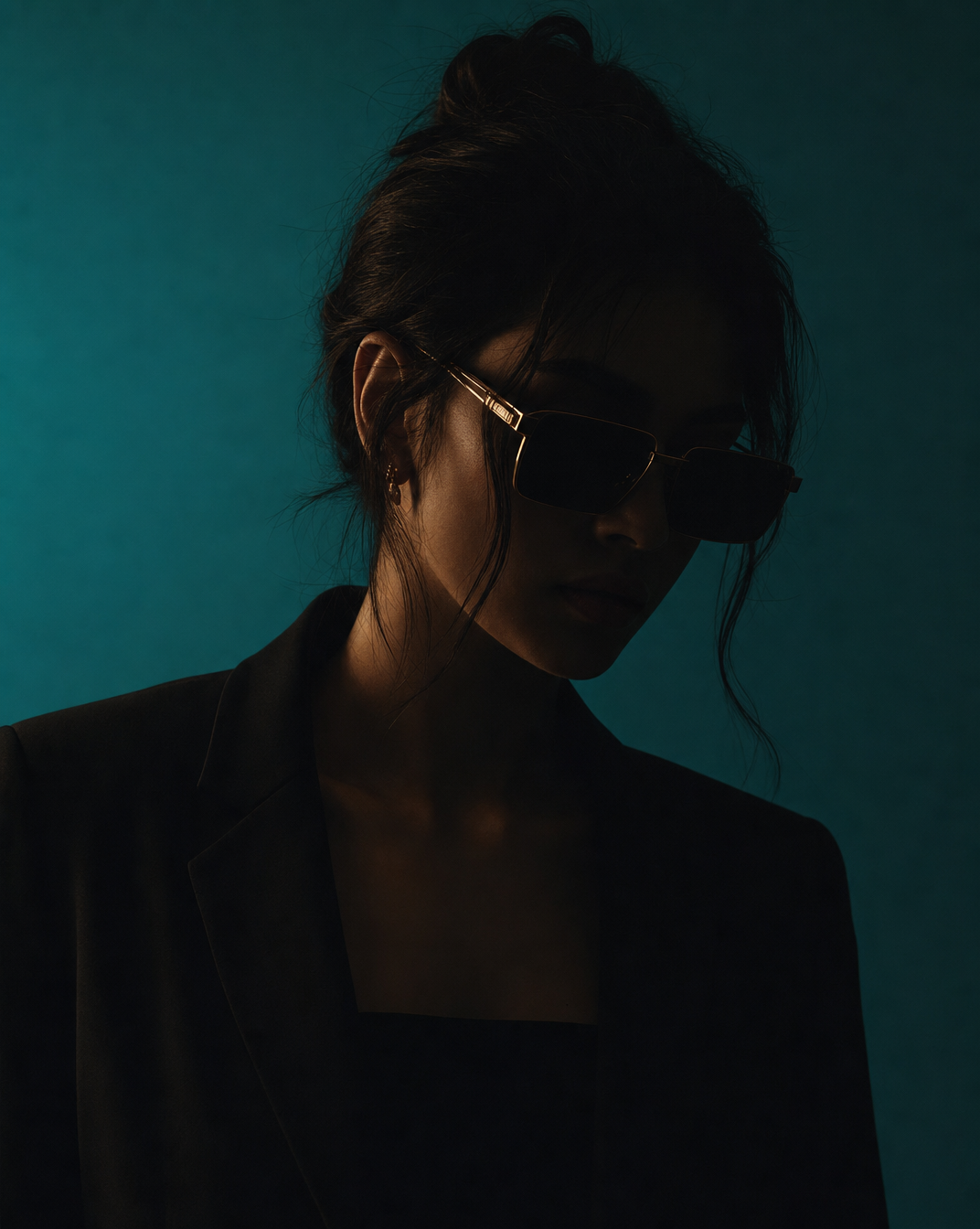
Woman in Teal Light, Shadowed Fashion Portrait
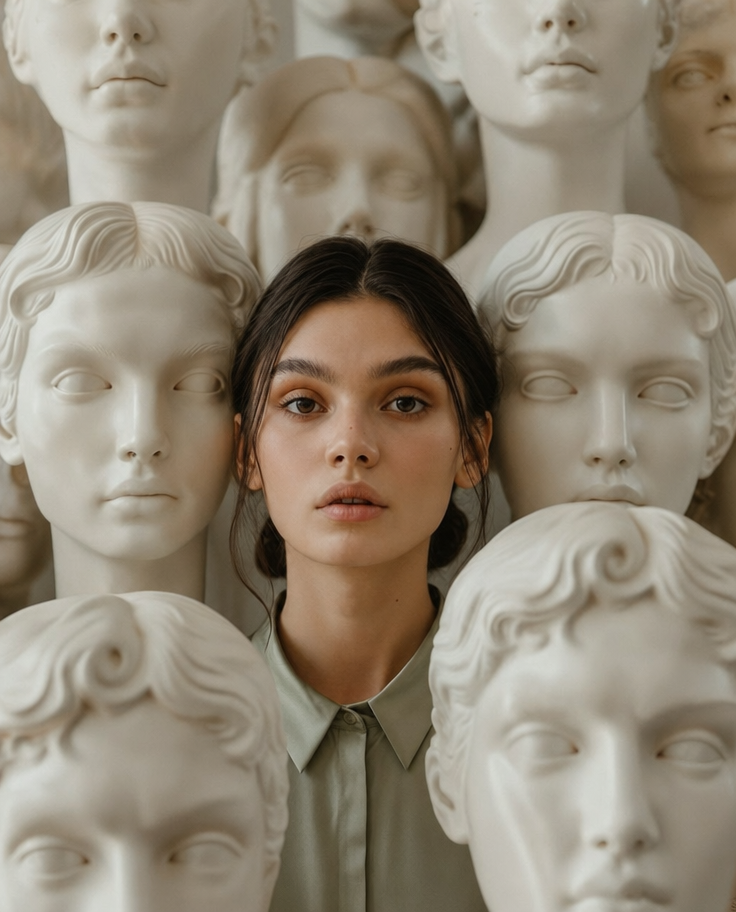
Eerie Elegance Among Marble Busts
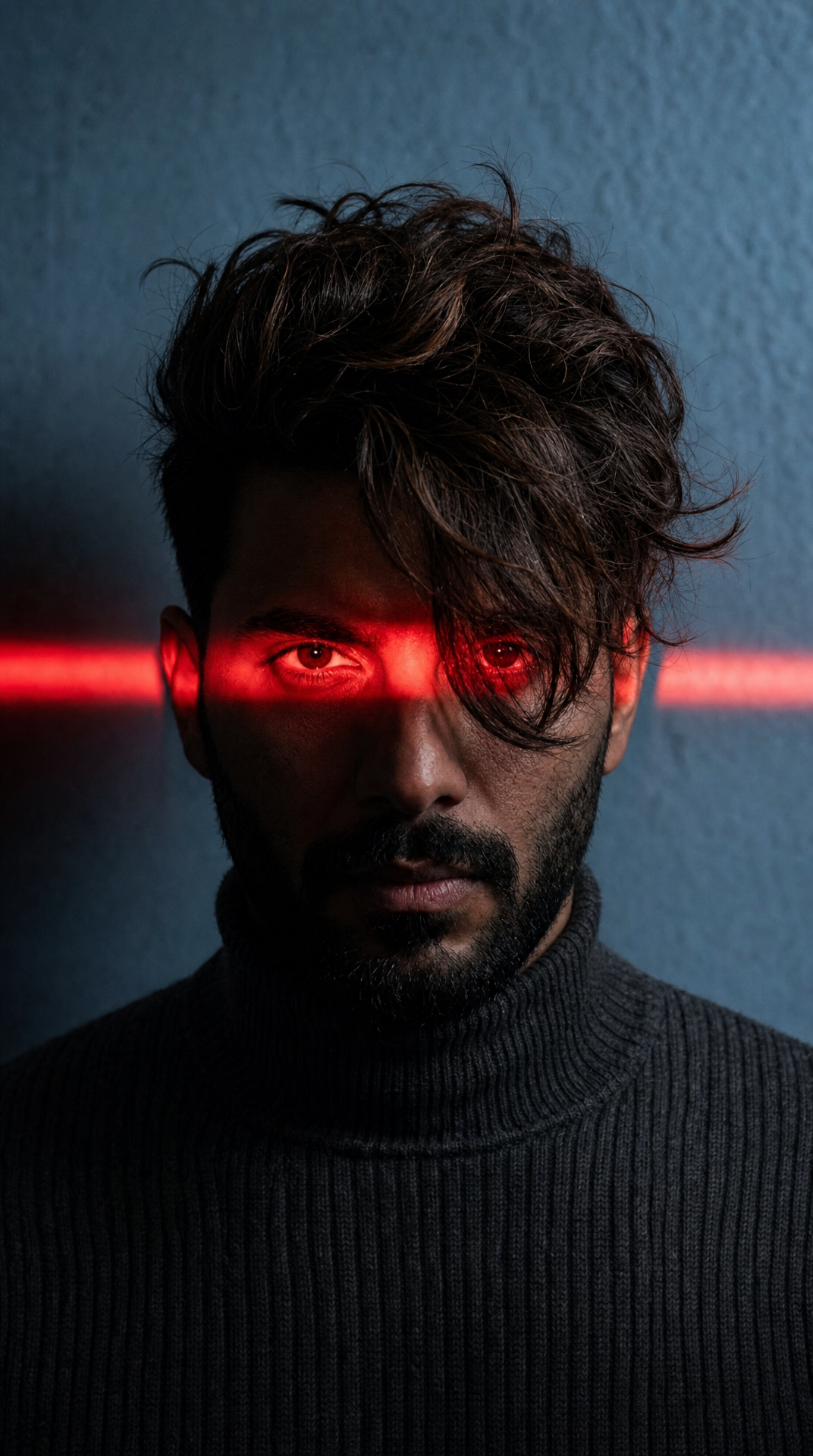
Charcoal turtleneck with red eye-beam
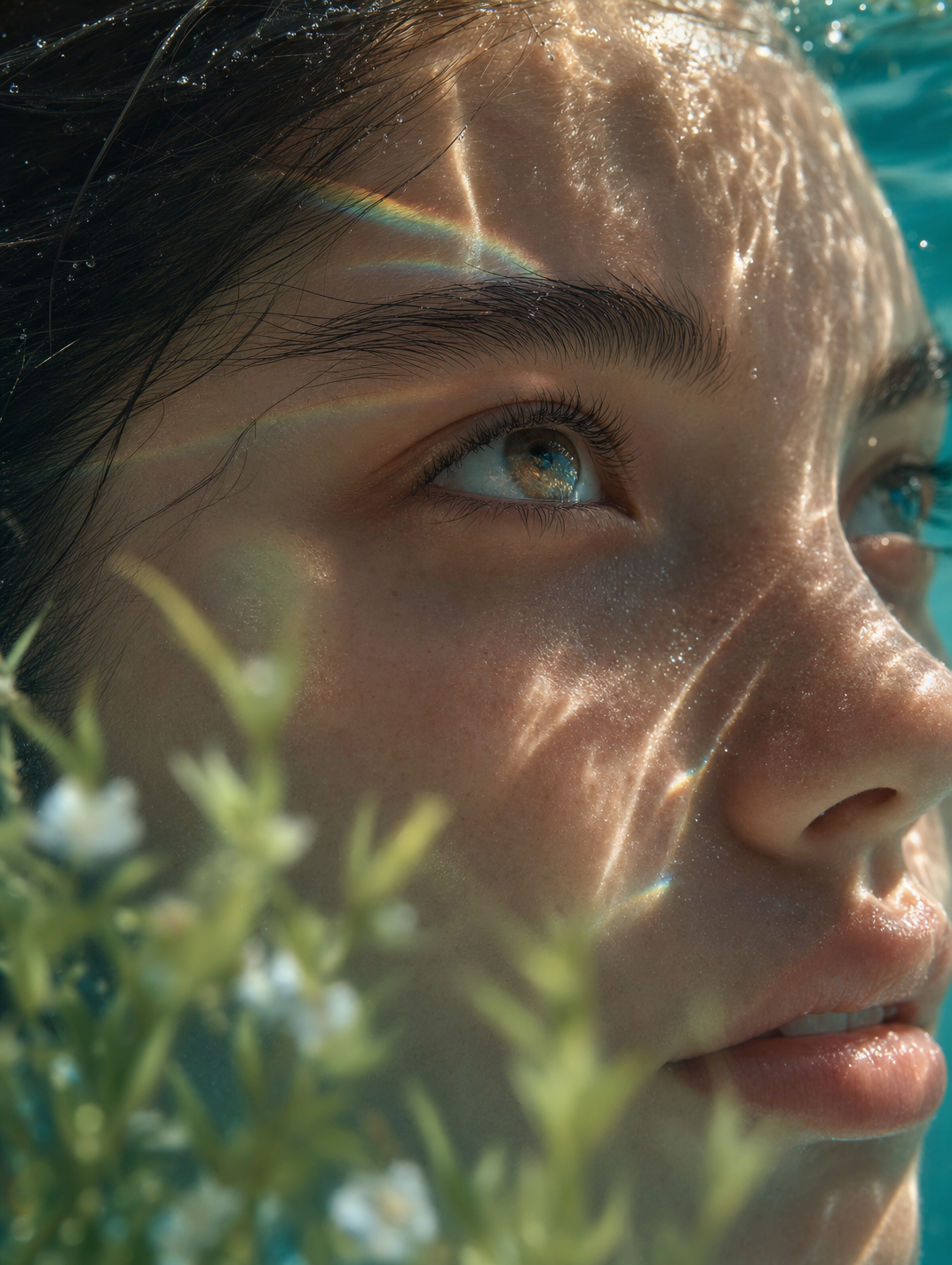
Dreamy Macro Portrait in Cool Water