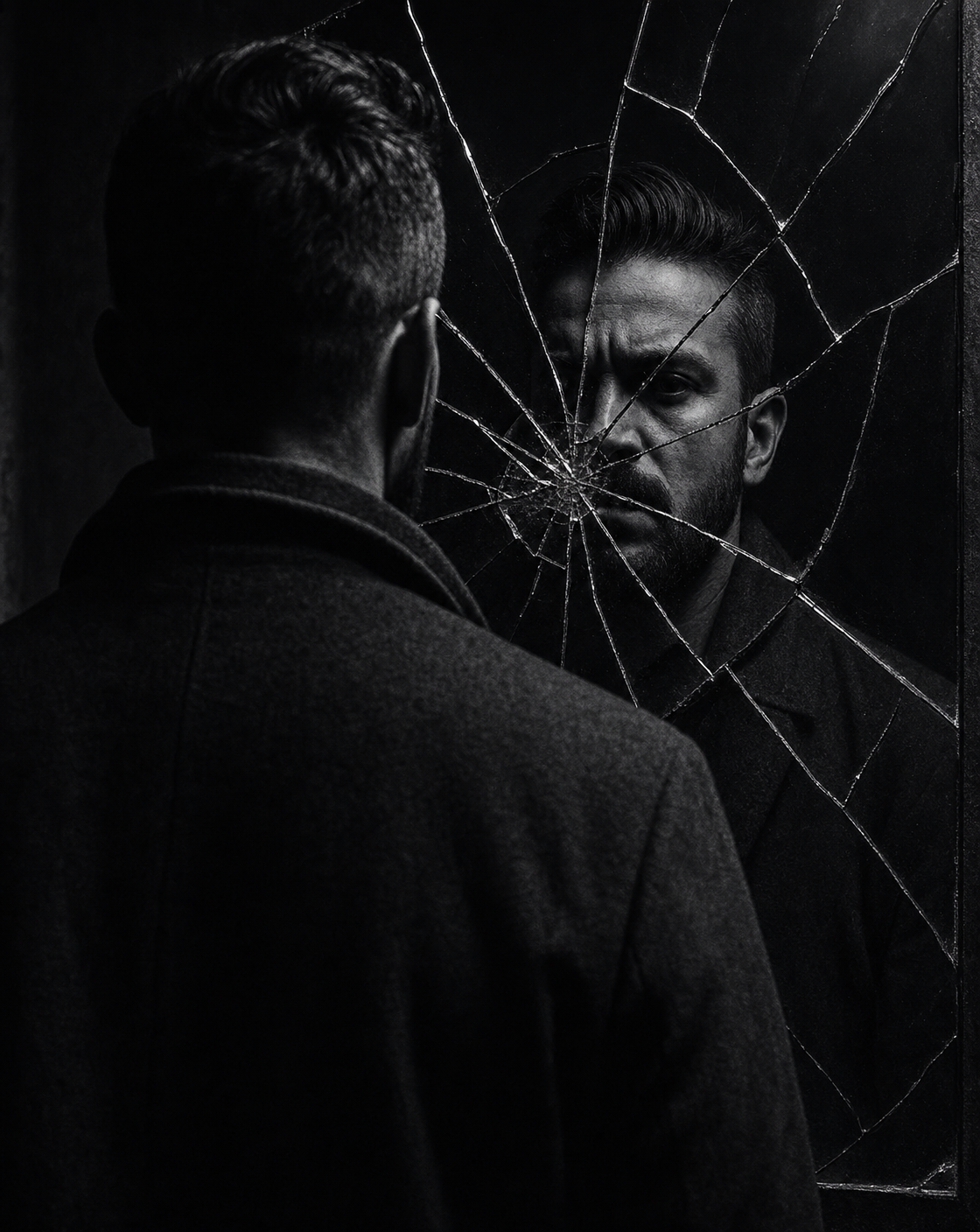
Why this works
The phrase “a man viewed from behind stands inches from a cracked mirror, his face visible in the shattered glass” creates the central psychological tension and makes the reflection the narrative focal point. “Dramatic low-key lighting from the side,” combined with “deep, inky shadows” and “a sharp highlight on the mirror’s broken edges,” produces the tense high-contrast mood more directly than the black-and-white treatment alone. “Vertical framing” and “portrait-full-body” establish a tall, isolating composition, while “shallow depth of field” keeps attention on the face and fracture lines and “film-like grain” supplies the gritty photographic texture.
FAQ
→How do I make the reflected face more prominent than the man’s back?
Replace “his face visible in the shattered glass” with “the reflected face is the dominant focal point, sharply detailed and larger than the man’s body,” and change “shallow depth of field” to “focus locked on the reflected eyes and nearest fracture lines.” Keep “viewed from behind” so the concealed identity remains part of the composition.
→How do I change the tense introspective mood into something quieter and mournful?
Replace “dramatic low-key lighting,” “deep, inky shadows,” and “high contrast” with “soft diffused window light, gentle gray tonal transitions, and restrained contrast.” Keep “slightly turned neck as if bracing for what he sees,” but replace “dark gaps between pieces” with “fine hairline cracks” to reduce the sense of danger.
→How do I build a series of variations while keeping this mirror concept recognizable?
Keep the anchor phrases “a man viewed from behind” and “his face visible in the shattered glass,” then swap the subject and setting details in controlled batches: use “an elderly woman in a worn wool coat” for the subject, or replace the implied indoor background with “an abandoned hotel hallway” or “a rain-streaked bathroom.” For consistent results, retain “vertical framing,” “black-and-white,” “shallow depth of field,” and “film-like grain” across every variation.
Learn the technique behind this
- Why can't AI spell, and how do I get readable text in an image? — Older diffusion models had no character-level representation of text, so they produced letterform-shaped texture instead of words.
- Which aspect ratio should I use, and how does it change the image? — Aspect ratio determines what the model composes, not how it's cropped afterwards.
- Why does AI get hands and faces wrong, and how do I fix it? — Hands fail because they're small in frame, extremely variable in pose, and self-occluding — the model has less usable signal per pixel than for any other body part.
Related prompts
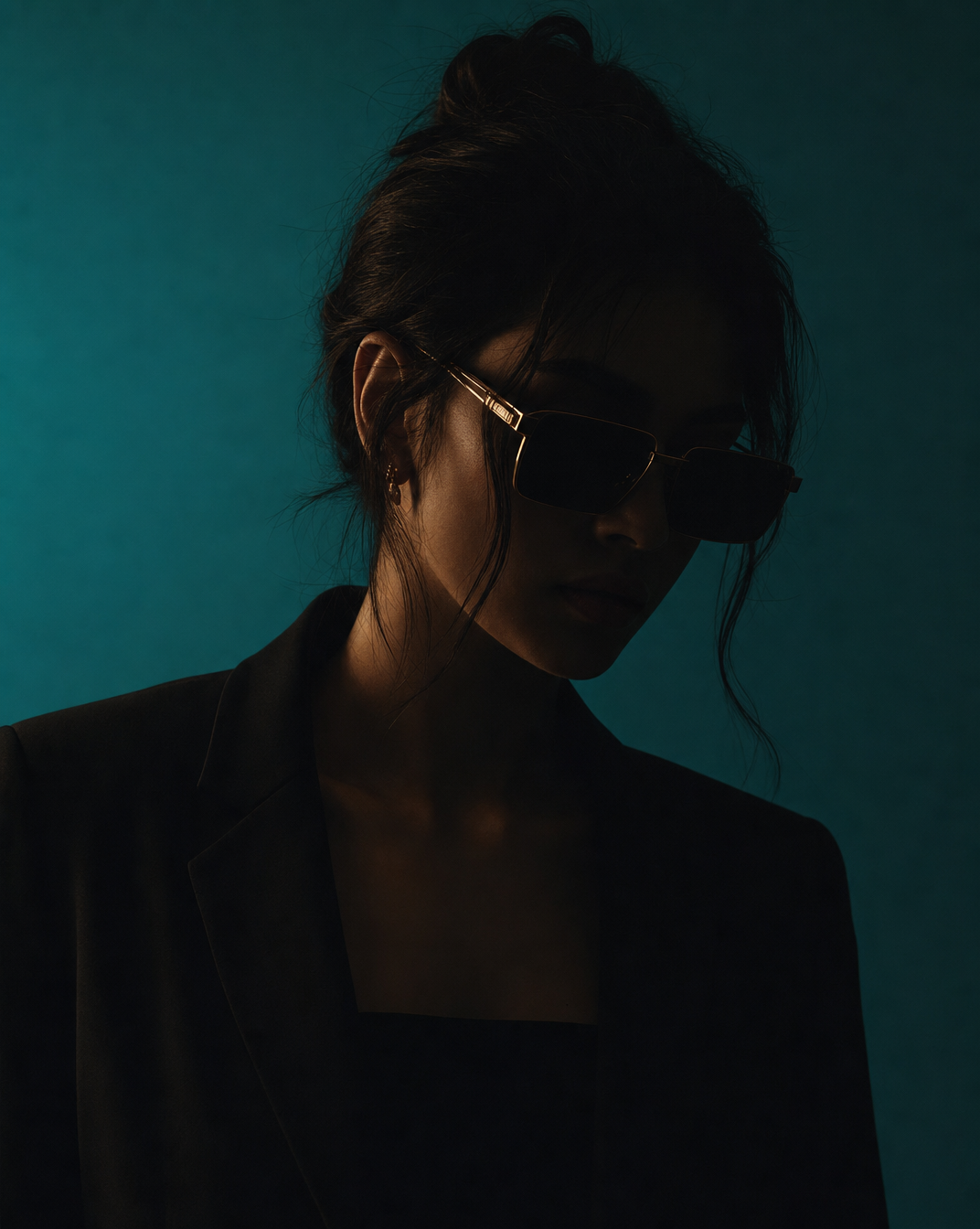
Woman in Teal Light, Shadowed Fashion Portrait

Eerie Elegance Among Marble Busts
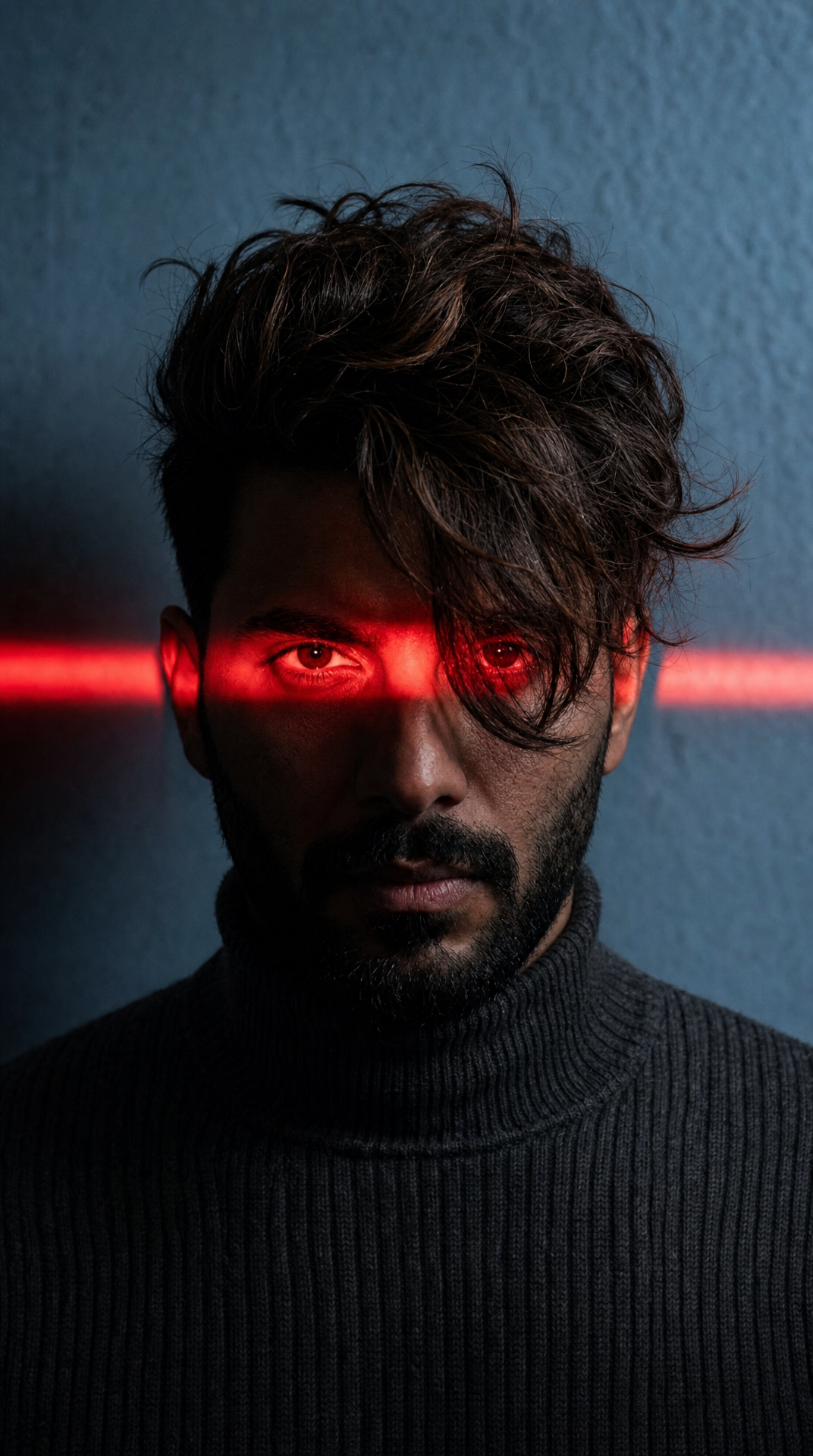
Charcoal turtleneck with red eye-beam

Dreamy Macro Portrait in Cool Water