Why this works
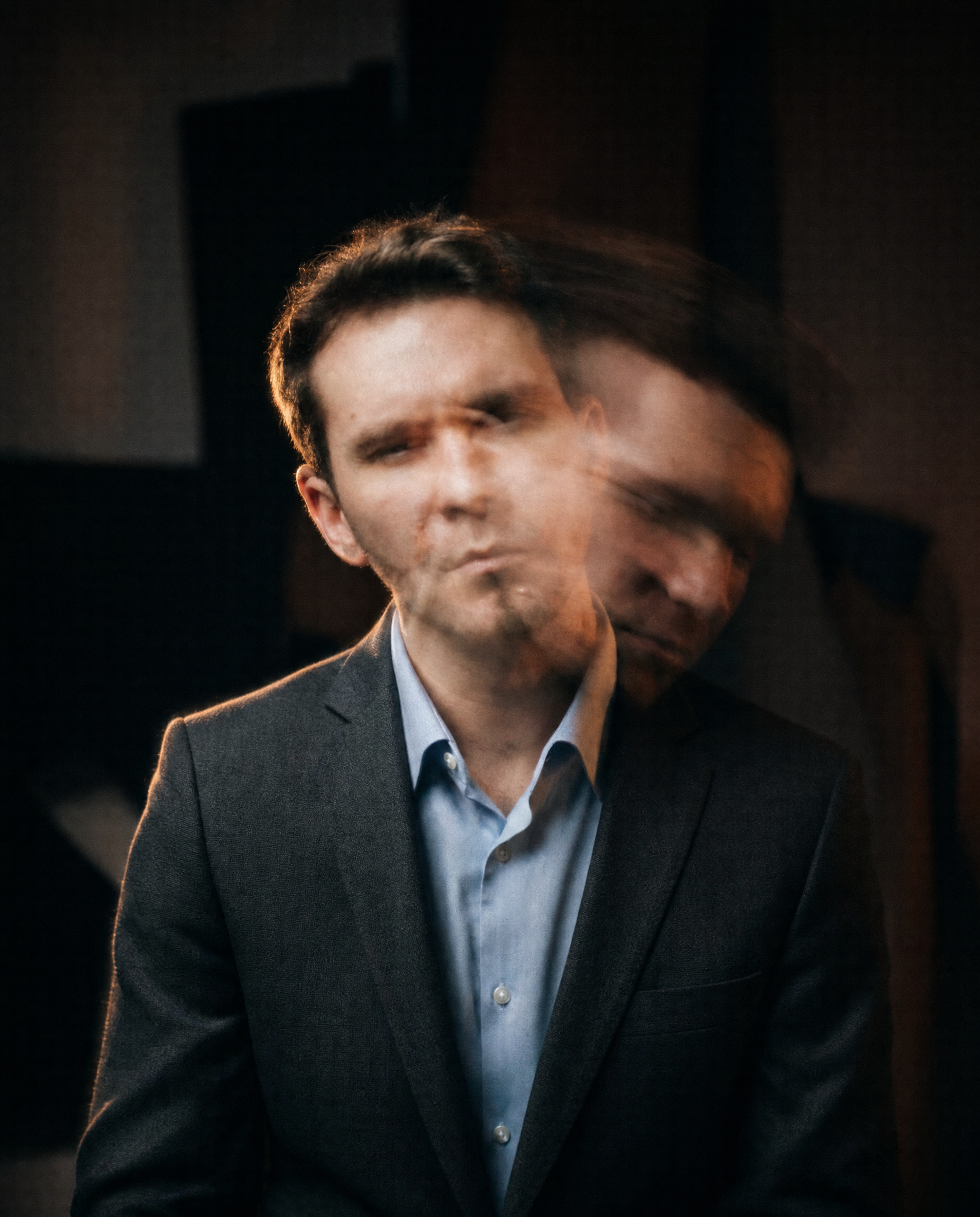
The psychological tension comes from “captured mid head-turn” and “sharp ghosting trails from multiple flashes,” which split the man into unstable temporal fragments rather than presenting a fixed portrait. “Slow shutter speed” plus “intentional sideways camera drift” supplies the lateral smear and chaotic close-up framing, while “dark low-key lighting,” “slight rim highlights,” and “high-contrast tonal range” isolate the charcoal suit and pale blue shirt against the indistinct background. The gray, blue, and white palette stays restrained because the prompt specifies a “charcoal suit,” “light blue dress shirt,” and “faint ambient fill,” keeping the experimental effect photographic instead of colorful or surreal.
FAQ
→How do I make the portrait feel more controlled and solemn instead of chaotic?
Replace “intentional sideways camera drift to intensify the sense of chaos” with “camera locked perfectly still for a solemn, controlled portrait,” and change “sharp ghosting trails from multiple flashes” to “one restrained secondary exposure with minimal ghosting.” Keep “dark low-key lighting” and “high-contrast tonal range” to preserve the grave tone.
→How do I make the man’s face the clear central focal point?
Replace “psychological abstract motion-blur portrait” with “tight facial portrait with the eyes and expression sharply resolved,” and change “captured mid head-turn” to “facing three-quarters toward camera, eyes in precise focus.” Reduce “strong motion blur and ghosting trails” to “subtle motion blur confined to the shoulders and background,” while retaining the “portrait-closeup” composition.
→How do I build a series of variations without losing this visual identity?
Keep the fixed anchor phrases “realistic photographic style,” “dark low-key lighting,” “high-contrast tonal range,” and “charcoal suit with a light blue dress shirt.” Create variations by replacing “man” and “captured mid head-turn” with subjects such as “woman in a navy coat, turning toward a window” or “older man in a black turtleneck, slowly lowering his gaze,” then vary “intentional sideways camera drift” with “vertical camera drift,” “circular camera movement,” or “static camera with layered flash exposures.”
Learn the technique behind this
- Why can't AI spell, and how do I get readable text in an image? — Older diffusion models had no character-level representation of text, so they produced letterform-shaped texture instead of words.
- How should a prompt be structured, and does word order matter? — A prompt that behaves predictably names one subject first, then what it is doing, then where, then the light, then the lens or medium, then the style.
- Do negative prompts work, and what should go in one? — Negative prompts work on models that support a separate negative conditioning channel — mainly Stable Diffusion and FLUX-family models.
Related prompts
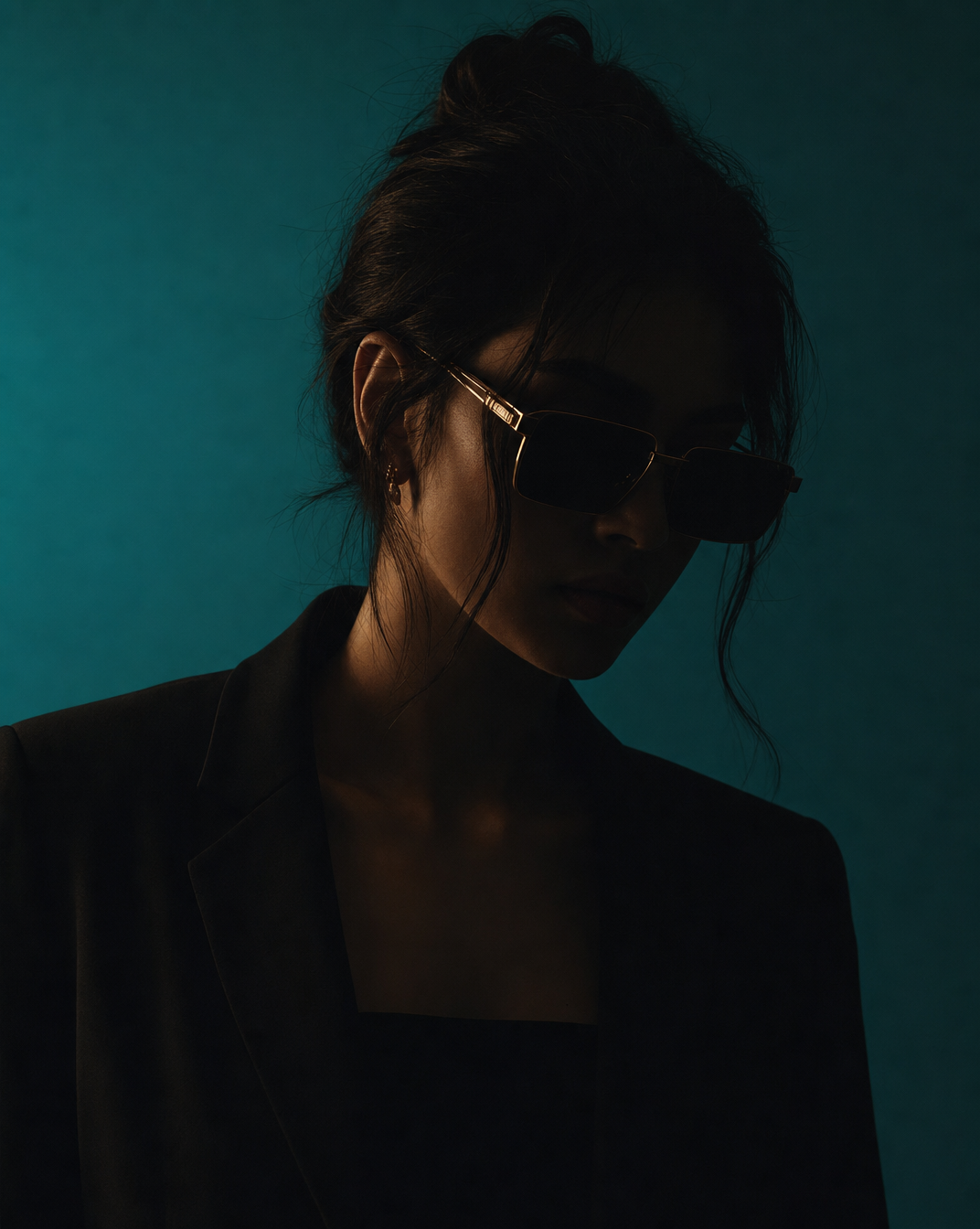
Woman in Teal Light, Shadowed Fashion Portrait
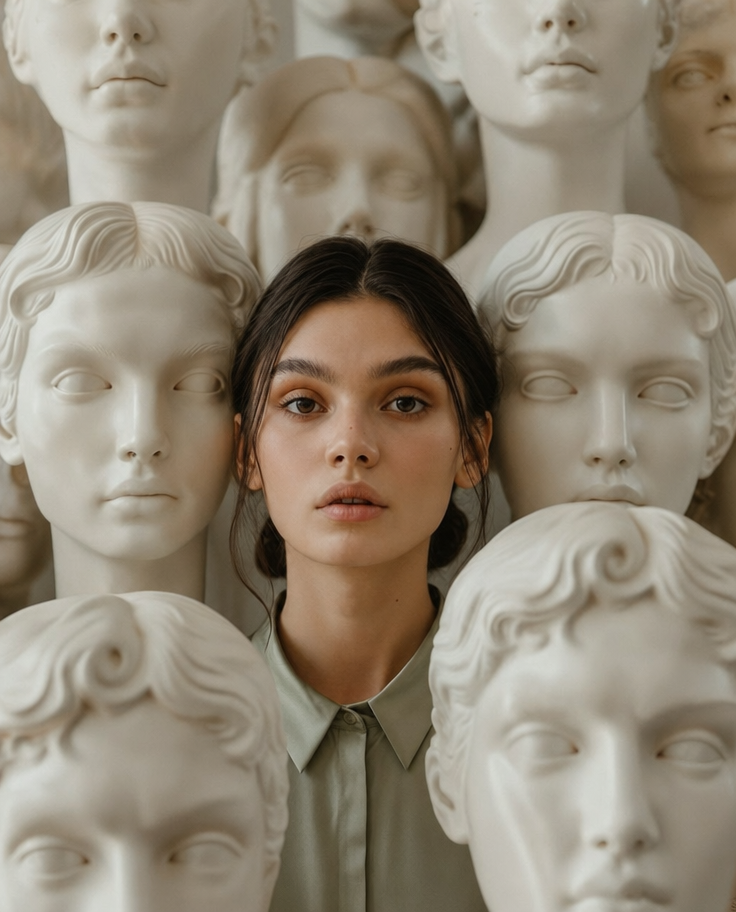
Eerie Elegance Among Marble Busts
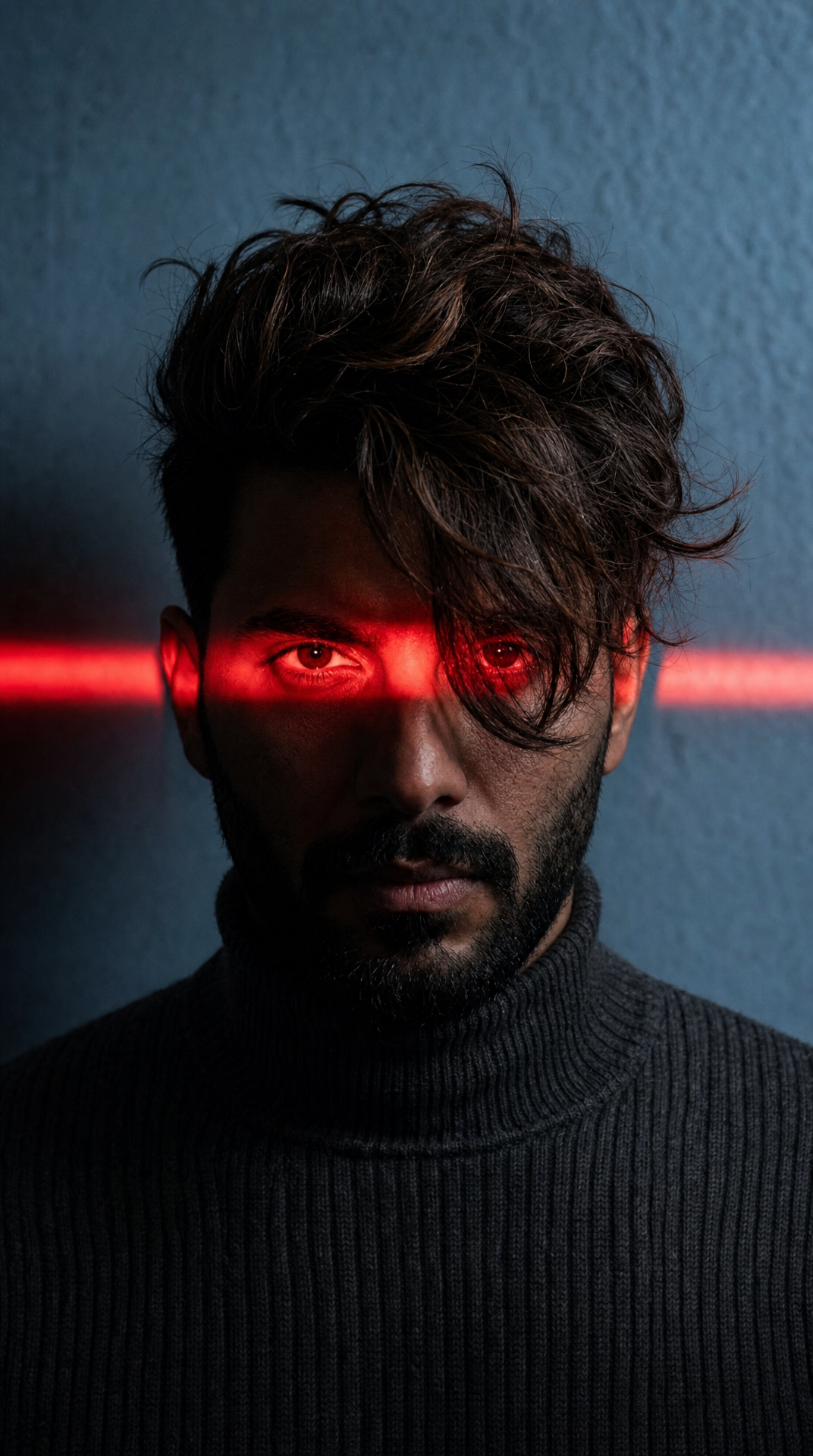
Charcoal turtleneck with red eye-beam
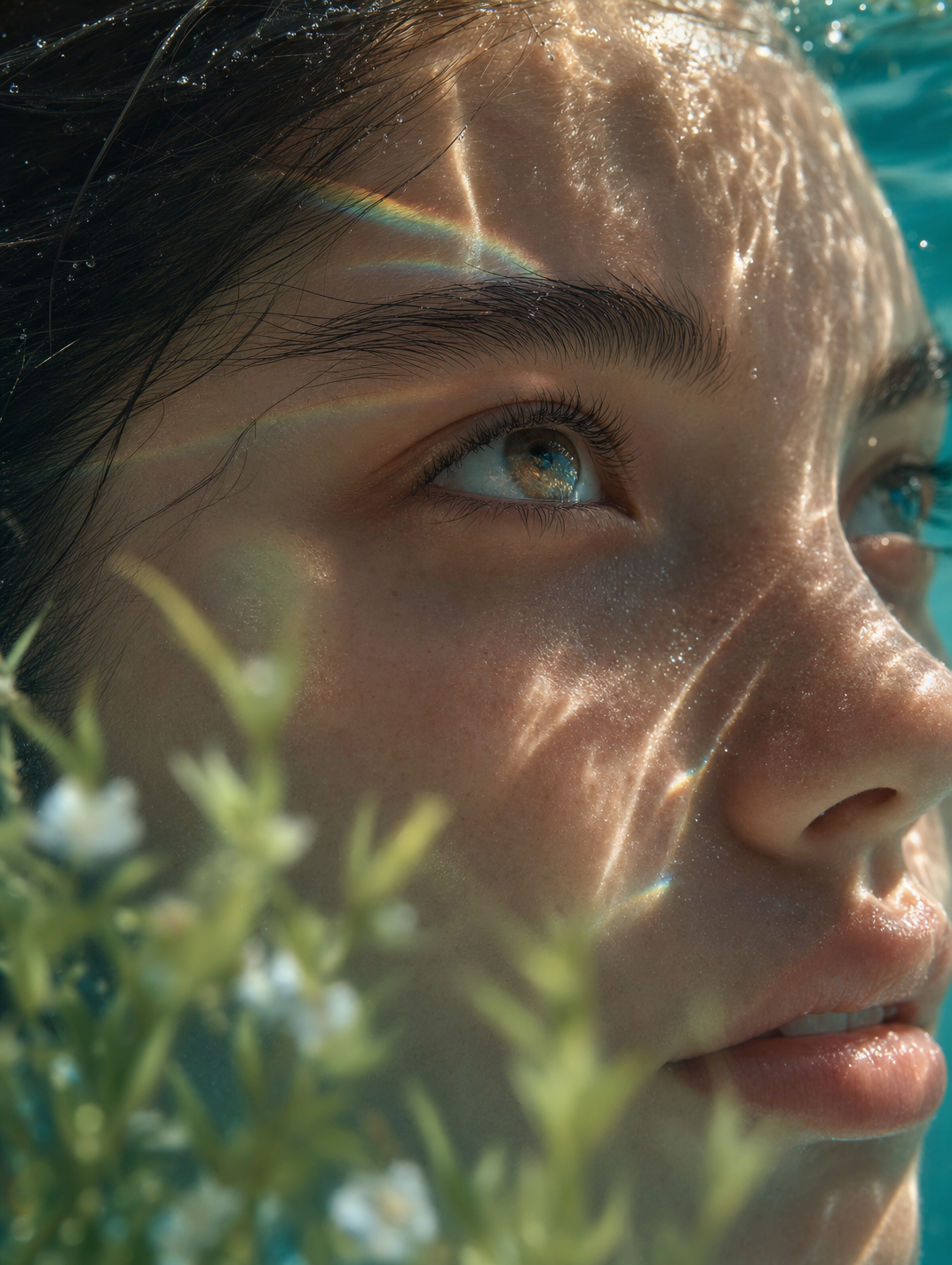
Dreamy Macro Portrait in Cool Water