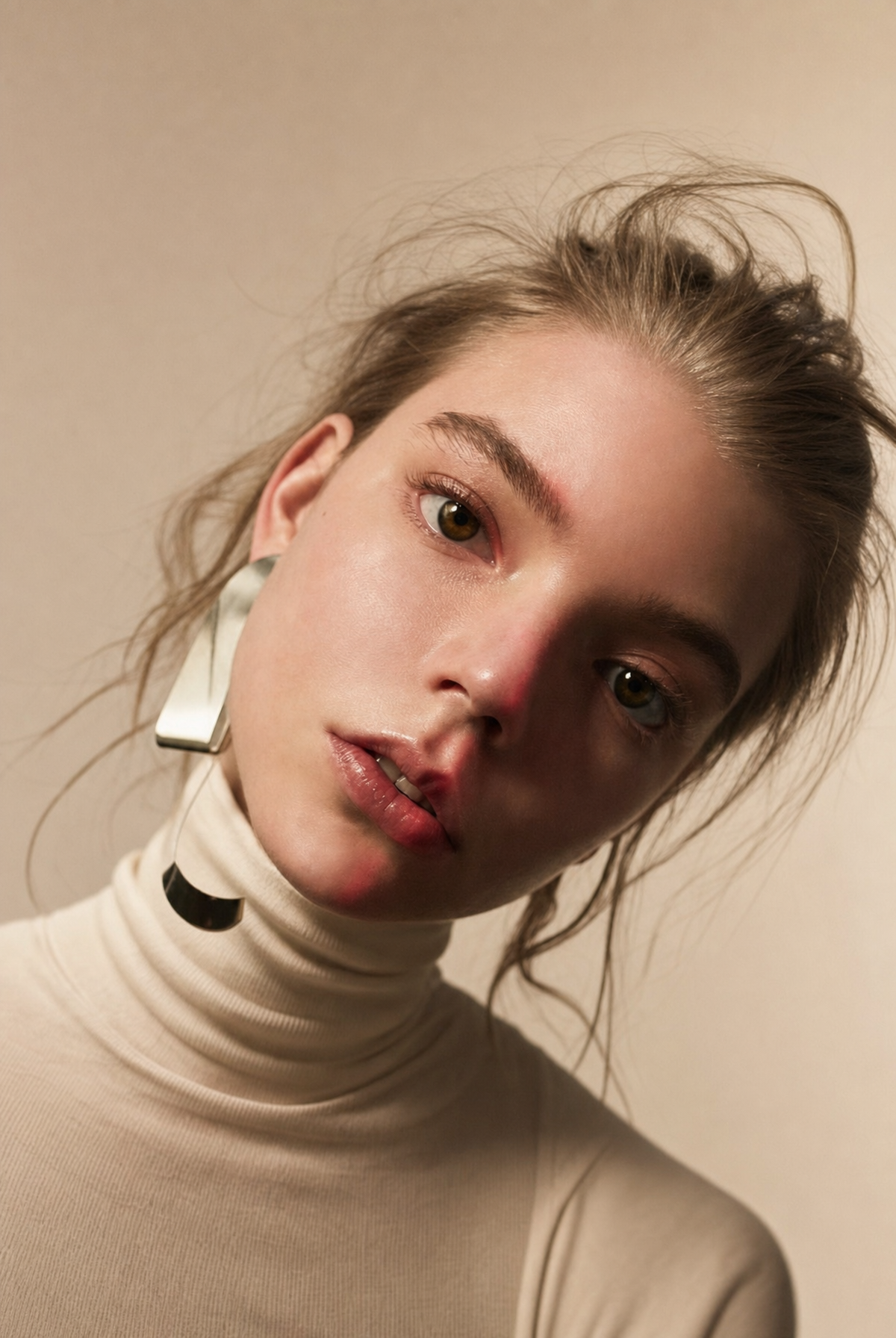
Why this works
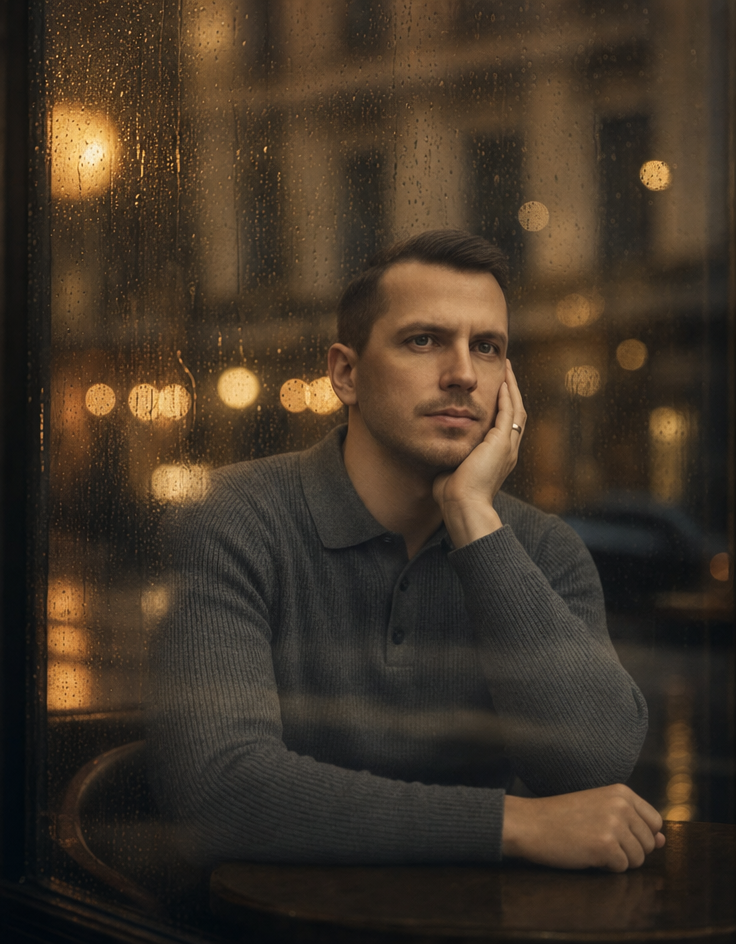
The close portrait framing comes from “man sitting by a window” paired with the “85mm lens look,” while “crisp focus on his face” makes the cheek-resting pose and contemplative expression the visual anchor. “Warm amber streetlight bokeh,” “light rain haze,” and “reflective glass” layer gold highlights over the gray-black night palette, creating the moody urban tone without losing the realistic skin texture. “Shot at f/1.4” and “softer falloff into the background” isolate the subject while preserving the reflection and streetlight shapes as readable secondary elements.
FAQ
→How do I change this prompt for a brighter, more optimistic mood?
Replace “moody urban atmosphere,” “warm amber streetlight bokeh,” and “light rain haze” with “clear early-morning window light, pale blue sky, and soft peach sunlight.” Change “natural shadows” to “gentle lifted shadows with subtle rim light” and shift the dominant palette from “gray, black, gold” to “cream, sky blue, and warm peach.”
→How do I make the reflection more central and prominent?
Replace “reflection visible in the glass” with “large, sharply defined reflection occupying the left half of the frame, aligned with his face.” Change “crisp focus on his face with softer falloff into the background” to “balanced focus on both the man’s face and his reflection,” and replace “portrait-closeup” with “symmetrical medium close-up through the window.”
→How do I build a series of variations from this portrait?
Keep “Cinematic editorial photography,” “85mm lens look,” “realistic skin texture,” and “high-end fashion look” fixed, then swap the pose phrase “hand resting on his cheek instead of his chin” for variations such as “fingers touching his temple,” “both hands folded beneath his chin,” or “gazing away with one hand on the window.” Change only the setting phrase “warm amber streetlight bokeh” to controlled alternatives such as “neon magenta signage,” “cool blue storefront light,” or “golden taxi headlights through rain.”
Learn the technique behind this
- Why can't AI spell, and how do I get readable text in an image? — Older diffusion models had no character-level representation of text, so they produced letterform-shaped texture instead of words.
- Why does AI get hands and faces wrong, and how do I fix it? — Hands fail because they're small in frame, extremely variable in pose, and self-occluding — the model has less usable signal per pixel than for any other body part.
- How should a prompt be structured, and does word order matter? — A prompt that behaves predictably names one subject first, then what it is doing, then where, then the light, then the lens or medium, then the style.
Related prompts
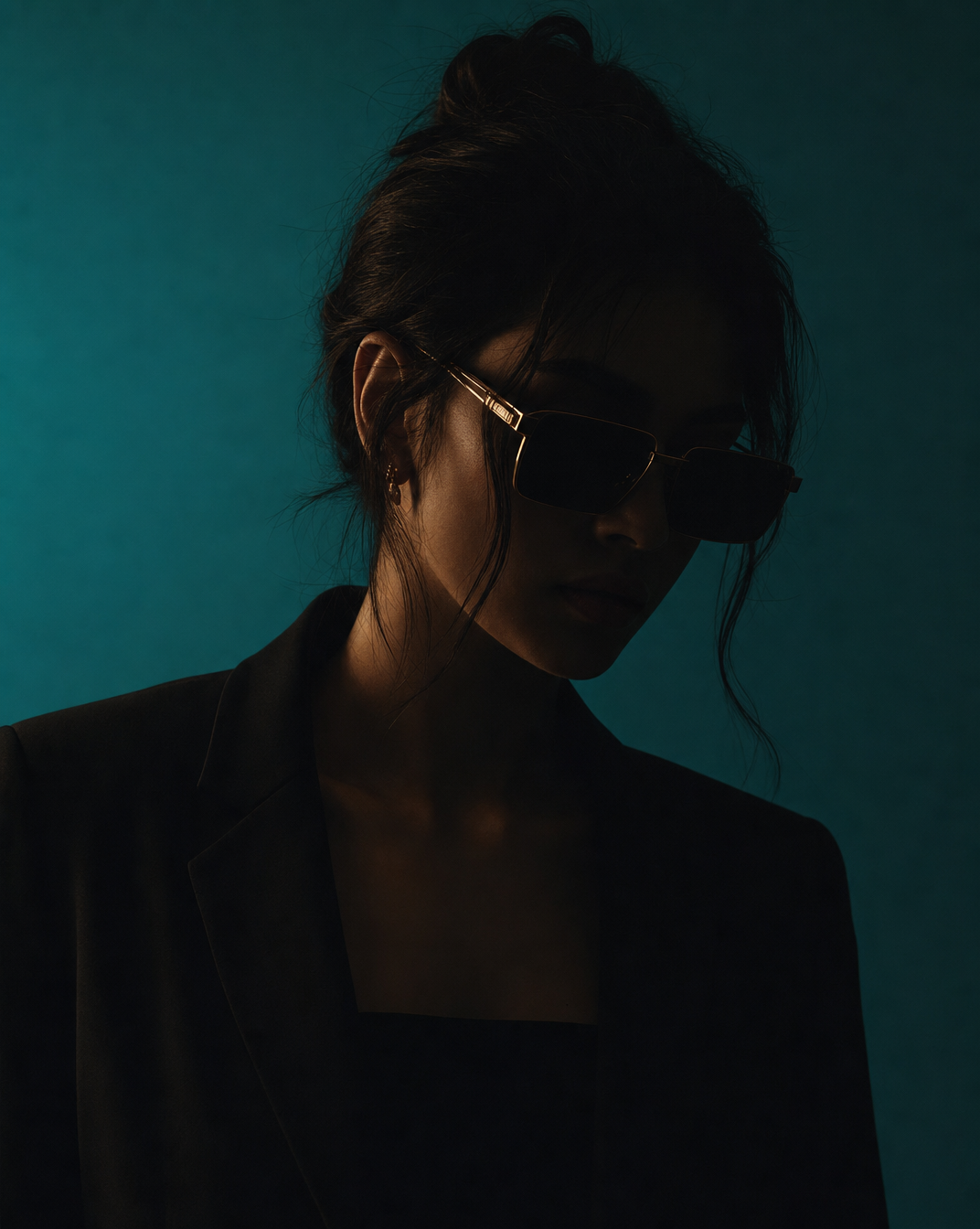
Woman in Teal Light, Shadowed Fashion Portrait
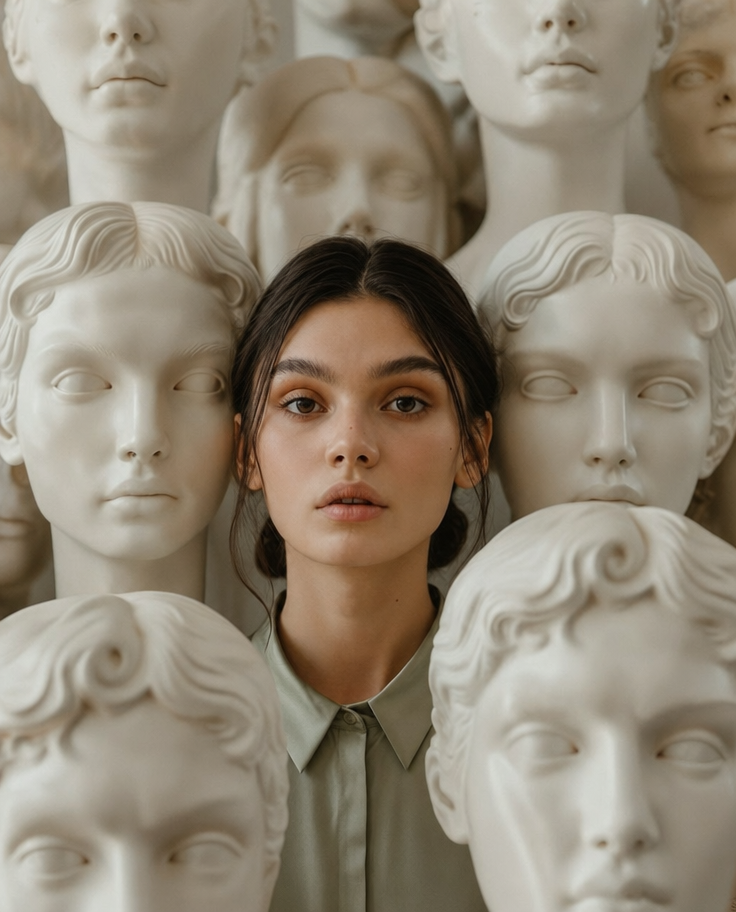
Eerie Elegance Among Marble Busts
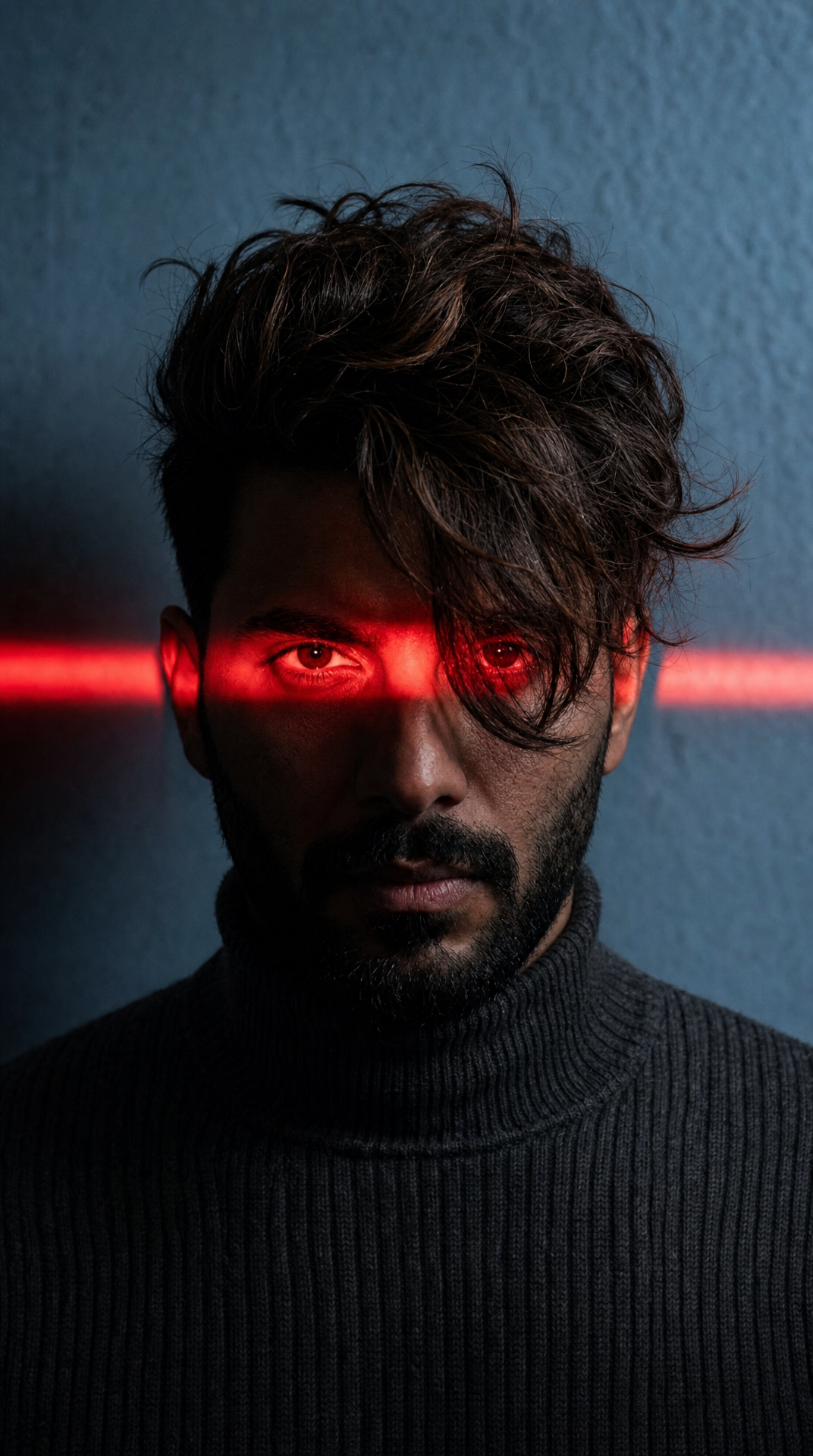
Charcoal turtleneck with red eye-beam
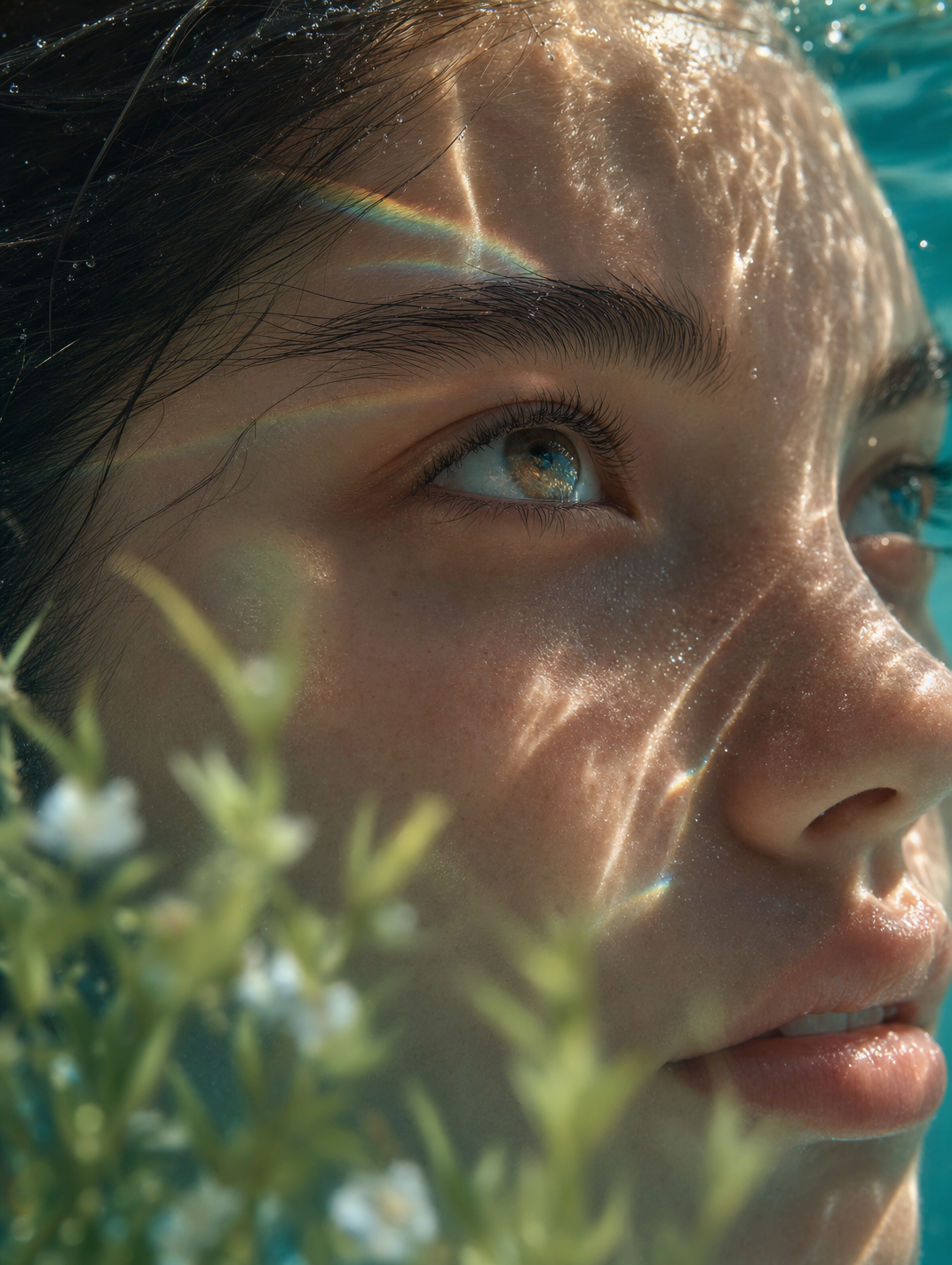
Dreamy Macro Portrait in Cool Water