Why this works
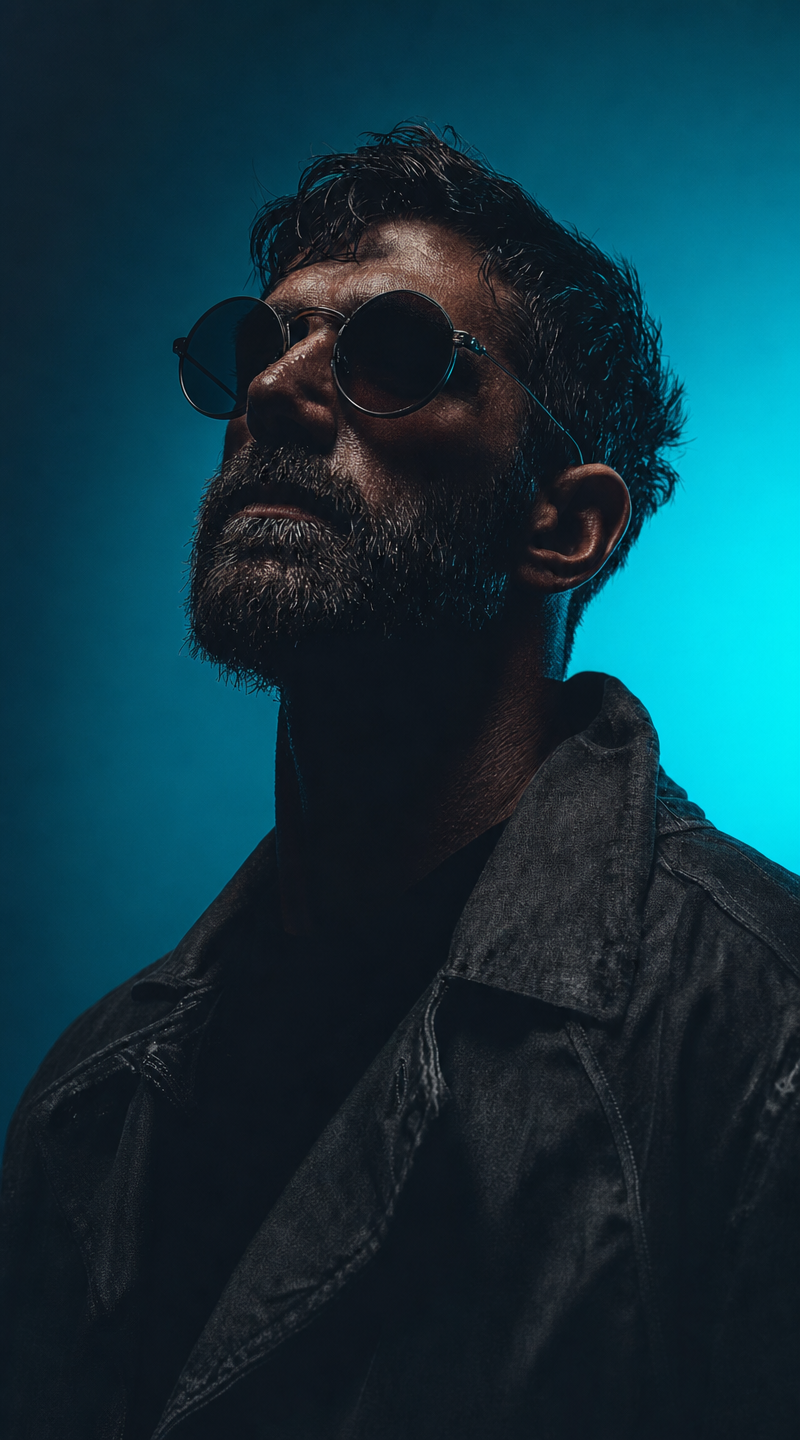
The low-angle medium close-up and the subject’s upward gaze make the bearded man feel imposing, while “serious, intense expression” fixes the emotional tone. “Dramatic high-contrast studio lighting with deep shadows” supplies the moody structure, and “strong rim light” separates the charcoal-gray jacket and sharply detailed shoulders from the smooth gradient backdrop. The cyan-and-teal palette harmonizes with the gray clothing, while “crisp skin texture and fabric detail” keeps the photorealistic editorial finish concentrated on the face and upper body.
FAQ
→How do I make the portrait feel more restrained and less aggressive?
Replace “serious, intense expression” with “calm, contemplative expression,” and change “dramatic high-contrast studio lighting with deep shadows” to “soft, diffused studio lighting with gentle shadows.” Keep “strong rim light” if you still want a defined silhouette, but reduce it to “subtle rim light.”
→How do I make the sunglasses and upward gaze more visually central?
Replace “medium close-up framing” with “tight close-up framing from the upper chest,” and change “sharp focus on face and shoulders” to “sharp focus on the sunglasses, eyes behind the lenses, and brow.” Add “round metal sunglasses dominate the foreground” and “upward gaze centered near the top third of the frame.”
→How do I create a series of variations without losing this visual identity?
Keep “photorealistic editorial portrait,” “low-angle,” “strong rim light,” and “cyan-and-teal color palette” unchanged, then swap the setting phrase “cinematic studio gradient background” for variants such as “misty teal industrial interior,” “rainy city rooftop at night,” or “minimal gray architectural corridor.” Change the jacket description from “charcoal-gray jacket” to controlled wardrobe variations such as “black leather jacket,” “deep navy wool coat,” or “textured slate blazer.”
Learn the technique behind this
- How should a prompt be structured, and does word order matter? — A prompt that behaves predictably names one subject first, then what it is doing, then where, then the light, then the lens or medium, then the style.
- Why can't AI spell, and how do I get readable text in an image? — Older diffusion models had no character-level representation of text, so they produced letterform-shaped texture instead of words.
- Which aspect ratio should I use, and how does it change the image? — Aspect ratio determines what the model composes, not how it's cropped afterwards.
Related prompts
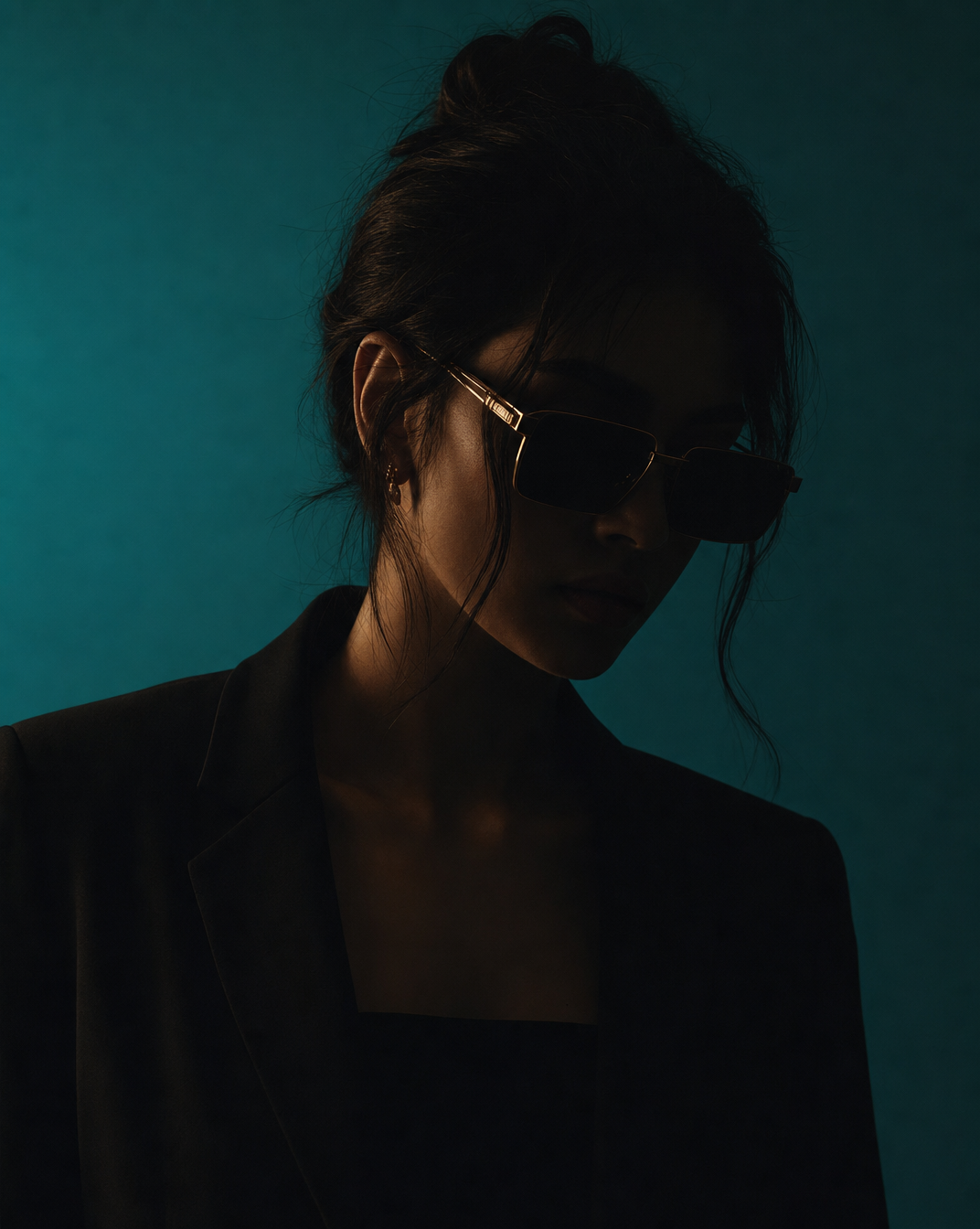
Woman in Teal Light, Shadowed Fashion Portrait
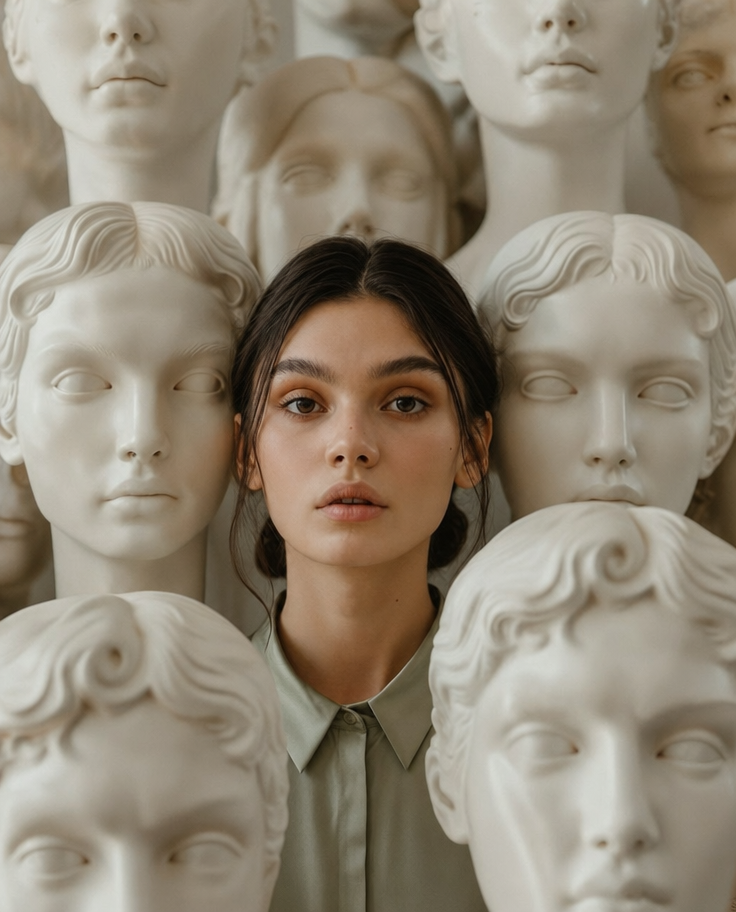
Eerie Elegance Among Marble Busts
Charcoal turtleneck with red eye-beam
Dreamy Macro Portrait in Cool Water