Why this works
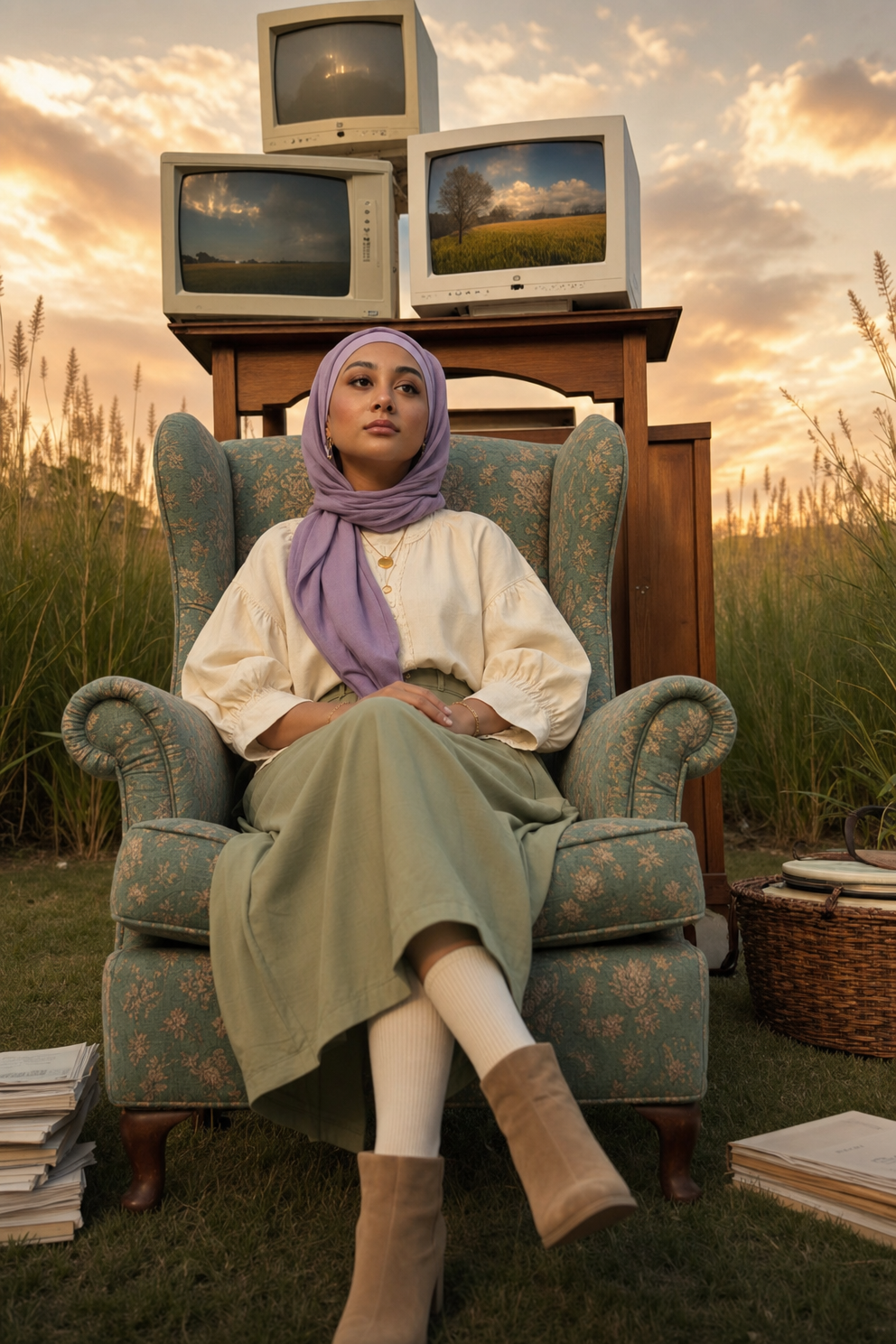
The centered, medium-framed portrait makes the seated woman and vintage teal floral armchair the visual anchor, while “stacked retro CRT monitors sit among scattered paper” builds a surreal secondary layer directly behind her. “Warm late-afternoon sunlight with gentle rim light” separates the lavender hijab, ivory blouse, and sage skirt from the lush green garden, while “dreamy serenity,” “pastel palette,” and “whimsical cotton-like clouds across a rich indigo sky” establish the soft, magical tone. The brown, green, and purple dominance reinforces the tan boots and chair, grass, and hijab-indigo sky relationship without losing the prompt’s gentle color harmony.
FAQ
→How do I make the CRT monitors more central and visually dominant?
Replace “medium framing focused on the subject and chair with monitors behind” with “medium-wide framing focused equally on the woman and a towering wall of CRT monitors.” Change “stacked retro CRT monitors sit among scattered paper” to “a towering, asymmetrical installation of glowing retro CRT monitors surrounds the chair,” and add “monitor screens sharply detailed and brightly visible.”
→How do I shift the scene from serene and dreamy to eerie and uncanny?
Replace “dreamy serenity” with “quiet uncanny tension,” “warm late-afternoon sunlight with gentle rim light” with “cold moonlight with hard directional shadows and flickering screen light,” and “whimsical cotton-like clouds” with “unnaturally smooth storm clouds.” Change the monitor content from “abstract pastel mountain-and-lake landscape scenes” to “distorted empty landscapes with dark lakes and impossible horizons.”
→How do I create a series of variations while keeping the same visual identity?
Keep “surreal editorial magical-realism photography,” the “soft lavender chiffon hijab,” “vintage teal floral armchair,” and “centered composition” unchanged. Swap the setting phrase “grassy garden with wildflowers” for variations such as “an abandoned seaside promenade,” “a sunlit greenhouse,” or “a quiet suburban rooftop,” and replace the monitor scenes with matching imagery such as “abstract pastel ocean horizons,” “botanical dreamscapes,” or “miniature city streets.”
Learn the technique behind this
- Why can't AI spell, and how do I get readable text in an image? — Older diffusion models had no character-level representation of text, so they produced letterform-shaped texture instead of words.
- Which aspect ratio should I use, and how does it change the image? — Aspect ratio determines what the model composes, not how it's cropped afterwards.
- How should a prompt be structured, and does word order matter? — A prompt that behaves predictably names one subject first, then what it is doing, then where, then the light, then the lens or medium, then the style.
Related prompts
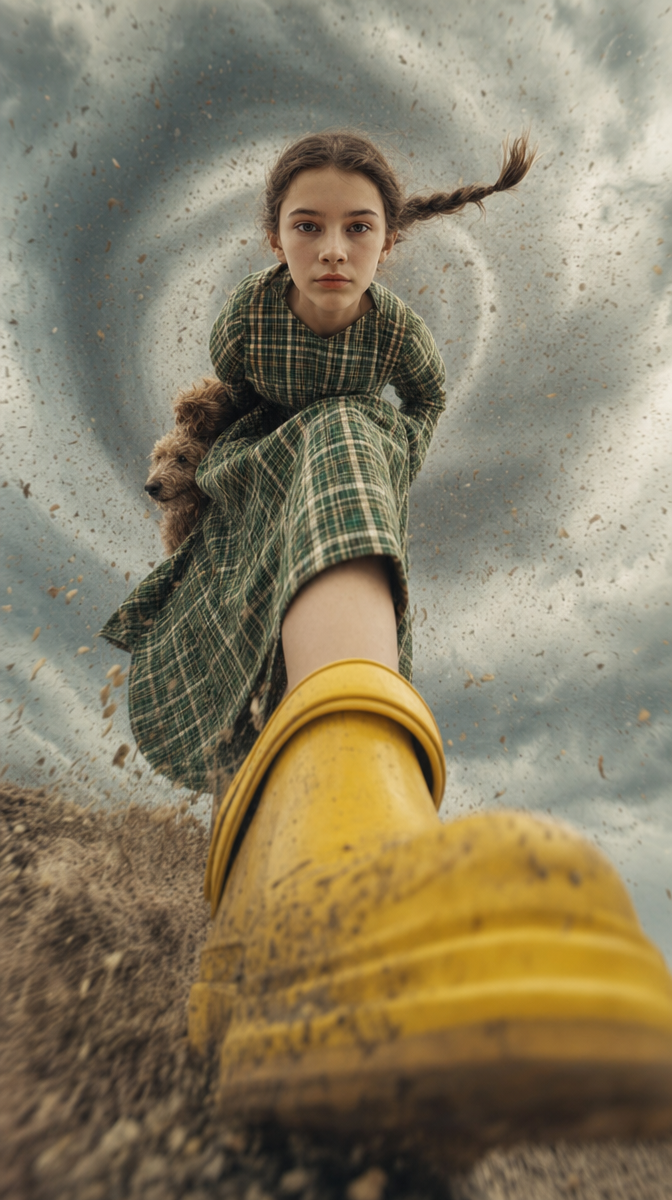
Young girl with dog in tornado
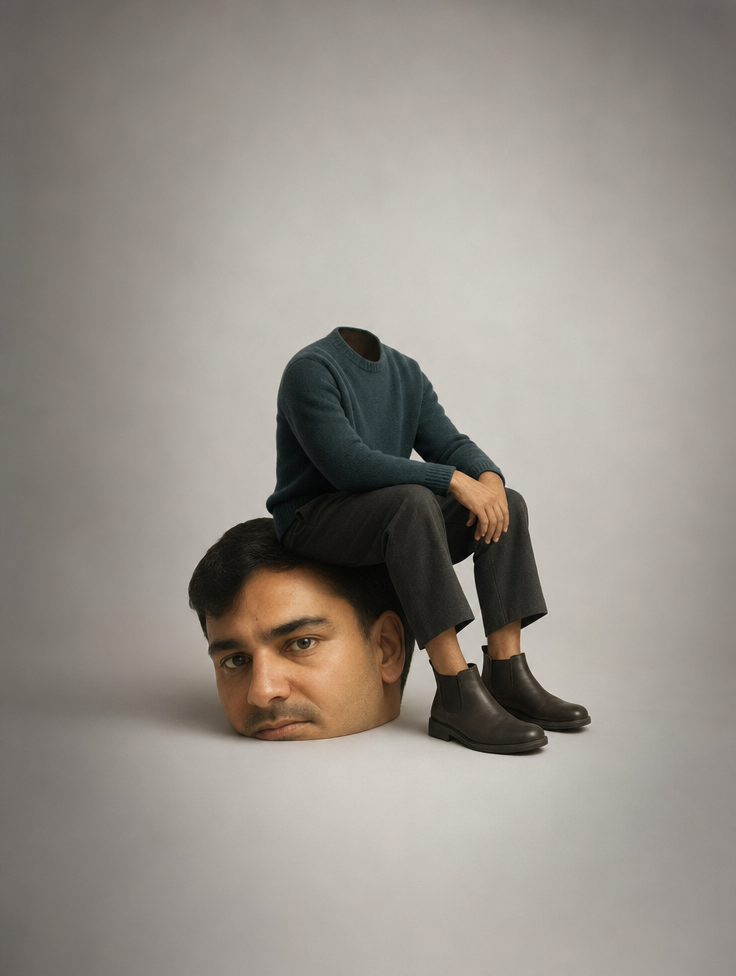
Headless sitter atop a giant head
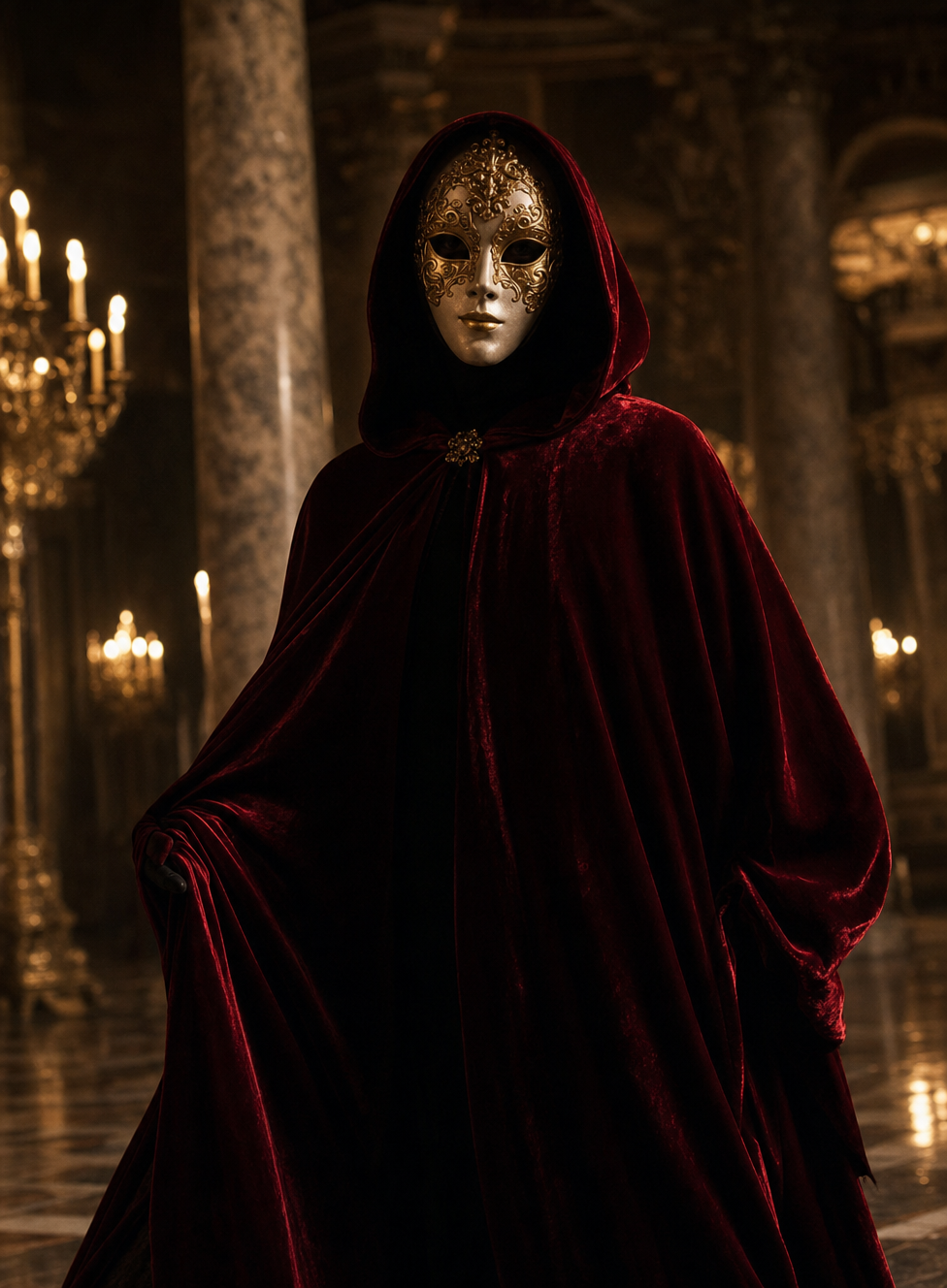
Crimson-Cloaked Specter in Candlelit Ballroom

Violet Holographic Hands Almost Touching