Why this works
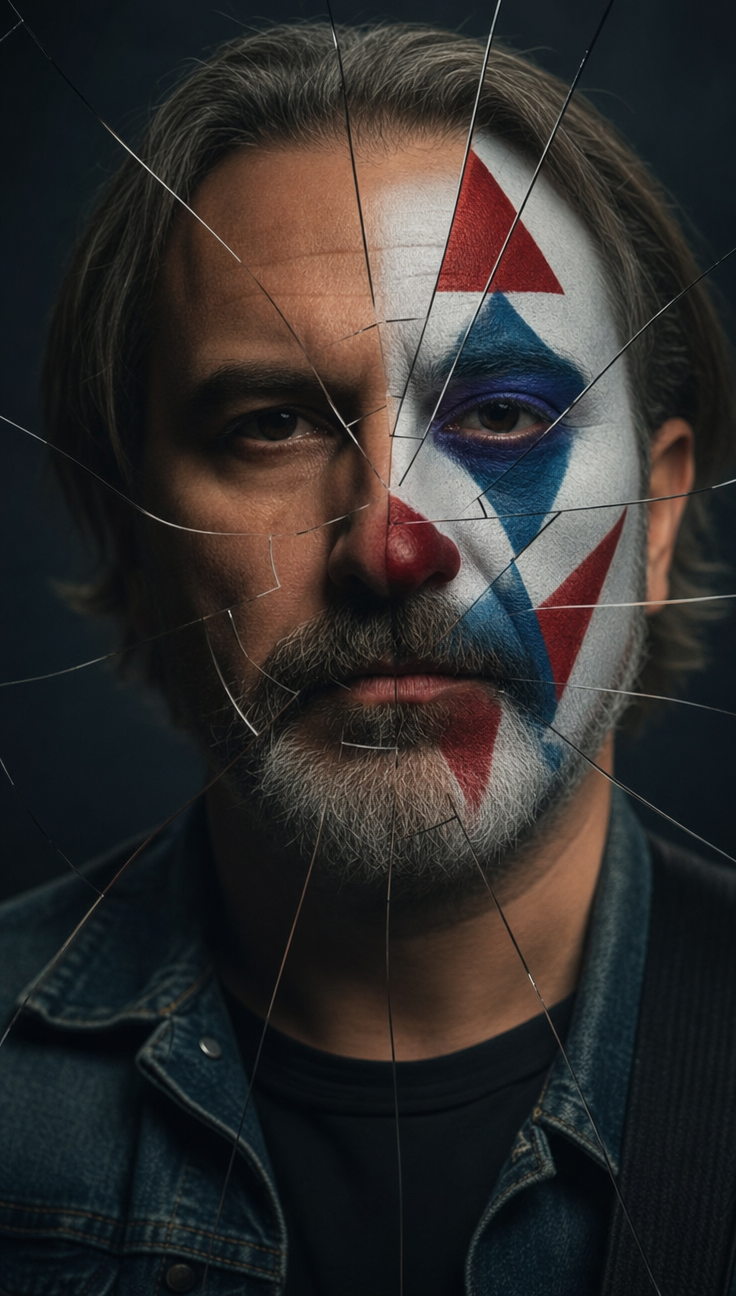
The “close-up portrait” and “85mm lens look” keep the face dominant, while the “jagged cracked-glass seam” gives the composition a precise visual divide between the muted, unpainted side and the geometric red-and-blue makeup. “Dramatic side lighting with high-contrast highlights on the glass fractures” makes the sparkling seam the brightest structural detail, and “dark, indistinct background” removes competing context. The somber mood comes from the “muted, somber expression,” while “shallow depth of field,” realistic pores, and the black-blue-red-white palette balance psychological tension with photographic realism.
FAQ
→How do I make the Joker-inspired side more prominent without losing the split-face concept?
Replace “split by a jagged cracked-glass seam into two personas” with “a three-quarter portrait dominated by the Joker-inspired side, with the cracked-glass seam pushed toward the left edge.” Change “on the other side he wears” to “the central visible side wears,” and add “makeup side in sharp focus, unpainted side partially receding into shadow.”
→How do I turn the somber portrait into a more threatening, confrontational image?
Replace “muted, somber expression” with “direct, hostile stare with a tense jaw,” and change “dramatic side lighting” to “hard, low-angle side lighting with deep eye-socket shadows.” For a stronger background response, replace “dark, indistinct background” with “near-black background with faint red reflected light,” while keeping “no smudged grin” if the geometric makeup should remain controlled rather than cartoonish.
→How do I create a matching series with different psychological identities?
Keep “photorealistic cinematic close-up portrait,” “85mm lens look,” “dark, indistinct background,” and “jagged glass fracture seam with sparkling highlights” fixed across every prompt. Swap “Joker-inspired makeup” and its “red-and-blue face pattern” for a new identity such as “half face covered in cracked porcelain with pale blue shadows,” then replace “muted, somber expression” with a consistent opposing state such as “calm, emotionally distant expression.”
Learn the technique behind this
- Why can't AI spell, and how do I get readable text in an image? — Older diffusion models had no character-level representation of text, so they produced letterform-shaped texture instead of words.
- How do I keep the same character across multiple images? — Text prompts alone won't hold a face across images — a description defines a type, not a person.
- How should a prompt be structured, and does word order matter? — A prompt that behaves predictably names one subject first, then what it is doing, then where, then the light, then the lens or medium, then the style.
Related prompts
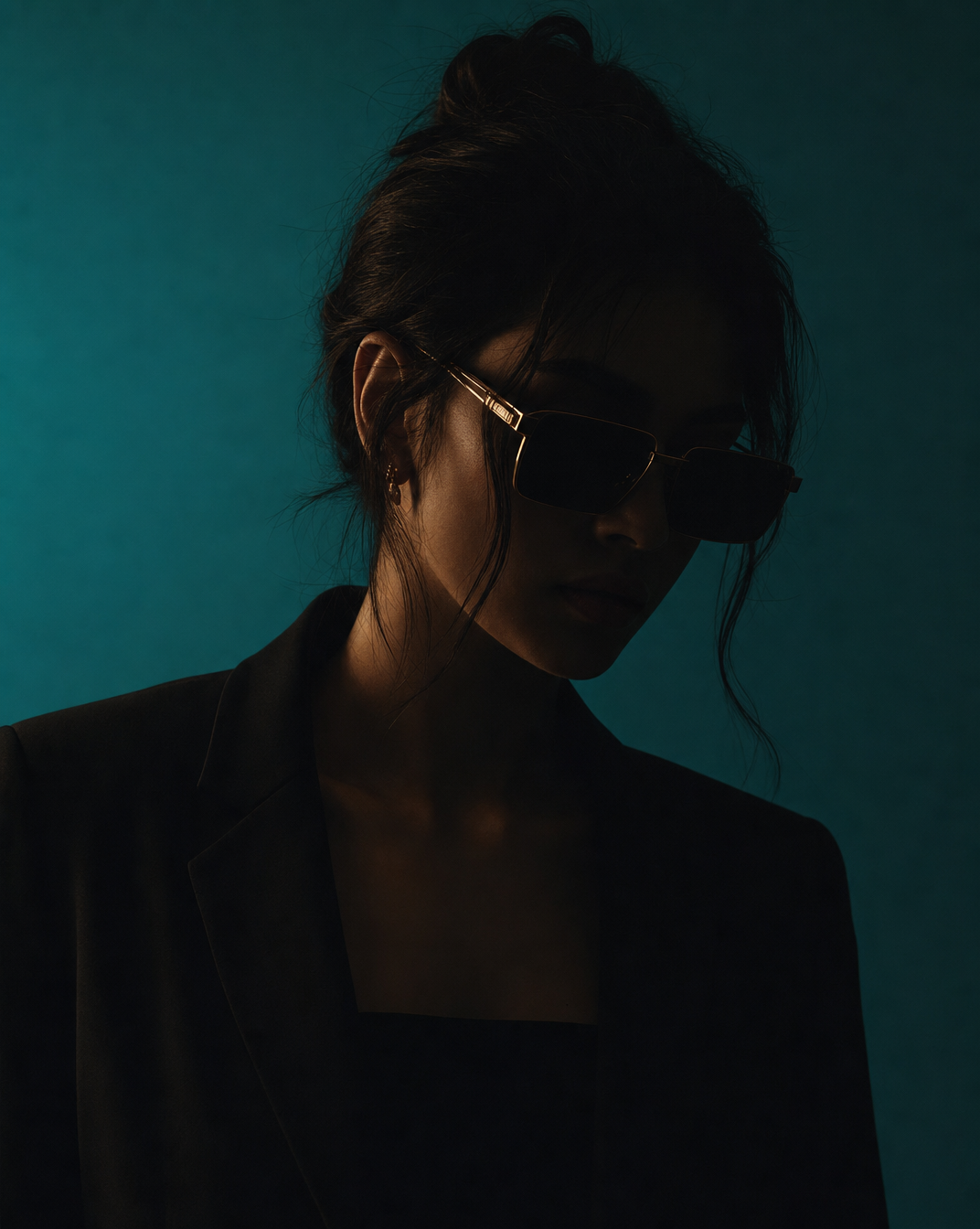
Woman in Teal Light, Shadowed Fashion Portrait
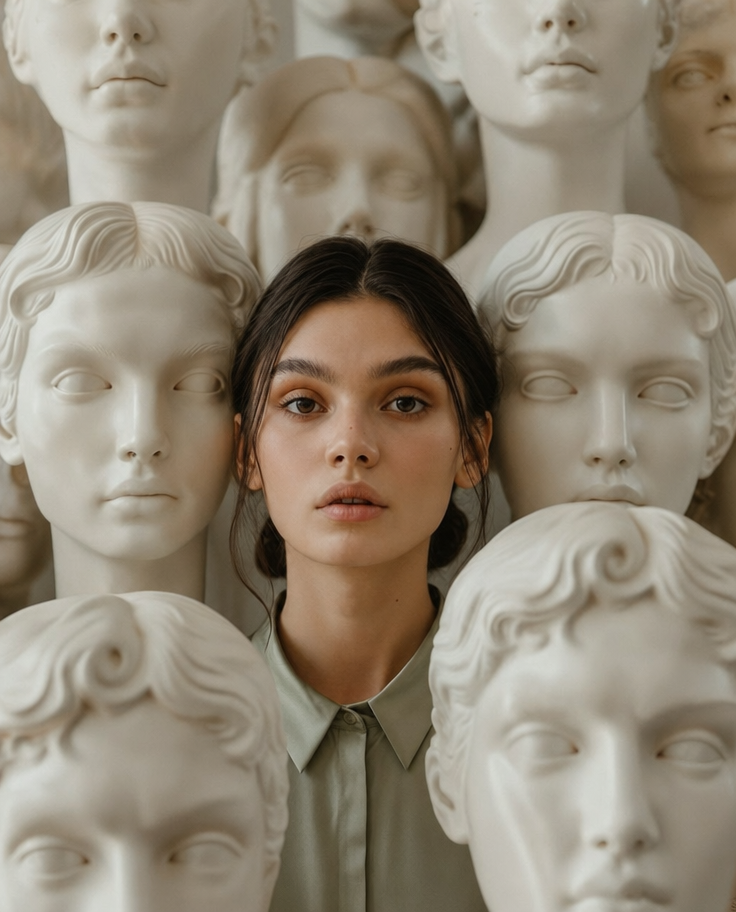
Eerie Elegance Among Marble Busts
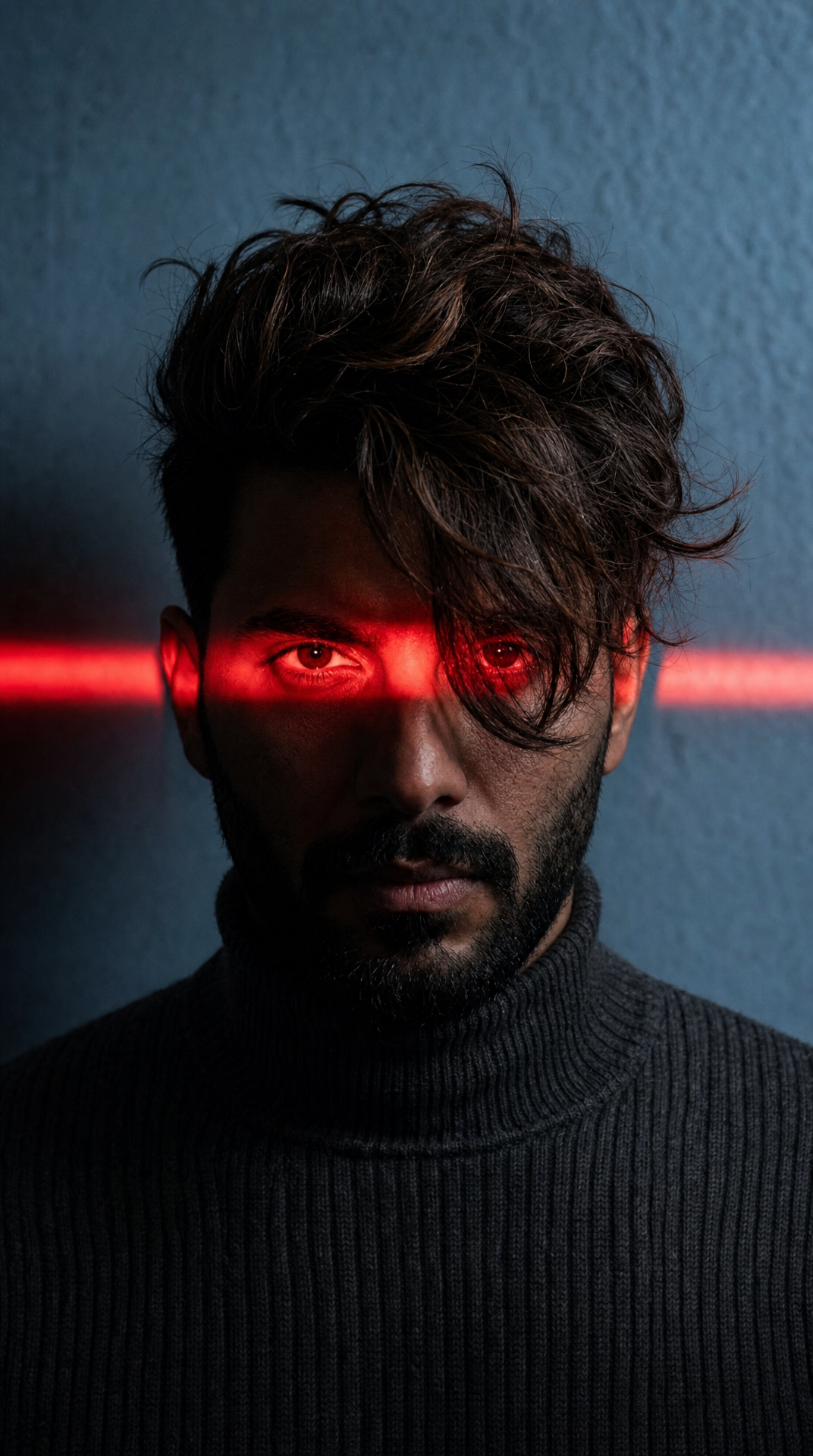
Charcoal turtleneck with red eye-beam

Dreamy Macro Portrait in Cool Water