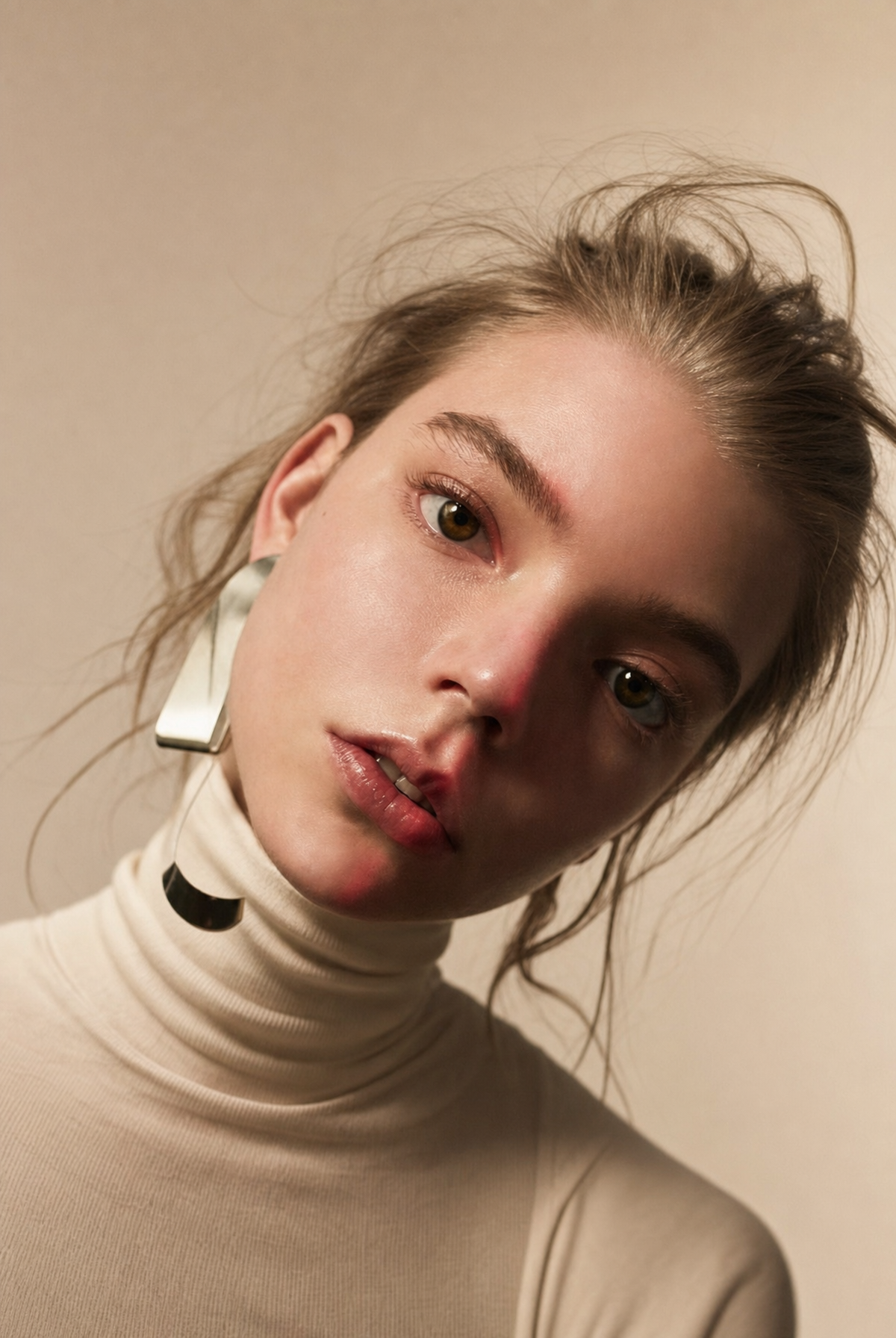
Why this works
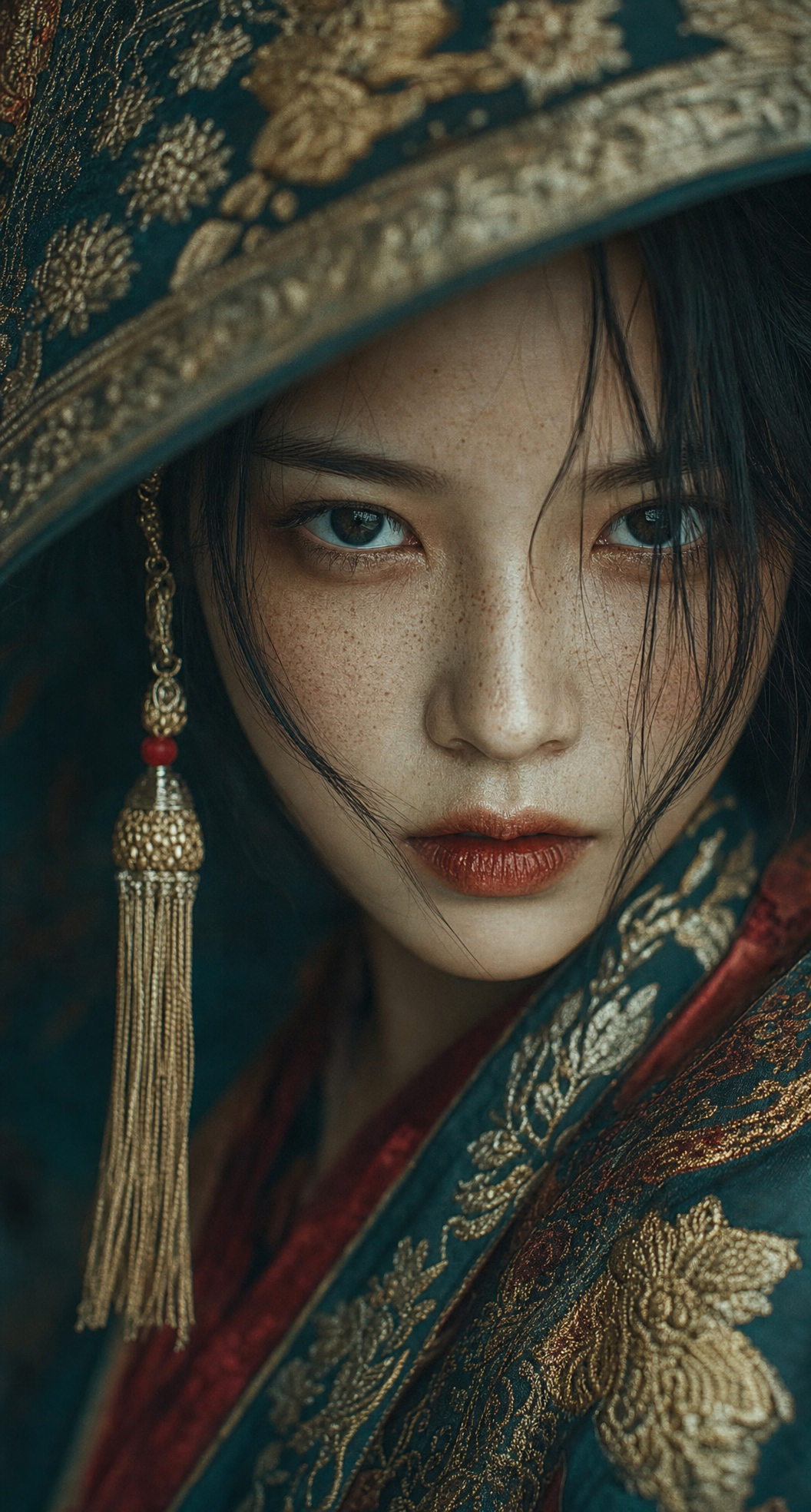
The close framing is carried by “close-up photorealistic cinematic portrait,” while “sharp focus on the eyes” and “realistic pores and hair strand highlights” make the intense gaze and tactile facial detail the visual anchor. “Wind-swept wet hair pulled to one side (fewer strands covering the face)” keeps the expression unobstructed, and “shallow depth of field with pronounced bokeh” separates the face from the background. The intended teal-and-amber scheme is complicated by the generated image’s dominant gold, brown, and crimson, but “warm amber highlights,” “richly embroidered garment,” and the “ornate patterned traditional hat” plausibly push the result toward that warmer, earthier harmony within the moody low-key tone.
FAQ
→How do I make the tassel earring and traditional hat more prominent?
Replace “single tassel earring visible” with “large ornate tassel earring clearly visible in the foreground” and add “hat fully visible, centered in the upper frame, intricate pattern readable.” Replace “close-up” with “tight head-and-shoulders portrait” to create enough space for both accessories without losing eye focus.
→How do I shift this from moody and intense to a brighter, celebratory portrait?
Replace “moody low-key lighting” with “bright soft daylight with warm frontal fill and gentle rim light,” and replace “muted teal and warm amber tones” with “vivid turquoise, coral, and gold tones.” Change “intense eyes” to “warm, joyful expression” to align the face with the lighter color and lighting treatment.
→How do I create a consistent series of variations from this portrait?
Keep the fixed identity and camera phrases, including “same young person,” “close-up photorealistic cinematic portrait,” and “sharp focus on the eyes,” then swap only the costume and palette. For example, replace “different ornate patterned traditional hat and a richly embroidered garment” with “silver filigree crown and deep blue brocade robe,” and replace “muted teal and warm amber tones” with “midnight blue, silver, and violet tones” for a controlled second variation.
Learn the technique behind this
- Why can't AI spell, and how do I get readable text in an image? — Older diffusion models had no character-level representation of text, so they produced letterform-shaped texture instead of words.
- How should a prompt be structured, and does word order matter? — A prompt that behaves predictably names one subject first, then what it is doing, then where, then the light, then the lens or medium, then the style.
- How do I keep the same character across multiple images? — Text prompts alone won't hold a face across images — a description defines a type, not a person.
Related prompts
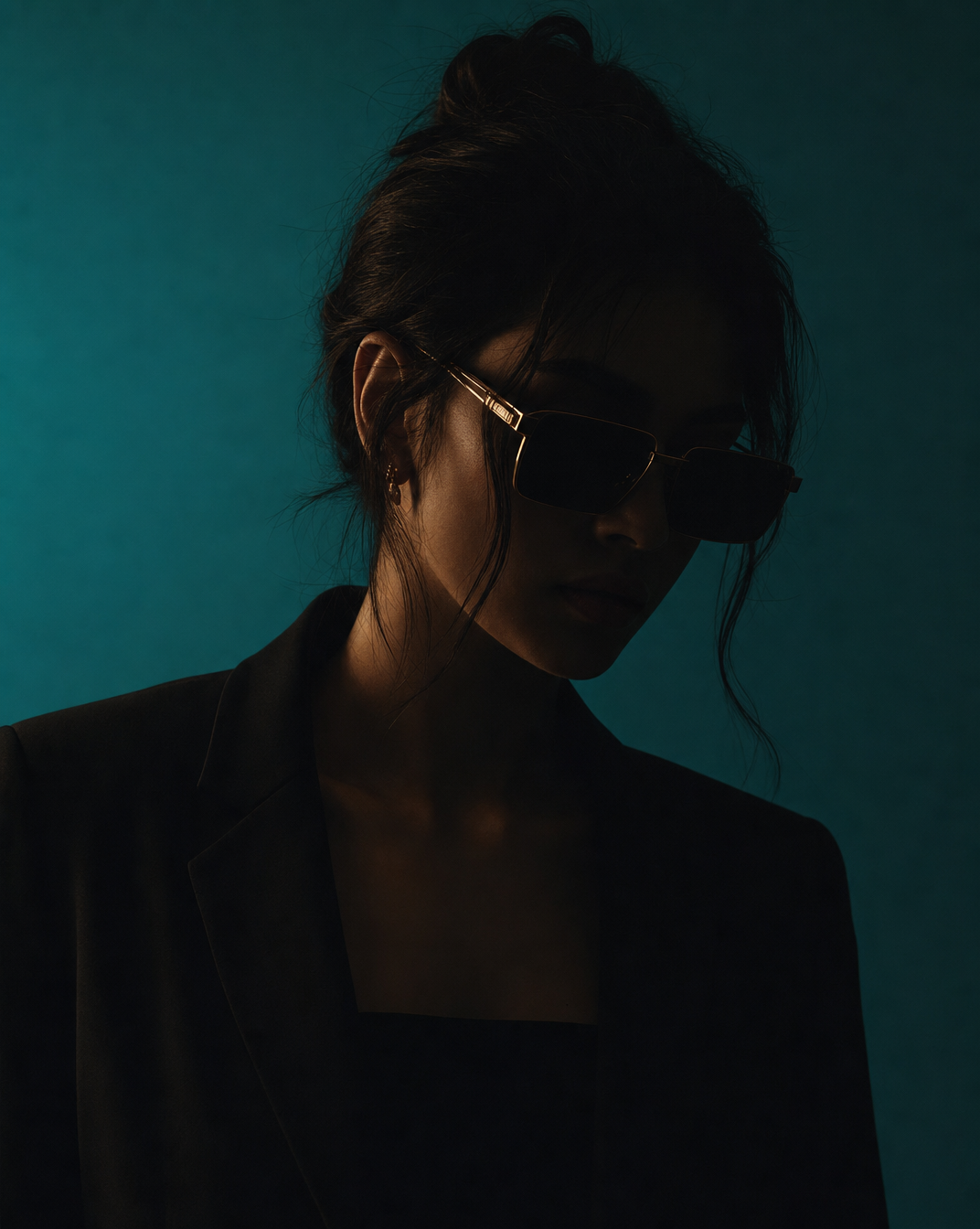
Woman in Teal Light, Shadowed Fashion Portrait
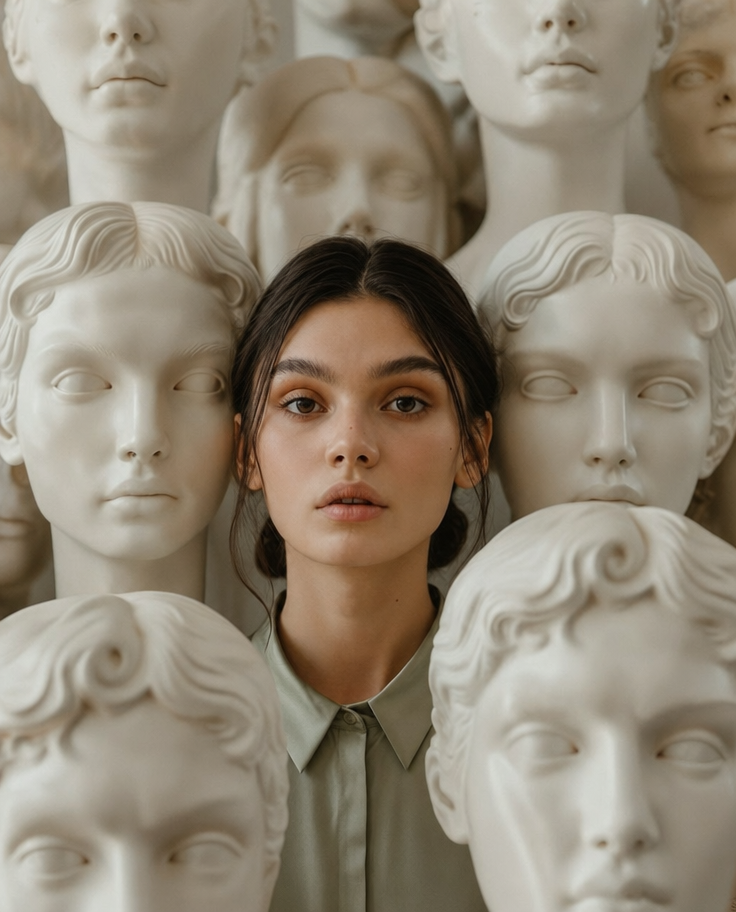
Eerie Elegance Among Marble Busts
Charcoal turtleneck with red eye-beam
Dreamy Macro Portrait in Cool Water