Why this works
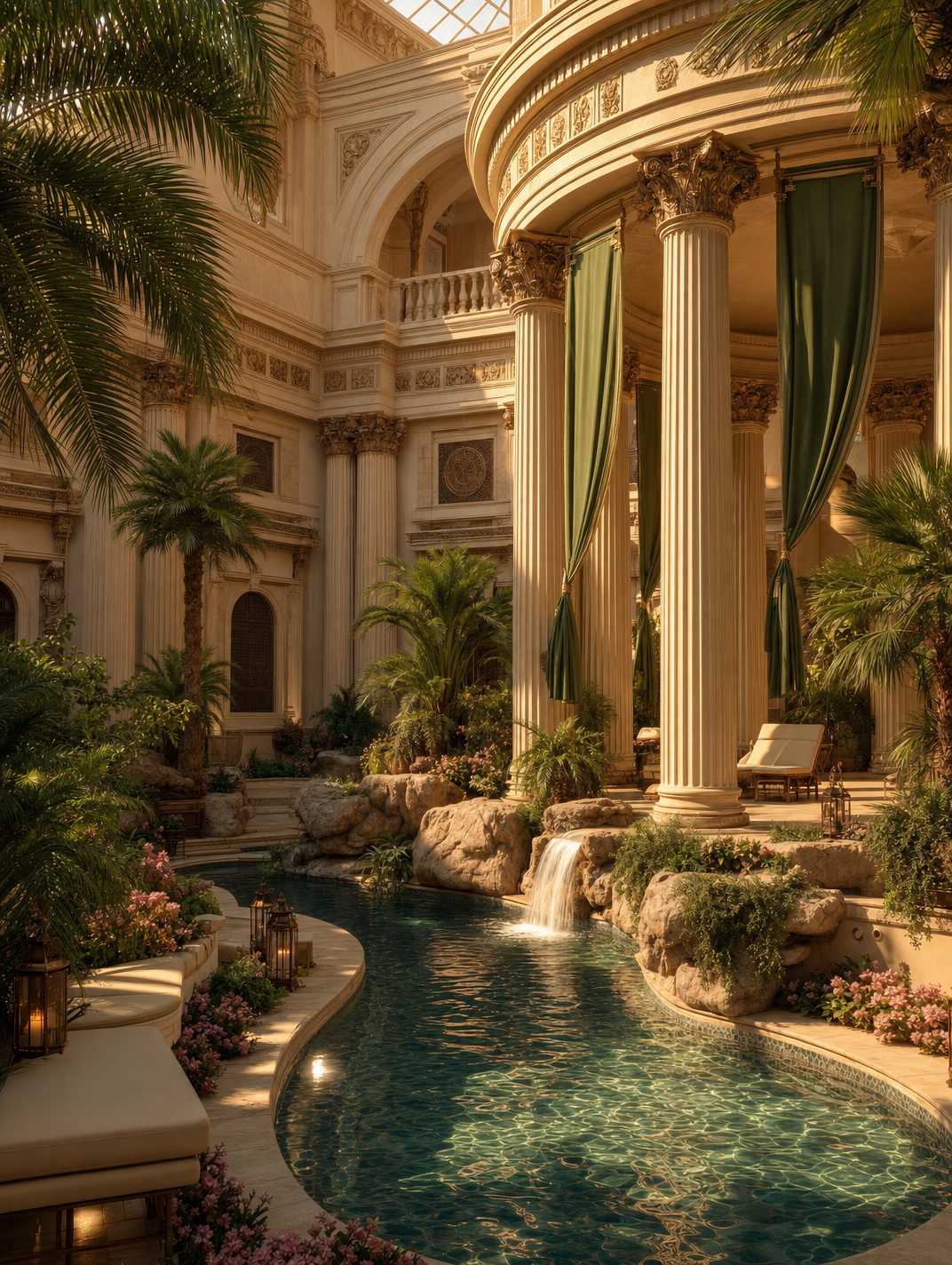
The phrase “cinematic architectural framing, wide angle looking through the courtyard with clear depth and reflections” establishes the wide-shot composition and leads the eye from the pale-marble columns and arched walls toward the winding pool. “Warm afternoon golden sunlight streaming through an inner skylight” supplies the sunlit mood, while “deep-teal pool,” “muted emerald green drapes,” and “dense lush greenery” create the dominant green-and-blue harmony against “light limestone stone edging” and pale marble. “Highly detailed textures” plus “realistic reflections on the water’s surface” keeps the image grounded in photorealistic architectural photography rather than making the courtyard feel like a purely decorative fantasy.
FAQ
→How do I make the waterfall and pool more visually central?
Replace “a winding deep-teal pool” with “a large winding deep-teal pool occupying the foreground and center of the composition,” and change “a small cascading waterfall into the pool” to “a prominent multi-tiered waterfall descending beside the central pool.” Keep “wide angle looking through the courtyard” so the architecture still frames the water feature.
→How do I shift the scene from serene afternoon luxury to a more dramatic evening mood?
Replace “Warm afternoon golden sunlight streaming through an inner skylight with soft highlights” with “cool blue-hour light filtering through the skylight, accented by dramatic amber architectural uplighting.” Change “serene, opulent resort ambiance” to “moody, cinematic palatial ambiance,” and add “deep shadows and luminous reflections across the pool.”
→How do I create a different courtyard variation while preserving this visual style?
Swap “classical palatial architecture with towering pale-marble columns and arched walls” for a specific alternative such as “Moorish courtyard architecture with horseshoe arches, carved stucco, and tiled arcades.” Replace “abundant tropical palms and dense lush greenery” with “olive trees, clipped citrus shrubs, and flowering vines,” while retaining “photorealistic architectural photography,” “cinematic composition,” and “highly detailed realistic reflections.”
Learn the technique behind this
- Why can't AI spell, and how do I get readable text in an image? — Older diffusion models had no character-level representation of text, so they produced letterform-shaped texture instead of words.
- How should a prompt be structured, and does word order matter? — A prompt that behaves predictably names one subject first, then what it is doing, then where, then the light, then the lens or medium, then the style.
- Do negative prompts work, and what should go in one? — Negative prompts work on models that support a separate negative conditioning channel — mainly Stable Diffusion and FLUX-family models.
Related prompts
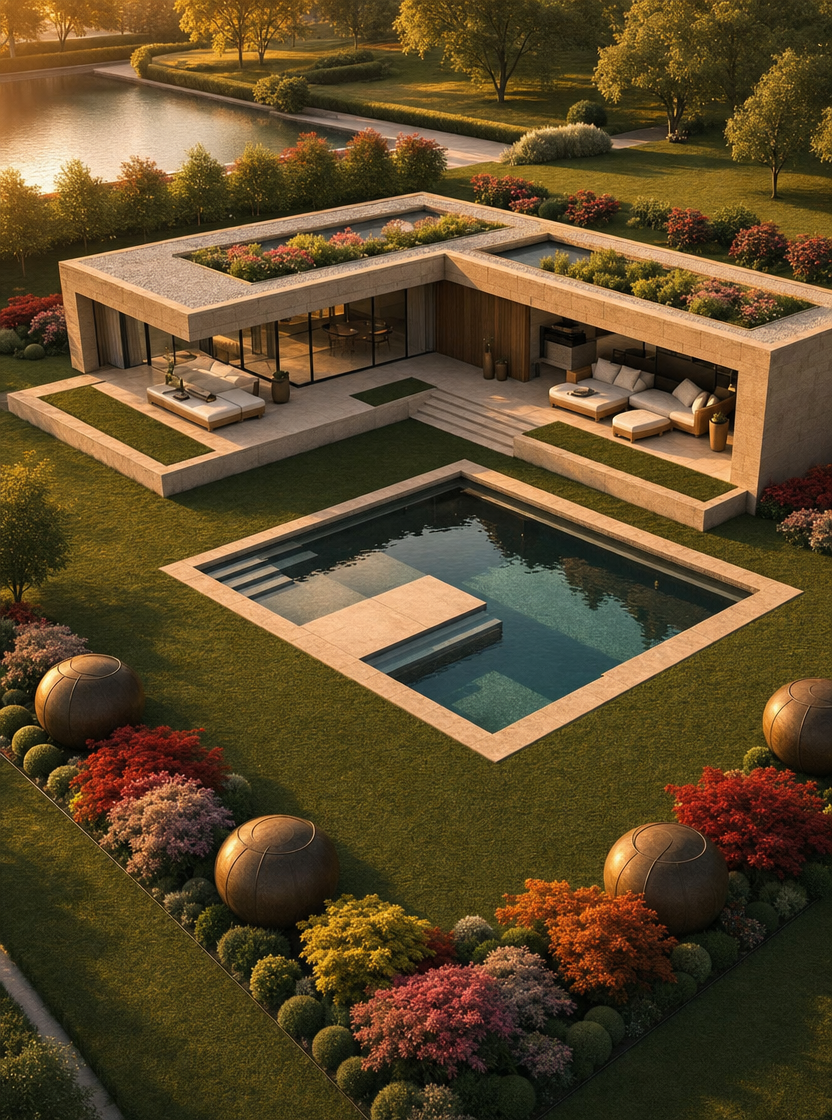
Beige Modern Villa with Rectangular Pool Garden
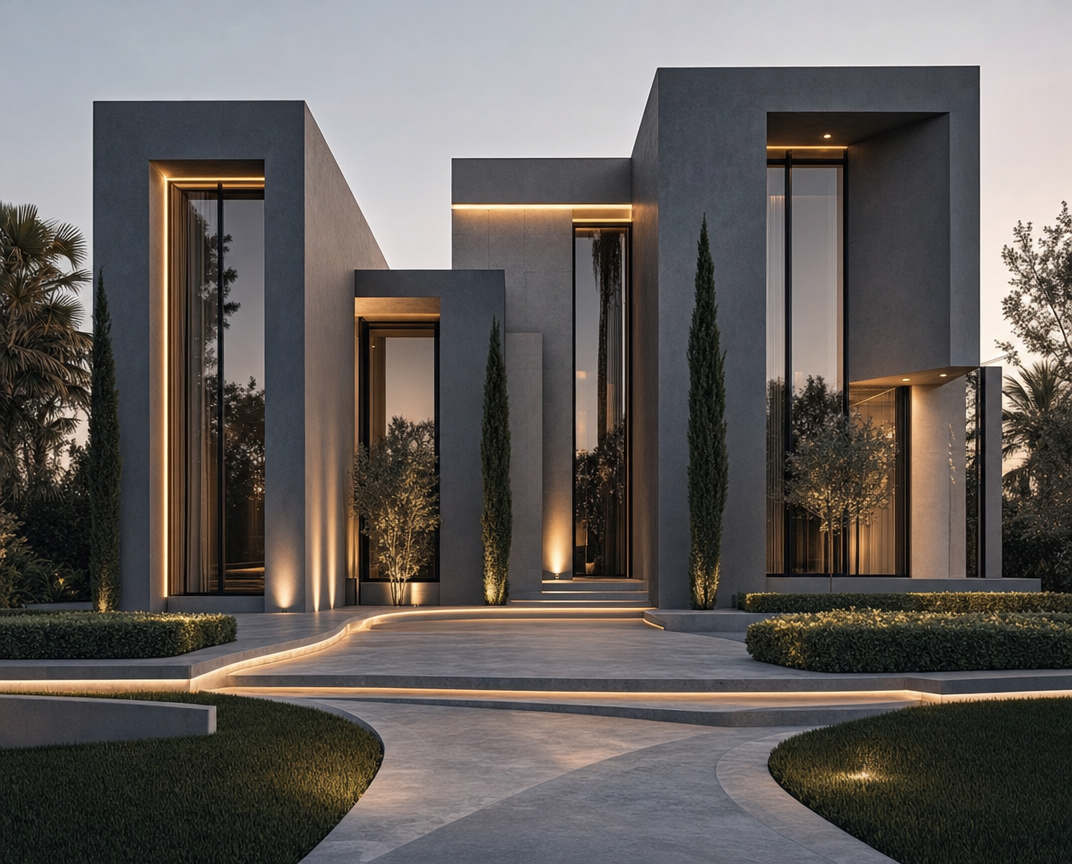
Luxury modern villa with dark concrete facade and vertical windows
Golden-hour eco boulevard with tram
Blue-Hour Wedding Tent Reception Scene