Why this works
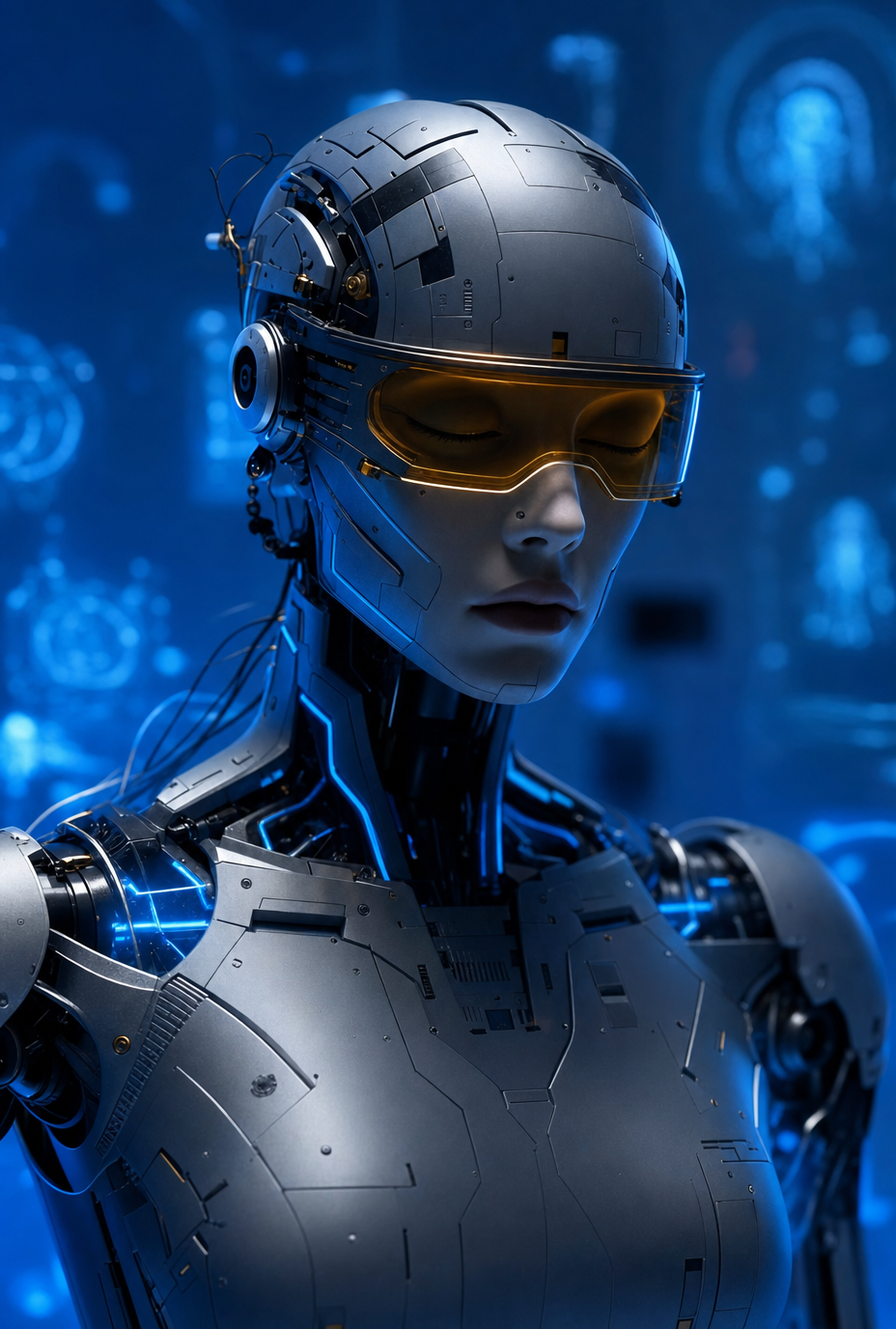
The “cinematic close-up portrait framing” makes the face plate and exposed mechanical neck the visual anchors, while “shallow depth of field” separates them from the dark backdrop. “Matte graphite-and-silver exoskeleton” supplies the dominant gray-and-black palette, and “tinted amber glass visor” adds a controlled warm accent against the “cool cyan futuristic lighting.” The high-tech mood depends on specific details: “blue circuit-like light strips along the collar area,” “faint abstract holographic shapes,” and “subtle atmospheric haze” build atmosphere without allowing readable code to compete with the portrait.
FAQ
→How do I make the amber visor and face plate more prominent?
Replace “cinematic close-up portrait framing” with “extreme facial close-up centered on the visor and face plate,” and replace “subtle internal reflections” with “strong controlled reflections inside the amber visor, clearly revealing layered optics.” Keep “shallow depth of field” so the collar lights and holographic shapes fall further out of focus.
→How do I make the robot feel more ominous instead of cool and polished?
Replace “cool cyan futuristic lighting” with “low-key desaturated blue lighting with hard side shadows,” and change “realistic reflections across the robot’s face plate” to “deep shadowed reflections with sharp specular highlights.” Replace “faint abstract holographic shapes” with “fragmented red warning symbols and distorted holographic forms,” while retaining “dark, misty” to preserve the threatening atmosphere.
→How do I create a series of variations without losing this robot’s identity?
Keep “humanoid robot portrait,” “matte graphite-and-silver exoskeleton,” “tinted amber glass visor,” and “blue circuit-like light strips along the collar area” unchanged. Vary only the setting and light, such as replacing “dark, misty futuristic backdrop” with “rain-soaked industrial hangar,” “sterile orbital laboratory,” or “abandoned neon transit station,” then swap “cool cyan futuristic lighting” for “violet rim lighting,” “clinical white overhead lighting,” or “magenta-and-teal neon lighting.”
Learn the technique behind this
- Why can't AI spell, and how do I get readable text in an image? — Older diffusion models had no character-level representation of text, so they produced letterform-shaped texture instead of words.
- How do I keep the same character across multiple images? — Text prompts alone won't hold a face across images — a description defines a type, not a person.
- How should a prompt be structured, and does word order matter? — A prompt that behaves predictably names one subject first, then what it is doing, then where, then the light, then the lens or medium, then the style.
Related prompts
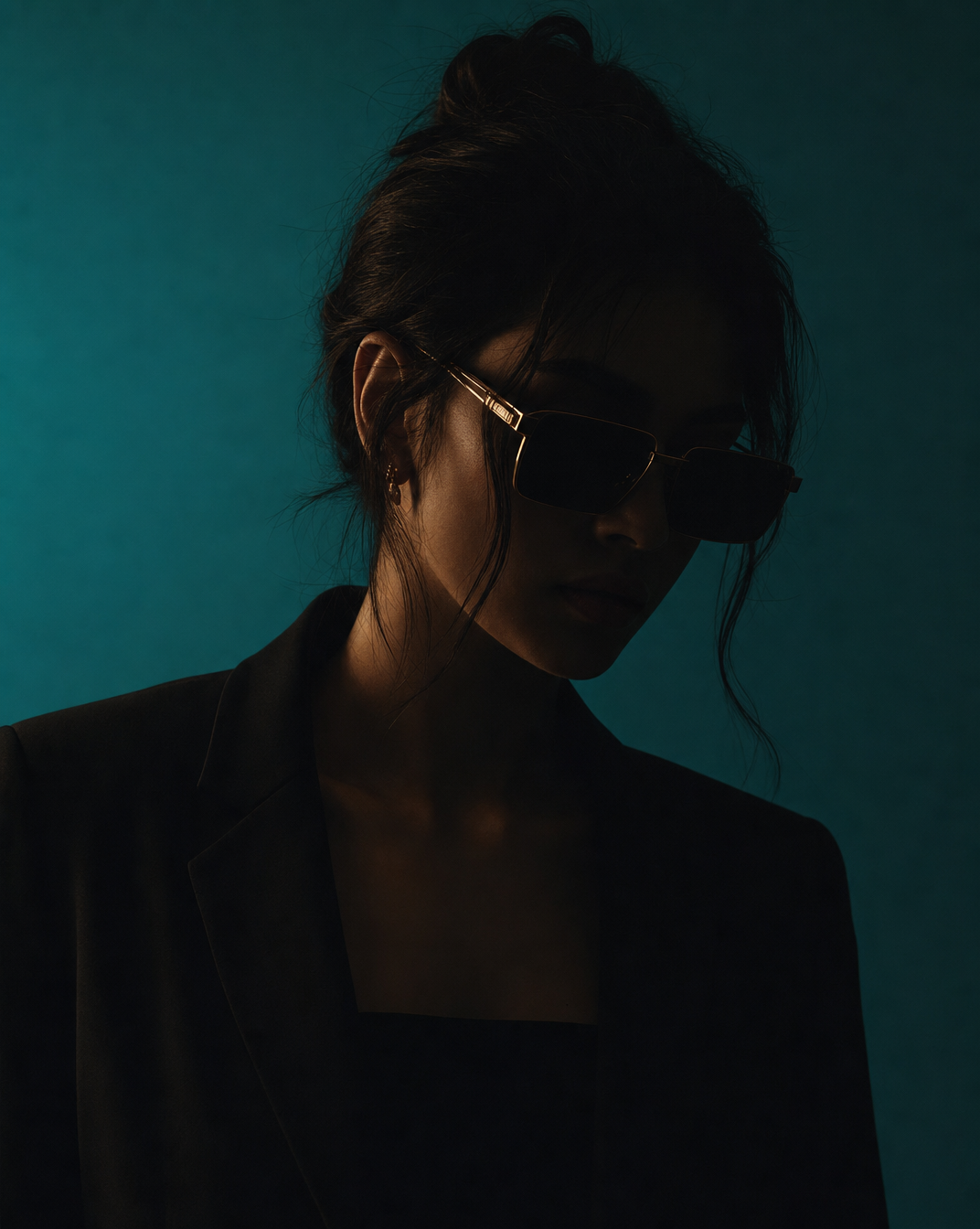
Woman in Teal Light, Shadowed Fashion Portrait
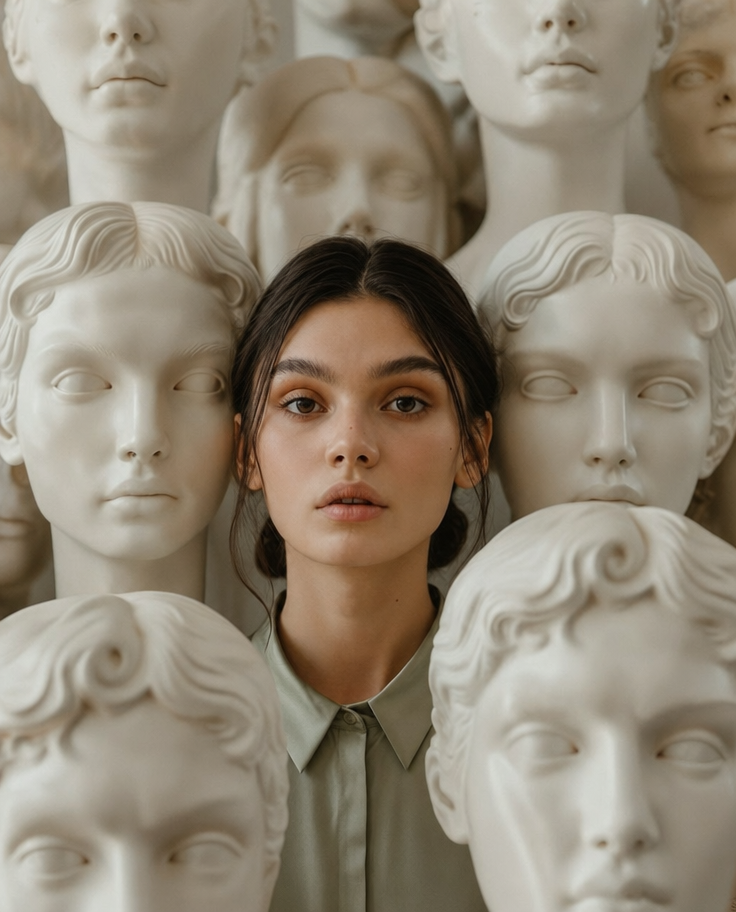
Eerie Elegance Among Marble Busts
Charcoal turtleneck with red eye-beam
Dreamy Macro Portrait in Cool Water