Why this works
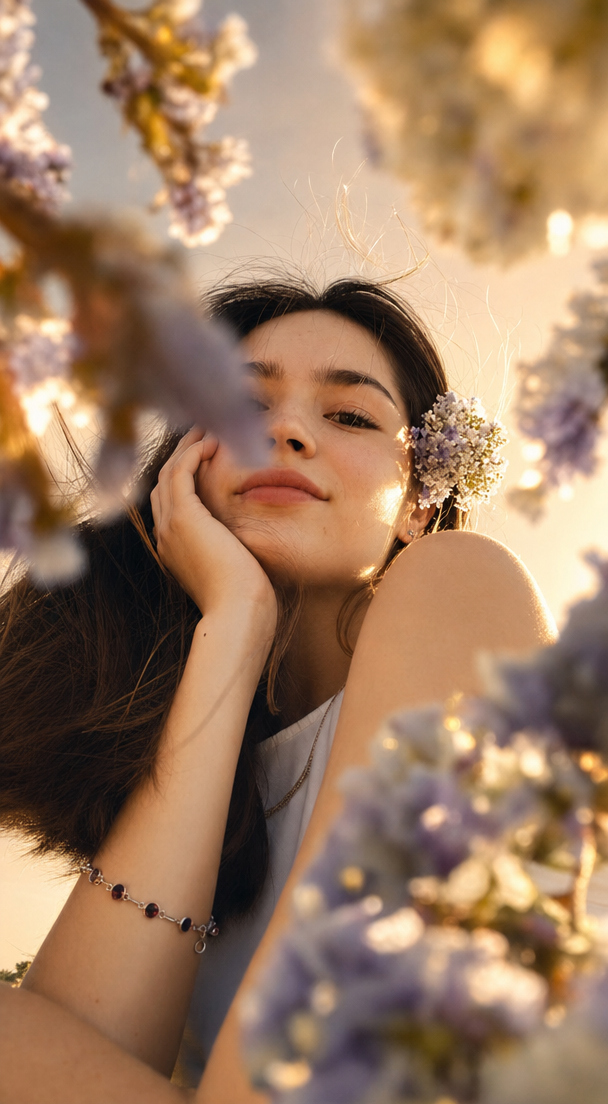
The low-angle close-up and “cinematic, near-macro perspective” make the woman’s face and cheek-touching hand fill the portrait, while “subject tack-sharp” gives the expression visual priority. “Out-of-focus white and lavender flowers” supplies the creamy foreground framing, and “shallow depth of field” turns those flowers into soft bokeh rather than competing detail. The soft, dreamy summer mood comes from the exact combination of “warm golden-hour sky,” “soft natural sunlight,” and “gentle pastel color palette with warm highlights,” reflected in the image’s brown warmth alongside white and purple accents.
FAQ
→How do I make the woman’s eyes and expression more central?
Replace “hand resting on her cheek in a candid close-up pose” with “both eyes centered and facing the camera, hand lowered out of frame,” and change “framed by out-of-focus white and lavender flowers” to “flowers confined to the extreme lower corners.” Keep “subject tack-sharp,” but add “sharp focus on both eyes and facial expression.”
→How do I make this portrait feel moodier and less summery?
Replace “warm golden-hour sky” and “soft natural sunlight” with “overcast blue-hour light with cool diffused shadows,” and change “dreamy summer aesthetic” to “quiet, melancholic editorial mood.” Replace “soft pastel tones with warm highlights” with “muted slate blue, charcoal, and dusty violet tones with restrained contrast.”
→How do I create a coordinated series from this image?
Keep the fixed structure, including “low-angle close-up,” “shallow depth of field,” “subject tack-sharp,” and “cinematic near-macro perspective,” while replacing the subject and flowers as a matched pair: use “young woman in a linen dress” with “out-of-focus blush roses,” then “young woman in a pale blue blouse” with “out-of-focus white daisies.” Preserve “soft natural golden-hour sunlight” and vary only the flower color, hand gesture, and background sky for consistent lighting and framing.
Learn the technique behind this
- Why can't AI spell, and how do I get readable text in an image? — Older diffusion models had no character-level representation of text, so they produced letterform-shaped texture instead of words.
- How should a prompt be structured, and does word order matter? — A prompt that behaves predictably names one subject first, then what it is doing, then where, then the light, then the lens or medium, then the style.
- Why does AI get hands and faces wrong, and how do I fix it? — Hands fail because they're small in frame, extremely variable in pose, and self-occluding — the model has less usable signal per pixel than for any other body part.
Related prompts
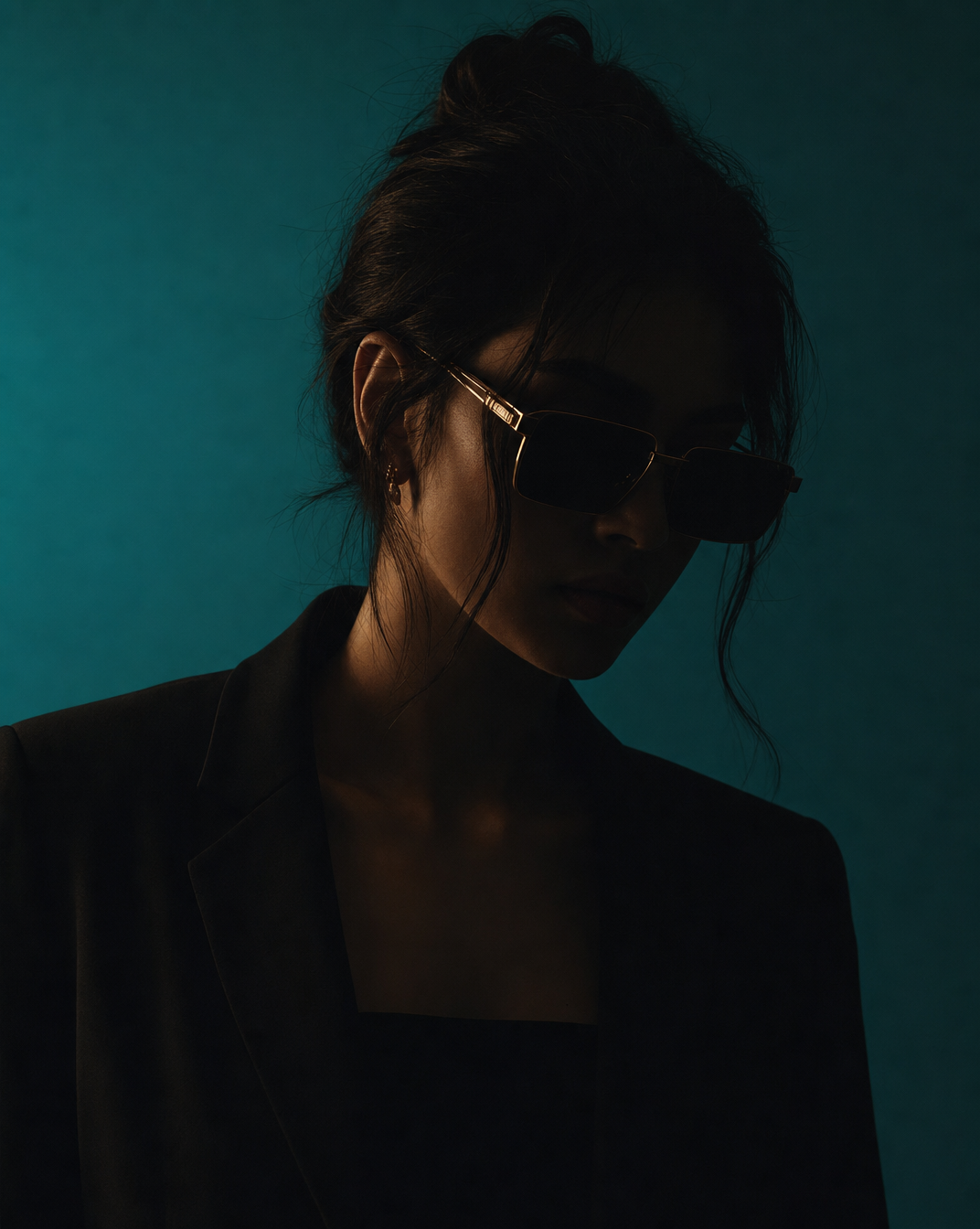
Woman in Teal Light, Shadowed Fashion Portrait
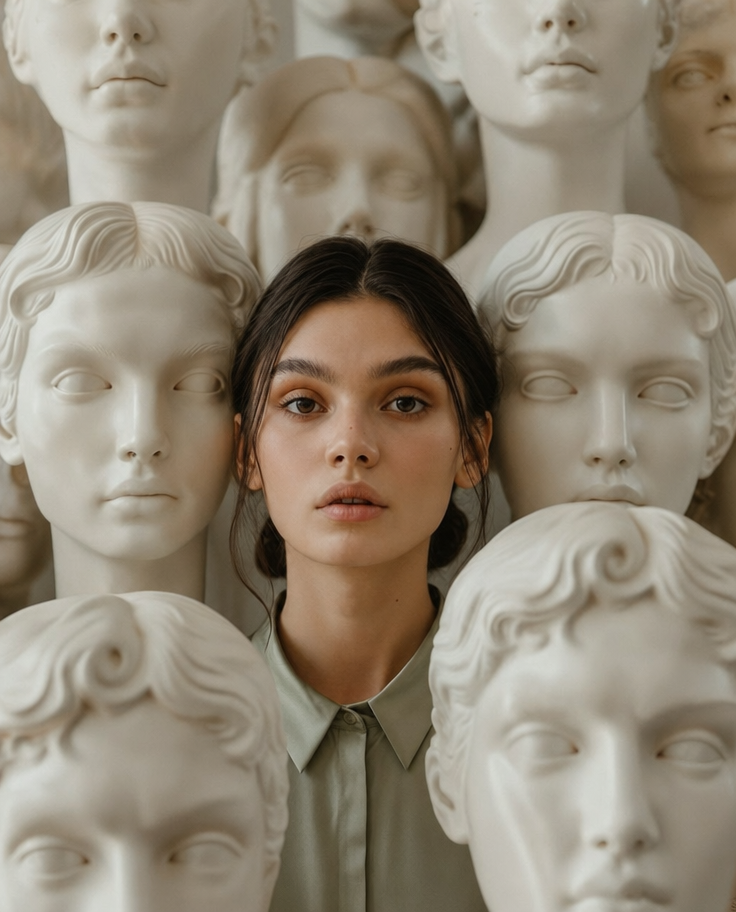
Eerie Elegance Among Marble Busts
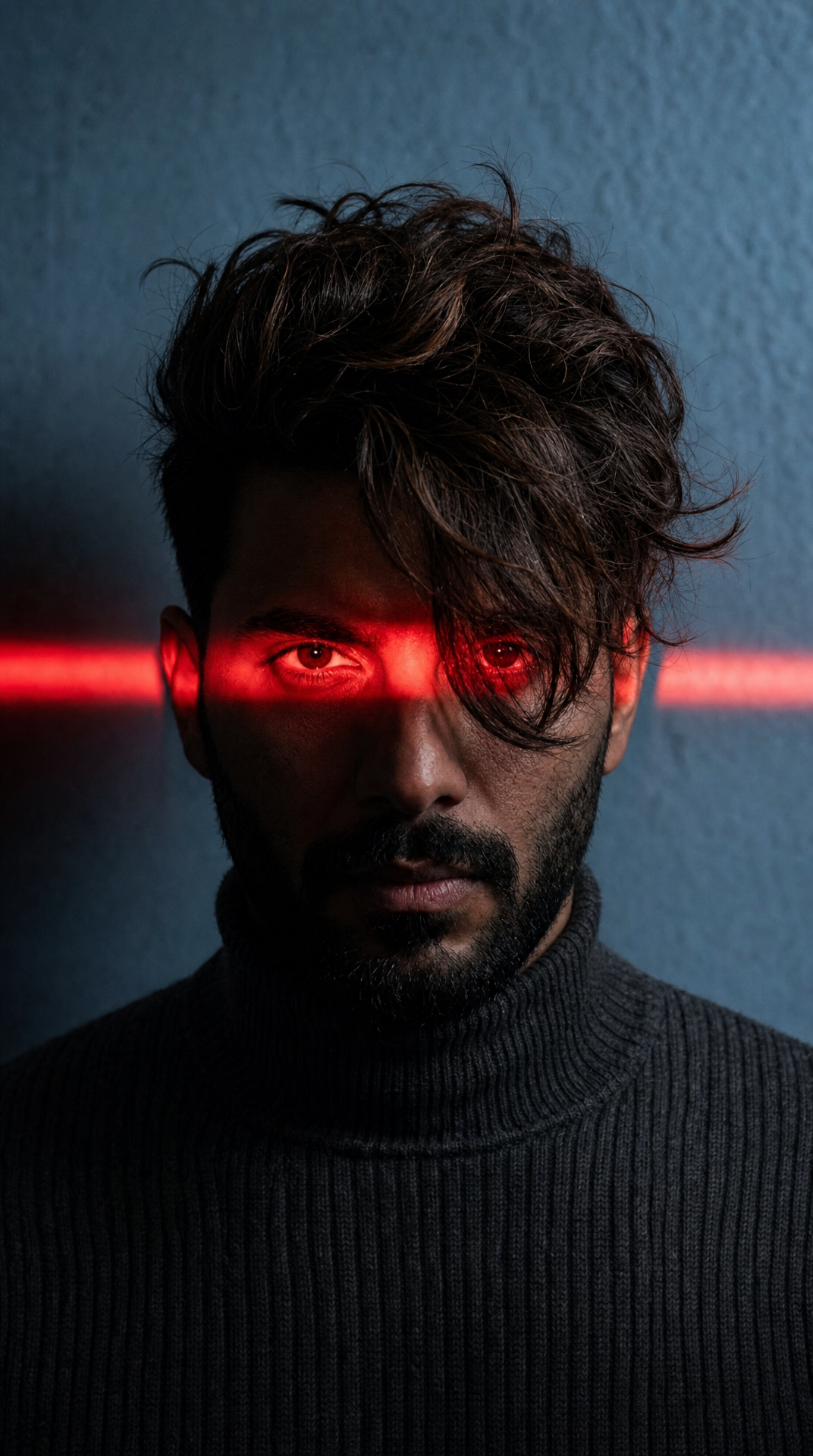
Charcoal turtleneck with red eye-beam
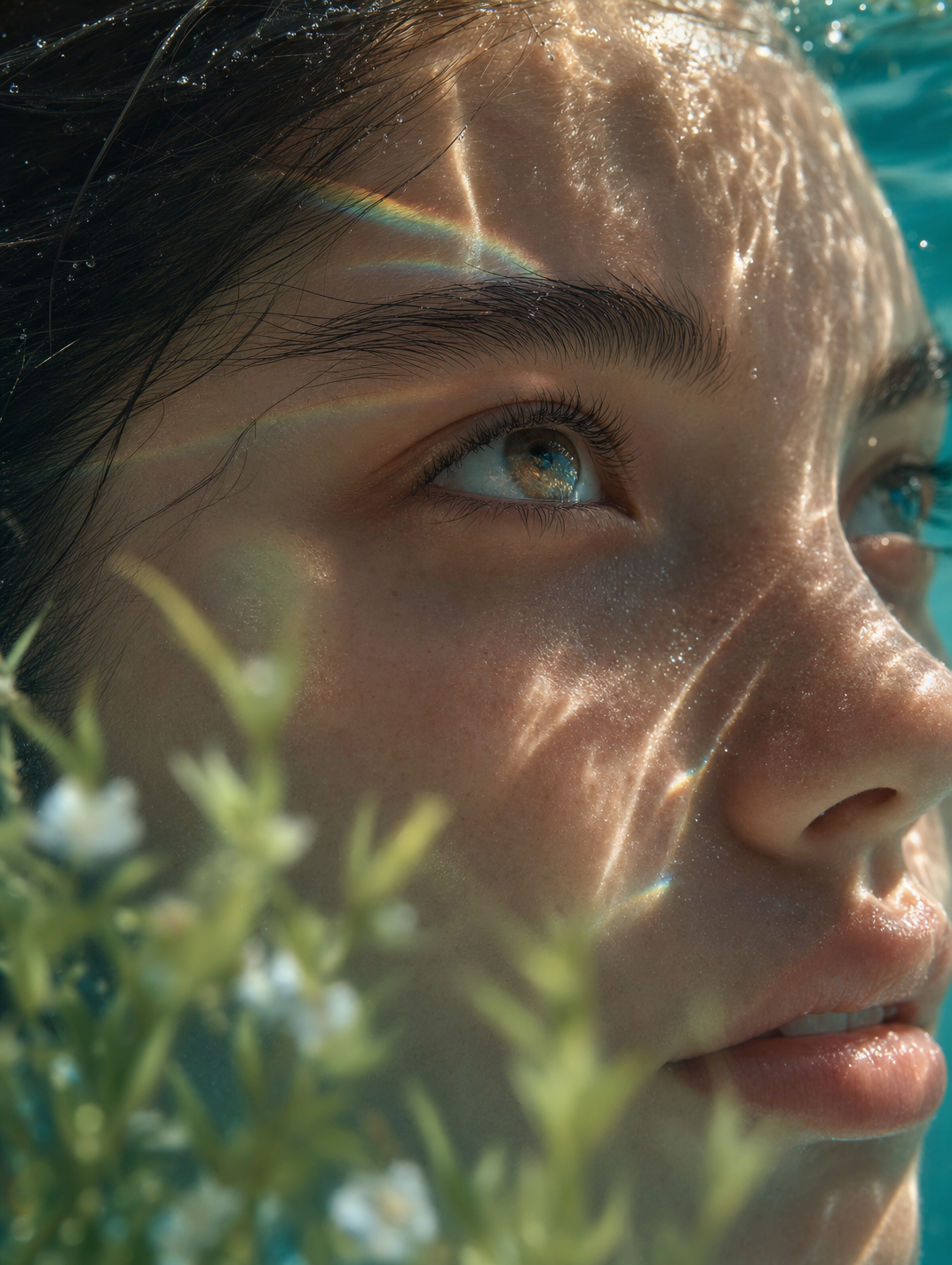
Dreamy Macro Portrait in Cool Water