Why this works
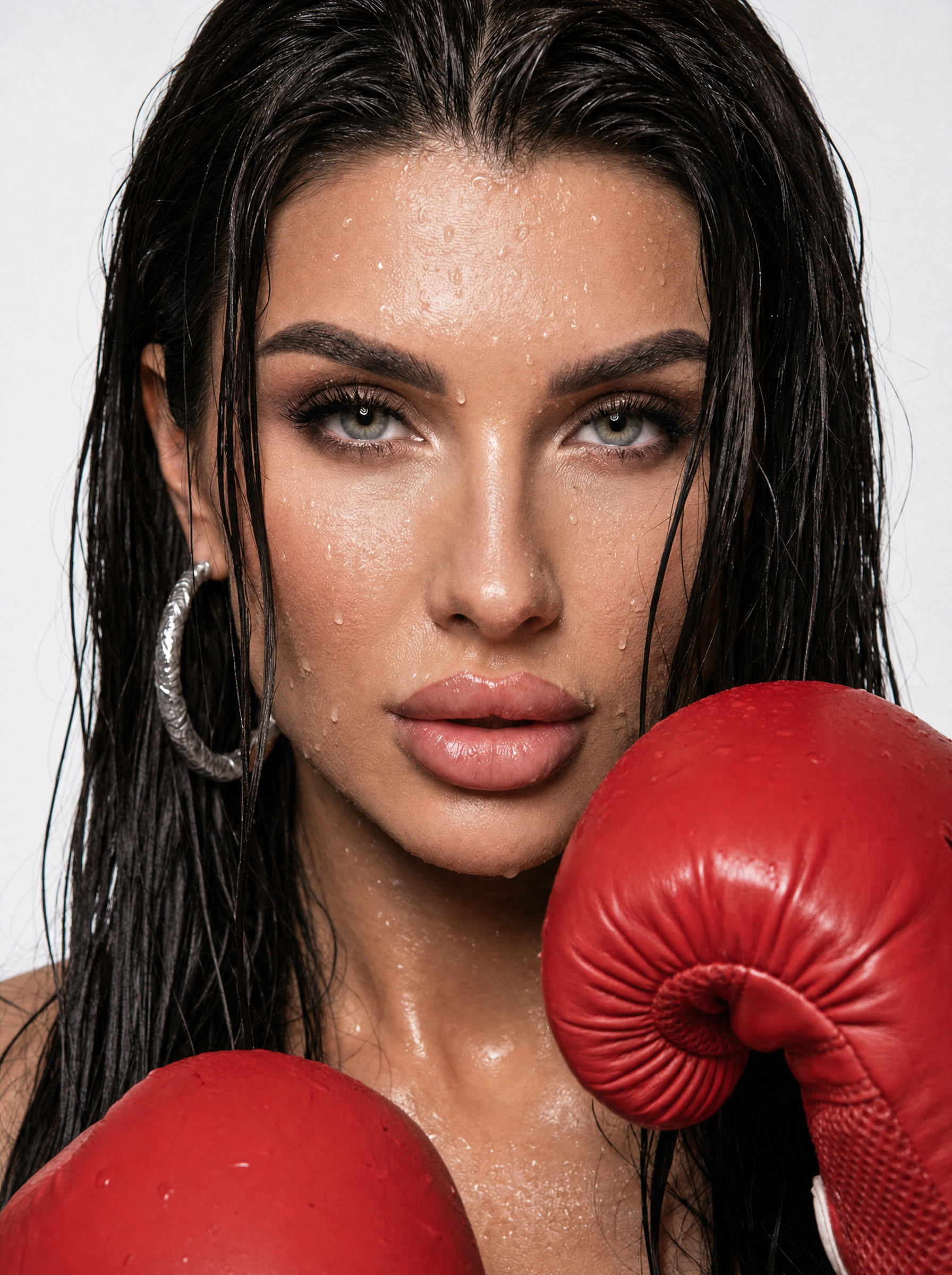
The “dramatic close-up crop on face and raised gloves” makes the red gloves and intense direct gaze dominate the portrait, while the light-gray background removes distractions and keeps the composition graphic. “High-contrast editorial lighting with crisp specular highlights” gives the wet dark-brown hair and glossy skin their hard, glamorous sheen, and “ultra-realistic,” “razor-sharp detail,” and “beauty photography finish” preserve fine texture in the skin, earrings, and glove surfaces. The red, white, and brown palette gains structure from the red gloves against the neutral background and the warm dark hair.
FAQ
→How do I make the woman’s face more central and reduce the visual dominance of the gloves?
Replace “oversized red boxing gloves raised in the foreground” with “smaller red boxing gloves held beside the shoulders,” and change “dramatic close-up crop on face and raised gloves” to “tight beauty close-up centered on the face, with gloves cropped at the lower edges.”
→How do I shift this from bold and confrontational to softer and more elegant?
Replace “intense direct gaze” with “calm, softly lowered gaze,” change “high-contrast editorial studio lighting with crisp specular highlights” to “large softbox lighting with gentle skin highlights,” and replace “wet, dark-brown hair” with “smooth softly waved dark-brown hair.”
→How do I create a series of variations while keeping the same portrait identity?
Keep “woman identity unchanged,” “high-fashion editorial photography,” and “razor-sharp detail” fixed, then vary one controlled phrase at a time: replace “red boxing gloves” with “black leather gloves,” “white satin gloves,” or “metallic silver gloves,” while changing the neutral “light-gray background” to “deep charcoal,” “muted blush,” or “warm ivory” for coordinated color studies.
Learn the technique behind this
- Why can't AI spell, and how do I get readable text in an image? — Older diffusion models had no character-level representation of text, so they produced letterform-shaped texture instead of words.
- How should a prompt be structured, and does word order matter? — A prompt that behaves predictably names one subject first, then what it is doing, then where, then the light, then the lens or medium, then the style.
- Why does AI get hands and faces wrong, and how do I fix it? — Hands fail because they're small in frame, extremely variable in pose, and self-occluding — the model has less usable signal per pixel than for any other body part.
Related prompts
Woman in Teal Light, Shadowed Fashion Portrait
Charcoal turtleneck with red eye-beam
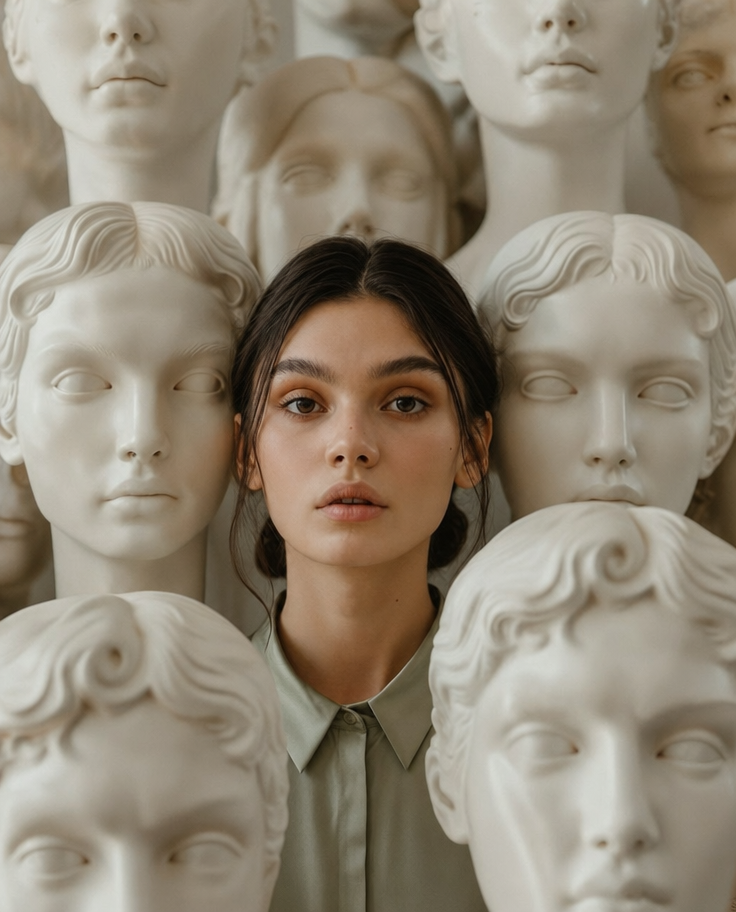
Eerie Elegance Among Marble Busts
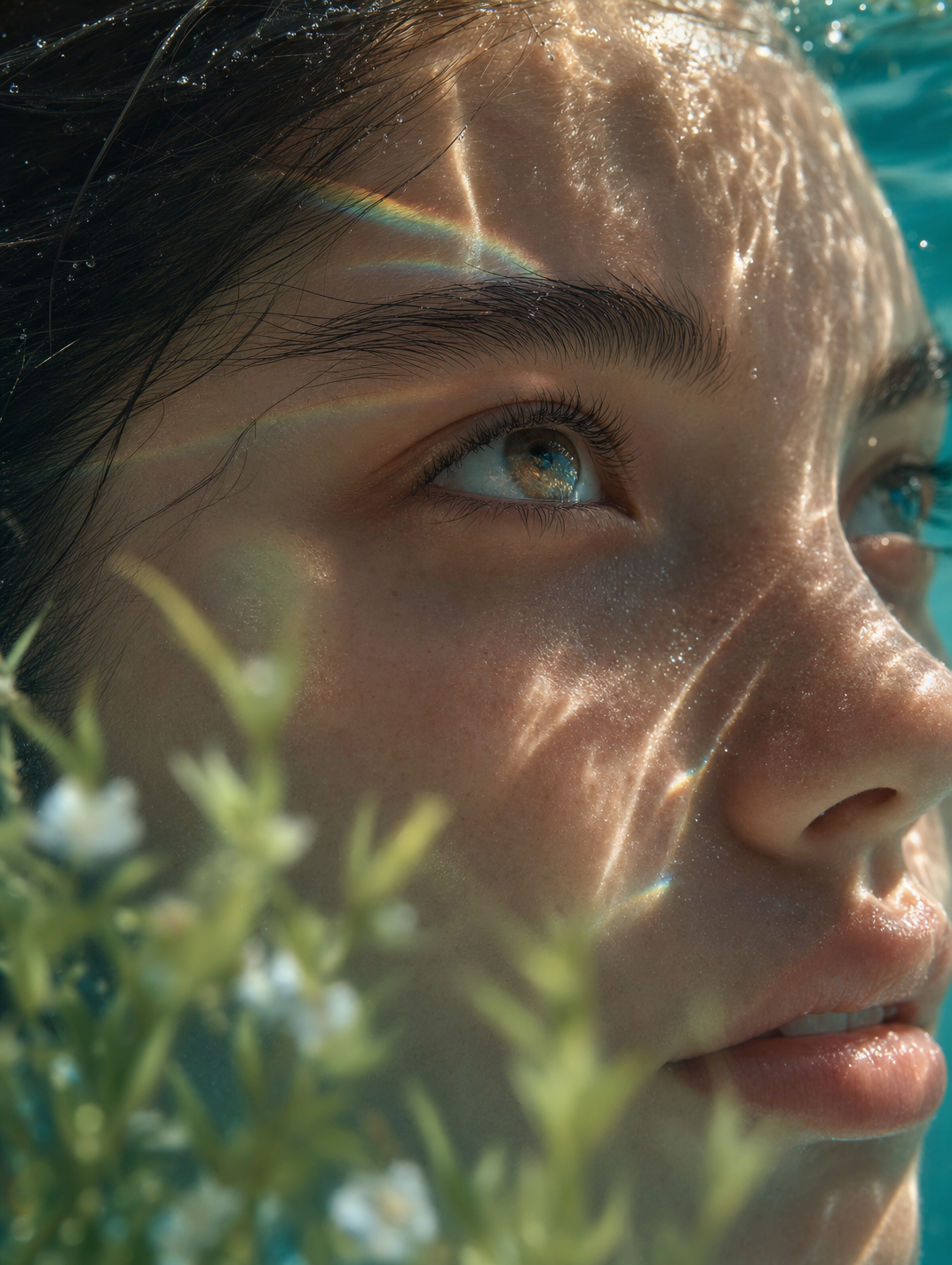
Dreamy Macro Portrait in Cool Water