Why this works
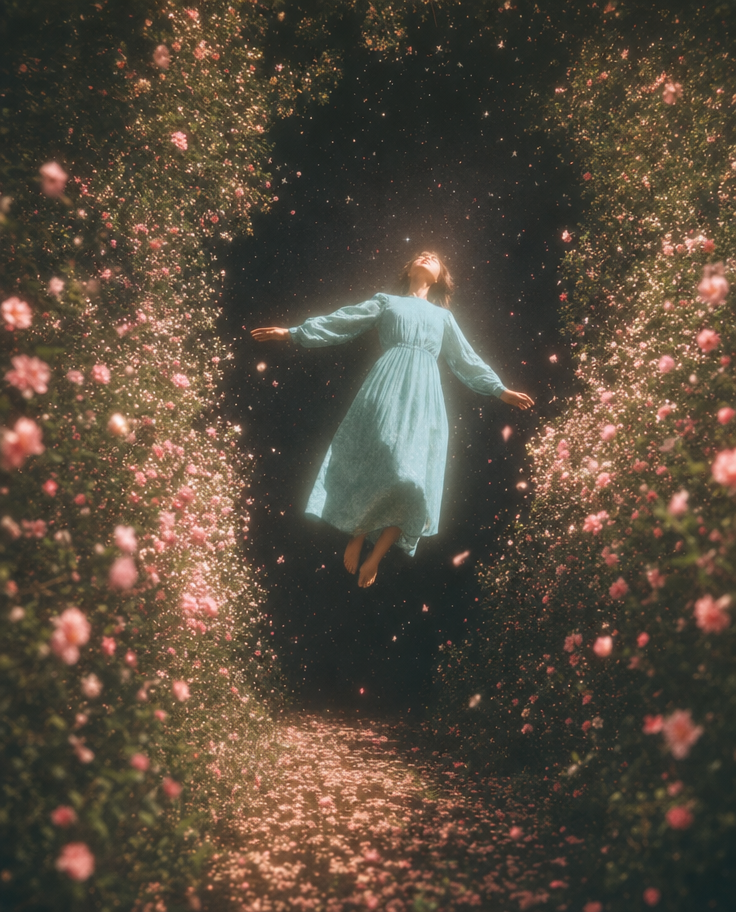
The centered subject and “medium cinematic framing” make the floating girl the immediate focal point, while “shallow depth of field” softens the flower-lined tunnel behind her. “Bright pink and white flowers,” “swirling star-like particles,” and “soft petal effects” create the dominant pink, beige, and green color harmony visible in the image, with “warm highlights and cool shadows” adding gentle retro contrast. The phrases “luminous tunnel,” “gentle haze,” and “whimsical fairytale atmosphere” carry the dreamy mood, while the teal dress supplies a cool visual counterpoint to the warm blooms.
FAQ
→How do I make the girl more prominent in the composition?
Replace “medium cinematic framing” with “medium close-up cinematic framing” and add “the girl occupies the central two-thirds of the frame, clearly visible from the waist up.” Keep “centered” and “shallow depth of field,” but change the background instruction to “flowers dissolve into a soft, indistinct bokeh.”
→How do I make the scene feel darker and more mysterious?
Replace “soft dreamlike lighting” and “warm highlights and cool shadows” with “low-key moonlit lighting, deep blue shadows, and sparse magenta highlights.” Change “whimsical fairytale atmosphere” to “mysterious enchanted forest atmosphere,” and replace “bright pink and white flowers” with “dimly glowing pink and ivory flowers.”
→How do I create a series of variations without losing this visual identity?
Keep the fixed phrases “photorealistic fantasy,” “vintage teal dress,” “warm highlights and cool shadows,” and “centered medium cinematic framing.” Swap only the setting and motion details, such as replacing “magical forest path” with “moonlit garden,” “misty mountain shrine,” or “crystal cave,” and replacing “floating through” with “walking slowly,” “turning toward the camera,” or “reaching toward the particles.”
Learn the technique behind this
- Why can't AI spell, and how do I get readable text in an image? — Older diffusion models had no character-level representation of text, so they produced letterform-shaped texture instead of words.
- How should a prompt be structured, and does word order matter? — A prompt that behaves predictably names one subject first, then what it is doing, then where, then the light, then the lens or medium, then the style.
- Do negative prompts work, and what should go in one? — Negative prompts work on models that support a separate negative conditioning channel — mainly Stable Diffusion and FLUX-family models.
Related prompts
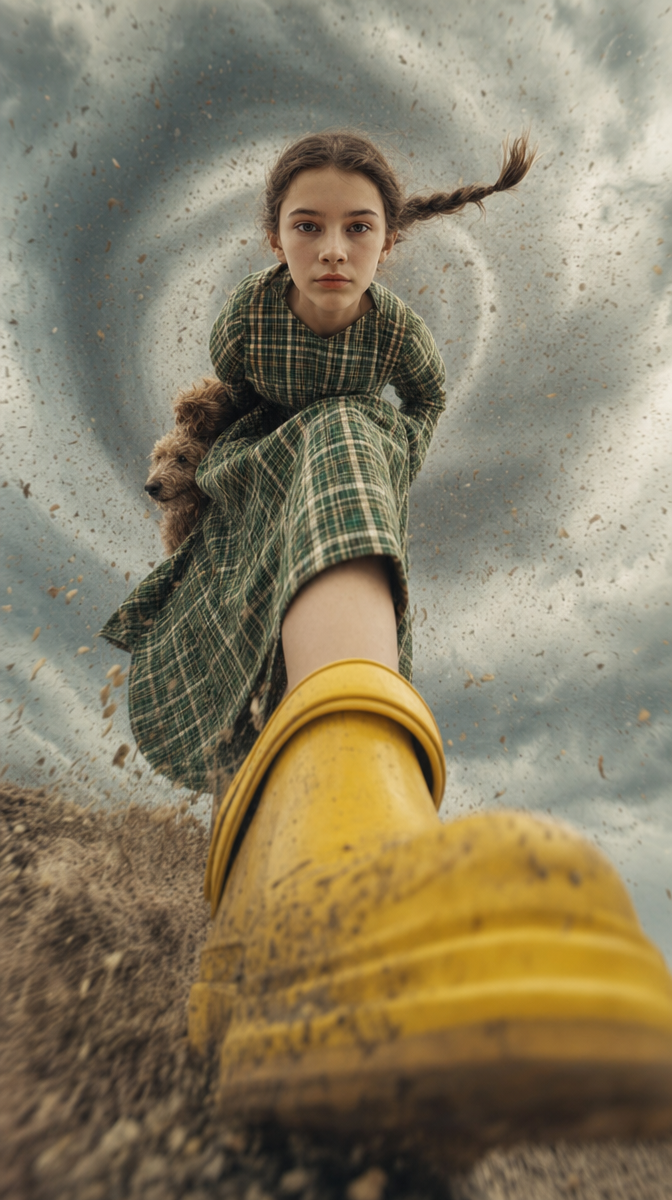
Young girl with dog in tornado
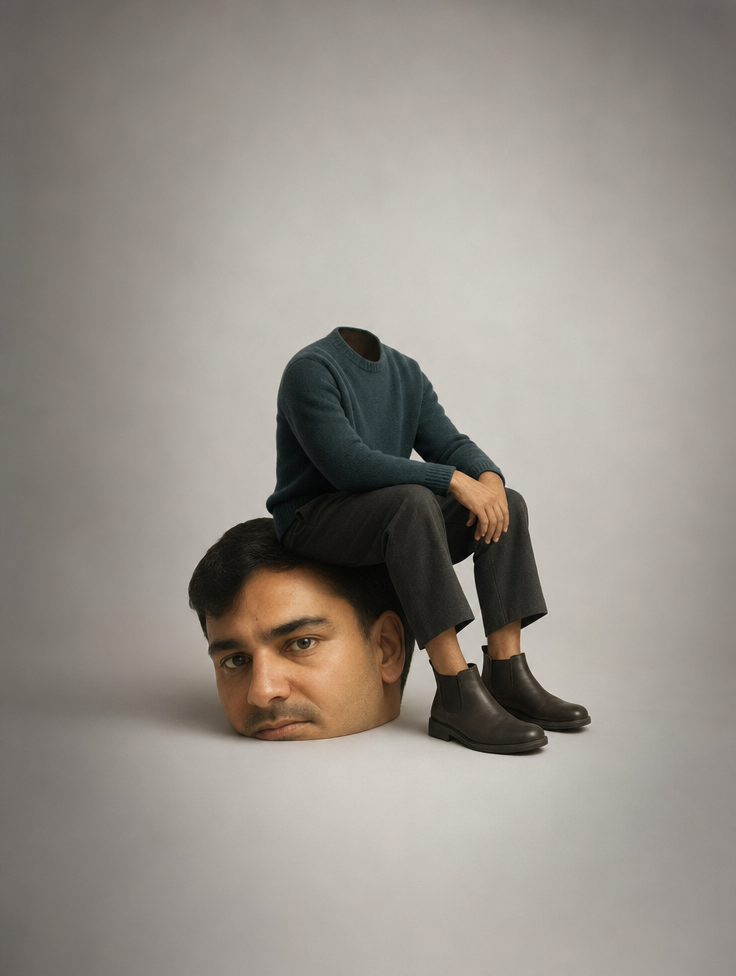
Headless sitter atop a giant head
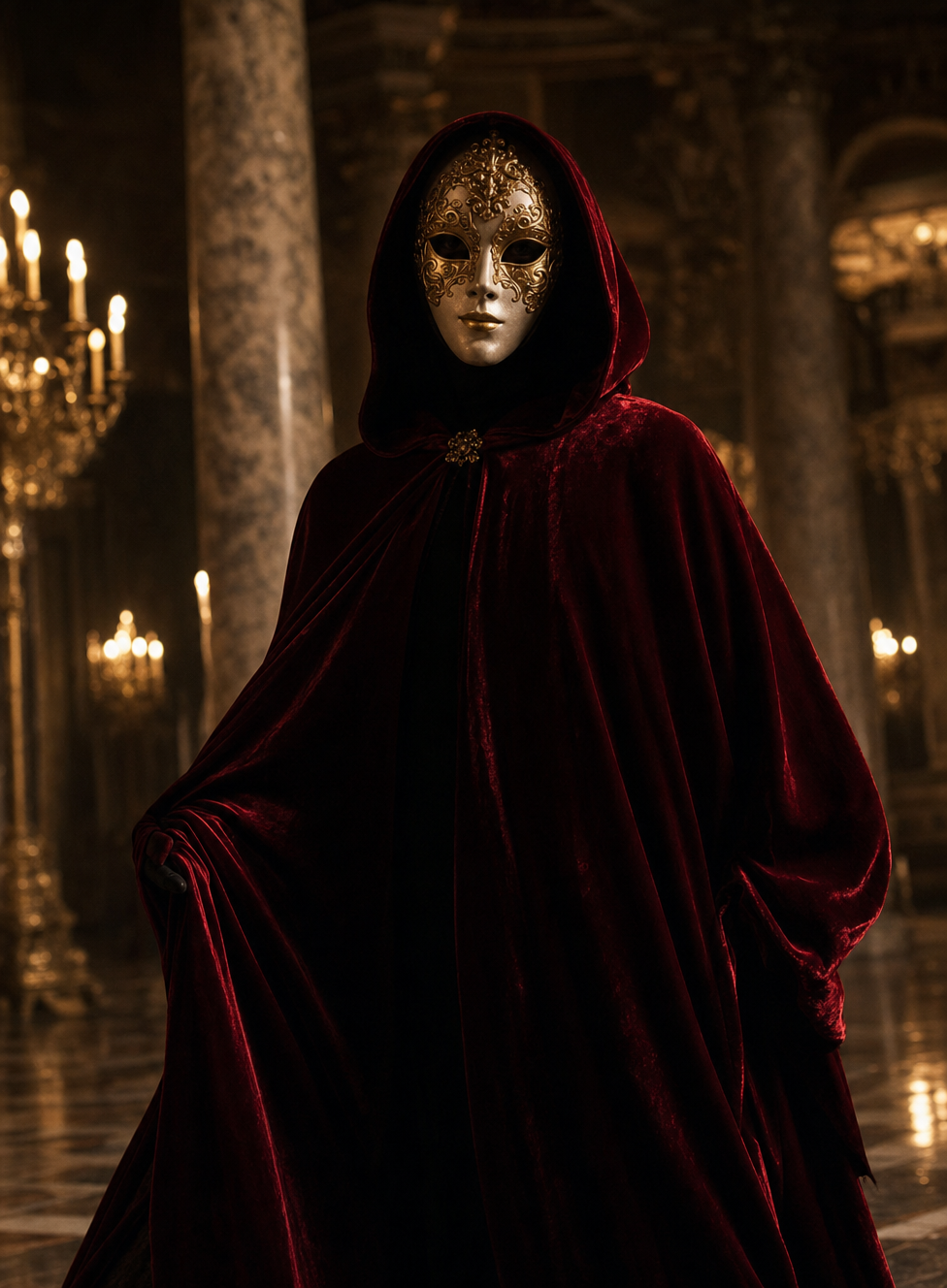
Crimson-Cloaked Specter in Candlelit Ballroom

Violet Holographic Hands Almost Touching