Why this works
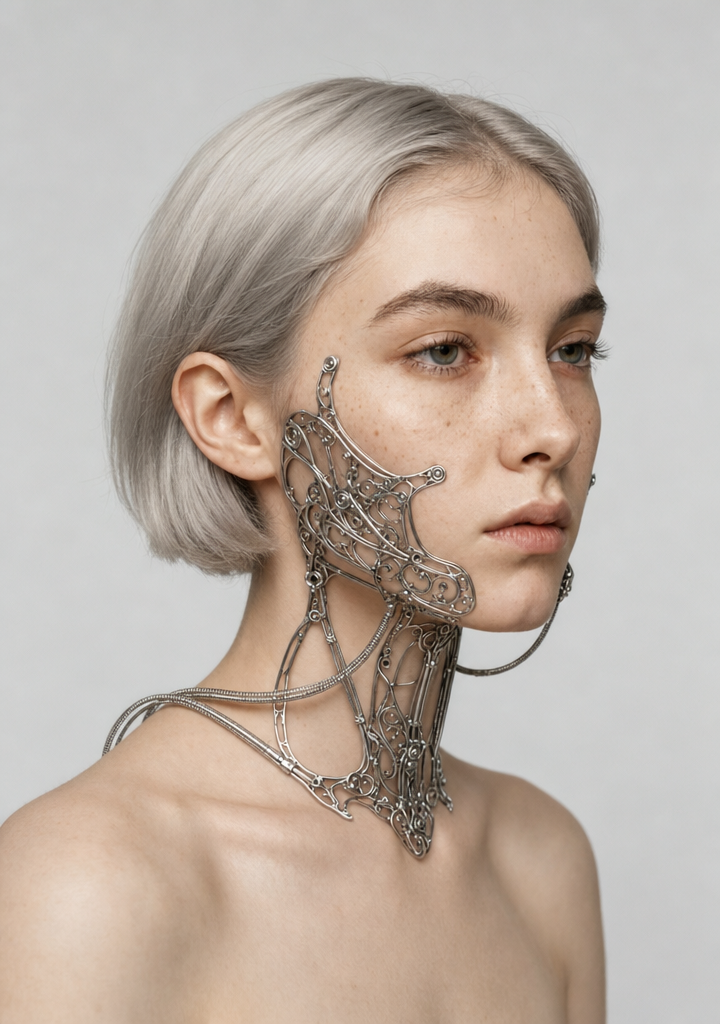
The “straight-on centered view” and “studio portrait framing” make the face and jaw apparatus the fixed focal point, while “bare shoulders visible” gives the close portrait a clean lower boundary. “Clean matte light-gray background” and the dominant gray palette create a restrained color harmony that keeps attention on the silver-blonde hair and metal filigree. The “neutral contemplative expression” supplies the quiet mood, and “soft rim highlights” plus “crisp specular reflections on the metal” separate the apparatus from the background without disrupting the minimal styling.
FAQ
→How do I make the biomechanical apparatus more prominent and visually dominant?
Replace “sleek biomechanical metal apparatus” and “less bulky, finer filigree structure” with “larger sculptural biomechanical exoskeletal apparatus covering the jawline, cheeks, and neck, layered mechanical plates and articulated metal details.” Keep “centered composition” and “straight-on centered view” so the increased scale remains aligned with the face.
→How do I shift this portrait from contemplative to colder and more intimidating?
Replace “neutral contemplative expression” with “severe impassive expression, direct unwavering stare,” and change “soft rim highlights” to “hard directional side-lighting with deep facial shadows.” Retain “crisp specular reflections on the metal” to make the apparatus feel sharper and more industrial.
→How do I build a series of variations while keeping the same editorial identity?
Keep “photorealistic studio portrait,” “centered composition,” “clean matte light-gray background,” and “fashion editorial lighting” unchanged, then swap only the subject descriptors: try “short copper bob with warm freckled skin,” “long black braided hair with deep brown skin,” or “androgynous model with a platinum buzz cut.” For consistent variation in the apparatus, replace “finer filigree structure” with a controlled design such as “delicate brass filigree,” “translucent ceramic biomechanical lattice,” or “black titanium articulated framework.”
Learn the technique behind this
- Why can't AI spell, and how do I get readable text in an image? — Older diffusion models had no character-level representation of text, so they produced letterform-shaped texture instead of words.
- Do negative prompts work, and what should go in one? — Negative prompts work on models that support a separate negative conditioning channel — mainly Stable Diffusion and FLUX-family models.
- Why does AI get hands and faces wrong, and how do I fix it? — Hands fail because they're small in frame, extremely variable in pose, and self-occluding — the model has less usable signal per pixel than for any other body part.
Related prompts
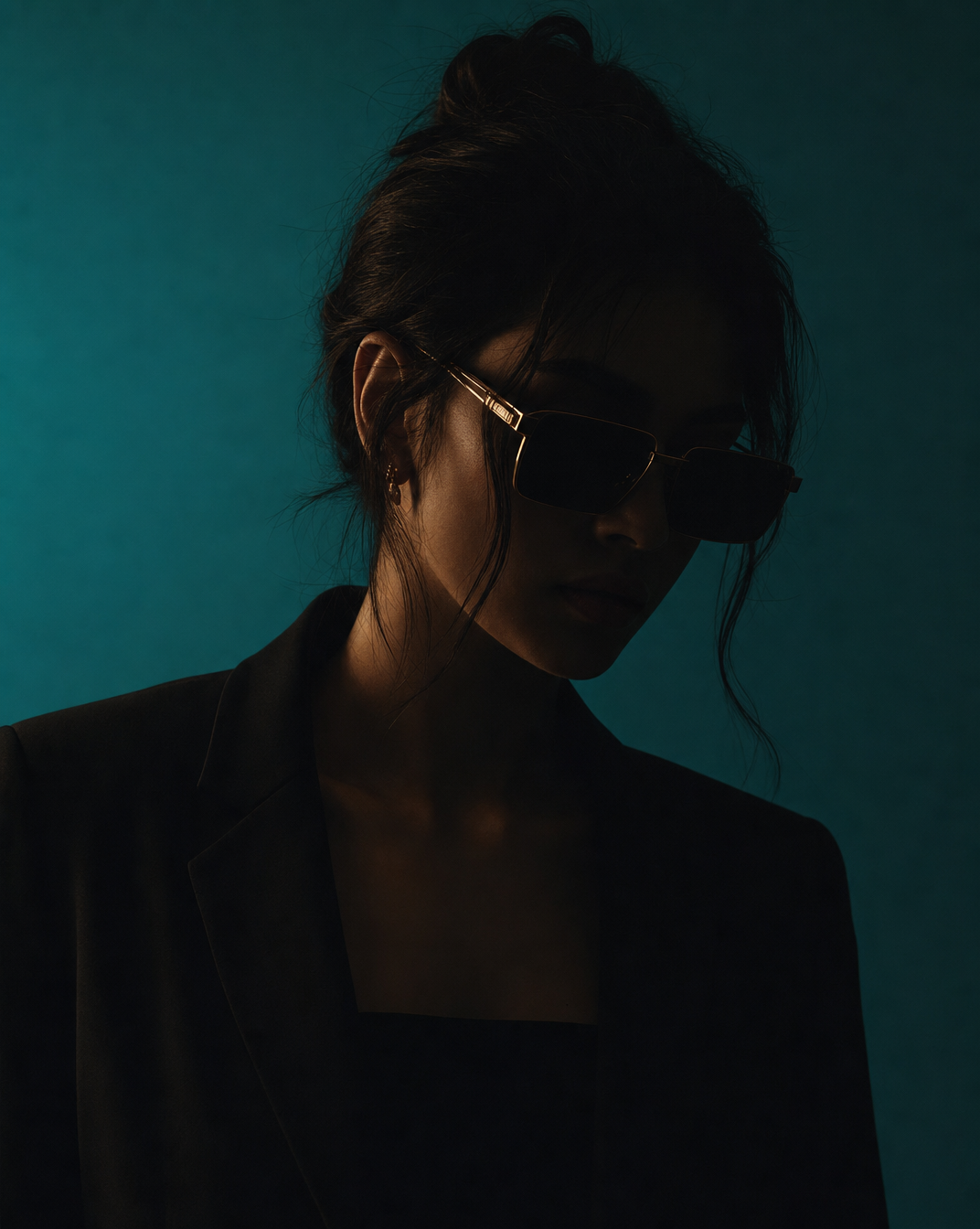
Woman in Teal Light, Shadowed Fashion Portrait
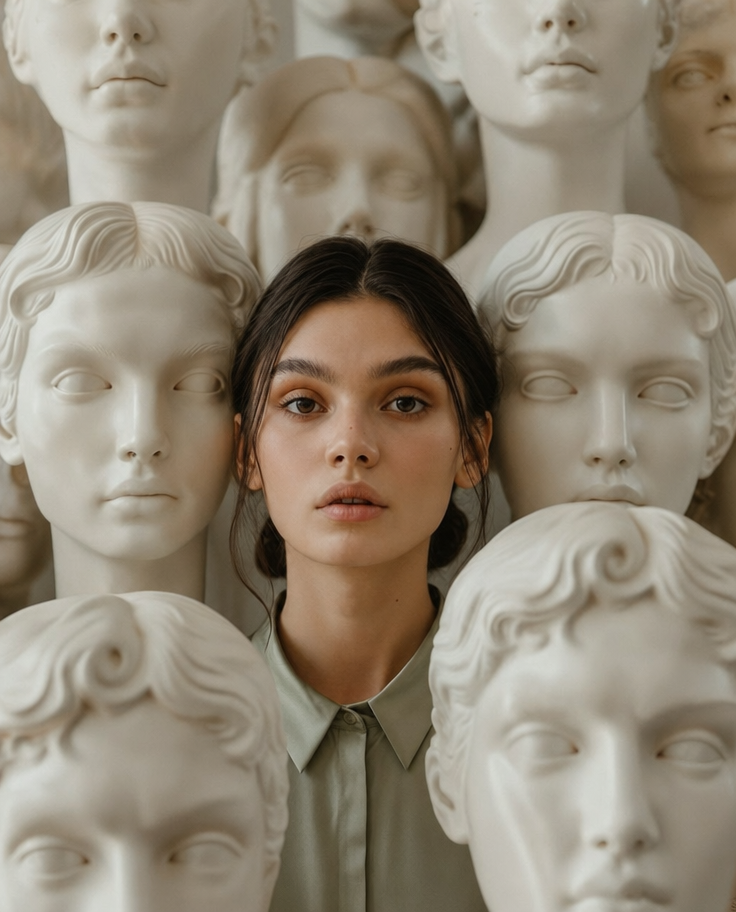
Eerie Elegance Among Marble Busts
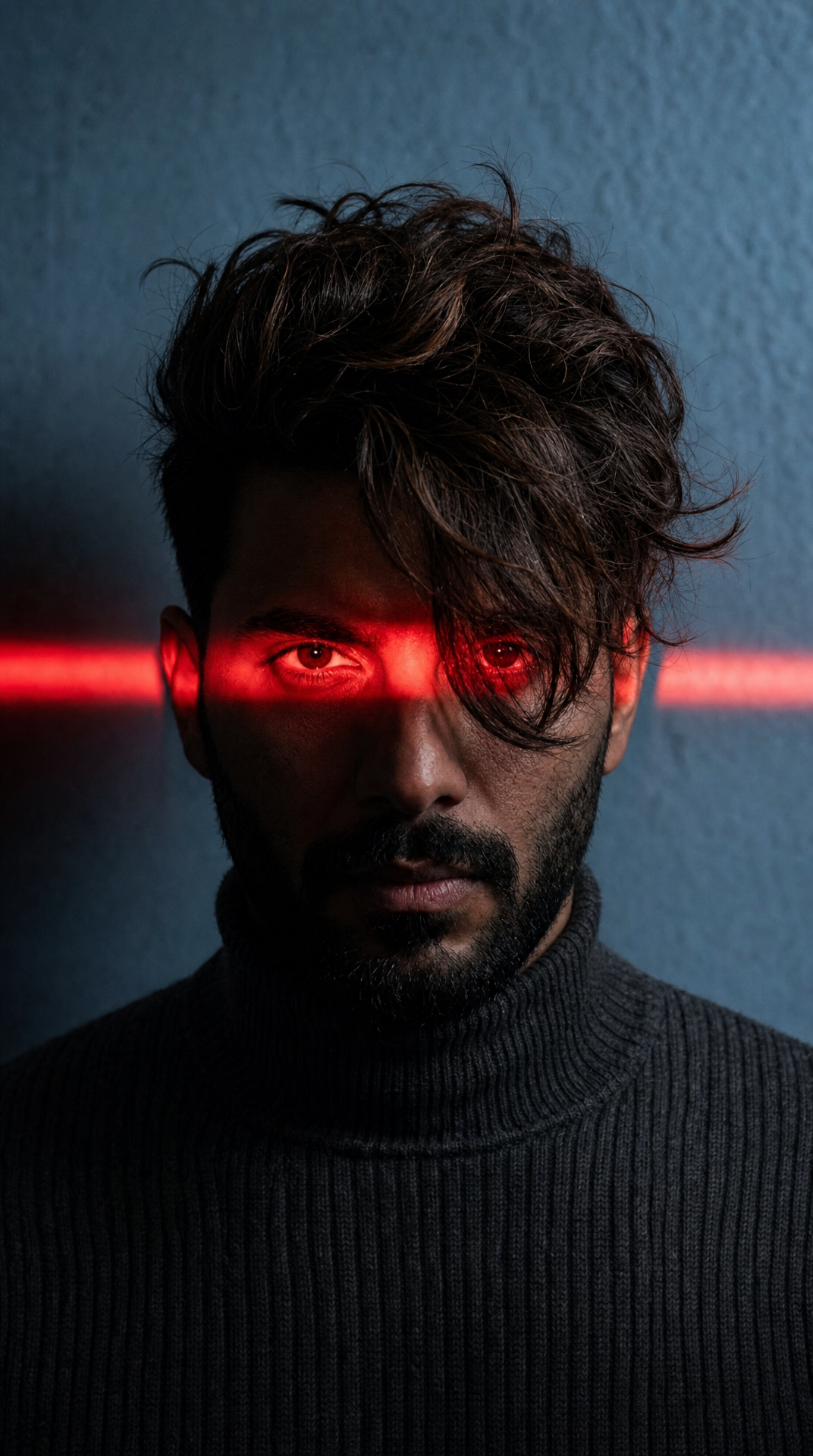
Charcoal turtleneck with red eye-beam
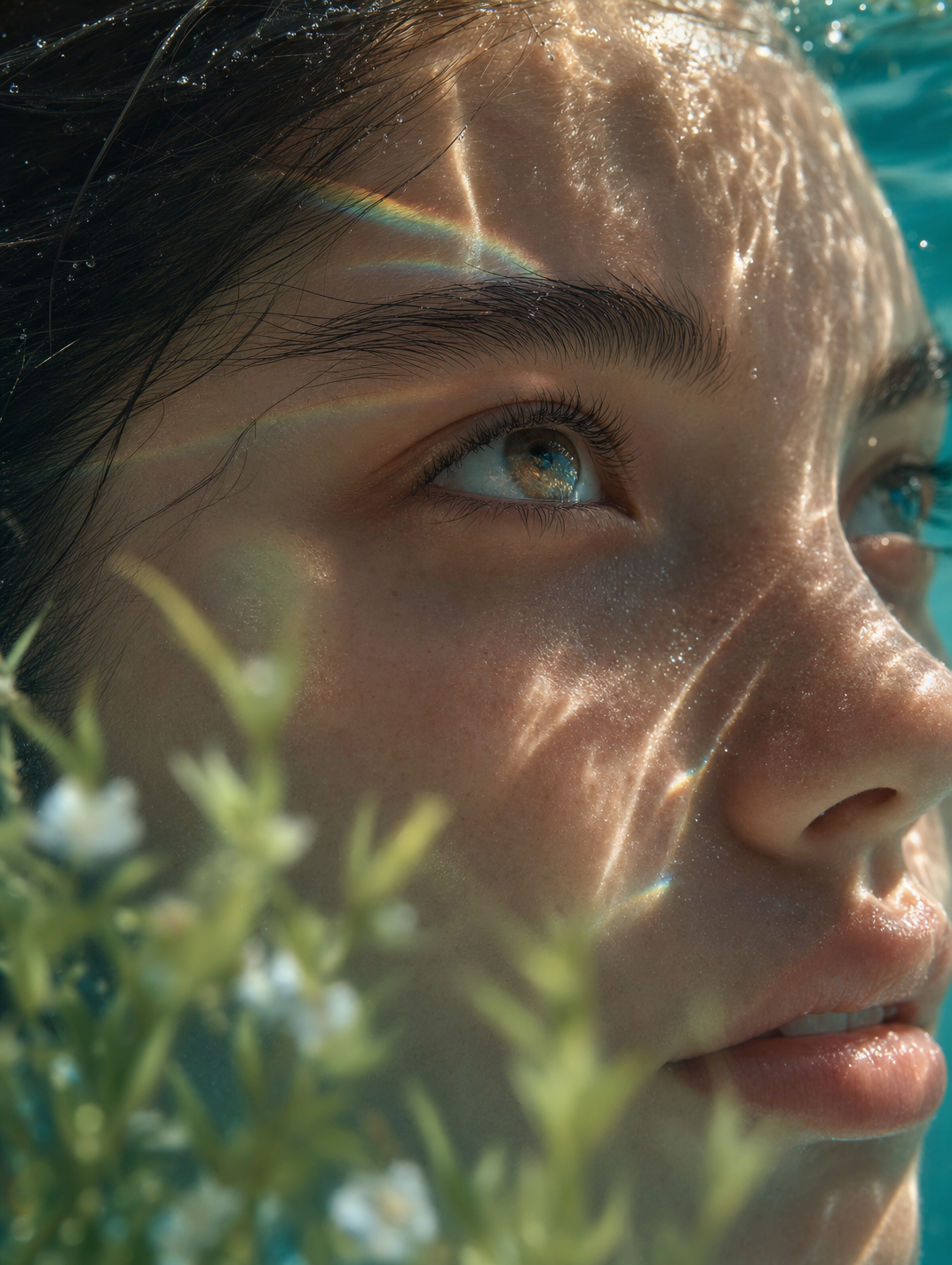
Dreamy Macro Portrait in Cool Water