Why this works
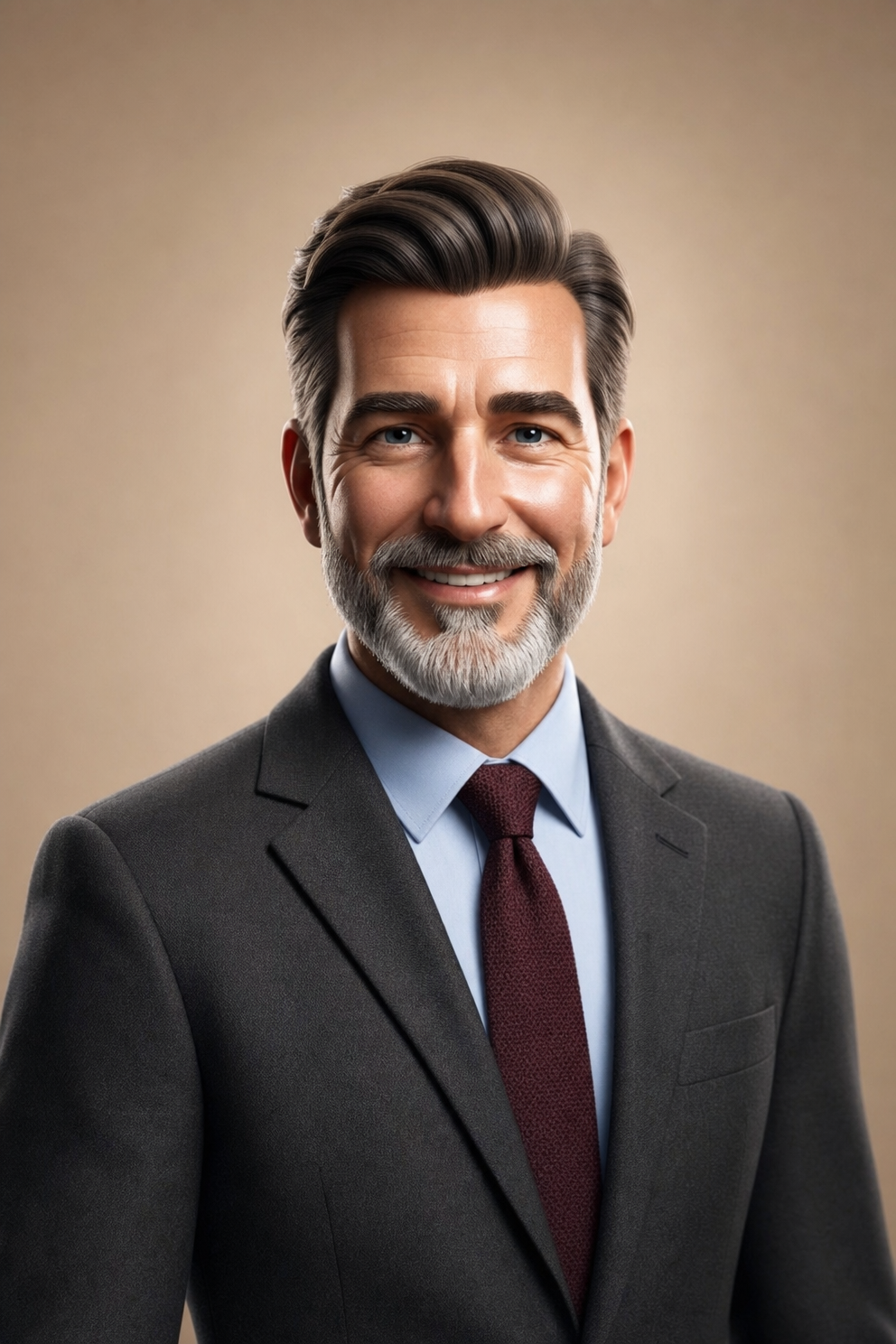
“Centered, medium-tight character portrait framing” and “facing the camera” make the smiling, refined-bearded man the immediate focal point, while “clean centered composition” gives the image its orderly corporate presentation. The “soft warm beige studio backdrop” and charcoal-gray suit establish the dominant beige-and-gray harmony, with the light blue shirt and burgundy tie providing controlled accents rather than competing with the face. “Elegant modern studio lighting with gentle rim light” separates the dark hair and suit from the backdrop, while “subtle ambient occlusion” and “natural glossy skin highlights” add dimensionality without weakening the polished, friendly tone.
FAQ
→How do I change this prompt for a warmer, more approachable business portrait?
Replace “charcoal-gray suit” with “warm mid-gray or muted navy suit,” change “burgundy tie” to “soft rust or muted teal tie,” and replace “soft warm beige studio backdrop” with “sunlit cream studio backdrop.” Keep “smiling,” “friendly, professional expression,” and “gentle rim light” so the expression and subject separation remain intact.
→How do I make the man’s face and beard more prominent?
Replace “medium-tight character portrait framing” with “tight head-and-shoulders close-up,” and change “clean centered composition” to “face-centered composition with the beard and eyes as the primary focal point.” Reduce the wardrobe competition by replacing “light blue dress shirt and a burgundy tie” with “simple white shirt with no tie,” while retaining “natural glossy skin highlights” for facial definition.
→How do I build a consistent series of variations from this prompt?
Keep the fixed identity and structure phrases, including “smiling man with a refined beard,” “facing the camera,” “centered,” “soft warm beige studio backdrop,” and “elegant modern studio lighting with gentle rim light.” Create controlled variants by changing only one field at a time, such as replacing “charcoal-gray suit” with “navy suit,” “burgundy tie” with “forest-green tie,” or “dark brown hair” with “black hair,” while preserving the same framing and expression.
Learn the technique behind this
- Why can't AI spell, and how do I get readable text in an image? — Older diffusion models had no character-level representation of text, so they produced letterform-shaped texture instead of words.
- How should a prompt be structured, and does word order matter? — A prompt that behaves predictably names one subject first, then what it is doing, then where, then the light, then the lens or medium, then the style.
- Which aspect ratio should I use, and how does it change the image? — Aspect ratio determines what the model composes, not how it's cropped afterwards.
Related prompts
Woman in Teal Light, Shadowed Fashion Portrait
Eerie Elegance Among Marble Busts
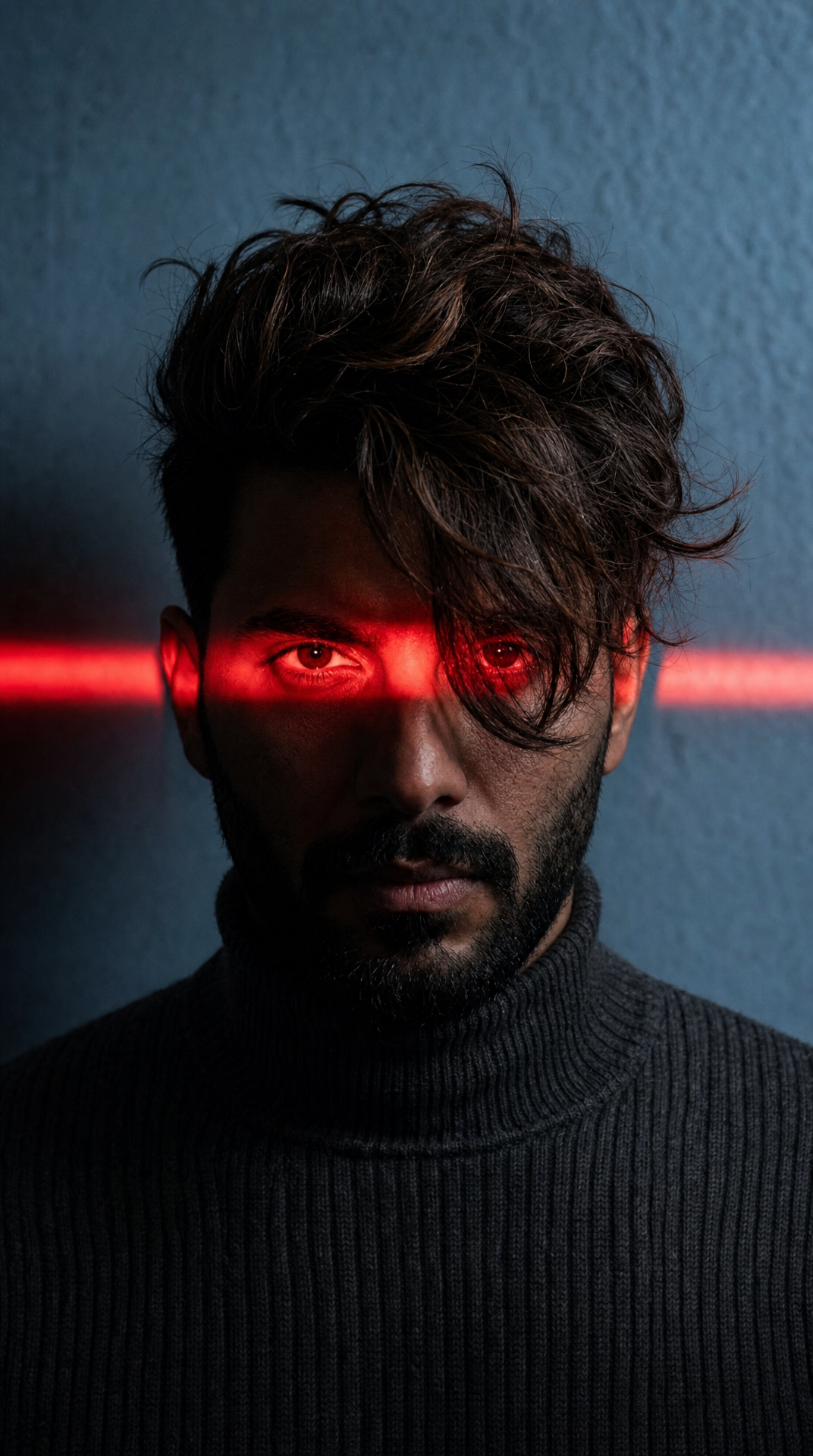
Charcoal turtleneck with red eye-beam
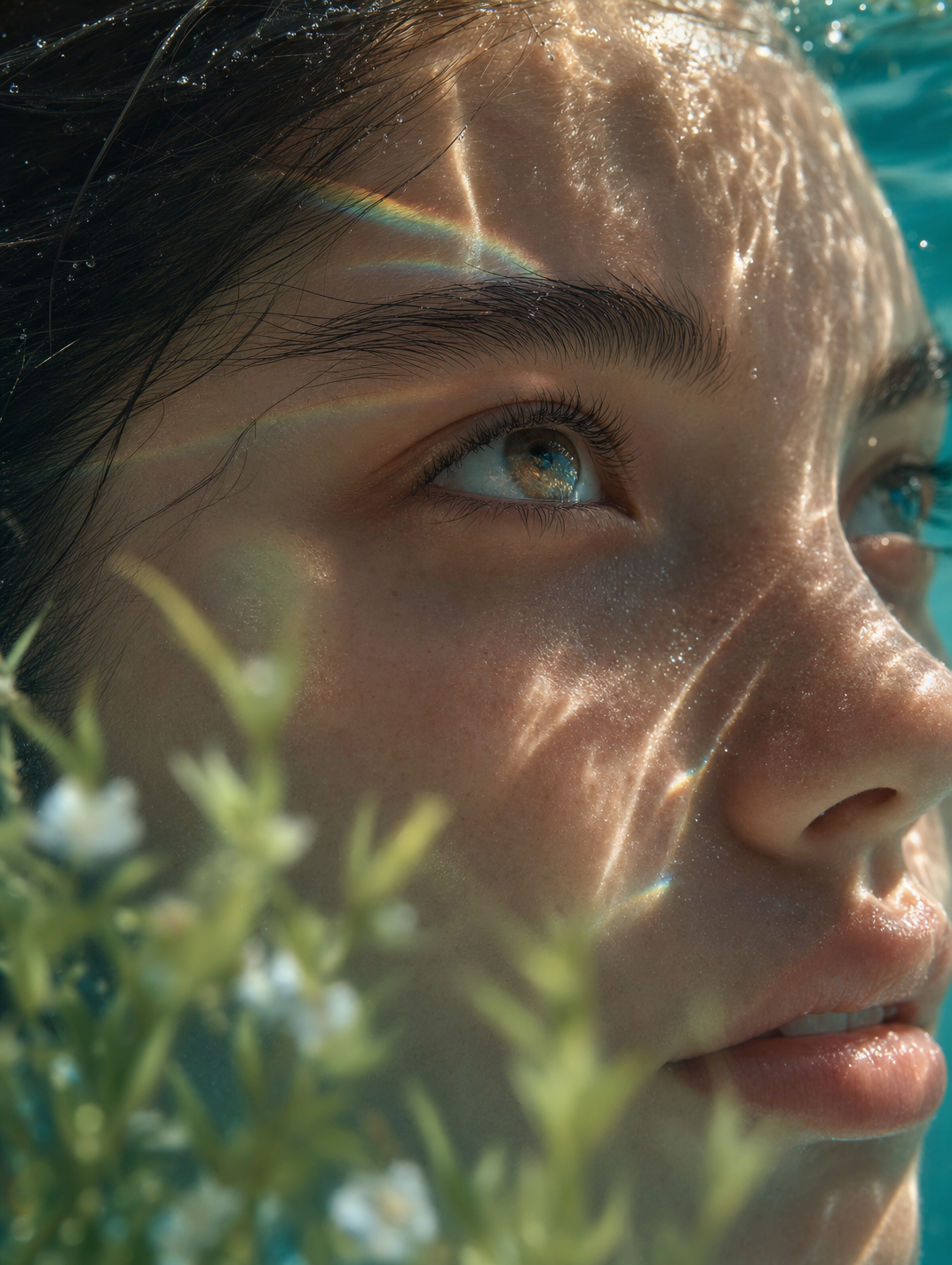
Dreamy Macro Portrait in Cool Water