Why this works
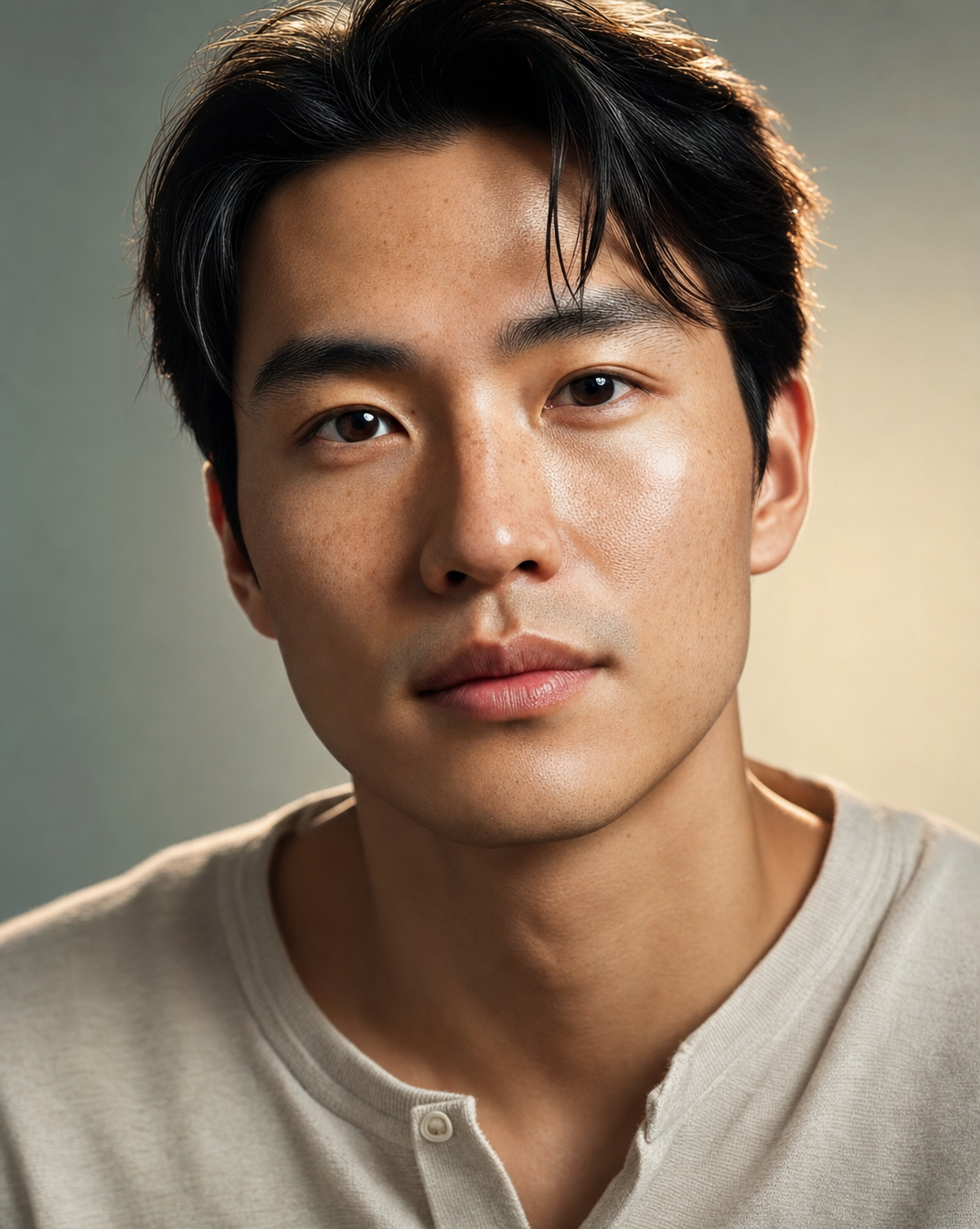
The close portrait framing comes from “studio portrait” and the “85mm 1.4 lens,” keeping the face dominant while “creamy bokeh” suppresses background detail. “Soft cool-to-warm mixed lighting” and “gentle rim light” supply the calm tonal modeling, while “natural freckles,” “smooth textured skin,” and “subtle imperfections” keep the hyper-realistic face from looking airbrushed. The “muted sage-to-ivory gradient backdrop” and “light oatmeal henley shirt” establish the restrained palette, reflected in the generated image’s black, gray, and white emphasis, while “softly into the camera” and “calm, introspective expression” carry the intimate mood.
FAQ
→How do I change this prompt for a darker, more dramatic portrait?
Replace “soft cool-to-warm mixed lighting with a gentle rim light” with “hard directional side-lighting, deep sculpting shadows, and a narrow warm rim light,” and replace “muted sage-to-ivory gradient backdrop” with “charcoal-to-black seamless studio backdrop.” Change “serene, understated, and warmly intimate” to “brooding, cinematic, and psychologically tense.”
→How do I make the eyes and facial expression more central?
Replace “portrait-closeup” and “studio portrait” with “extreme close-up portrait cropped from the upper forehead to the chin,” and change “gazes softly into the camera with a calm, introspective expression” to “direct, unwavering eye contact with a quietly confident expression.” Keep “85mm 1.4 lens” but replace “creamy bokeh” with “precise eye focus and sharply resolved irises” so the eyes become the visual anchor.
→How do I build a consistent series of variations from this portrait?
Keep the fixed identity and rendering phrases, including “mid-20s East Asian male,” “natural freckles,” “smooth textured skin,” “Canon EOS R5,” and “85mm 1.4 lens.” Create variations by changing only “light oatmeal henley shirt,” “muted sage-to-ivory gradient backdrop,” and the lighting phrase, using substitutions such as “slate-blue knit sweater,” “warm ivory-to-clay gradient,” and “soft window light from camera left.” Preserve “minimalist editorial composition” and the same “portrait-closeup” framing across every image.
Learn the technique behind this
- Why can't AI spell, and how do I get readable text in an image? — Older diffusion models had no character-level representation of text, so they produced letterform-shaped texture instead of words.
- How should a prompt be structured, and does word order matter? — A prompt that behaves predictably names one subject first, then what it is doing, then where, then the light, then the lens or medium, then the style.
- Which camera and lighting terms actually change an AI image? — Focal length, aperture, light direction and time of day change the image reliably because they correlate with real photographic patterns in the training data.
Related prompts
Woman in Teal Light, Shadowed Fashion Portrait
Eerie Elegance Among Marble Busts
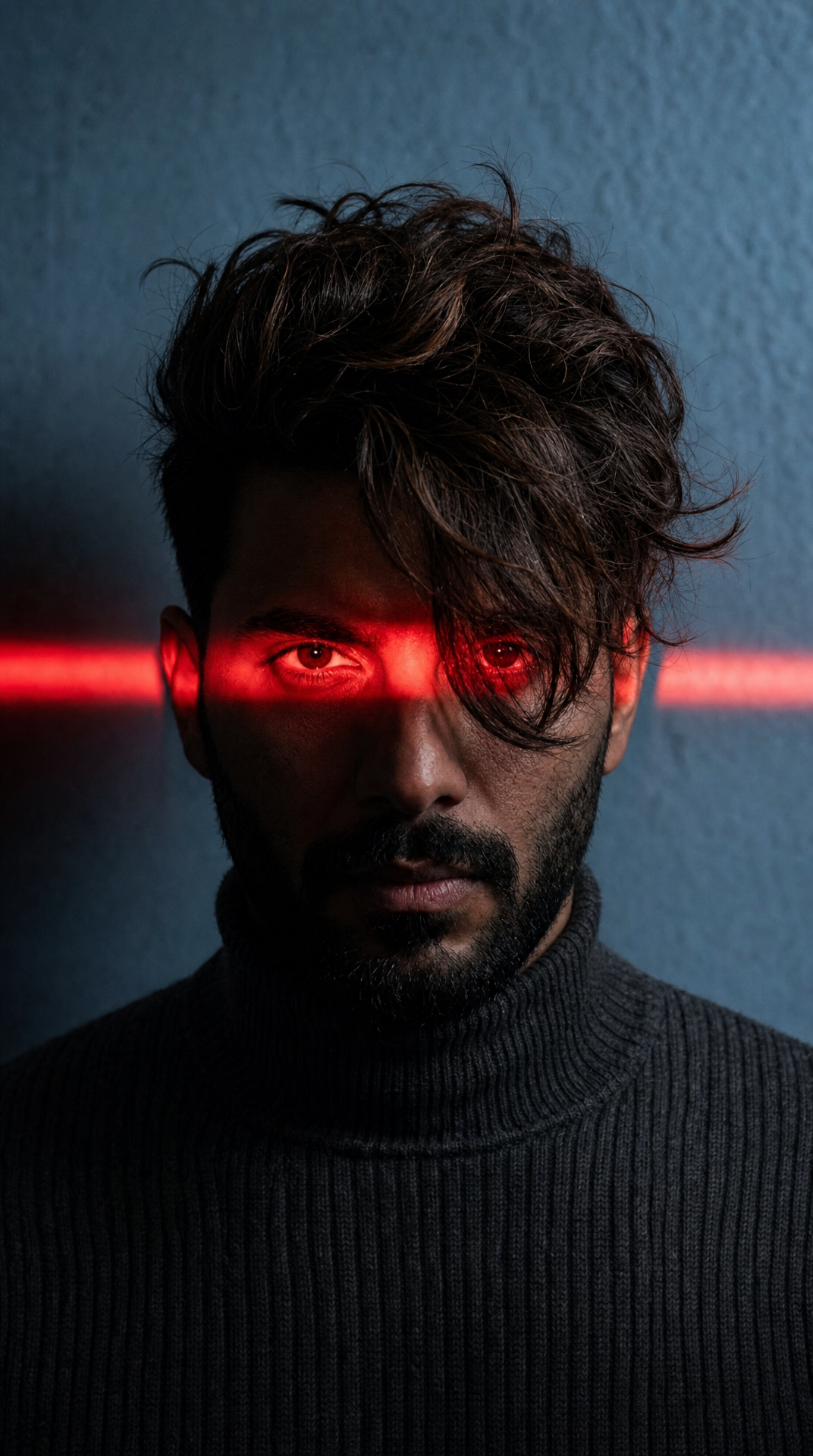
Charcoal turtleneck with red eye-beam
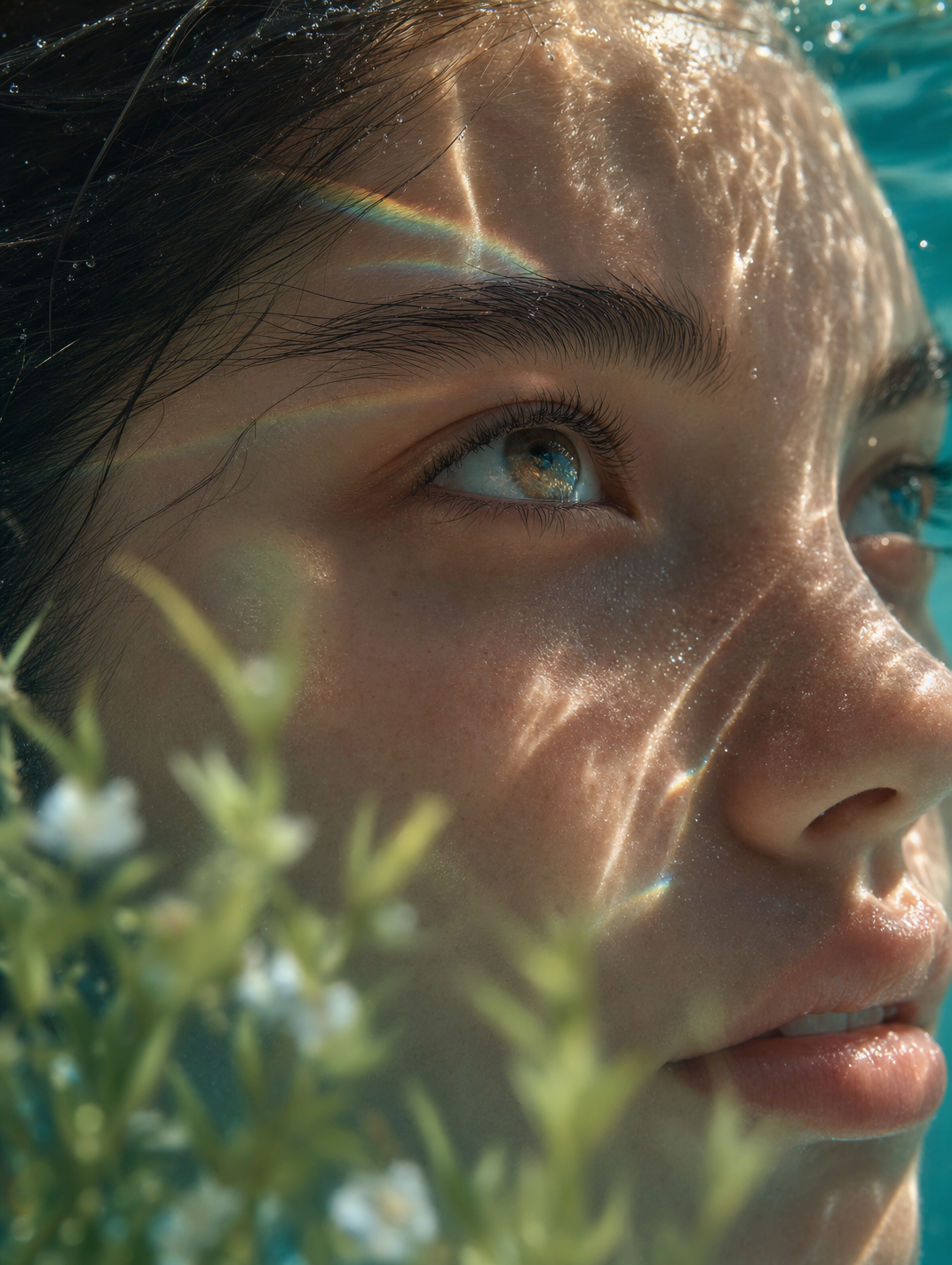
Dreamy Macro Portrait in Cool Water