Why this works
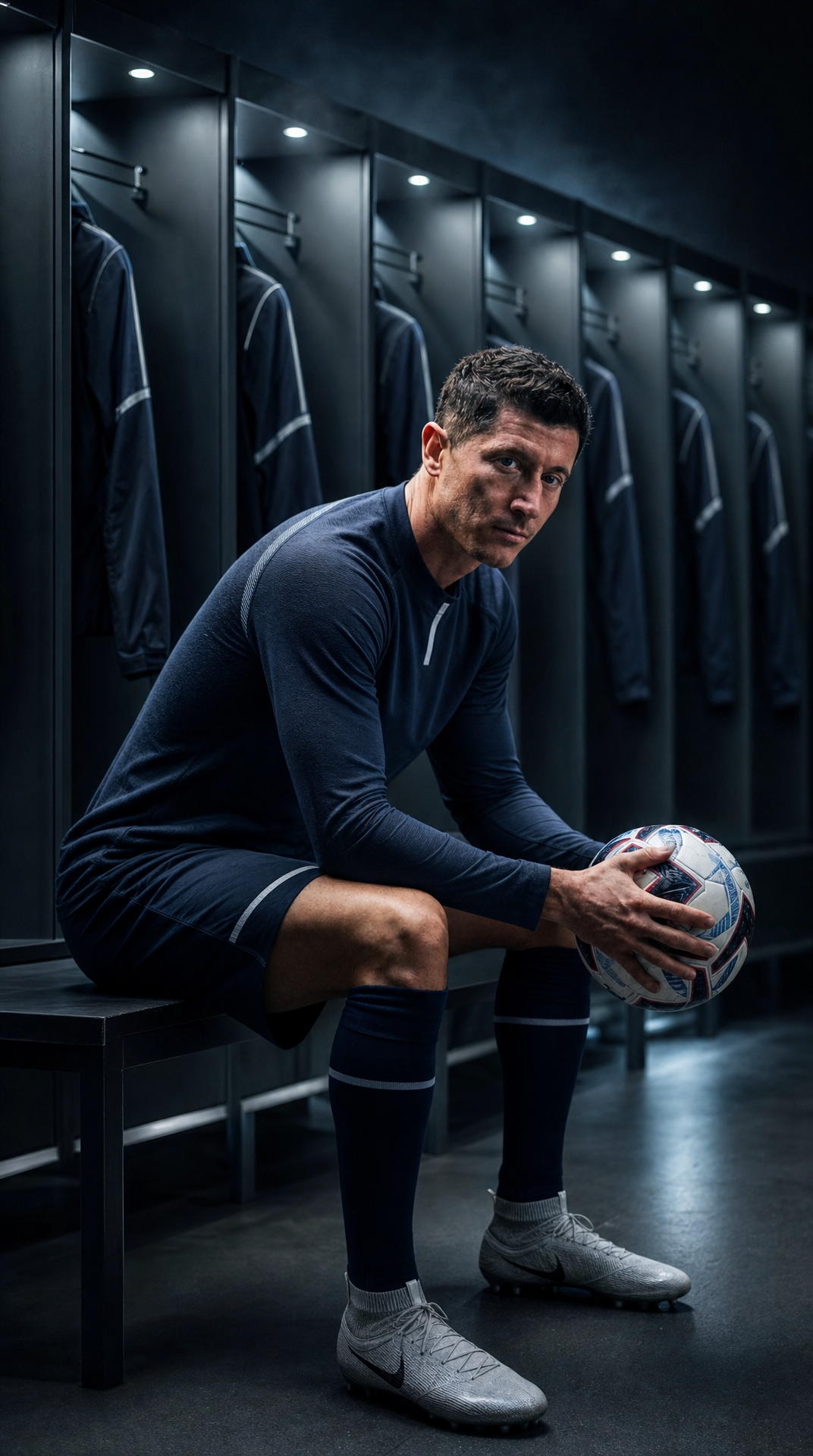
The “full-length frontal view with direct eye contact” makes the player the unmistakable anchor, while “shallow depth of field” separates the sharp figure from the blurred metallic lockers and hanging training jackets. “Soft overhead lighting with a cool-toned rim light” preserves facial and kit detail, and “strong contrast and dramatic shadows” supplies the intense athletic mood without losing the portrait’s controlled magazine-cover framing. Deep navy and silver accents, reinforced by “teal-blue highlights” and “charcoal shadows,” create a restrained cool palette that fits the image’s dominant black, gray, and white tones; “faint mist/steam haze” and “subtle film grain” add atmosphere and photographic texture.
FAQ
→How do I make the player’s face and expression more prominent?
Replace “full-length frontal view” with “waist-up close portrait” or “three-quarter upper-body portrait,” and change “direct eye contact to the camera” to “intense close-up eye contact, highly detailed facial expression.” Keep “strong subject sharpness” and “shallow depth of field” so the lockers recede further.
→How do I make the image feel less severe and more hopeful?
Replace “strong contrast and dramatic shadows” with “soft, evenly diffused cinematic lighting,” and change “charcoal shadows” to “soft slate-blue shadows with warm silver highlights.” You can also replace “faint mist/steam haze” with “subtle morning light through the locker-room windows” for a clearer, more optimistic atmosphere.
→How do I create a series of variations while keeping the same visual identity?
Keep “hyper-realistic sports portrait,” “cinematic magazine-cover photography aesthetic,” “cool color grading,” “subtle film grain,” and “strong subject sharpness with blurred background” unchanged. Swap only the subject action and setting details, such as replacing “sitting in a locker room holding a soccer ball” with “standing beside a goal holding gloves,” or “metallic lockers and hanging training jackets” with “rainy stadium tunnel and blurred floodlights.”
Learn the technique behind this
- Why can't AI spell, and how do I get readable text in an image? — Older diffusion models had no character-level representation of text, so they produced letterform-shaped texture instead of words.
- How should a prompt be structured, and does word order matter? — A prompt that behaves predictably names one subject first, then what it is doing, then where, then the light, then the lens or medium, then the style.
- How do I keep one consistent style across a whole set of images? — Style consistency is more achievable than character consistency because style lives in describable attributes.
Related prompts
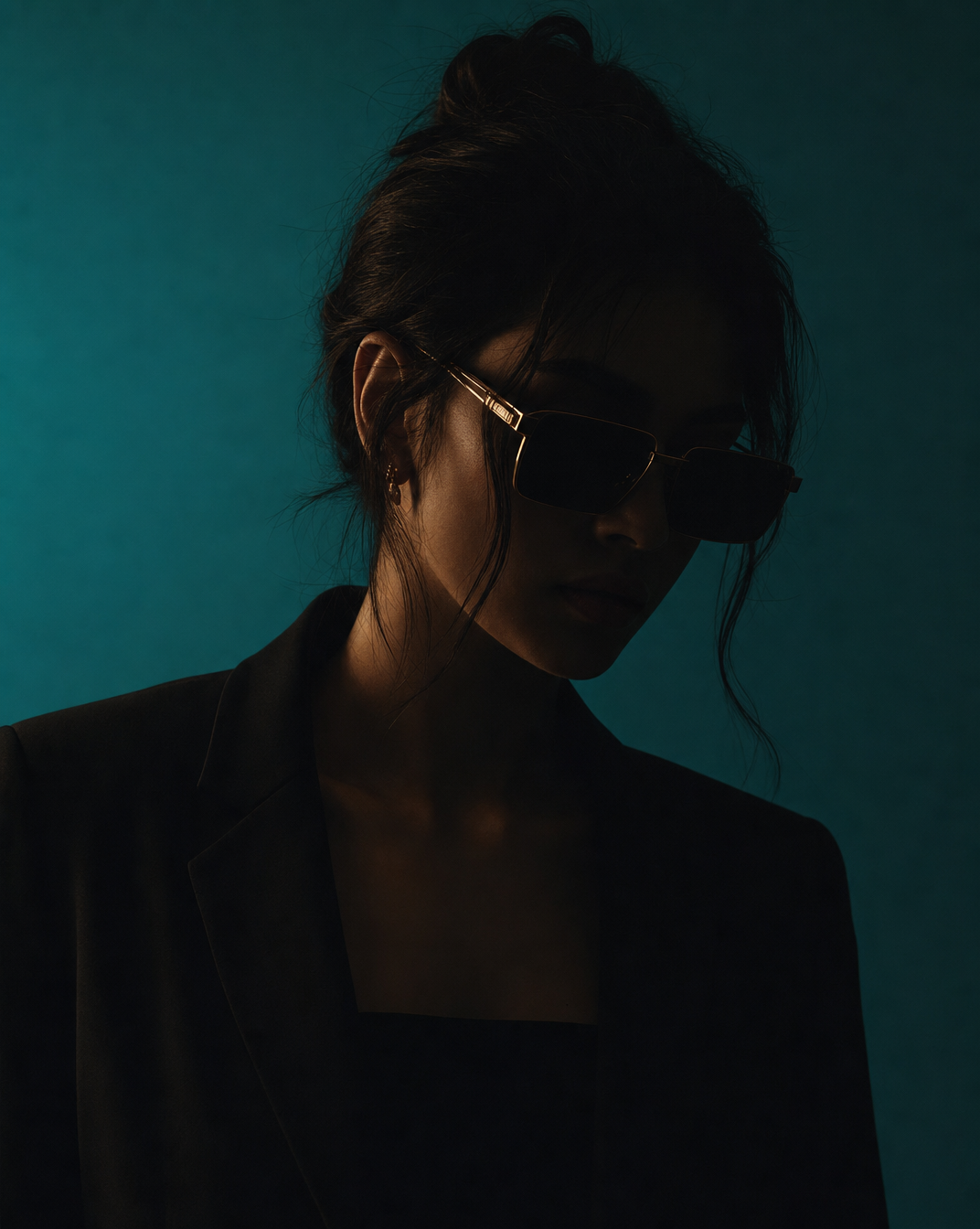
Woman in Teal Light, Shadowed Fashion Portrait
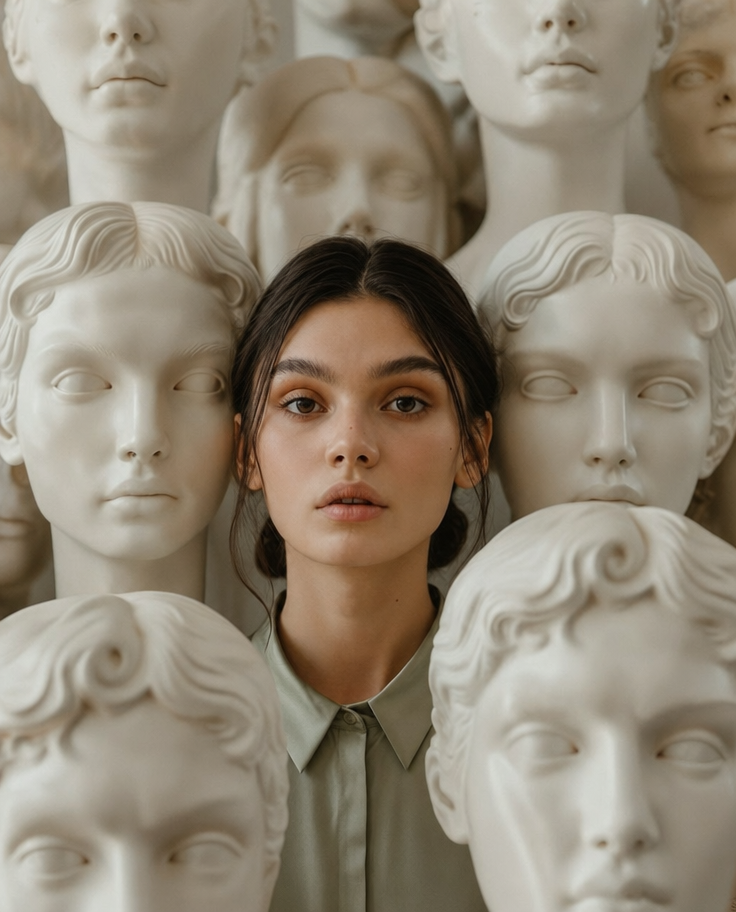
Eerie Elegance Among Marble Busts
Charcoal turtleneck with red eye-beam
Dreamy Macro Portrait in Cool Water