Why this works
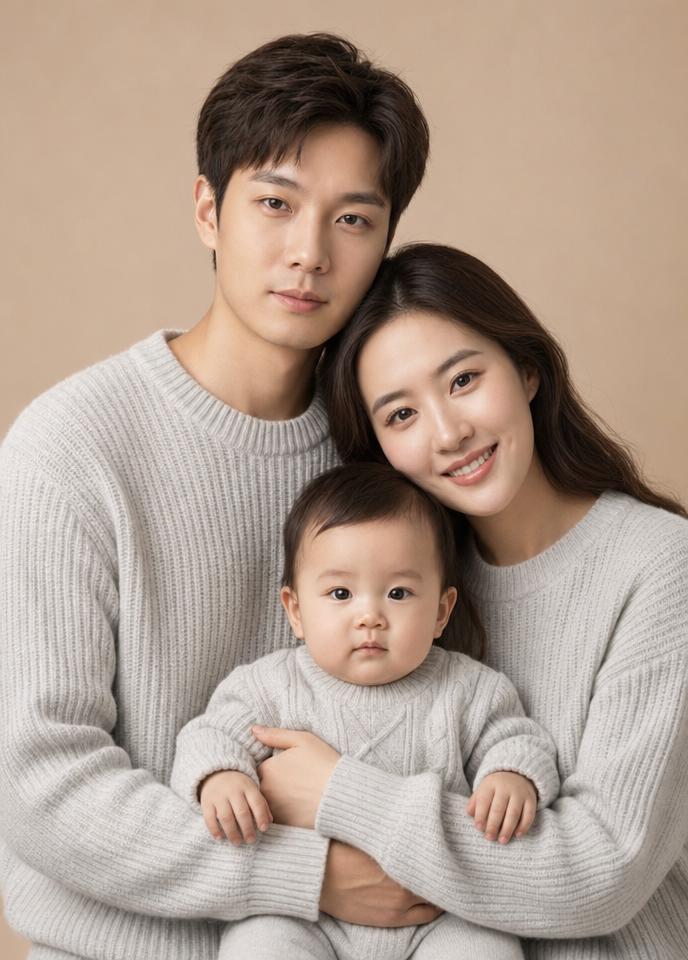
“Father with short dark brown hair,” “mother with long wavy dark brown hair,” and “a baby in the center” establish a readable three-person arrangement, while “matching light gray knit sweaters” unifies the family visually. “Warm beige background” and “soft diffused studio lighting” support the warm, calm mood, with “natural skin tones” preventing the beige-and-brown palette from feeling overly monochrome. “Clean minimal composition,” “close studio framing,” and “shallow depth of field” keep attention on the faces and central baby, while “realistic fabric texture” and “subtle lifelike skin detail” reinforce the photorealistic finish.
FAQ
→How do I change this prompt for a more formal, elegant family portrait?
Replace “matching light gray knit sweaters” with “coordinated tailored outfits in cream, charcoal, and muted beige,” and replace “intimate and calm mood” with “refined, poised mood.” Keep “clean minimal composition” and “warm beige background” to preserve the uncluttered studio presentation.
→How do I make the baby more visually prominent?
Replace “holding a baby in the center” with “the baby prominently centered in the foreground, held close between the parents, with the parents’ faces framing the baby.” Change “shallow depth of field” to “shallow depth of field with sharp focus on the baby’s face and softly blurred parents” so focus shifts decisively to the child.
→How do I build a seasonal variation with the same family arrangement?
Keep “young Asian family of three” and “baby in the center,” but replace “warm beige background” with a specific seasonal setting such as “soft winter-white studio backdrop with subtle evergreen branches.” Replace “light gray knit sweaters” with “coordinated cream wool sweaters with muted forest-green accents,” while retaining “soft diffused studio lighting” for the same gentle portrait quality.
Learn the technique behind this
- Why can't AI spell, and how do I get readable text in an image? — Older diffusion models had no character-level representation of text, so they produced letterform-shaped texture instead of words.
- Why does the model ignore parts of my prompt? — Ignored instructions are almost always conflicts, counts, or spatial relationships — three things current models handle badly — rather than the model failing to read you.
- How should a prompt be structured, and does word order matter? — A prompt that behaves predictably names one subject first, then what it is doing, then where, then the light, then the lens or medium, then the style.
Related prompts
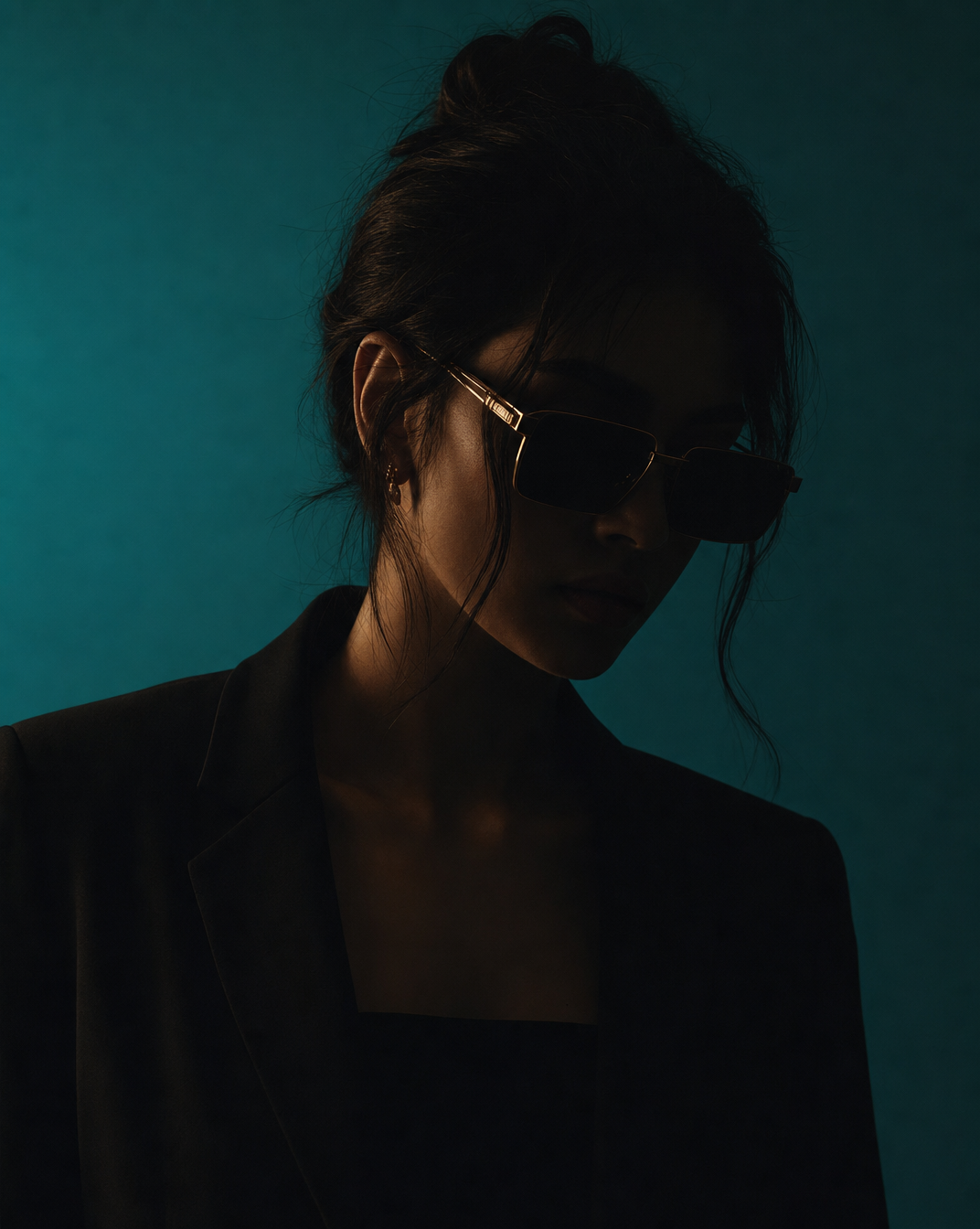
Woman in Teal Light, Shadowed Fashion Portrait
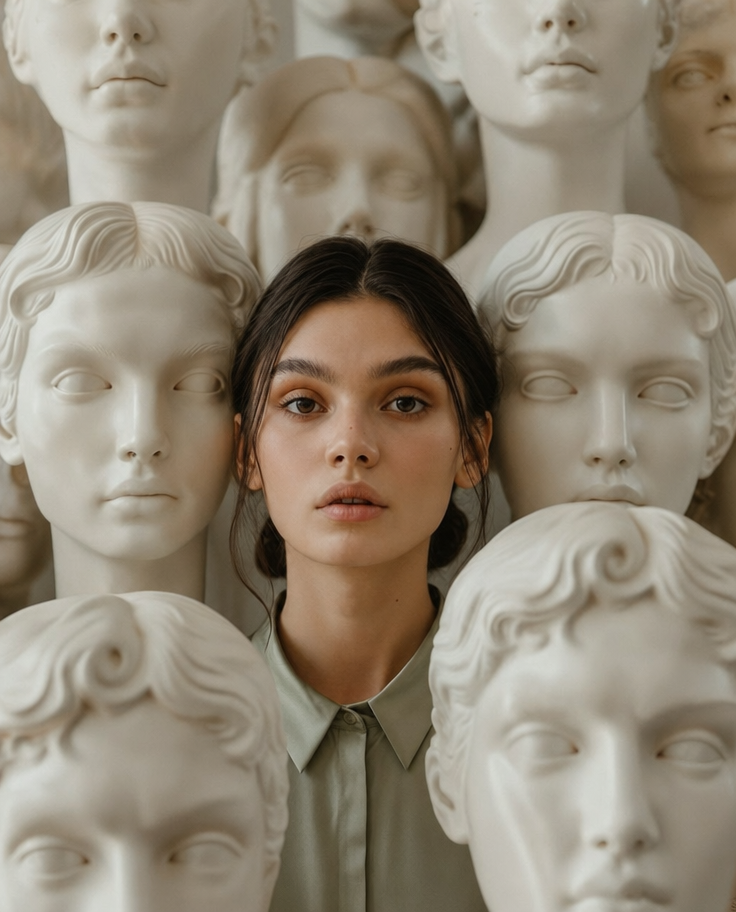
Eerie Elegance Among Marble Busts

Charcoal turtleneck with red eye-beam

Dreamy Macro Portrait in Cool Water