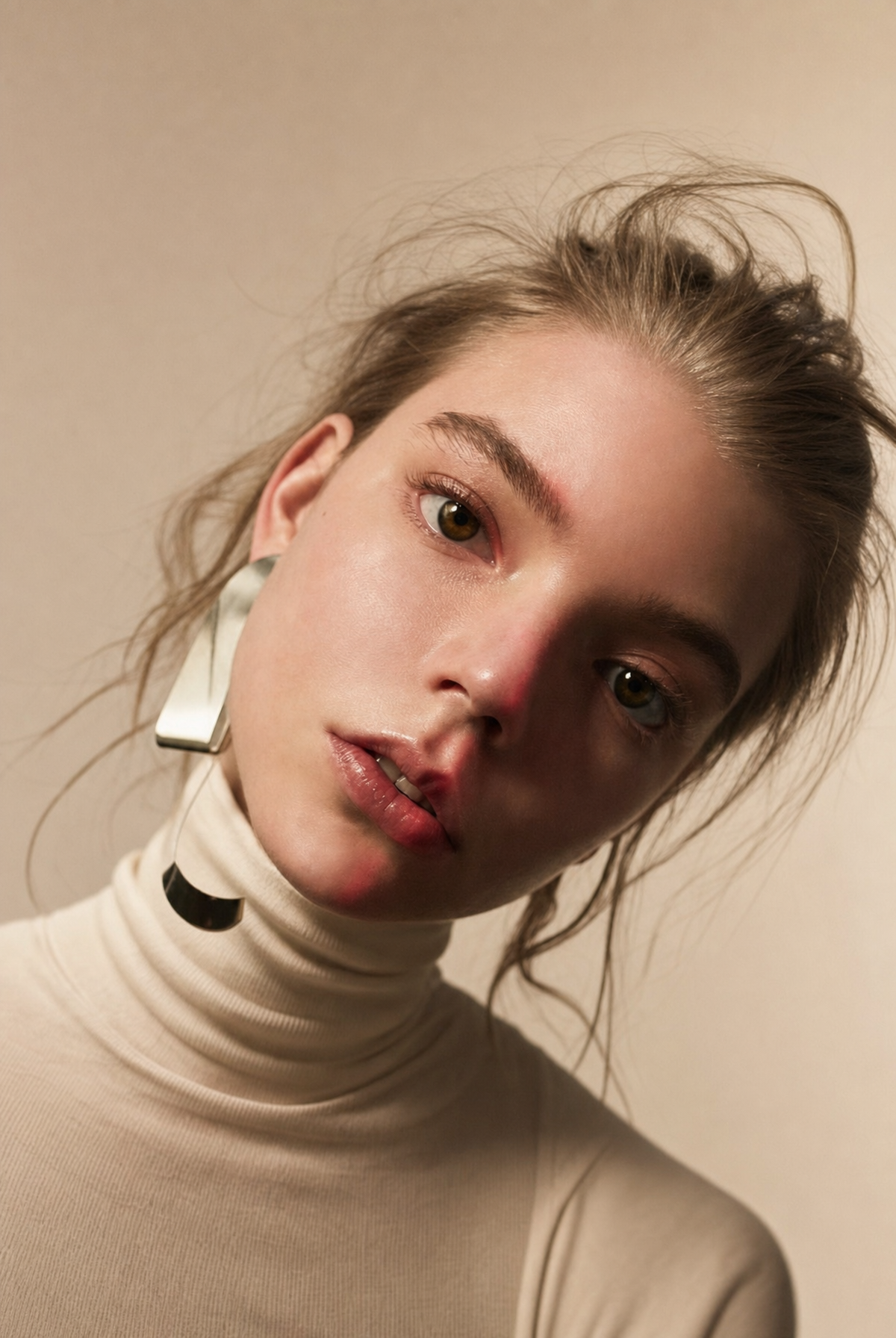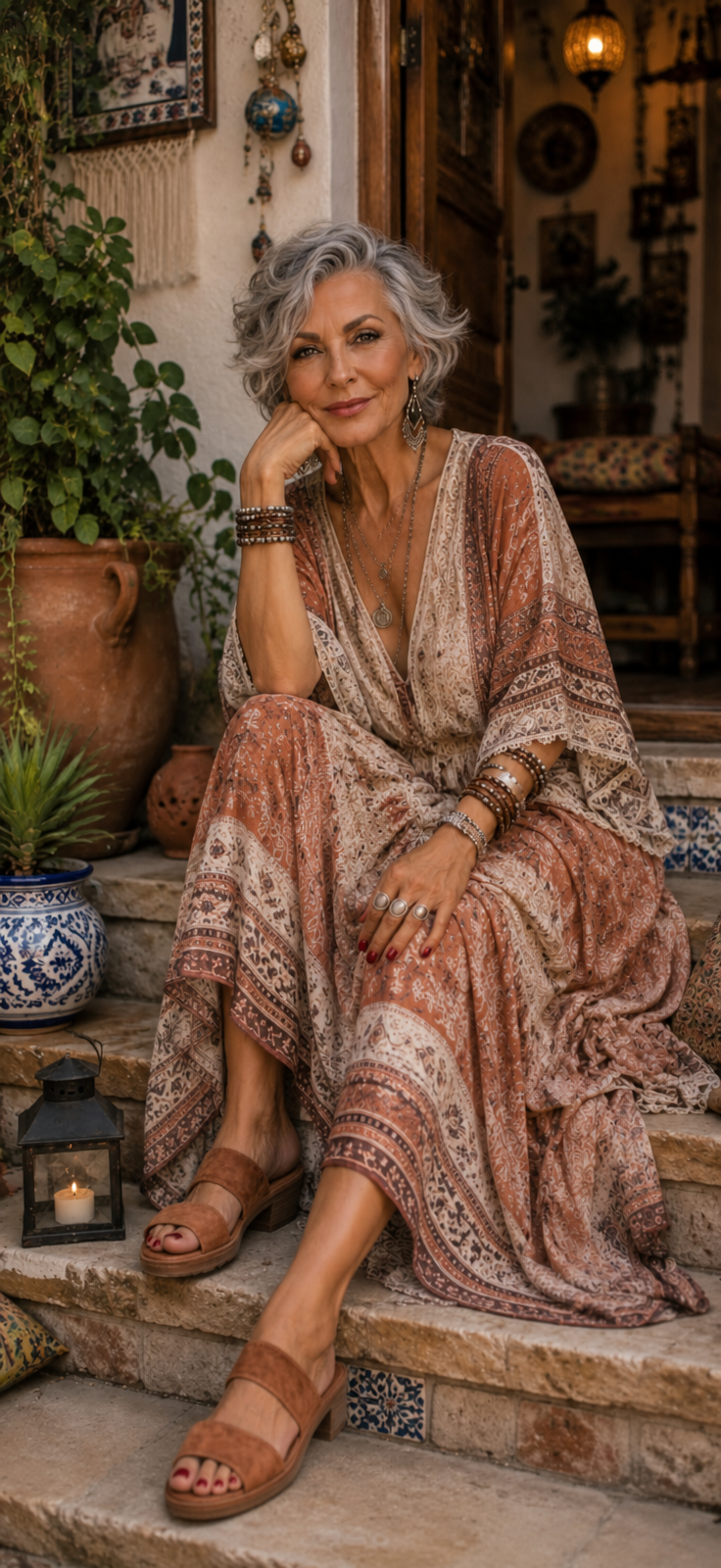
Same prompt, generated with each model separately — click one to see how it holds up.
Why this works
“Full-body portrait” and “sitting on stone steps” establish a grounded vertical composition, while “Mediterranean courtyard home,” “lush potted greenery,” and “handmade ceramics” give the beige, brown, and green palette concrete environmental anchors. The warm, relaxed mood comes specifically from “warm late-afternoon natural light” with “soft highlights and gentle shadows,” while “flowing bohemian maxi dress,” “layered bangles,” and “delicate pendant necklaces” carry the elegant styling. “Shallow depth of field” and “cinematic look” keep the woman visually dominant by separating her from the courtyard without removing the lifestyle context.
FAQ
→How do I make the woman’s face and expression more central while keeping the editorial setting?
Replace “Photorealistic full-body framing” with “three-quarter portrait from the knees up,” and add “direct eye contact, calm confident expression, face sharply detailed.” Keep “Mediterranean courtyard home” and “lush potted greenery” but change “shallow depth of field” to “strong background blur” so the courtyard remains recognizable without competing with her face.
→How do I shift this from a warm relaxed portrait to a more dramatic, fashion-editorial image?
Replace “warm late-afternoon natural light creates soft highlights and gentle shadows” with “low raking sunset light, deep directional shadows, and high-contrast highlights.” Change “inviting lifestyle editorial feel” to “refined high-fashion editorial mood,” and replace the “subtle terracotta-and-cream pattern” with “sculptural monochrome charcoal dress” for a sharper silhouette.
→How do I create a coordinated series of variations from this courtyard portrait?
Keep the fixed core phrases “elegant older woman,” “bohemian editorial lifestyle portrait,” and “warm late-afternoon natural light,” then vary one location phrase per image: replace “sitting on stone steps” with “standing beside an arched doorway,” “seated at a tiled courtyard table,” or “walking past a whitewashed garden wall.” Rotate the nearby props from “handmade ceramics” to “woven market basket,” “terracotta vase,” or “linen shawl,” while preserving “full-body portrait” and the same terracotta-and-cream palette for visual continuity.
Learn the technique behind this
- Why can't AI spell, and how do I get readable text in an image? — Older diffusion models had no character-level representation of text, so they produced letterform-shaped texture instead of words.
- Why does AI get hands and faces wrong, and how do I fix it? — Hands fail because they're small in frame, extremely variable in pose, and self-occluding — the model has less usable signal per pixel than for any other body part.
- How should a prompt be structured, and does word order matter? — A prompt that behaves predictably names one subject first, then what it is doing, then where, then the light, then the lens or medium, then the style.
Related prompts
Woman in Teal Light, Shadowed Fashion Portrait
Eerie Elegance Among Marble Busts
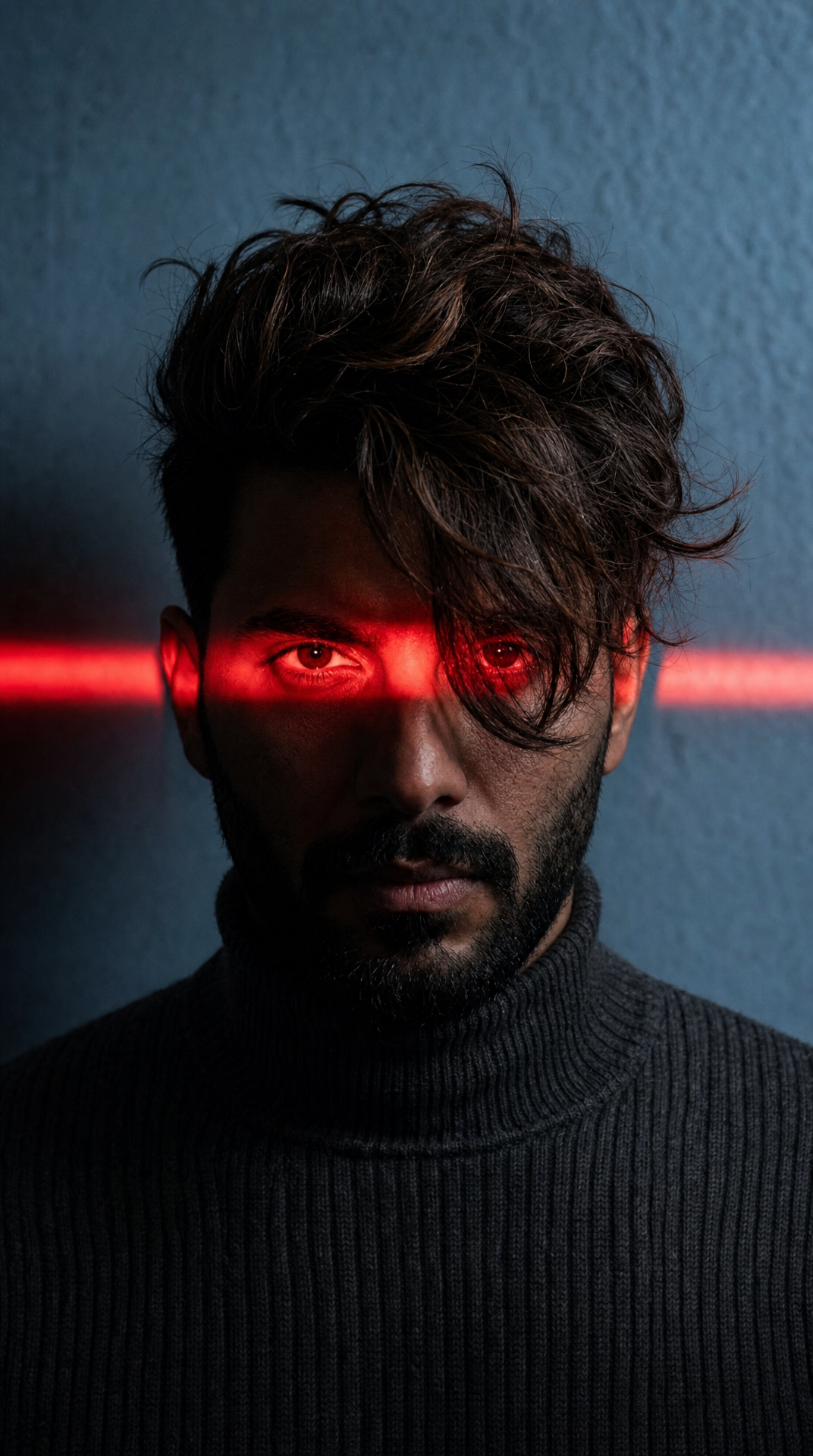
Charcoal turtleneck with red eye-beam
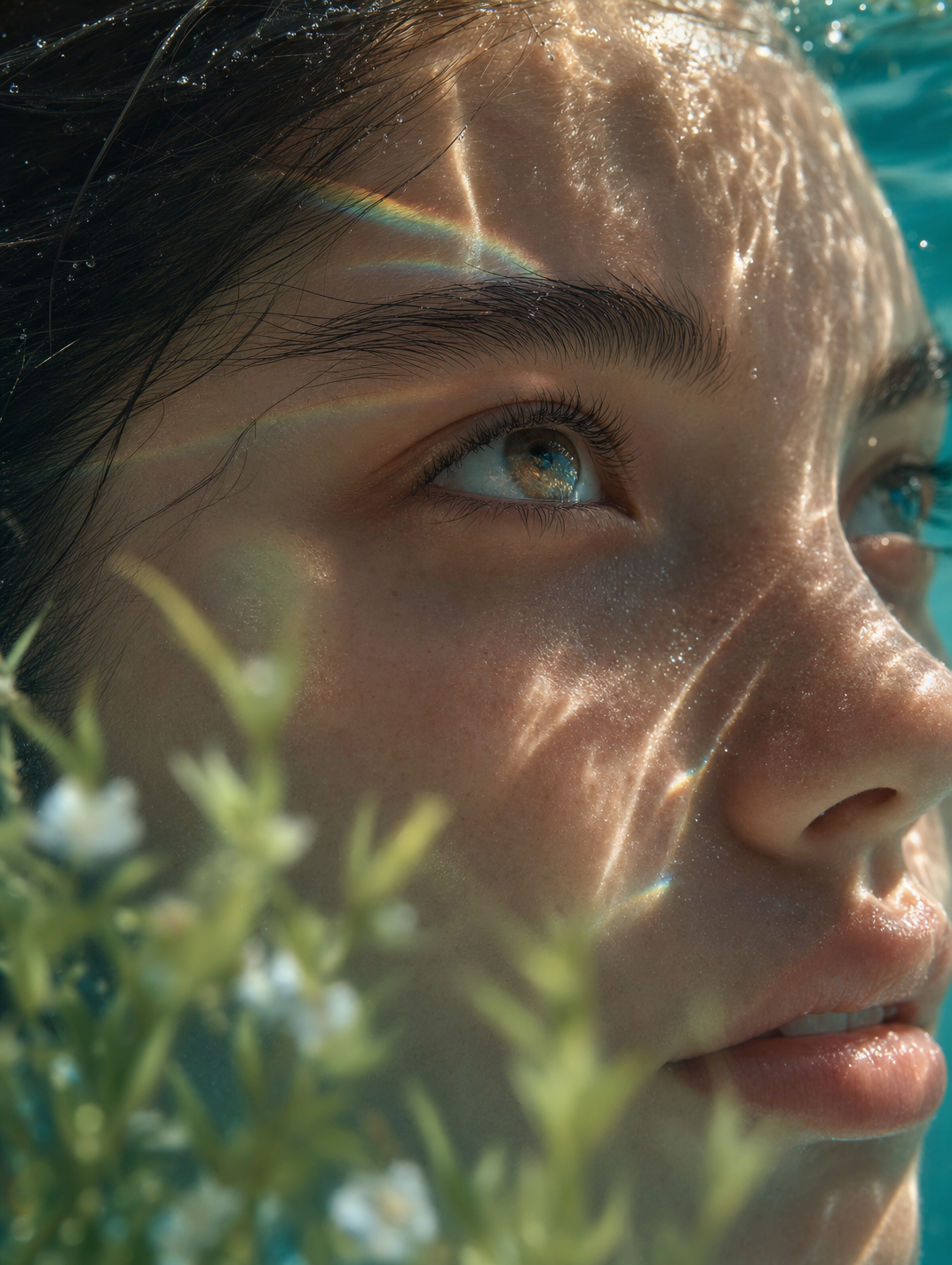
Dreamy Macro Portrait in Cool Water