Why this works
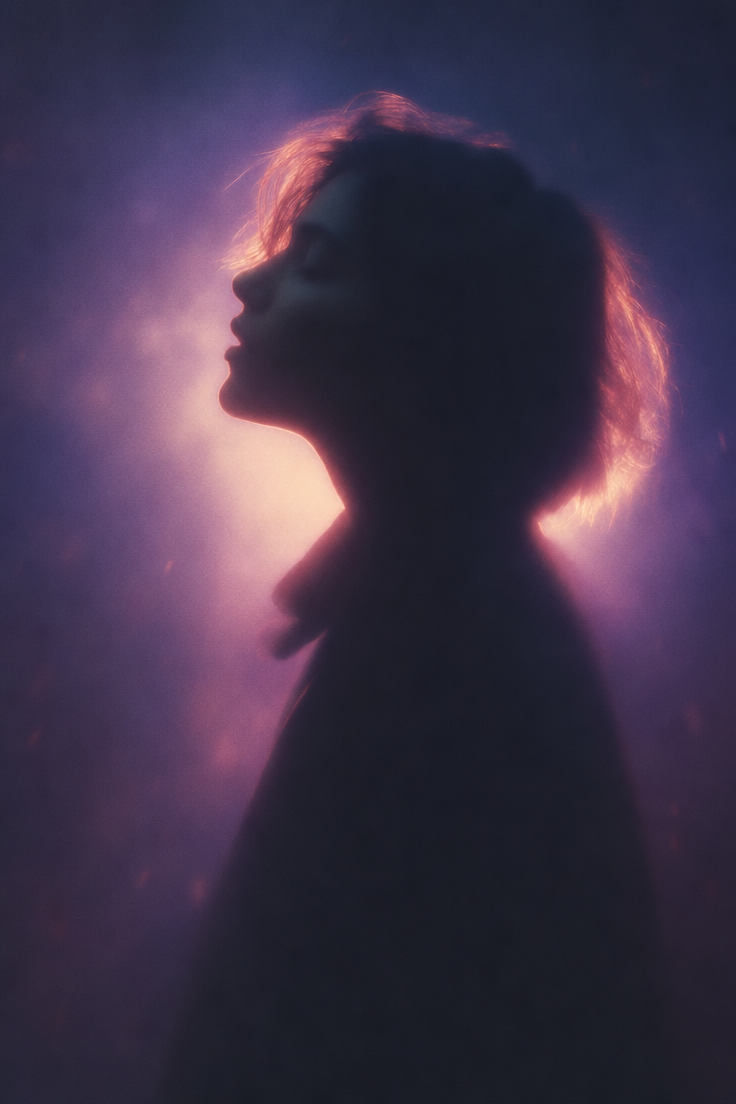
The close framing comes from “vertical frame” and “portrait” side-profile language, keeping the head and shoulders as the dominant shape rather than letting the background compete. “Panning motion creating a smooth motion-blur trail behind her head and shoulders” supplies the lateral smear, while “slow-shutter, dreamy smear” and “soft-focus facial contours” prevent the portrait from resolving into a sharp identity. The dreamy purple-pink harmony is anchored by the “smoky indigo-to-purple gradient,” “ethereal color bloom,” and “faint, ember-like haze,” with “gentle diffused edge lighting” separating the silhouette from that saturated backdrop.
FAQ
→How do I make the woman’s face more recognizable while keeping the dreamy motion effect?
Replace “blurry female silhouette” with “softly recognizable female face,” and change “soft-focus facial contours” to “defined eyes, nose, and lips with restrained soft focus.” Reduce “smooth motion-blur trail behind her head and shoulders” to “a narrow motion-blur trail along the back of her head and shoulders” so the blur remains directional instead of covering the facial features.
→How do I shift this from an ethereal purple portrait to a warmer, more intimate mood?
Replace “smoky indigo-to-purple gradient background” with “smoky amber-to-rose gradient background,” and change “faint, ember-like haze” to “a warm candlelit haze near the horizon line.” Swap “cool ethereal color bloom” for “muted rose-gold bloom” while keeping “gentle diffused edge lighting” to preserve the soft profile separation.
→How do I create a series of variations without losing the same visual identity?
Keep the fixed structure, including “cinematic photorealistic,” “vertical frame,” “slow-shutter,” “fine film grain,” and “smooth motion-blur trail,” then vary one controlled block at a time. For subject studies, replace “female silhouette portrait in side profile” with “male silhouette in three-quarter profile” or “dancer’s upper-body silhouette in profile”; for background studies, replace “indigo-to-purple gradient” with “teal-to-cobalt gradient” or “rose-to-crimson gradient,” while retaining “faint, ember-like haze near the horizon line.”
Learn the technique behind this
- Why can't AI spell, and how do I get readable text in an image? — Older diffusion models had no character-level representation of text, so they produced letterform-shaped texture instead of words.
- How should a prompt be structured, and does word order matter? — A prompt that behaves predictably names one subject first, then what it is doing, then where, then the light, then the lens or medium, then the style.
- Do negative prompts work, and what should go in one? — Negative prompts work on models that support a separate negative conditioning channel — mainly Stable Diffusion and FLUX-family models.
Related prompts
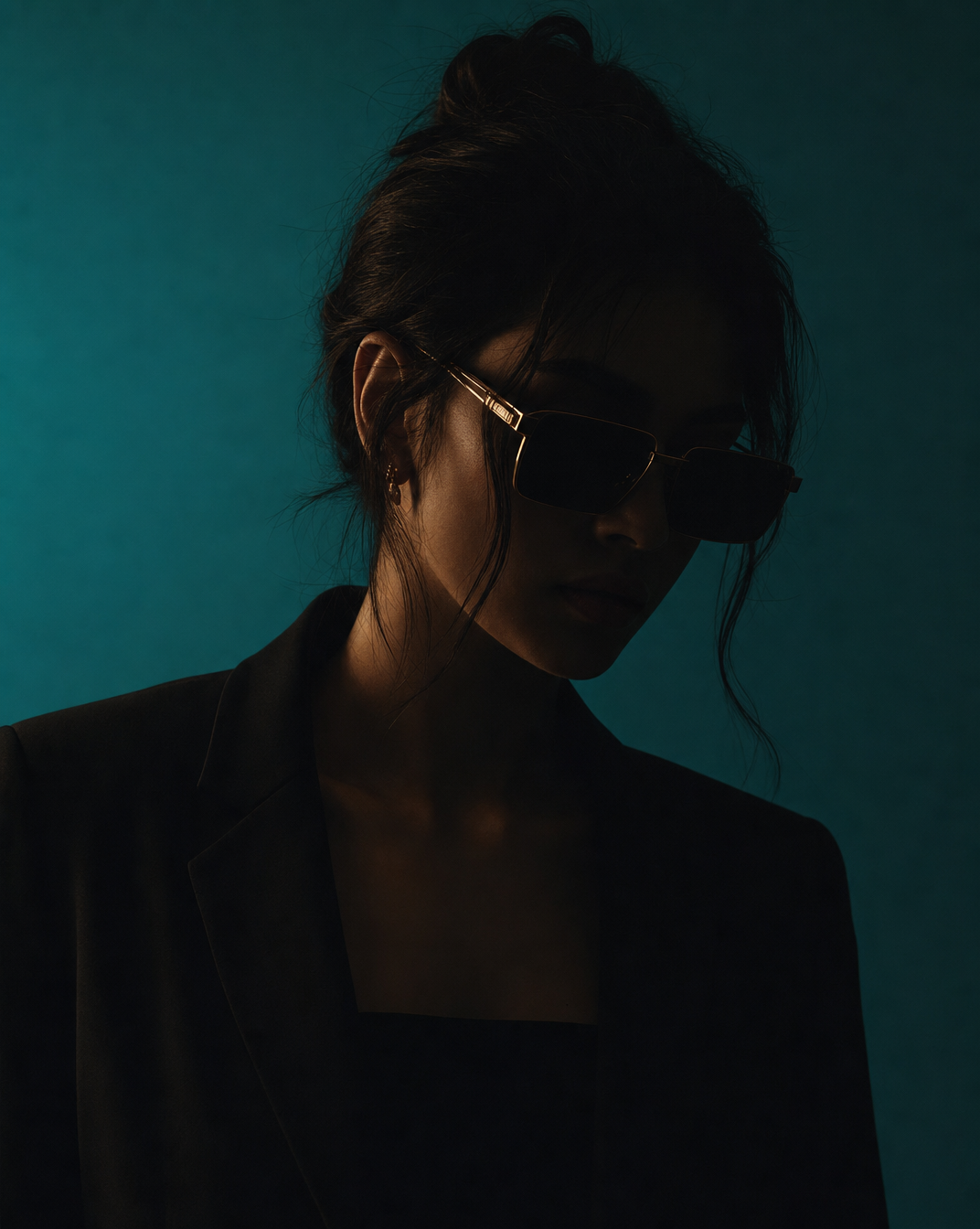
Woman in Teal Light, Shadowed Fashion Portrait
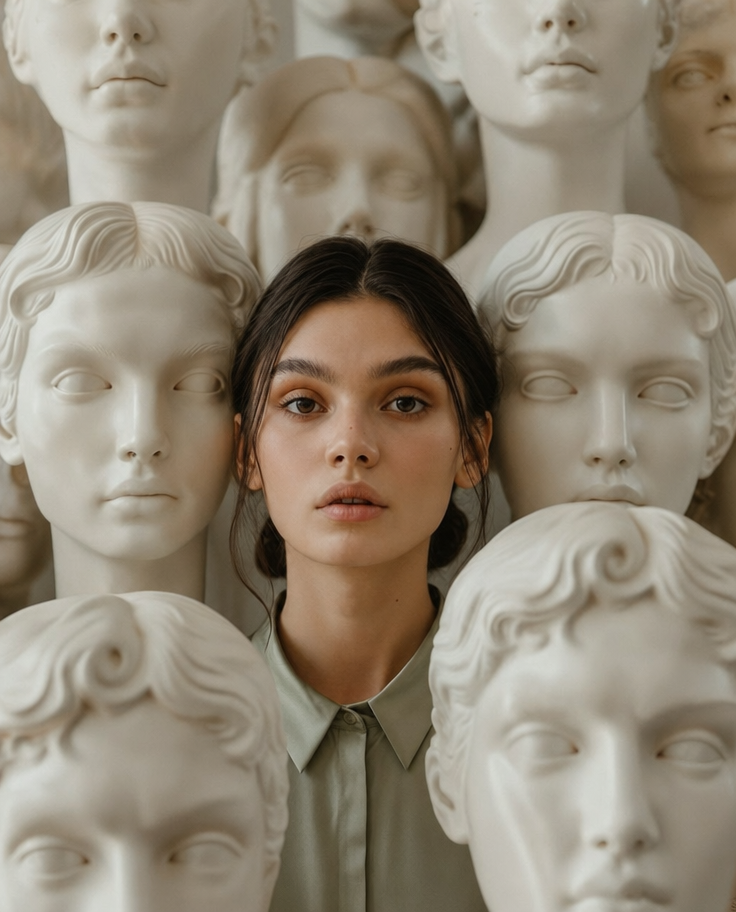
Eerie Elegance Among Marble Busts
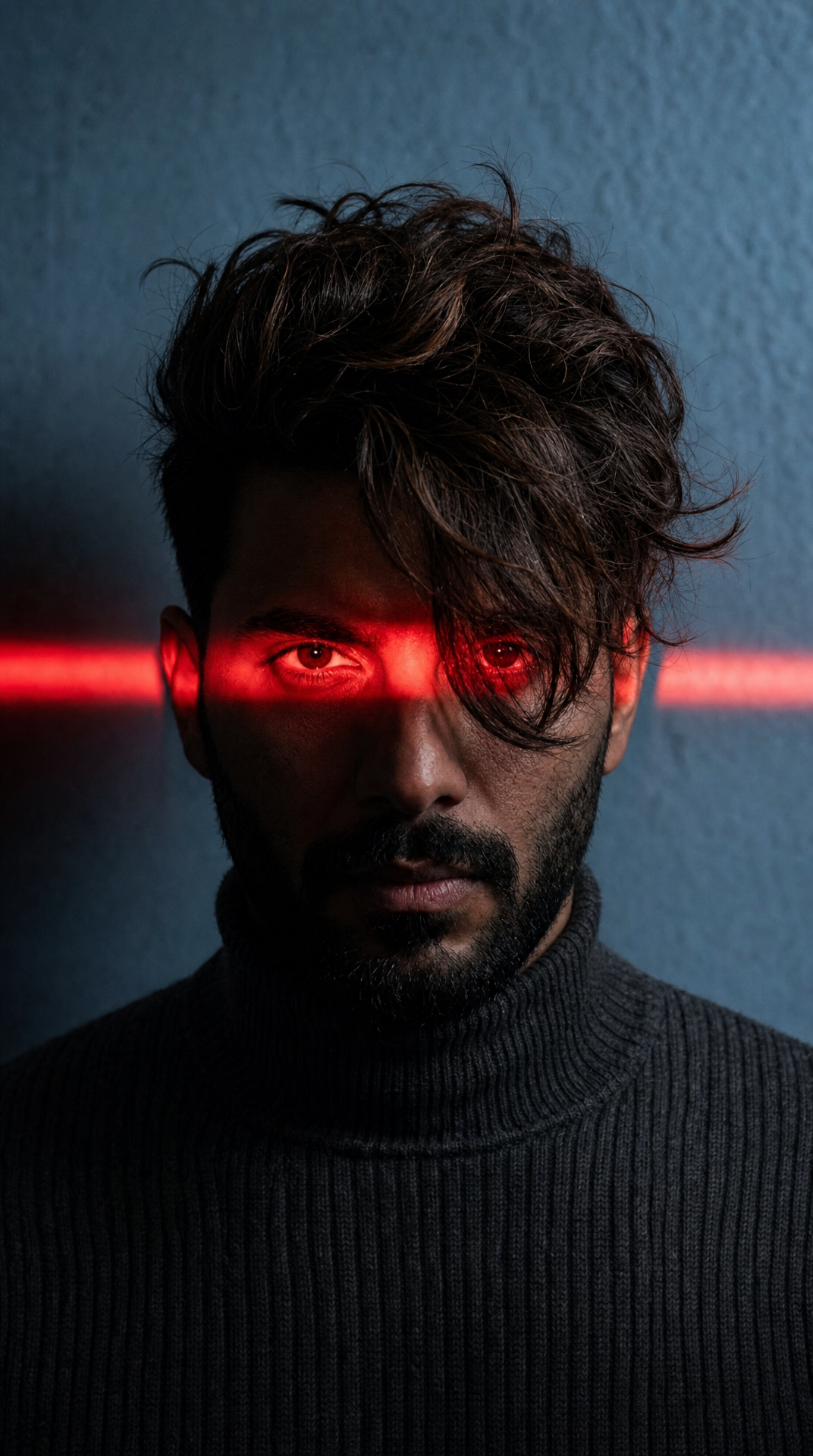
Charcoal turtleneck with red eye-beam

Dreamy Macro Portrait in Cool Water