Why this works
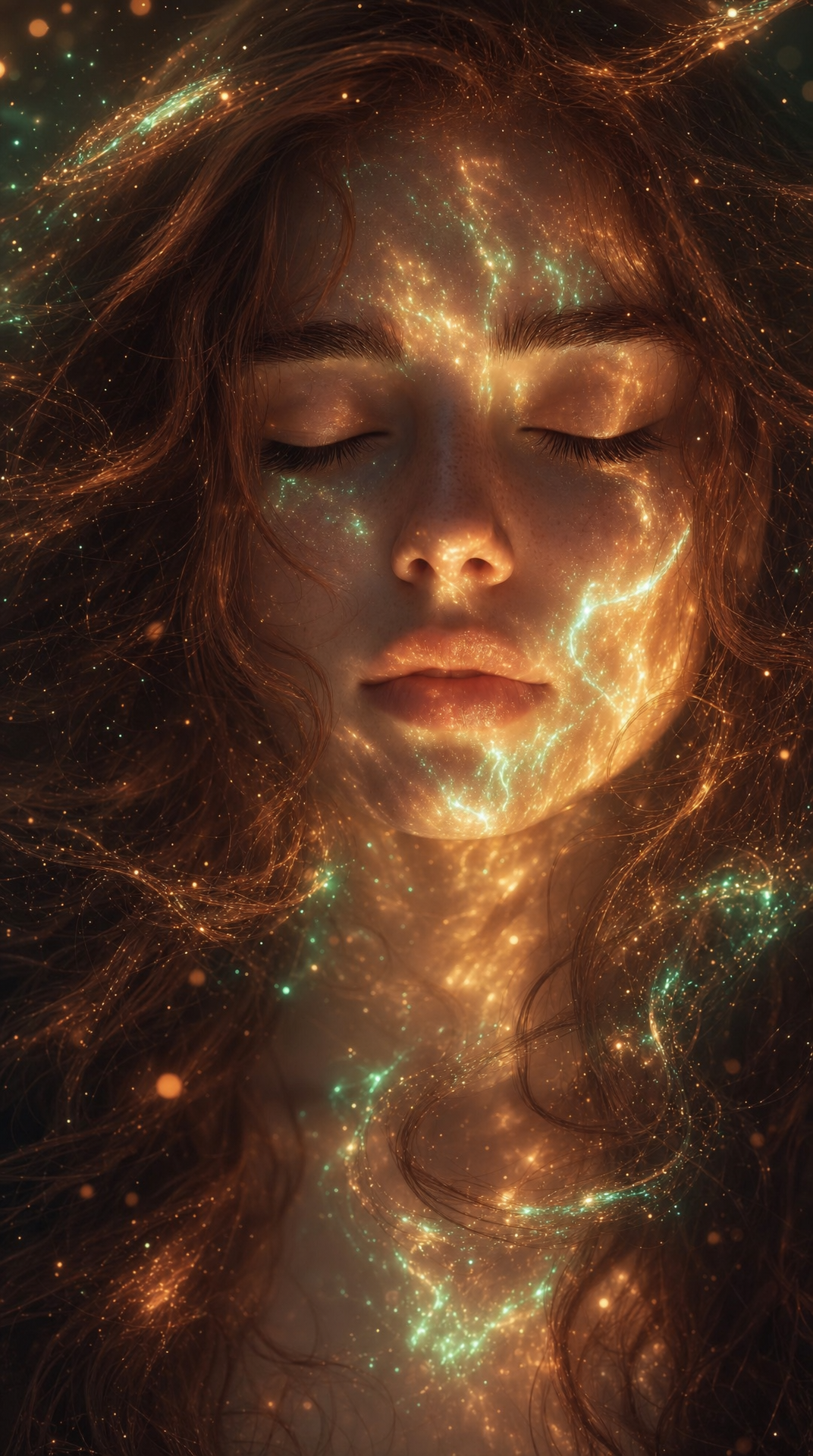
The close-up portrait framing and the subject’s “closed eyes” keep attention on the young woman’s inward, contemplative expression, while “ethereal glowing light trails wrapping softly around her cheeks and collarbones” gives the portrait a deliberate circular flow. The gold-and-teal harmony comes directly from “flowing warm light particles” and “faint bioluminescent green sparks,” with the dark bokeh background separating those colors from the face. “Soft dramatic rim lighting” defines the auburn wavy hair and shoulders, while “photorealistic cinematic surrealism” balances recognizable skin detail against the dreamlike mystical atmosphere.
FAQ
→How do I make the glowing particles and light trails more central than the woman’s face?
Replace “close-up portrait framing” with “medium close-up with the face in the lower third and luminous trails dominating the foreground,” and change “light trails wrapping softly around her cheeks and collarbones” to “large radiant light ribbons crossing the frame and partially surrounding her face.” Keep “closed eyes” if you want the expression to remain calm rather than startled.
→How do I shift this from mystical and dreamy to darker and more ominous?
Replace “dreamlike mystical atmosphere” with “ominous supernatural atmosphere,” change “soft dramatic rim lighting” to “hard directional red rim lighting,” and replace “warm light particles” with “smoldering amber embers.” Reduce “faint bioluminescent green sparks” to “sporadic sickly green sparks” so the teal accent feels unsettling rather than magical.
→How do I create a series of variations while keeping this portrait recognizable?
Keep “close-up portrait,” “young woman with closed eyes,” “auburn wavy hair,” and “photorealistic cinematic surrealism” unchanged, then swap the lighting phrase for controlled versions such as “floating silver snow motes,” “violet cosmic dust,” or “blue underwater caustic patterns.” Preserve “dark cinematic background with subtle bokeh” across every version so the changing gold, teal, violet, or blue effects remain visually comparable.
Learn the technique behind this
- Why can't AI spell, and how do I get readable text in an image? — Older diffusion models had no character-level representation of text, so they produced letterform-shaped texture instead of words.
- How should a prompt be structured, and does word order matter? — A prompt that behaves predictably names one subject first, then what it is doing, then where, then the light, then the lens or medium, then the style.
- Why does AI get hands and faces wrong, and how do I fix it? — Hands fail because they're small in frame, extremely variable in pose, and self-occluding — the model has less usable signal per pixel than for any other body part.
Related prompts
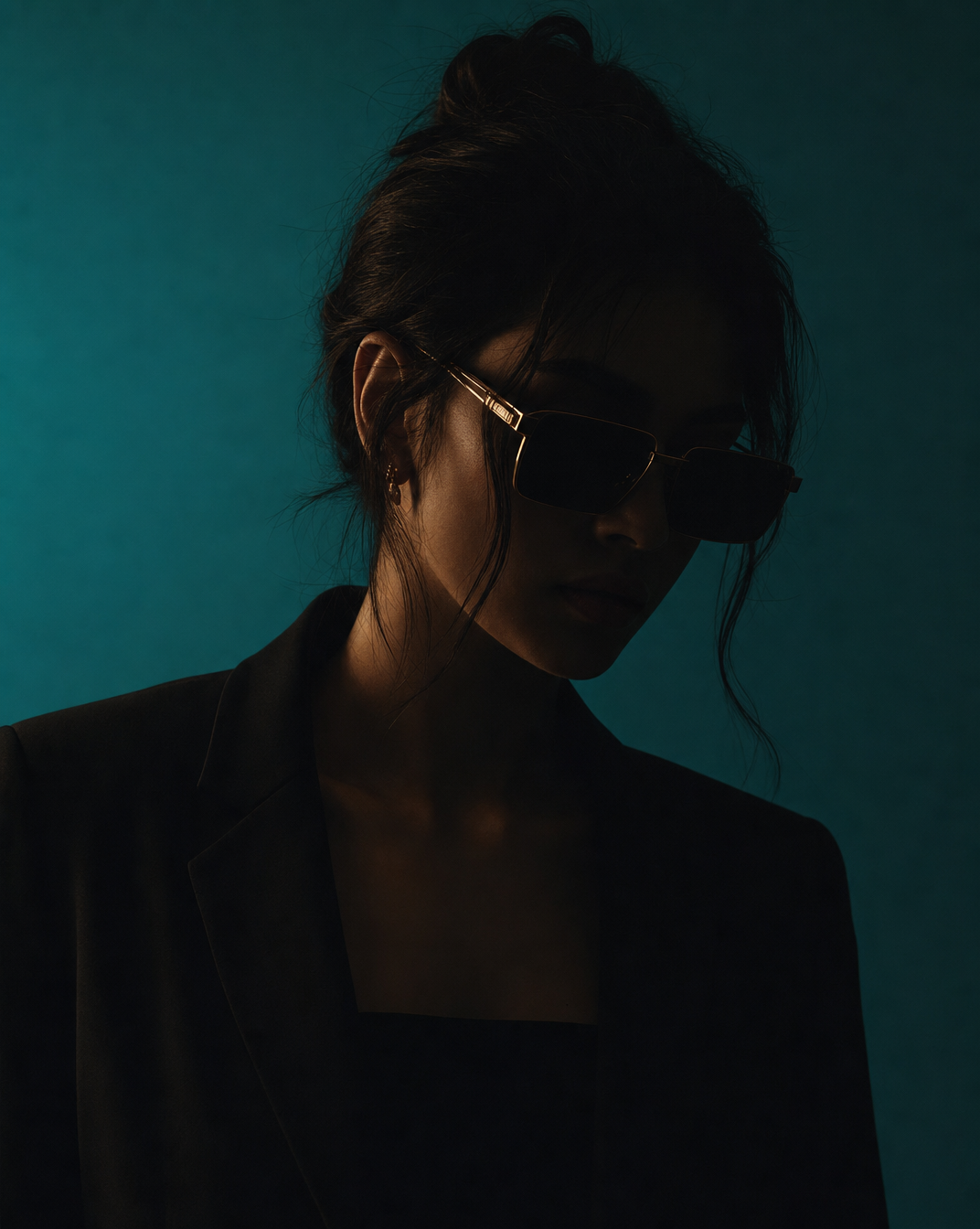
Woman in Teal Light, Shadowed Fashion Portrait
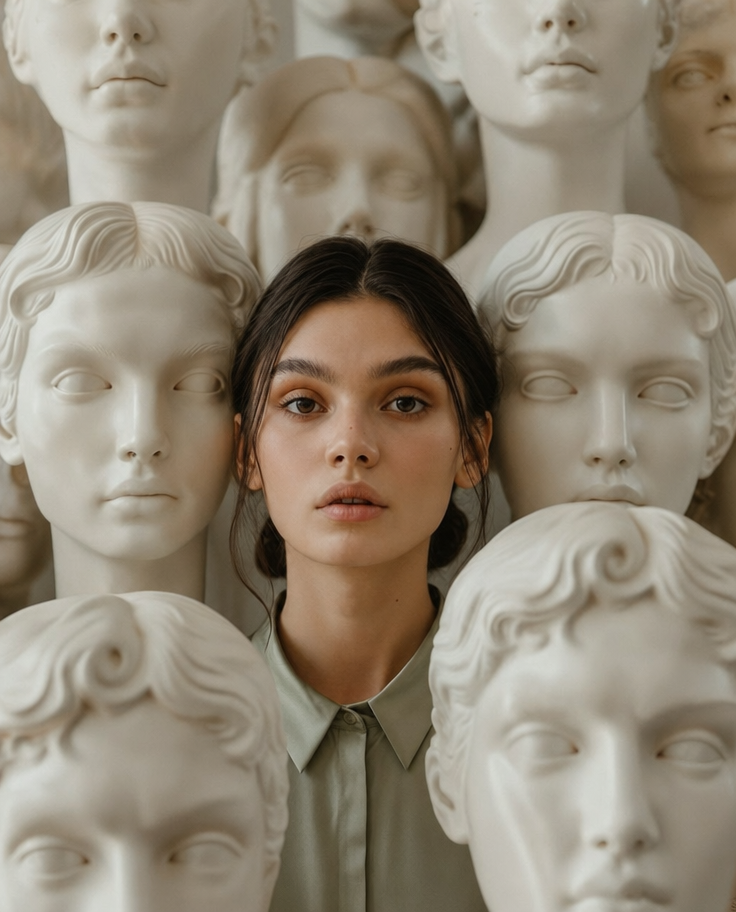
Eerie Elegance Among Marble Busts
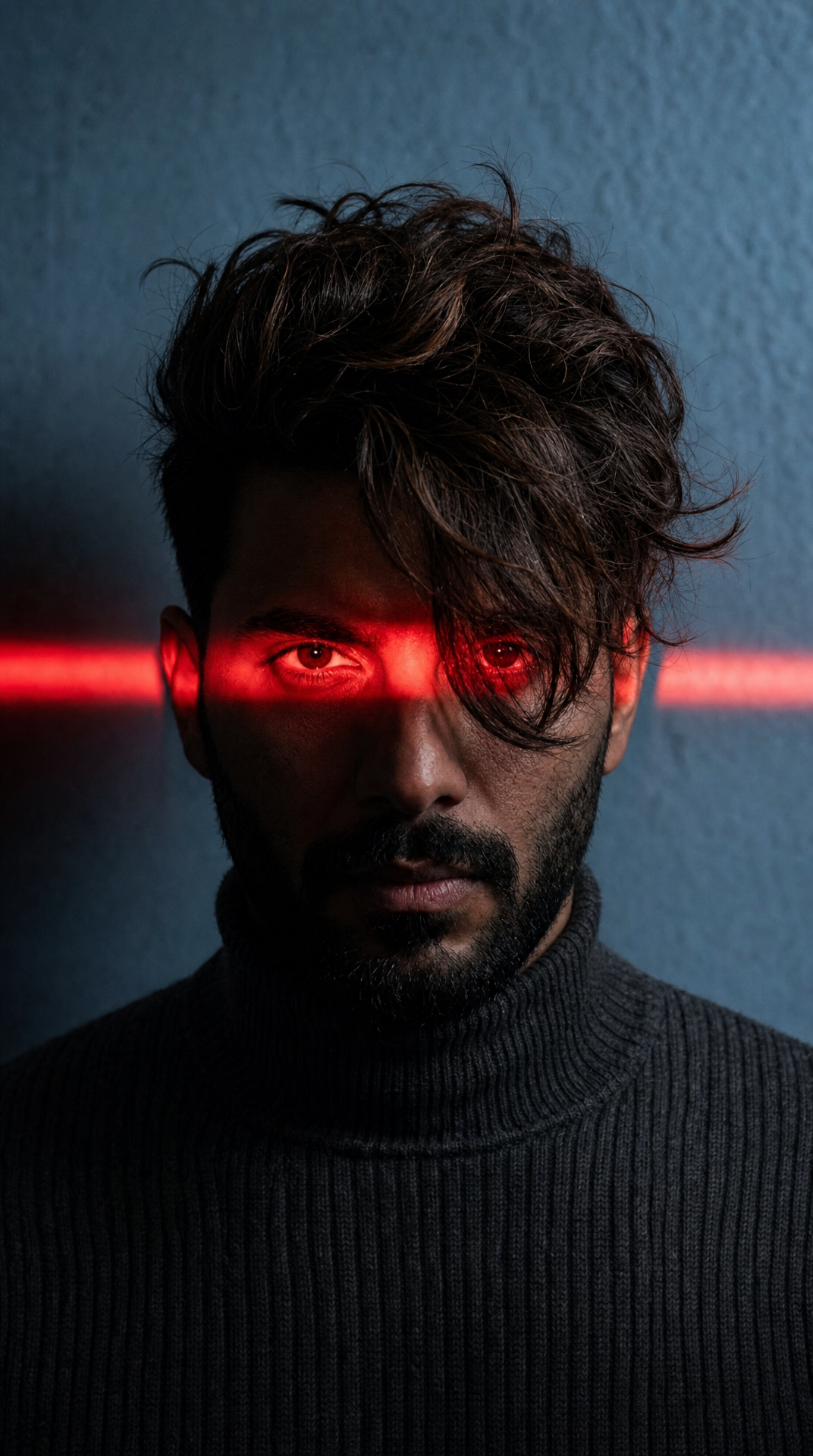
Charcoal turtleneck with red eye-beam
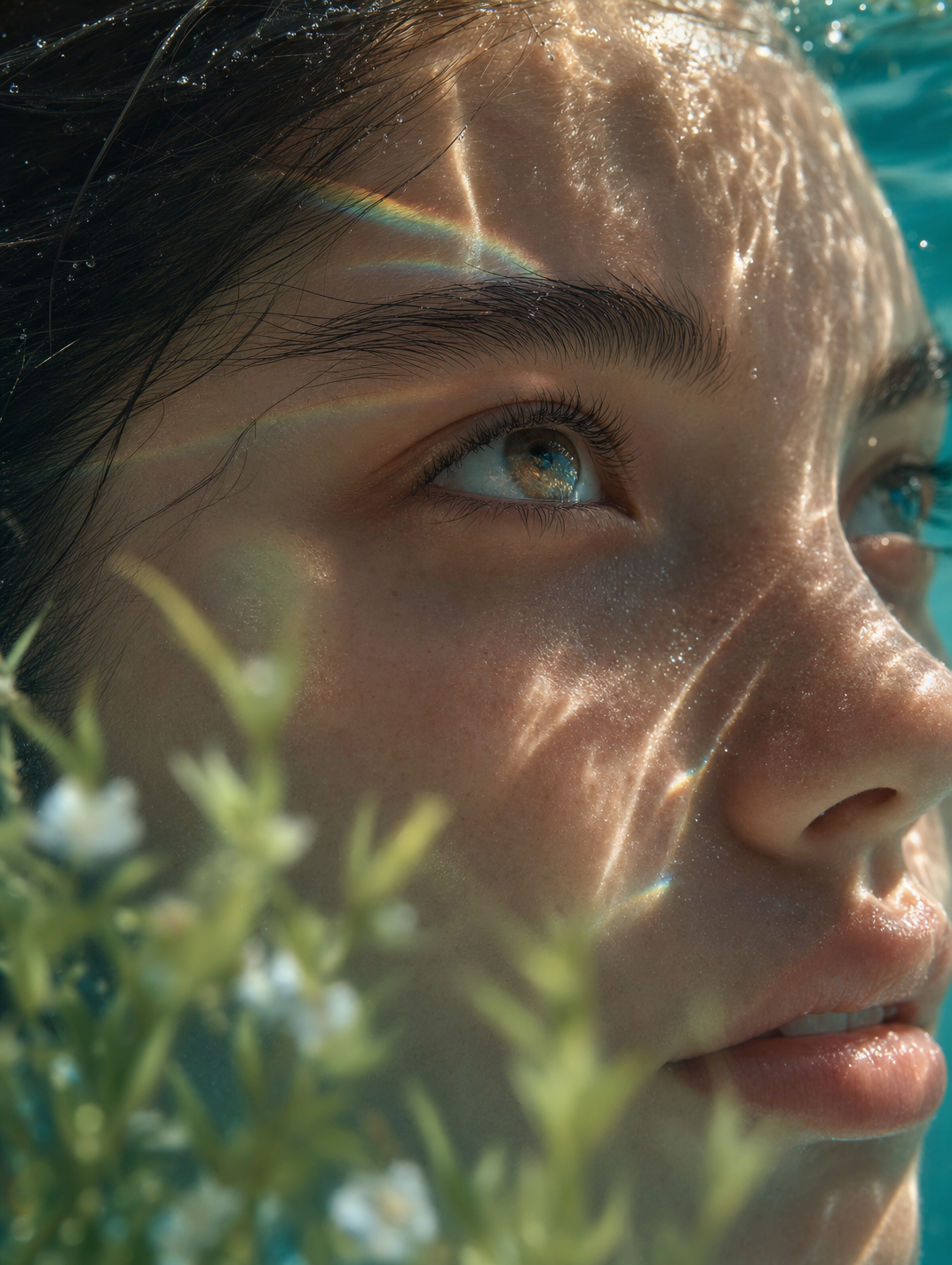
Dreamy Macro Portrait in Cool Water