Why this works
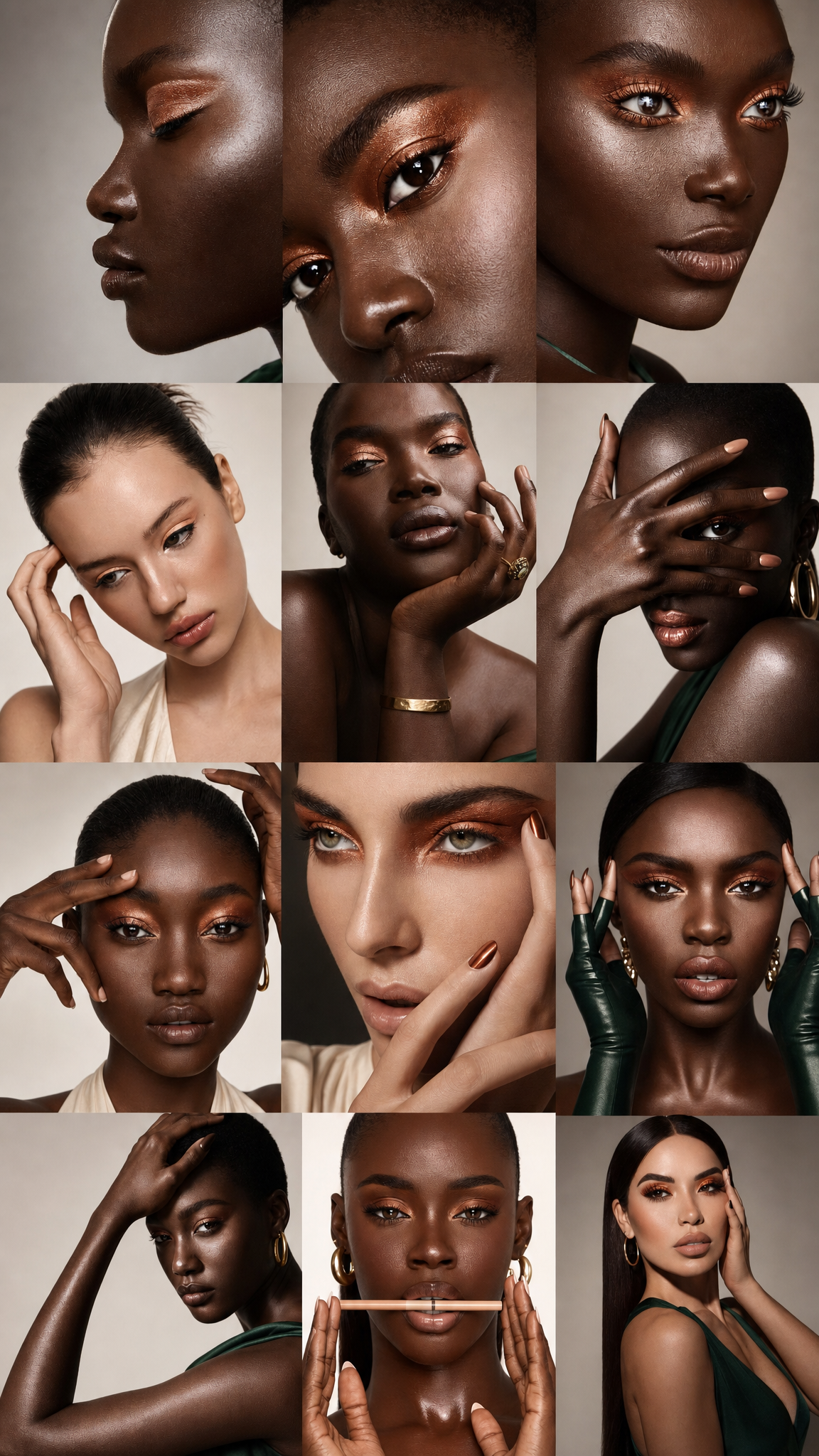
“Tight close-up framing” and “intense direct gazes” make the models’ eyes and sculpted skin the visual anchors, while “collage layout of multiple headshots” builds a symmetrical, editorial grid. The blue-and-copper makeup, glossy lips, and “subtle rim highlights” supply controlled metallic contrast; in the generated image, that copper reads as gold against the beige skin tones, with black-and-white studio backgrounds keeping the composition clean. “Softer, more even directional studio lighting” preserves sharp cosmetic detail without the harsher drama of the original palette, supporting the “bold, glamorous, polished mood.”
FAQ
→How do I make the copper eye makeup and green styling more visually dominant?
Replace “bold blue and warm copper eye makeup” with “dominant metallic copper eye makeup with only a narrow cobalt-blue accent,” and replace “solid deep green and cream styling details (visible at the edges of the frame)” with “deep green collars and fabric panels clearly visible along the lower third of each portrait.” This gives the warm metallic color and green wardrobe more area and contrast without losing the close-up format.
→How do I make the collage feel darker and more dramatic?
Change “softer, more even directional studio lighting with subtle rim highlights” to “hard split lighting with pronounced copper rim highlights and controlled shadow falloff,” and replace “sleek black-and-white studio backgrounds” with “deep matte-black studio backgrounds with narrow cream graphic panels.” Keep “crisp sharp focus” so the darker treatment still retains high-end skin and makeup detail.
→How do I turn this into a coordinated series with different models and makeup variations?
Keep “luxury editorial beauty photography,” “tight close-up framing,” and “symmetrical collage layout” fixed, then vary one controlled phrase per image: replace “blue-and-copper color scheme” with options such as “violet-and-silver,” “emerald-and-gold,” or “rose-and-platinum,” while changing “solid deep green and cream styling details” to matching wardrobe pairs such as “plum and ivory” or “black and champagne.” Preserve “intense direct gazes” and “glossy lips” to maintain the series identity.
Learn the technique behind this
- Why can't AI spell, and how do I get readable text in an image? — Older diffusion models had no character-level representation of text, so they produced letterform-shaped texture instead of words.
- How should a prompt be structured, and does word order matter? — A prompt that behaves predictably names one subject first, then what it is doing, then where, then the light, then the lens or medium, then the style.
- Do negative prompts work, and what should go in one? — Negative prompts work on models that support a separate negative conditioning channel — mainly Stable Diffusion and FLUX-family models.
Related prompts
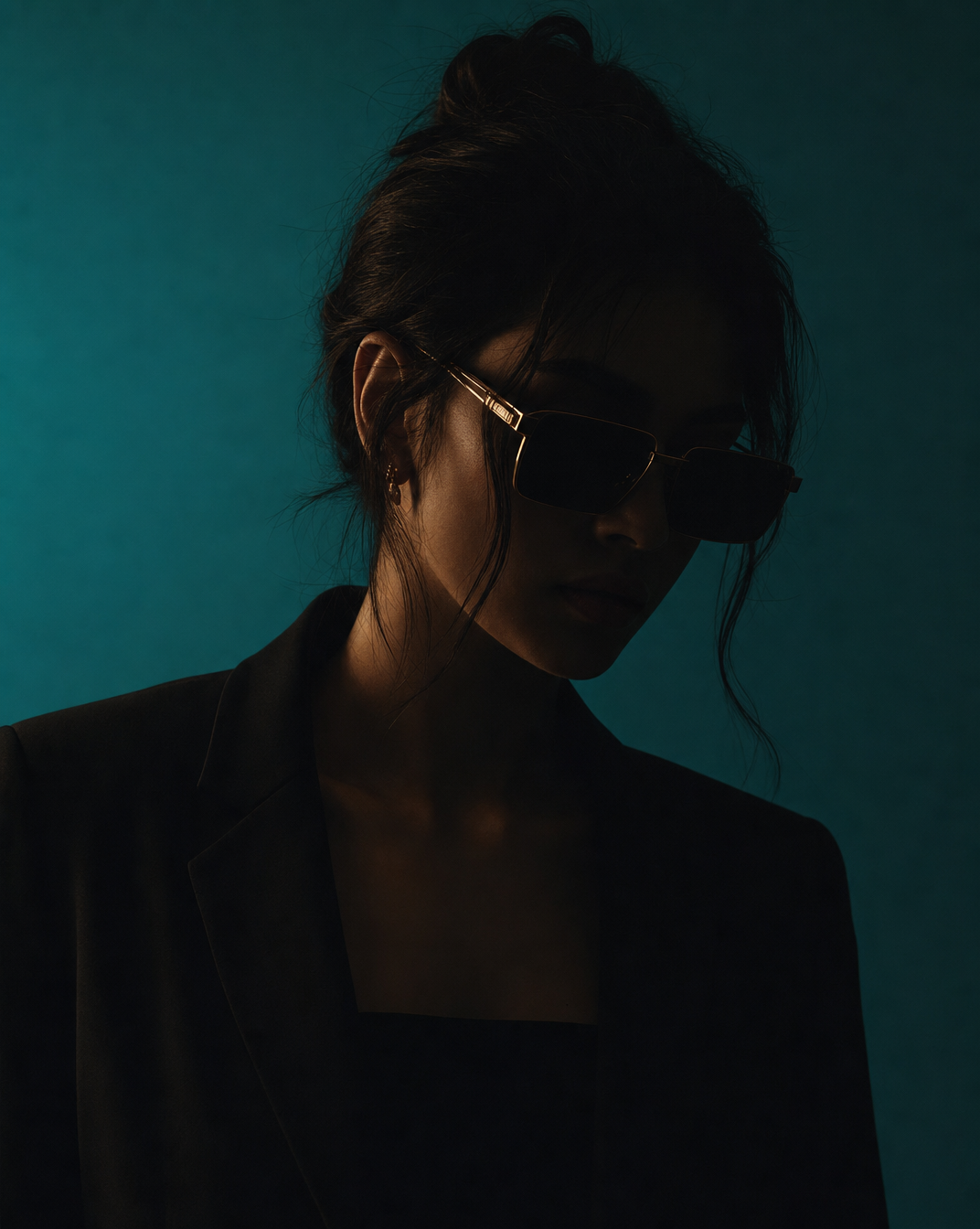
Woman in Teal Light, Shadowed Fashion Portrait
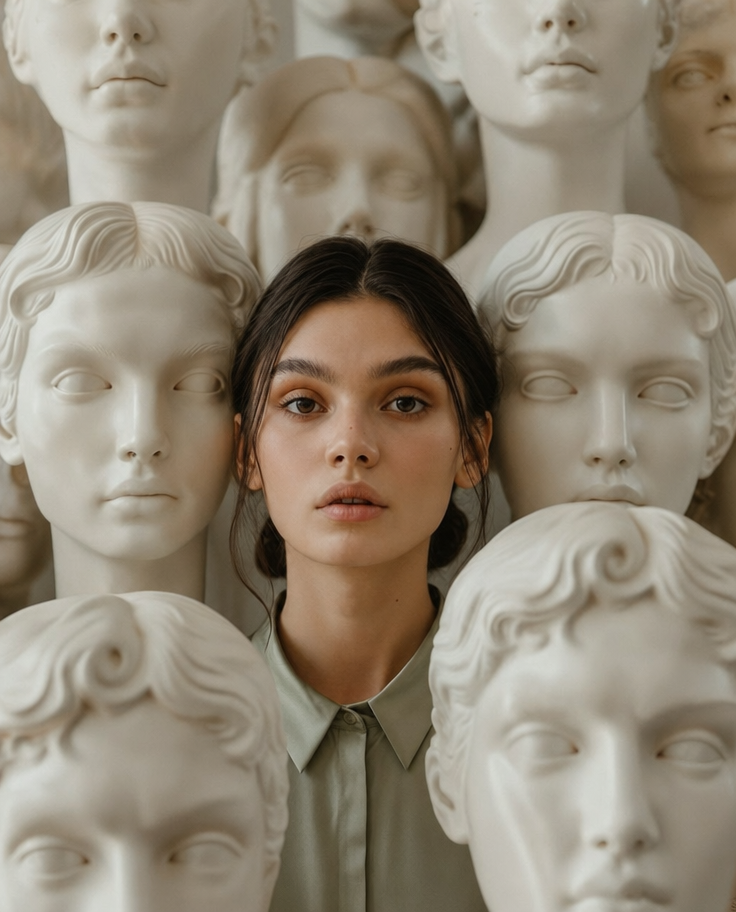
Eerie Elegance Among Marble Busts
Charcoal turtleneck with red eye-beam
Dreamy Macro Portrait in Cool Water