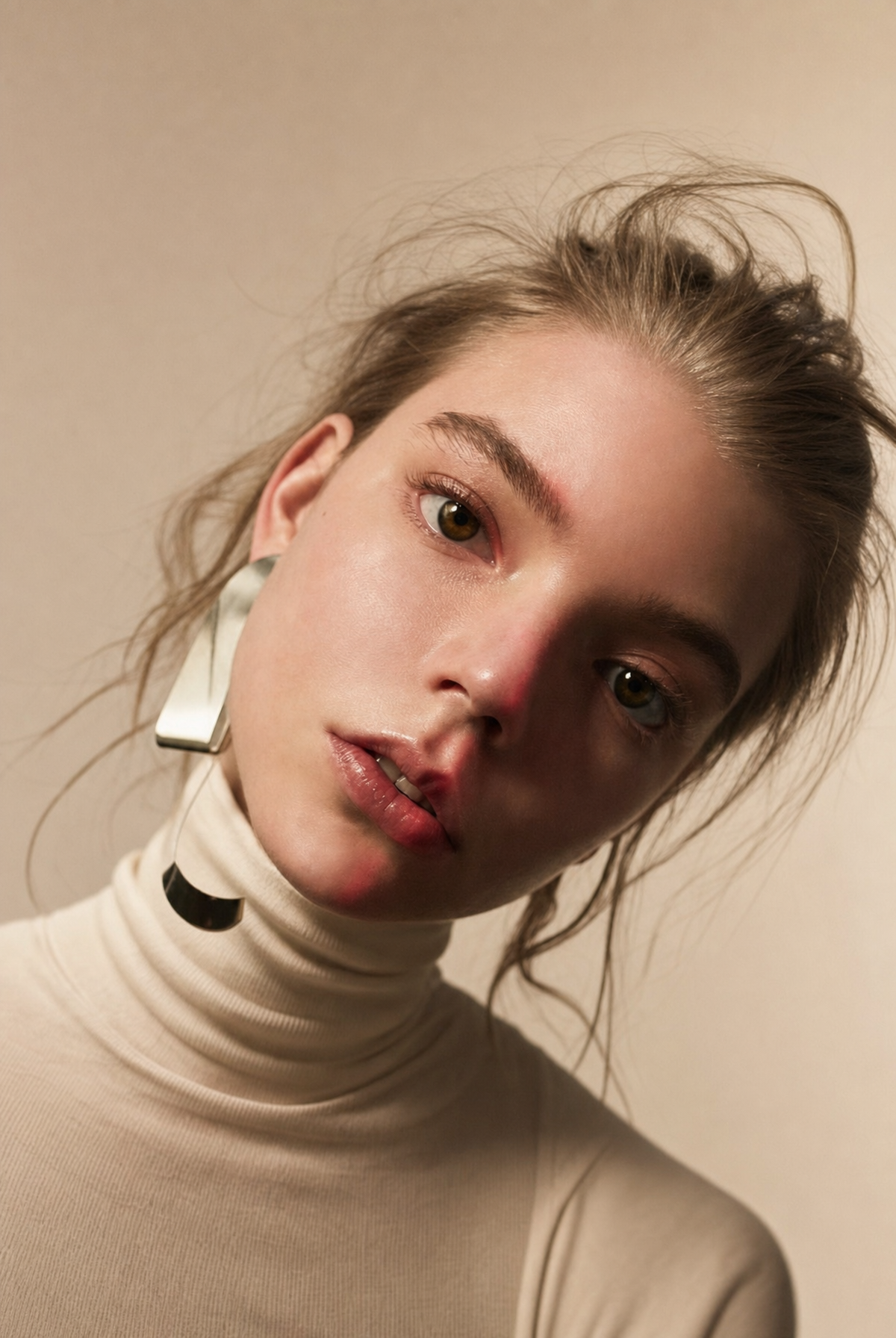
Why this works
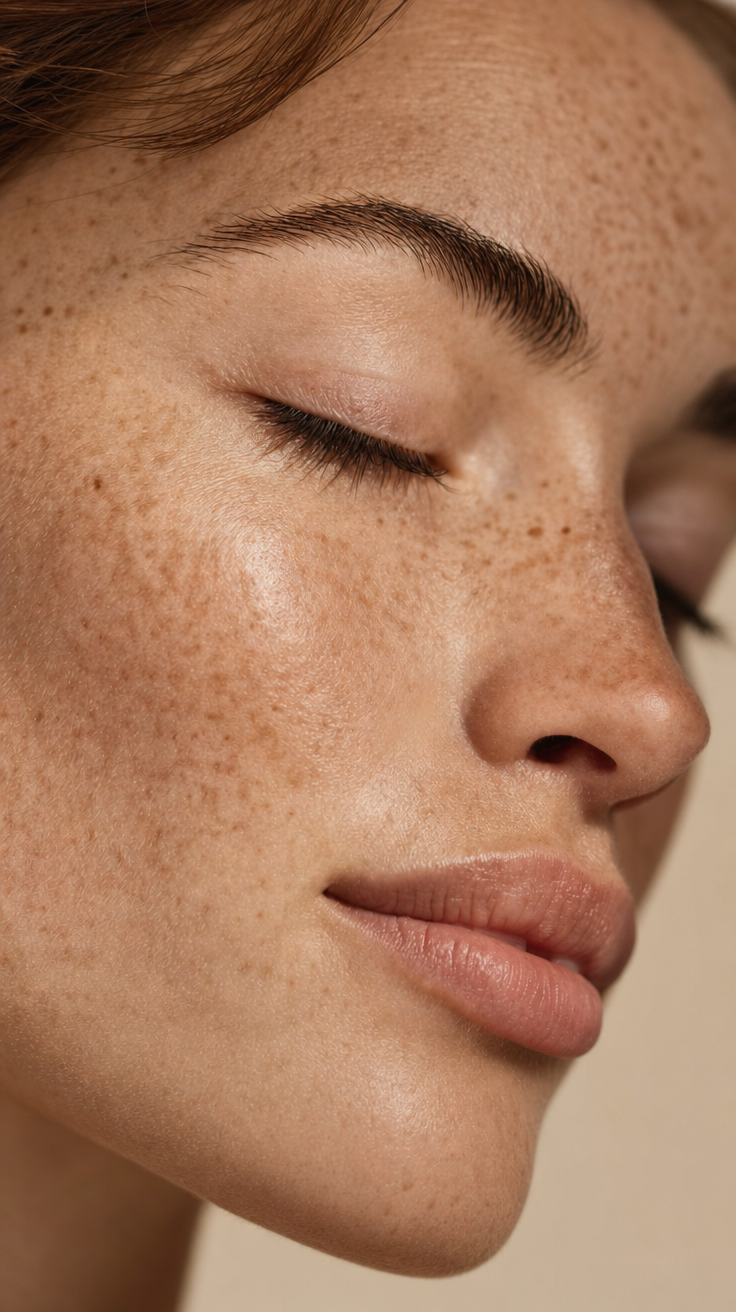
The intimate portrait framing comes directly from “tight close-up framing focused on skin texture and facial details,” while “eyes closed” keeps the expression calm and inward. “Soft, diffused morning light” and “gentle facial contours and smooth highlight roll-off” produce the low-contrast, natural mood; “satin-matte, hydrated finish” prevents the skin from reading as glossy. The “minimal warm beige background” and shallow depth of field isolate the brunette subject, with brown tones reinforcing the restrained, skin-focused palette.
FAQ
→How do I make the eyes and expression more central instead of the skin texture?
Replace “focused on skin texture and facial details” with “focused on the eyes and emotional expression,” and change “eyes closed” to “direct eye contact with a soft, contemplative gaze.” Keep “tight close-up framing” for intensity, or replace it with “head-and-shoulders portrait” if you want more facial context.
→How do I shift this from a calm natural portrait to a moodier editorial image?
Replace “soft, diffused morning light” with “low-key side lighting with controlled shadow,” and change “intimate calm natural mood” to “quiet, dramatic editorial mood.” Swap “minimal warm beige background” for “deep charcoal background” to reduce the warm, neutral feel while preserving the close-up composition.
→How do I build a coordinated series with different subjects or skincare products?
Keep the fixed structure “photorealistic skincare editorial portrait,” “tight close-up framing,” “shallow depth of field,” and “soft, diffused morning light.” Replace “a brunette woman with eyes closed” with variants such as “a silver-haired man with eyes closed” or “a red-haired woman looking slightly upward,” and add a consistent product phrase such as “a small glass serum bottle held beside the cheek” to each version.
Learn the technique behind this
- Why can't AI spell, and how do I get readable text in an image? — Older diffusion models had no character-level representation of text, so they produced letterform-shaped texture instead of words.
- Why does AI get hands and faces wrong, and how do I fix it? — Hands fail because they're small in frame, extremely variable in pose, and self-occluding — the model has less usable signal per pixel than for any other body part.
- How do I keep the same character across multiple images? — Text prompts alone won't hold a face across images — a description defines a type, not a person.
Related prompts
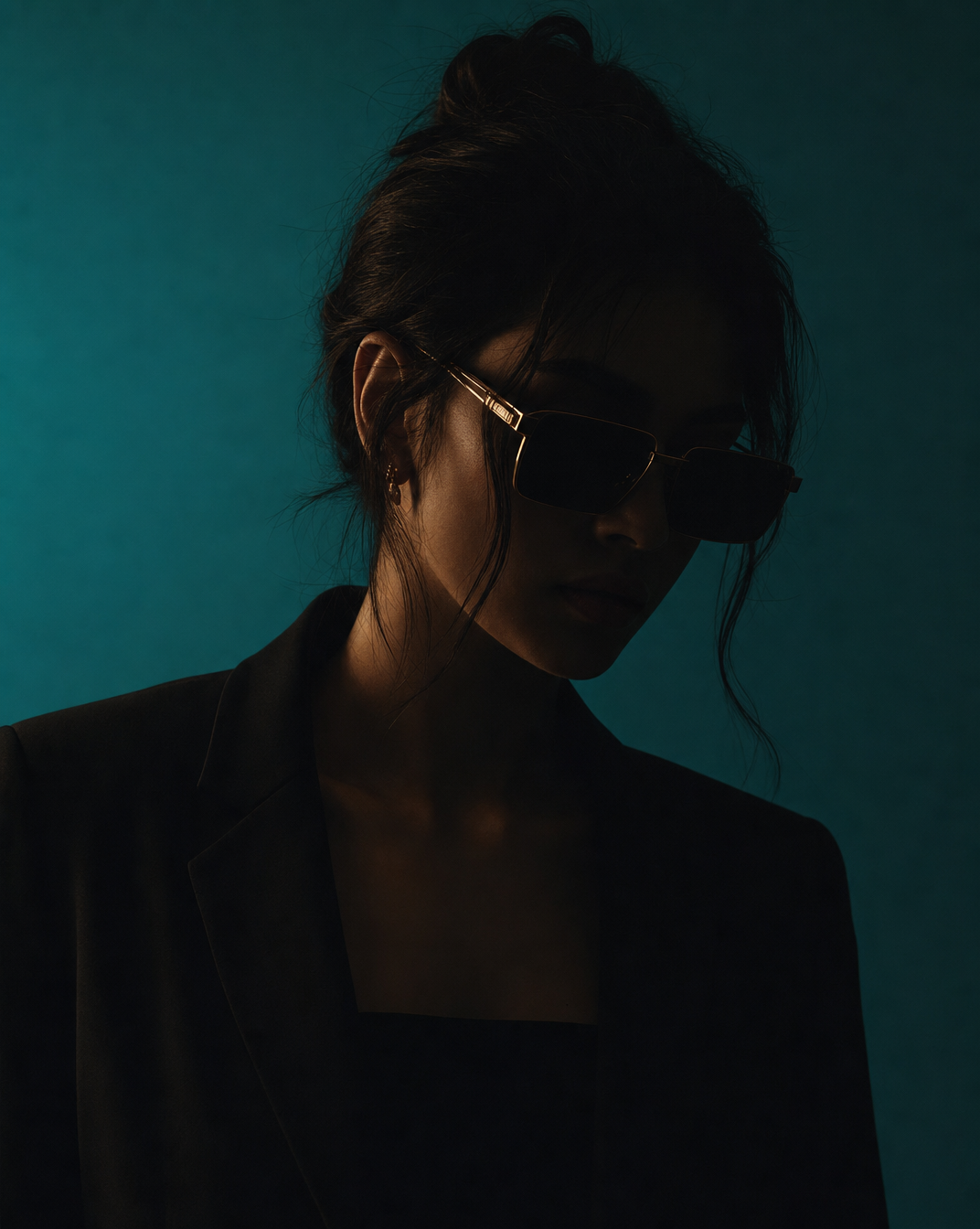
Woman in Teal Light, Shadowed Fashion Portrait
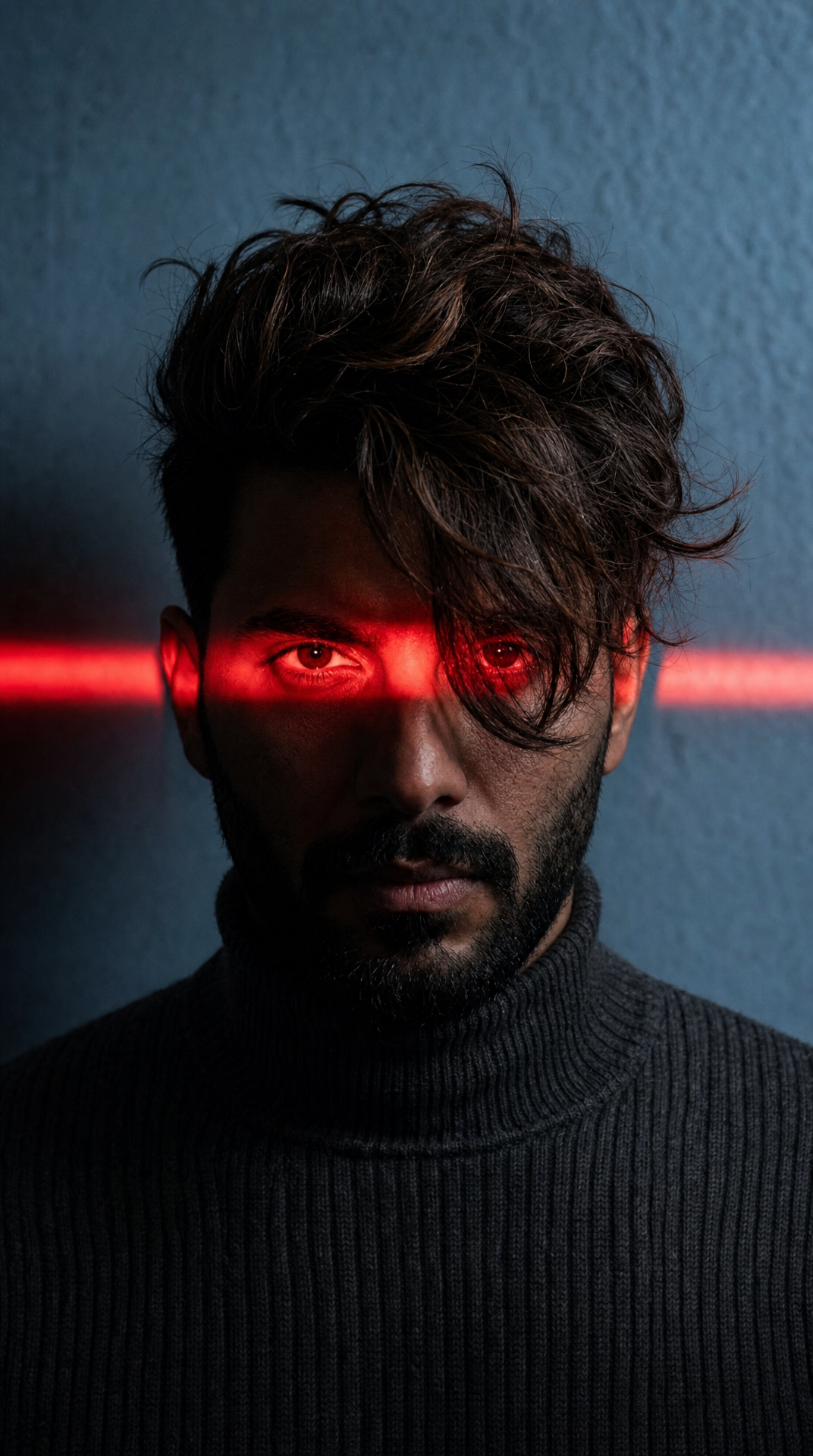
Charcoal turtleneck with red eye-beam
Eerie Elegance Among Marble Busts
Dreamy Macro Portrait in Cool Water