Why this works
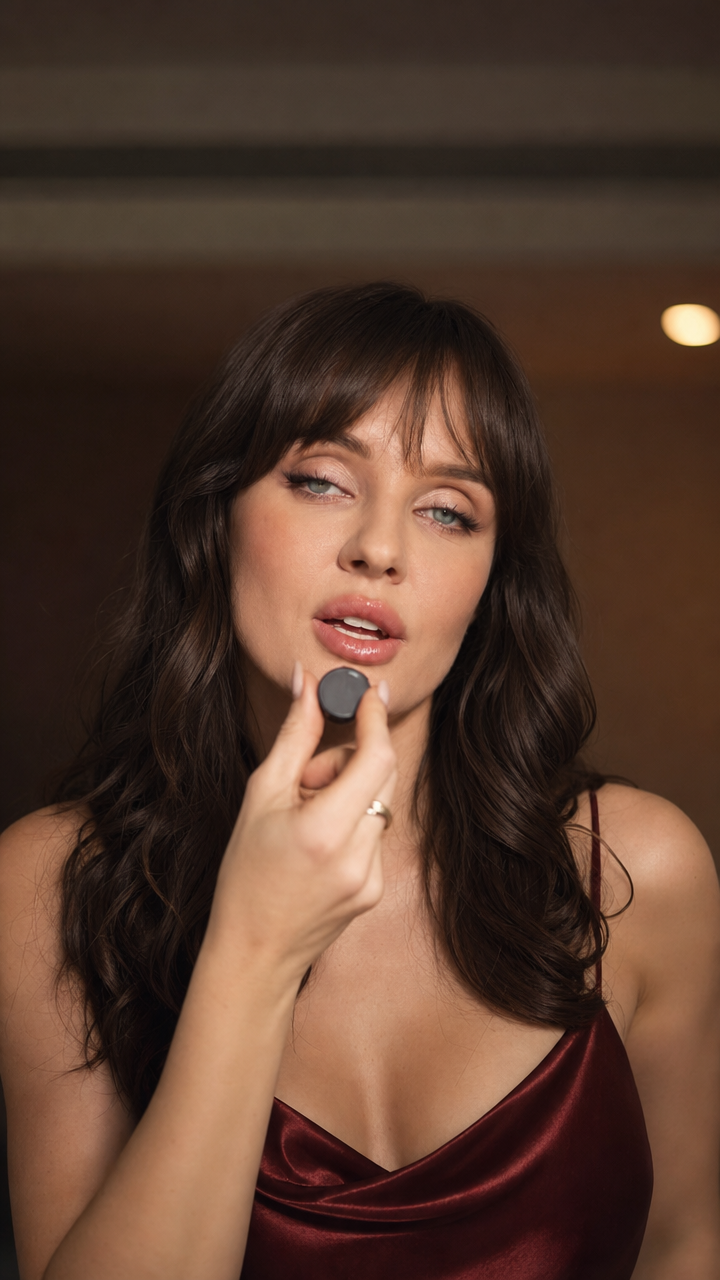
The tight crop and “shallow depth of field” keep the woman’s lips, applicator, and makeup action dominant, while “soft-focus background” removes competing detail. “Warm, intimate indoor lighting” supplies the close, polished mood, and the “deep red satin camisole” gives the image its strongest red accent against the darker hair and background. “Natural skin texture,” “detailed pores,” and “high-resolution realism” counterbalance the glossy lips and “polished editorial look,” preserving a tactile beauty-photography finish rather than an overly airbrushed one.
FAQ
→How do I make the lipstick application and lips even more central?
Replace “tight crop emphasizing her lips and makeup application” with “extreme close-up centered on the lips, applicator tip, and lower half of the face,” and add “lips and applicator occupy most of the frame.” Keep “shallow depth of field,” but change “soft-focus background” to “background reduced to an indistinct creamy blur” so attention stays on the application.
→How do I change the warm editorial mood into a cooler, sharper campaign look?
Replace “warm, intimate indoor lighting” with “cool directional studio lighting with crisp highlights and controlled shadows,” and replace “soft-focus background” with “clean dark studio backdrop with minimal blur.” Change “subtle neutral-beige eye makeup” to “graphic charcoal eye makeup” and “deep red satin camisole” to “structured black satin top” for a more severe black-and-red palette.
→How do I turn this into a consistent series with different lipstick shades?
Keep the fixed structure, including “Close-up photorealistic beauty editorial portrait,” “tight crop,” “shallow depth of field,” and “natural skin texture,” while replacing “deep red satin camisole” with a neutral “black satin camisole.” Swap “glossy lips” and the implied red lipstick for a controlled shade phrase such as “glossy coral lipstick,” “muted mauve lipstick,” or “opaque plum lipstick,” and specify “same pose, lighting, framing, and makeup applicator” across each variation.
Learn the technique behind this
- Why can't AI spell, and how do I get readable text in an image? — Older diffusion models had no character-level representation of text, so they produced letterform-shaped texture instead of words.
- How should a prompt be structured, and does word order matter? — A prompt that behaves predictably names one subject first, then what it is doing, then where, then the light, then the lens or medium, then the style.
- Which aspect ratio should I use, and how does it change the image? — Aspect ratio determines what the model composes, not how it's cropped afterwards.
Related prompts
Woman in Teal Light, Shadowed Fashion Portrait
Eerie Elegance Among Marble Busts
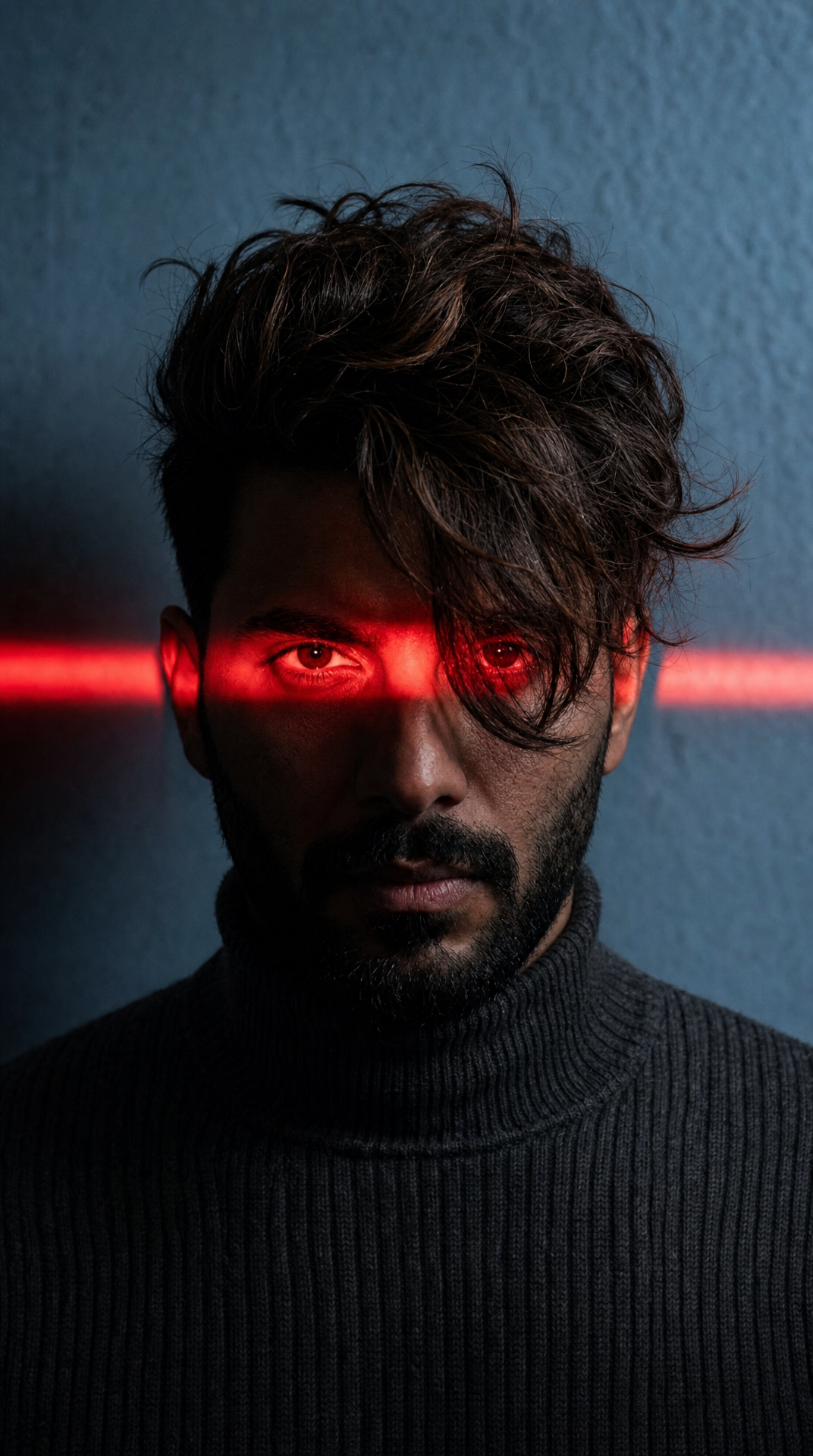
Charcoal turtleneck with red eye-beam
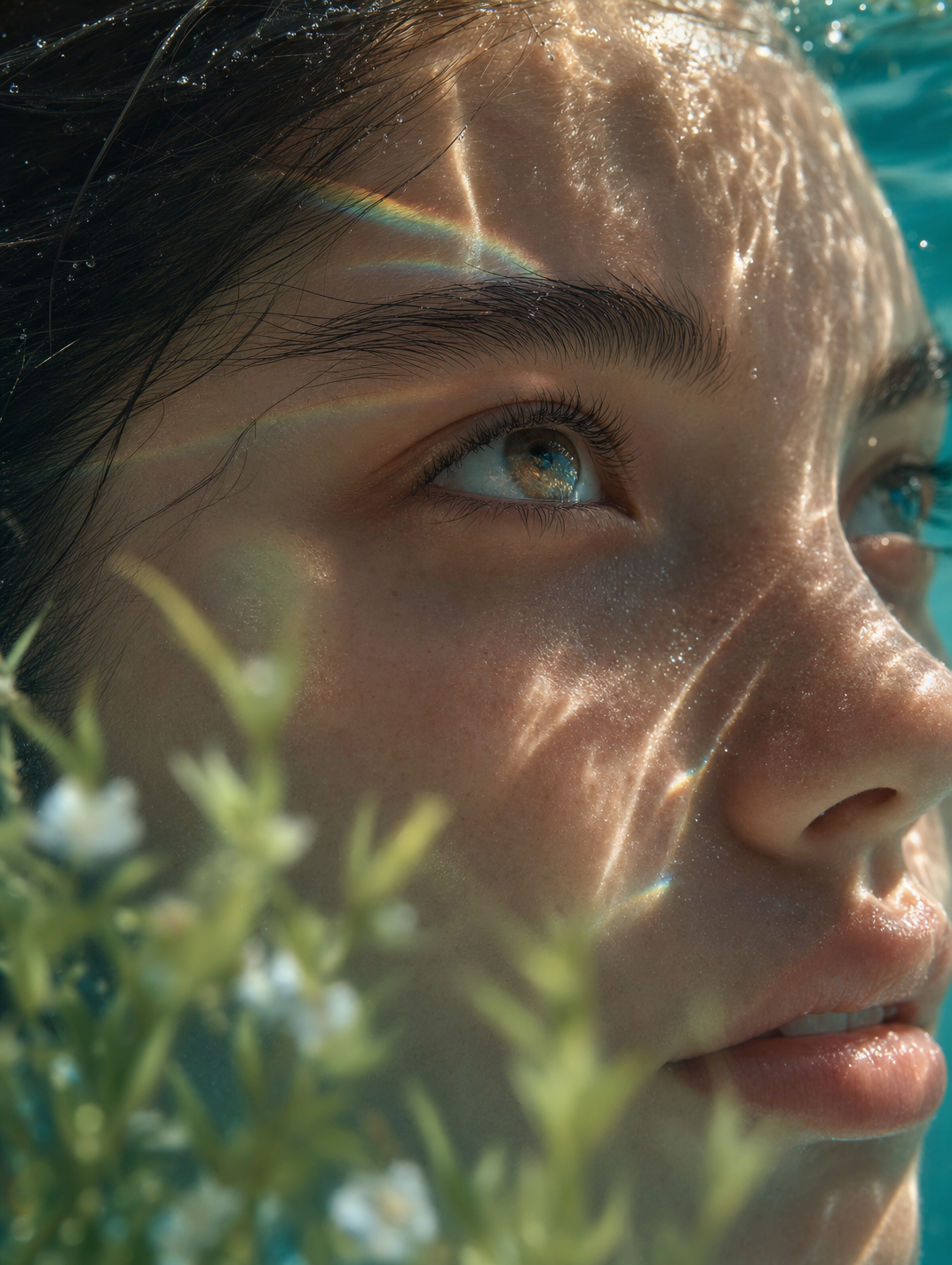
Dreamy Macro Portrait in Cool Water