Why this works
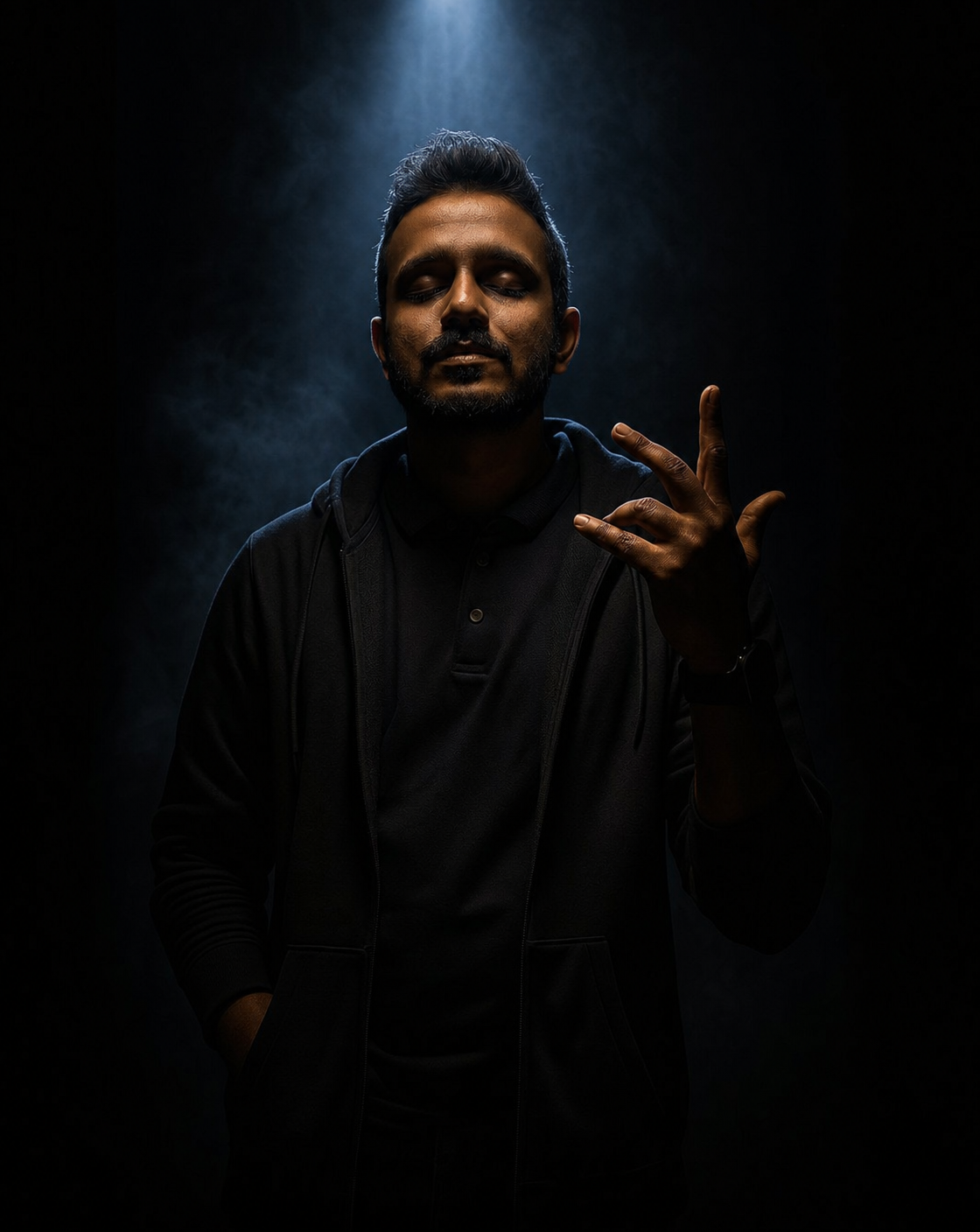
The phrase “portrait framing” paired with “portrait-full-body” keeps the young man and his prayer-like hand gesture readable as one vertical figure, while “eyes closed” concentrates the emotional focus inward. “Soft smoky darkness” removes background detail, and the “narrow blue-white beam from above” gives the gray-dominant image a controlled cool highlight; “crisp, high-contrast shadows” and “subtle cold rim light along his silhouette” separate the body from the darkness without breaking the restrained palette. The serene mood comes specifically from “elegant, prayer-like hand gesture,” “eyes closed,” and “serene, soulful atmosphere,” while “dramatic, moody cinematic low-key” supplies the heavier tonal register.
FAQ
→How do I change this prompt to make the face and hand gesture more prominent?
Replace “portrait framing, low-key cinematic contrast” and “portrait-full-body” with “tight waist-up portrait, face and raised hand filling the frame.” Keep “narrow blue-white beam from above that lights his face and hand,” but add “sharp focus on the eyes-closed face and fingertips” so those two elements receive priority.
→How do I make the scene warmer and more comforting instead of cold and severe?
Replace “cooler spotlight,” “narrow blue-white beam,” and “subtle cold rim light” with “soft amber-gold spotlight from above and a warm honey rim light.” Change “crisp, high-contrast shadows” to “soft graduated shadows,” and replace “dramatic, moody” with “quiet, tender” while retaining “prayer-like hand gesture” and “serene, soulful atmosphere.”
→How do I build a series of variations while keeping the same visual identity?
Keep the fixed structure “young man with eyes closed,” “elegant, prayer-like hand gesture,” “soft smoky darkness,” and “cinematic low-key photography.” For each variation, change only the lighting phrase, such as “narrow blue-white beam from above” to “thin violet sidelight from the left,” “soft green overhead haze,” or “single silver spotlight from behind,” while preserving “rich contrast” and the full-body portrait framing.
Learn the technique behind this
- Why can't AI spell, and how do I get readable text in an image? — Older diffusion models had no character-level representation of text, so they produced letterform-shaped texture instead of words.
- Why does AI get hands and faces wrong, and how do I fix it? — Hands fail because they're small in frame, extremely variable in pose, and self-occluding — the model has less usable signal per pixel than for any other body part.
- How should a prompt be structured, and does word order matter? — A prompt that behaves predictably names one subject first, then what it is doing, then where, then the light, then the lens or medium, then the style.
Related prompts
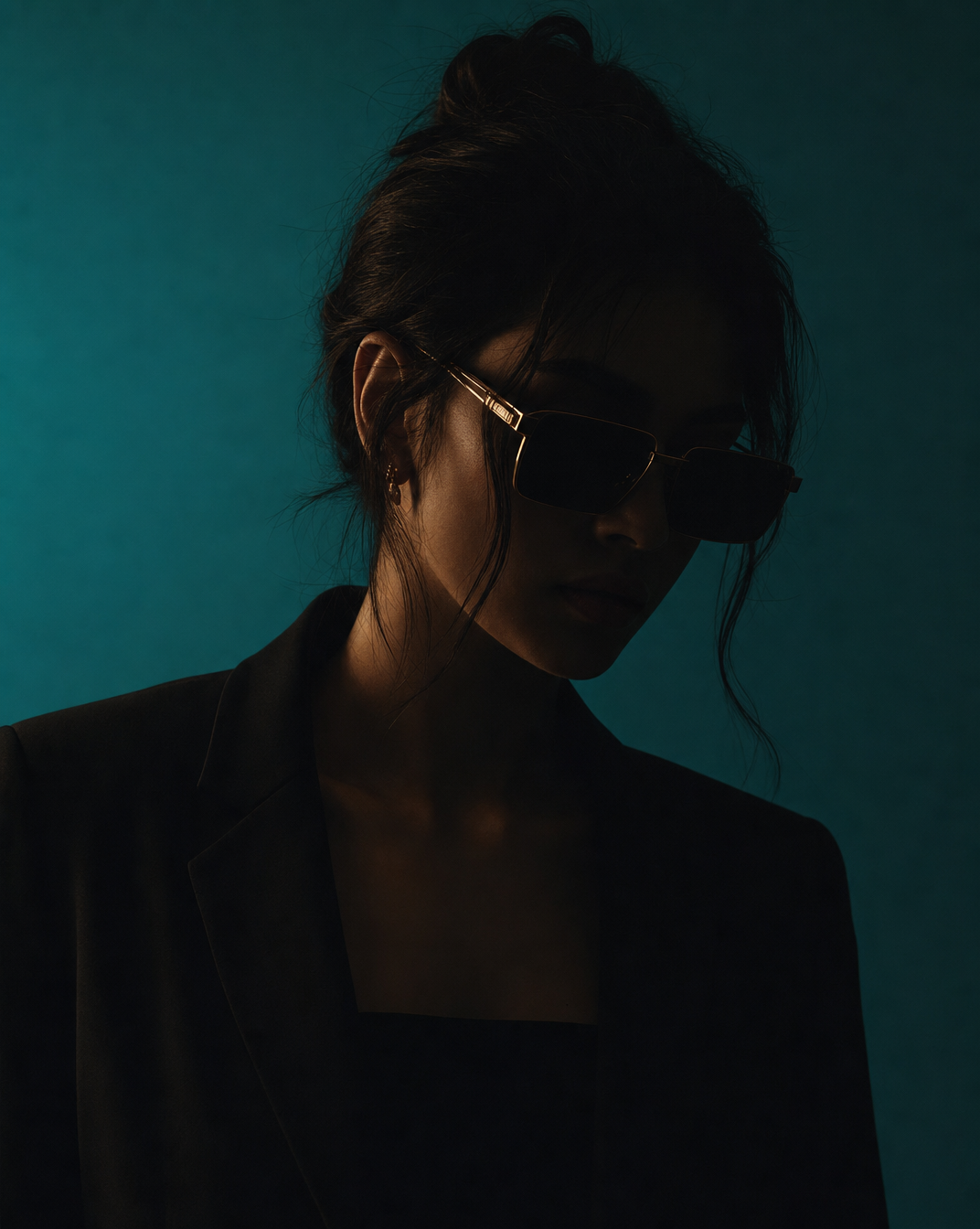
Woman in Teal Light, Shadowed Fashion Portrait
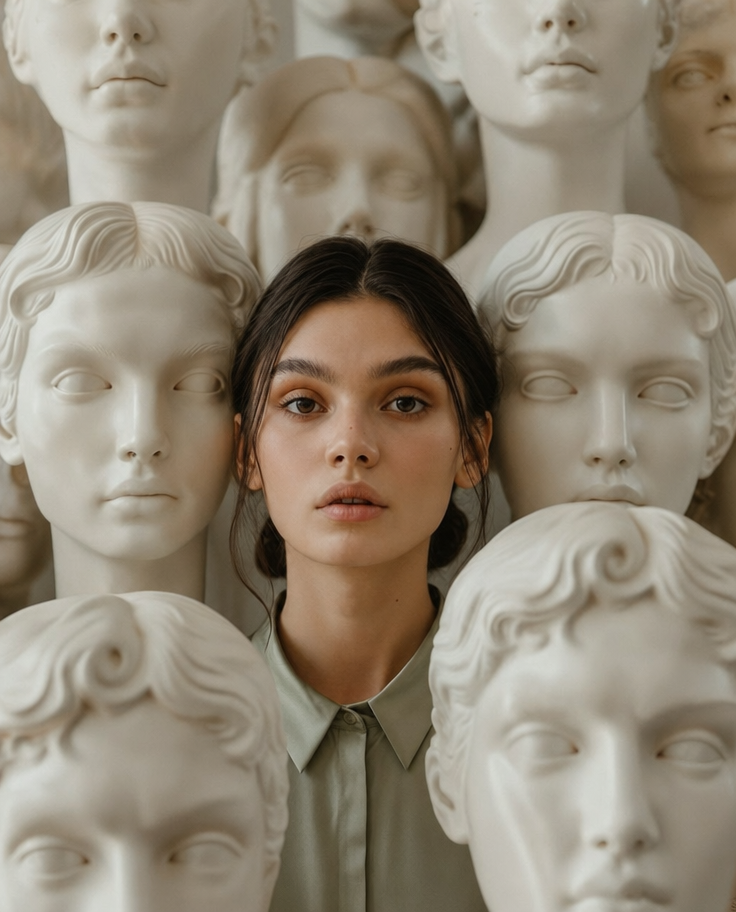
Eerie Elegance Among Marble Busts
Charcoal turtleneck with red eye-beam
Dreamy Macro Portrait in Cool Water