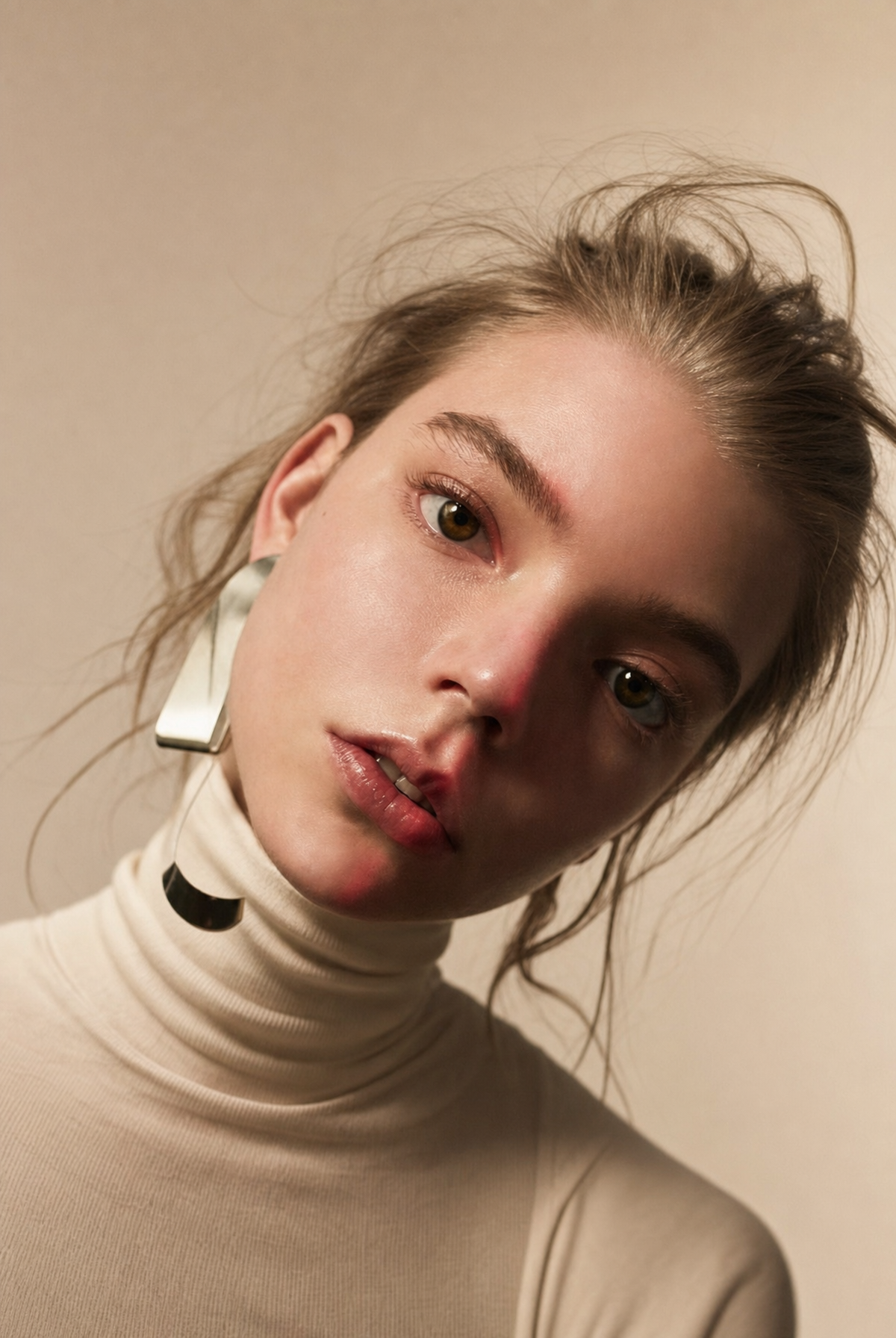
Same prompt, generated with each model separately — click one to see how it holds up.
Why this works
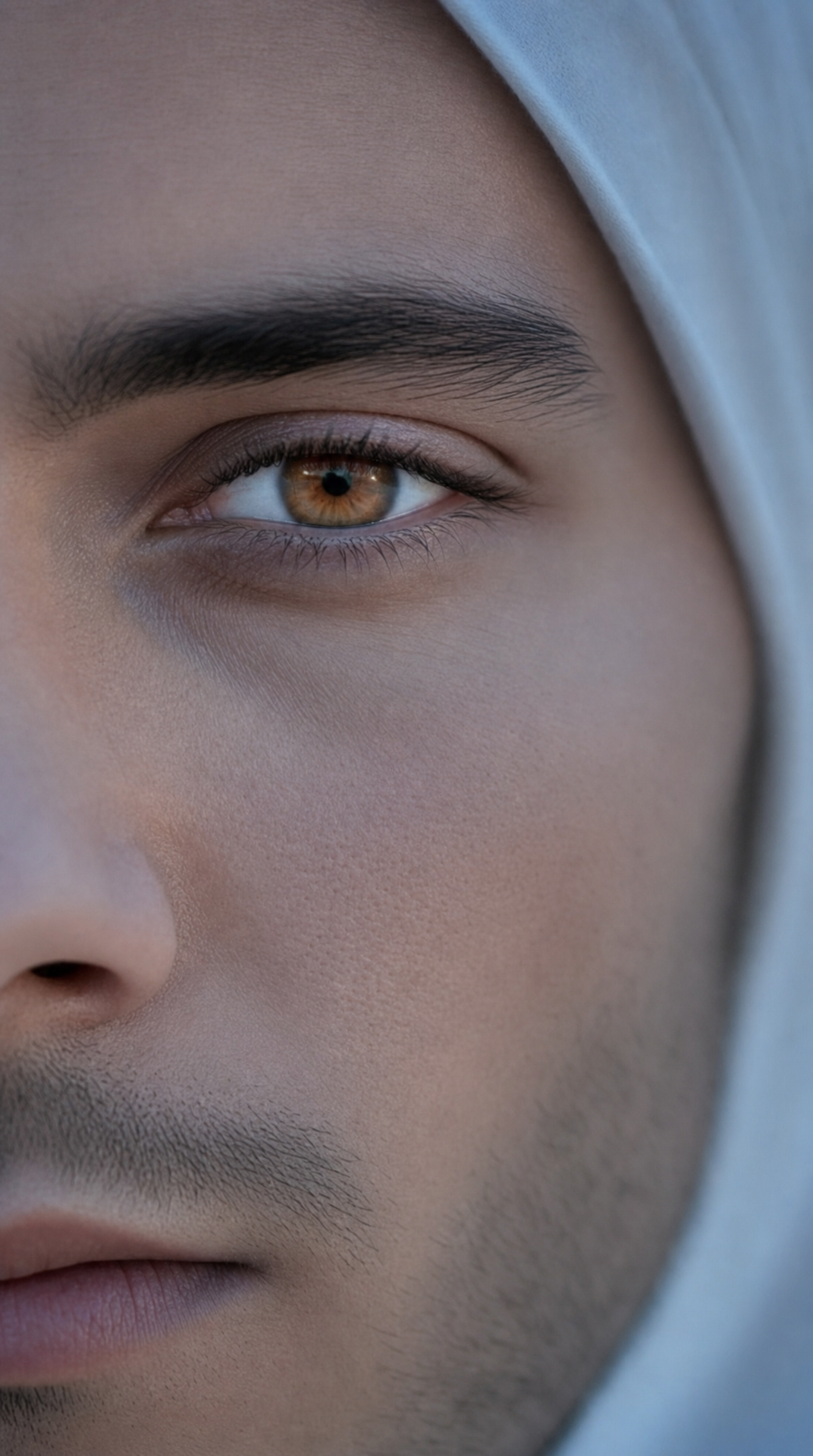
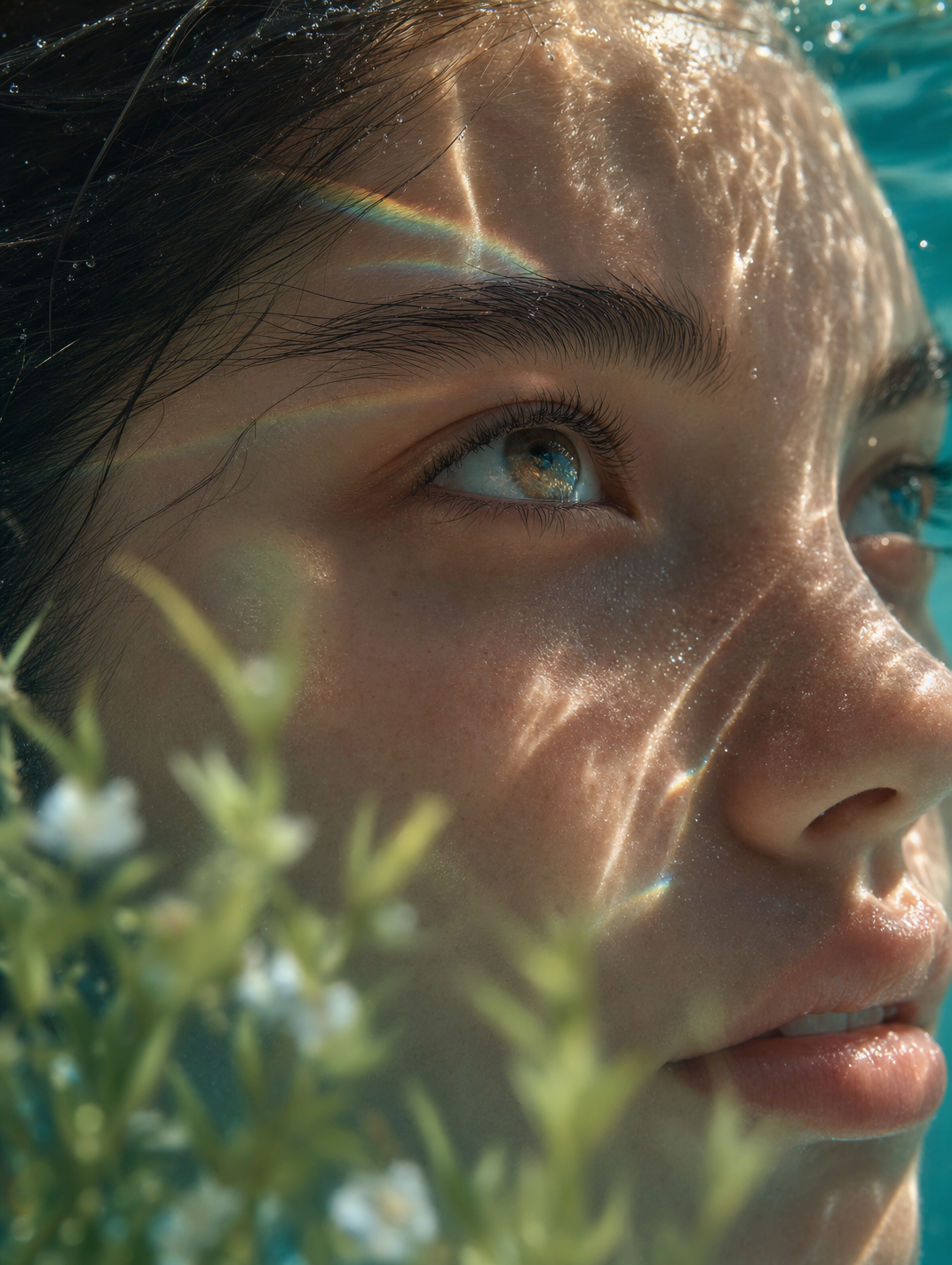
The amber iris against 'cool, silvery-blue lighting highlights with minimal contrast' is what creates the gold-versus-sky-blue color tension visible in the dominant palette, not just a generic warm/cool split. 'Extreme close-up' plus 'compositionally cropped, showing only the area around the left eye, part of the cheekbone, and upper cheek' is the specific instruction forcing the intimate scale, since a wider crop would dilute that contemplative focus into a standard portrait. The 'shot on 100mm macro lens' phrase is doing the heavy lifting on the pore-level skin texture and shallow depth of field, while 'soft, diffused blue hour twilight' explains why the shadows read as gentle vertical accents rather than harsh chiaroscuro despite the dramatic mood tag.
FAQ
→How do I make the mood colder and less intimate?
Swap 'soft, diffused blue hour twilight' for 'harsh, overcast midday light' and remove 'creating an intimate, contemplative focus.' Also change 'minimal contrast' to 'high contrast, deep shadows' so the silvery-blue warmth gives way to a flatter, clinical gray tone.
→How do I shift the focus from the eye to the whole face?
Replace 'focusing on the left eye with a striking amber iris' with 'focusing on the full face, symmetrical framing' and change the crop line 'showing only the area around the left eye, part of the cheekbone, and upper cheek' to 'showing the entire face from hairline to chin.' Keep the 100mm macro lens reference but drop 'extreme close-up' to 'close-up' so the lens doesn't force an impossible full-face macro distortion.
→How do I build a series of variations from this same prompt?
Keep the technical backbone ('shot on 100mm macro lens,' 'photorealistic, 8k resolution, raw photo') fixed and cycle the iris color phrase ('striking amber iris' to 'pale grey iris' or 'deep green iris') alongside the lighting phrase ('blue hour twilight' to 'golden hour warmth' or 'harsh studio side-light') so each version keeps the same intimate crop but changes the color story and mood.
Learn the technique behind this
- How should a prompt be structured, and does word order matter? — A prompt that behaves predictably names one subject first, then what it is doing, then where, then the light, then the lens or medium, then the style.
- Which aspect ratio should I use, and how does it change the image? — Aspect ratio determines what the model composes, not how it's cropped afterwards.
- Why can't AI spell, and how do I get readable text in an image? — Older diffusion models had no character-level representation of text, so they produced letterform-shaped texture instead of words.
Related prompts
Woman in Teal Light, Shadowed Fashion Portrait
Eerie Elegance Among Marble Busts
Charcoal turtleneck with red eye-beam
Dreamy Macro Portrait in Cool Water