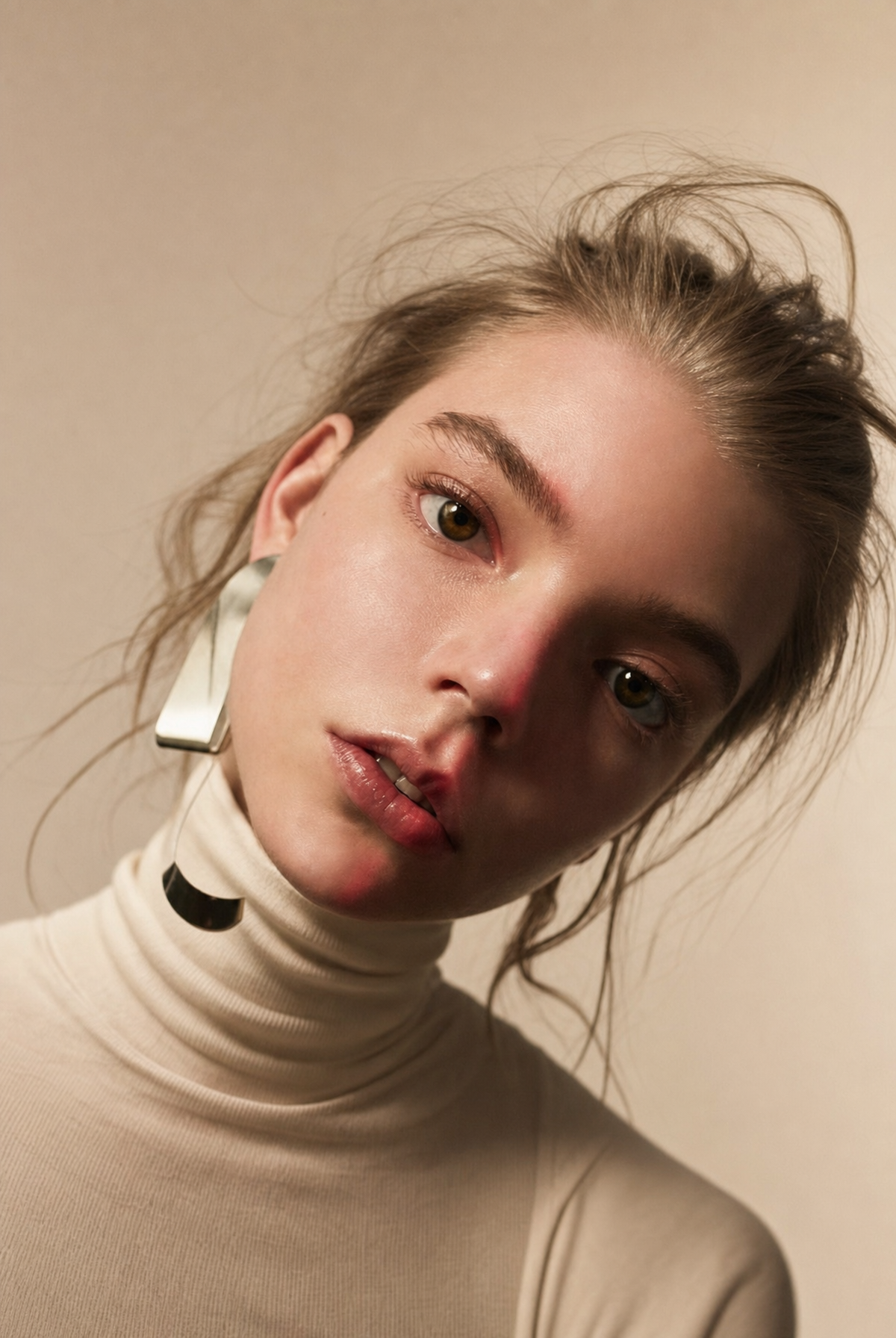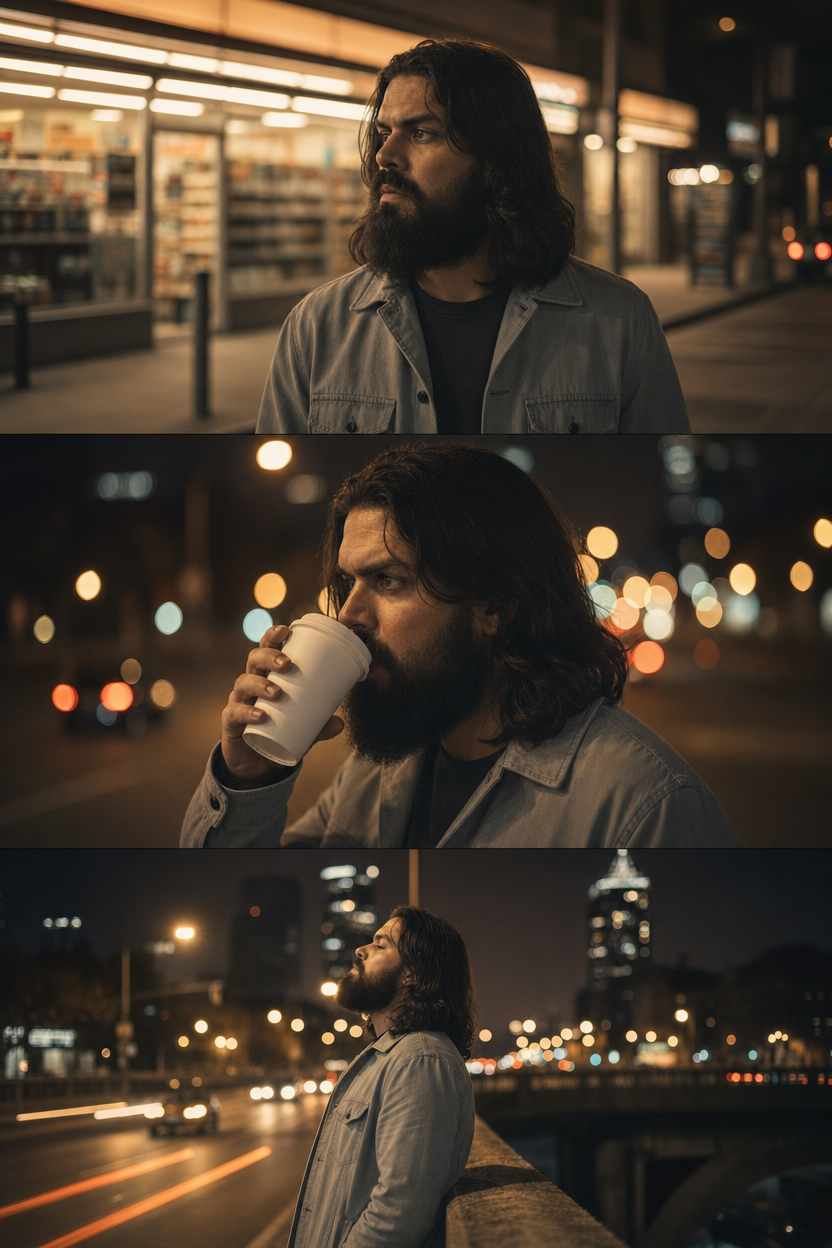
Same prompt, generated with each model separately — click one to see how it holds up.
Why this works
The intimate, cinematic framing comes from “cinematic photorealistic portrait” and “50mm film look,” while “shallow depth of field” isolates the bearded man against the urban street. “Warm neon storefront lighting,” “subtle rim lighting,” and “moody amber-and-teal color grading” explain the orange highlights, green cast, and black night background visible in the image. The “contemplative expression” and candid-action composition keep the portrait feeling observed rather than posed, with “soft bokeh city lights” turning the street into a textured backdrop.
FAQ
→How do I make the man feel more central and commanding in the frame?
Replace “cinematic portrait framing” with “tight head-and-shoulders close-up, face centered in frame,” and change “shallow depth of field” to “extremely shallow depth of field with the eyes in crisp focus.” Keep “subtle rim lighting,” but add “bright rim light outlining the hair and shoulders” to separate him more strongly from the black street.
→How do I shift this from moody contemplation to a warmer, more optimistic tone?
Replace “moody amber-and-teal color grading” with “warm golden-orange color grading with soft teal shadows,” and change “contemplative expression” to “quiet, approachable half-smile.” Swap “at night” for “blue hour after sunset” so the background retains urban atmosphere without the heavy black contrast.
→How do I turn this into a consistent series of related portraits?
Keep the fixed subject description, “50mm film look,” “realistic skin texture,” and “cinematic photorealism” unchanged, then vary only the setting and lighting phrases. For example, replace “urban city street at night” with “rainy subway entrance at night,” “warm neon storefront lighting” with “cool fluorescent overhead lighting,” and later use “rooftop overlooking the city at dusk” with “soft sunset side-lighting,” while preserving “light gray jacket” and “dark crew-neck shirt” as visual anchors.
Learn the technique behind this
- Why can't AI spell, and how do I get readable text in an image? — Older diffusion models had no character-level representation of text, so they produced letterform-shaped texture instead of words.
- How should a prompt be structured, and does word order matter? — A prompt that behaves predictably names one subject first, then what it is doing, then where, then the light, then the lens or medium, then the style.
- Which camera and lighting terms actually change an AI image? — Focal length, aperture, light direction and time of day change the image reliably because they correlate with real photographic patterns in the training data.
Related prompts
Woman in Teal Light, Shadowed Fashion Portrait
Eerie Elegance Among Marble Busts
Charcoal turtleneck with red eye-beam
Dreamy Macro Portrait in Cool Water